
Mapping Informal Influence Networks at Work

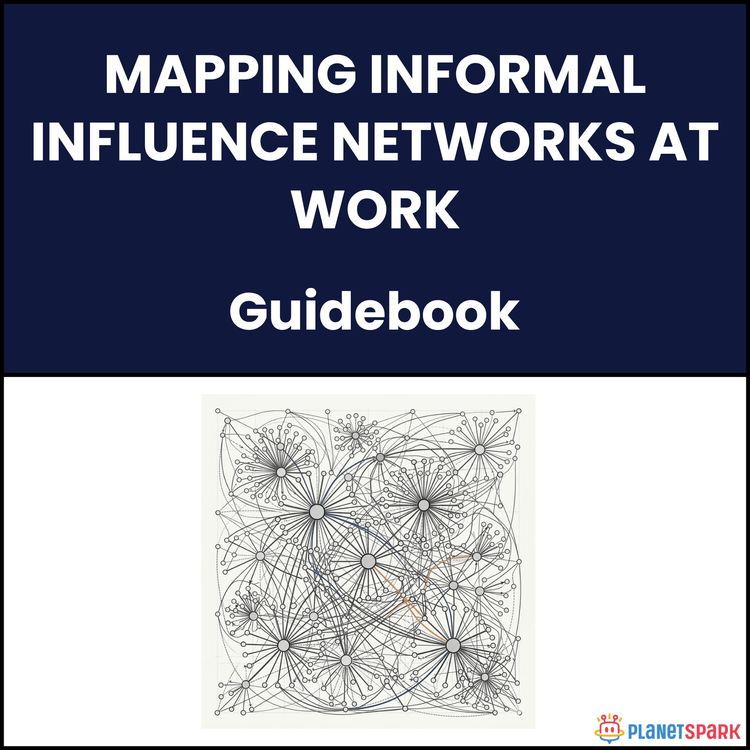
Mapping Informal Influence Networks at Work
Mapping Informal Influence Networks at Work: A Practical Guide to Navigating Workplace Power Dynamics
If you’ve ever felt overlooked despite delivering strong results, struggled to get your ideas heard, or wondered why some colleagues seem to influence decisions far beyond their role—you’re not imagining it.
Most workplaces don’t run purely on hierarchy. They run on relationships, trust, visibility, and informal influence. Yet, very few professionals are taught how to understand or navigate this hidden system.
That’s exactly why the resource “Mapping Informal Influence Networks at Work: The Unofficial Power Map Guidebook” exists. It helps you decode the invisible dynamics of your workplace so you can position yourself strategically, build meaningful relationships, and accelerate your career—without politics or manipulation.
Who Is This Resource For?
This resource is especially valuable if you are:
- An early to mid-career professional (0–15 years of experience) feeling stuck despite strong performance
- A career switcher trying to understand a new organisational culture quickly
- A consultant who needs to build trust and influence in unfamiliar environments
- A manager who wants to lead through influence—not just authority
- A professional who feels “out of the loop” in key decisions or opportunities
- Someone who wants to build visibility, credibility, and strategic relationships at work
If you want clarity on how things actually work in your organisation—not just how they’re supposed to work—this guide is built for you.
What Does This Resource Contain?
This is not a generic networking guide. It’s a structured, step-by-step toolkit designed for practical application.
Inside the resource, you’ll find:
- A clear explanation of informal influence networks and why org charts don’t tell the full story
- A breakdown of key influencer types: Connectors, Experts, Amplifiers, and Gatekeepers
- A structured Observation Framework to help you identify influence patterns in your workplace
- The Observation Tracker worksheet to capture real-time insights over two weeks
- A Personal Influence Audit based on four dimensions: Visibility, Trust, Relevance, and Reach
- A self-assessment worksheet to evaluate your current influence position
- A practical Influence Map template to visually map your organisation’s power structure
- Step-by-step guidance on building and updating your influence map
- Six proven positioning strategies to increase your influence organically
- Real-world conversation scripts for building meaningful professional relationships
- A 90-day Influence Building Plan template to guide consistent action
- A detailed case study showing how influence mapping transforms career outcomes
- A comprehensive Influence Readiness Checklist for ongoing self-evaluation
- A quick reference guide for applying the framework in any new role or organisation
- Common mistakes to avoid—and how to correct them effectively
Every section is designed to move you from awareness to action.
Summary of the Resource
“Mapping Informal Influence Networks at Work” is a practical, action-oriented guide that helps you understand how influence actually works inside organisations—and how to position yourself within it.
It enables you to identify key decision-makers beyond titles, map relationship dynamics, assess your own influence, and build a clear strategy to increase your visibility, credibility, and impact at work.
If you invest just 45–60 minutes in this guide, you’ll walk away with a completely different perspective on your workplace—and a clear plan to navigate it more effectively.
How Will This Resource Be Useful?
This resource helps you move from confusion to strategic clarity.
You’ll gain:
- A clear understanding of who really influences decisions in your organisation
- The ability to identify hidden power structures and informal networks
- Greater visibility into your own professional positioning
- A structured approach to building meaningful, high-impact relationships
- Increased confidence in navigating workplace dynamics
- Better access to opportunities, projects, and decision-making spaces
- Stronger professional reputation built on trust and contribution
Most importantly, it helps you stop relying only on hard work—and start working with the system intelligently.
How Should You Use This Resource?
To get the best results, follow a phased approach:
Start by reading the introduction and foundational concepts to understand how informal influence works and why it matters.
Next, move into the Observation Phase. Spend two weeks actively tracking patterns—who gets consulted, how information flows, and which names keep appearing in key conversations.
Then complete your Personal Influence Audit. Assess yourself honestly across visibility, trust, relevance, and reach to understand your current position.
Once you have that clarity, build your Influence Map using the provided template. Identify key players, their roles, and your current relationship with them.
After mapping, focus on positioning yourself strategically. Select 3–5 priority relationships and begin investing in them through genuine, value-driven interactions.
Finally, implement the 90-day plan to build consistency. Use the checklist and reflection tools to track progress and refine your approach over time.
You can revisit this resource whenever you:
- Join a new organisation or team
- Feel stuck in your current role
- Want to increase your visibility and influence
- Prepare for leadership or strategic roles
Action Steps
After accessing this resource, take these steps immediately:
1. Set a daily 5-minute reminder to complete the Observation Tracker for the next 14 days
2. Identify at least 10–15 people in your workplace who influence decisions informally
3. Complete your Personal Influence Audit and identify your weakest dimension
4. Build your first rough Influence Map—don’t aim for perfection
5. Choose 3–5 high-priority relationships to invest in
6. Initiate one genuine, value-driven conversation within the next week
7. Create a simple 30-day action plan to improve your visibility or reach
Consistent small actions here can significantly change your career trajectory.
Your career is shaped not just by what you do—but by who knows it, trusts it, and advocates for it. Informal influence is not about politics or manipulation. It’s about understanding people, building trust, and contributing meaningfully in the right places.
When you learn to see and navigate these networks, you stop feeling stuck—and start moving with clarity and intention.
Use this resource to build not just influence, but a stronger, more strategic version of your professional self.
Book your free session today!