
Mapping Reputation Gaps Between Perception and Reality

Mapping Reputation Gaps Between Perception and Reality
How to Close the Reputation Gap Between Perception and Reality: A Practical Guide for Professionals
Imagine working tirelessly to meet deadlines, deliver top-quality work, and contribute to team success. Yet, despite all your efforts, you're passed over for promotions, excluded from key meetings, or feel misunderstood by colleagues. This disconnect is often due to what experts call a "reputation gap." It's the difference between how you see yourself and how others perceive you. And surprisingly, this gap can quietly sabotage your career—long before you even realize it exists. In this blog, we'll show you how to diagnose and close that gap, so you can align your internal brand with how you're experienced by others, and unlock new professional opportunities.
Who Is This Resource For? (Target Audience)
This scorecard is designed for:
- Career changers, consultants, and managers
- Early to mid-career professionals who want to take control of their professional reputation
- Individuals who feel their hard work isn’t being fully recognized or rewarded
- Anyone seeking a clear, actionable framework to bridge the gap between self-perception and external feedback
What Does This Resource Contain?
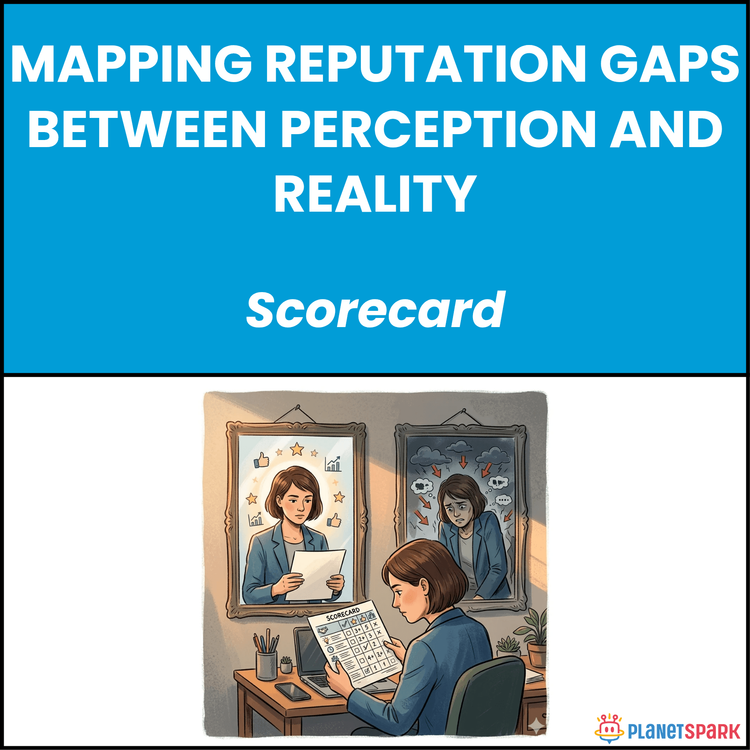
This resource offers a Reputation Gap Scorecard, a structured tool to help you identify the discrepancies between how you see your professional brand and how others actually experience it. The resource is divided into actionable modules that guide you through:
1. Audit Your Internal Narrative: Understand how you currently view your professional reputation.
2. Gather External Data: Collect honest feedback from key stakeholders to see how others perceive you.
3. Map the Gap: Analyze the difference between your self-assessment and external feedback.
4. Build Your Reputation Closing Plan: Develop a 90-day action plan to close your reputation gap through targeted behavior changes.
Summary of the Resource
The Reputation Gap Scorecard provides a diagnostic method to identify gaps in your professional reputation and close them with precision. By following the framework and completing the worksheets, you'll gain clarity on where your self-image diverges from the reality experienced by others. With actionable steps and reflective exercises, you’ll be equipped to make intentional changes that improve how you’re perceived, leading to career advancement, increased trust, and better opportunities.
How Will This Resource Be Useful?
This scorecard will:
- Help you gain an honest understanding of your current reputation by comparing your self-assessment with external feedback
- Reveal key areas where your professional behavior and visibility don’t align with how others perceive you
- Give you actionable steps to close the gap by focusing on specific behaviors, not just traits
- Empower you to take control of how you're perceived, increasing your chances for promotion, new opportunities, and cross-functional collaborations
How Should You Use This Resource?
Follow these steps to use the Reputation Gap Scorecard effectively:
1. Audit Your Internal Narrative: Reflect on your self-perception. Write down your beliefs, strengths, and the story you tell yourself about your professional reputation. Be honest with yourself, and identify any gaps in your own narrative.
2. Gather External Data: Ask at least 3–5 stakeholders for feedback using the Reputation Pulse Script. Collect responses from peers, direct reports, and senior colleagues. Use their feedback to validate (or challenge) your self-assessment.
3. Map the Gap: Review the differences between your self-score and the stakeholder scores in your Reputation Gap Scorecard. Identify areas with significant gaps, and categorize them as “minor,” “significant,” or “critical.”
4. Build Your Reputation Closing Plan: Focus on 2–3 key gaps. Break down each gap into specific behaviors and start implementing small, observable changes. Use the 90-Day Reputation Closing Plan to track your progress and ensure consistent improvement.
Action Steps
- Complete your self-assessment on the Reputation Gap Scorecard (Module 2).
- Reach out to 3–5 stakeholders for honest feedback. Use the Reputation Pulse Script to guide your conversations.
- Calculate the gap between your self-score and your stakeholder feedback.
- Identify your top 2–3 gaps and develop an action plan to close them within the next 90 days.
- Track your progress by re-scoring yourself after 30, 60, and 90 days.
Your reputation is one of your most valuable assets. It’s not something that happens by accident—it’s something you actively build and maintain through strategic collaboration. By following the Reputation Gap Scorecard, you can close the gap between your self-perception and the reality others experience. This is an ongoing process that requires intentionality and commitment, but the payoff is immense. Take action today, and start closing the gap that may be holding you back from achieving your full professional potential.