
Mapping Your Influence Network Inside Your Organization

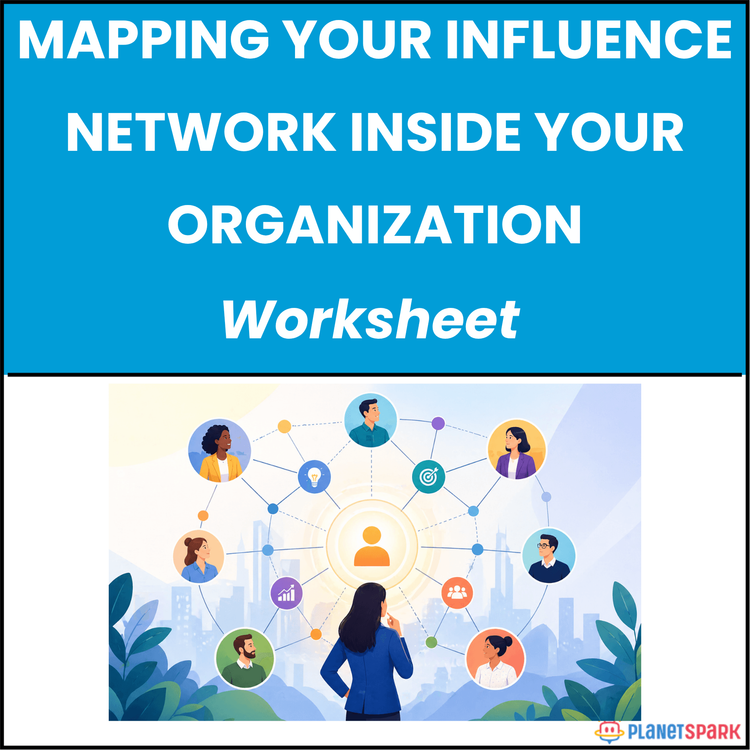
Mapping Your Influence Network Inside Your Organization
Mapping Your Influence Network Inside Your Organization
You can be great at your job and still feel invisible.
Your ideas don’t gain traction, your work goes unnoticed by decision-makers, and opportunities seem to pass you by—despite consistently delivering strong results. If this sounds familiar, the issue may not be your performance. It may be your network.
In most organizations, influence doesn’t flow through org charts—it flows through relationships. The ability to connect with the right people, build trust, and navigate informal power structures often determines who gets ahead.
This resource, “Mapping Your Influence Network Inside Your Organization,” is designed to help you understand, evaluate, and strategically strengthen your workplace relationships—so your work gets the visibility, support, and momentum it deserves.
Who Is This Resource For?
This resource is especially valuable for:
- Early to mid-career professionals (0–15 years experience)
- Employees feeling overlooked despite strong performance
- Professionals aiming for promotions or leadership roles
- Career switchers navigating a new organization
- Consultants and cross-functional team members
- Managers looking to increase influence beyond their immediate team
If you’ve ever felt stuck, under-recognized, or disconnected from decision-makers, this resource is built for you.
What Does This Resource Contain?
This worksheet-driven guide is structured to help you move from awareness to action. It includes:
- A clear explanation of organizational influence and why it matters
- The three types of influence:
- Formal authority (titles and decision-makers)
- Informal influence (trusted advisors and experts)
- Cross-functional reach (connectors across teams)
- A network audit worksheet to map:
- Key stakeholders
- Relationship strength
- Influence type
- Priority connections
- A power mapping framework to identify:
- Who really influences decisions
- Where your network is strong or weak
- Hidden connectors and influence hubs
- The GAPS Framework to diagnose network weaknesses:
- Visibility gaps
- Access gaps
- Perspective gaps
- Support gaps
- A 30-day action plan template to:
- Prioritize key relationships
- Define outreach actions
- Track progress
- A real-world case study showing how targeted networking led to career growth
- Common mistakes professionals make—and how to fix them
Summary of the Resource
This is not a generic networking guide.
It is a structured, practical worksheet that helps you:
- See your current network clearly
- Identify what’s missing and why it matters
- Take focused, high-impact action to build influence
Instead of telling you to “network more,” it shows you exactly where, how, and why to invest your effort.
How Will This Resource Be Useful?
Using this resource can lead to tangible, career-defining outcomes:
- Increased visibility with senior stakeholders
- Faster decision-making and reduced friction at work
- Stronger cross-team collaboration
- Access to opportunities, projects, and promotions
- Greater confidence in navigating your organization
Most importantly, it shifts your approach from passive networking to intentional relationship-building.
You stop hoping to be noticed—and start positioning yourself to be.
How Should You Use This Resource?
To get the most value, follow this structured approach:
Step 1: Read Through the Entire Resource
Understand the concepts of influence, network types, and the overall framework before taking action.
Step 2: Complete the Network Audit Honestly
List your key professional relationships and assess them objectively. This is your baseline.
Step 3: Map the Power Landscape
Identify who actually influences decisions—not just who holds titles.
Step 4: Diagnose Your Gaps Using the GAPS Framework
Pinpoint whether your biggest limitation is visibility, access, perspective, or support.
Step 5: Build Your 30-Day Action Plan
Select 3–5 high-impact relationships and define specific, achievable outreach actions.
Step 6: Execute and Track Consistently
Follow through with value-driven communication and revisit your plan regularly.
Step 7: Review Quarterly
Your network evolves. Reassess and refine your strategy every few months.
Action Steps
After accessing this resource, take these immediate steps:
1. Block 30–45 minutes to complete your first network audit
2. Identify at least 3 relationships that could significantly impact your career
3. Diagnose which GAPS category each relationship falls into
4. Draft one low-pressure, value-first outreach message for each person
5. Schedule your first interaction within the next 7 days
6. Set reminders to maintain contact every 3–4 weeks
Consistency—not intensity—is what builds influence.
Your career growth is not just about working harder. It’s about working more strategically with the right people.
The professionals who rise fastest aren’t always the most skilled—they’re the most connected in meaningful, intentional ways. When you understand your influence network and actively shape it, you unlock opportunities that talent alone cannot create.
Start small. Be intentional. Stay consistent. Over time, these relationships compound into real career momentum.