
Mapping Your Personal Decision-Making Style and Patterns

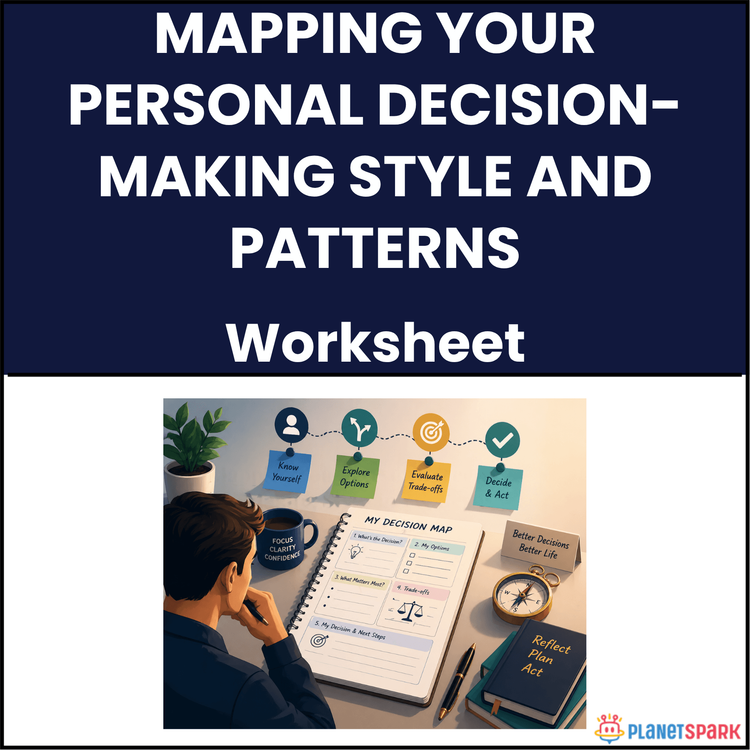
Mapping Your Personal Decision-Making Style and Patterns
Identifying Your Decision-Making Style and Habits: A Practical Worksheet for Better, Faster, and More Confident Choices
Every day, working professionals face decisions—some small, others career-defining. However, few ever take the time to reflect on how they make these decisions. Are you analytical, intuitive, consensus-driven, or directive in your decision-making? Understanding your personal style can transform your ability to make smarter, faster, and more confident decisions. This worksheet guides you through mapping your decision-making style and patterns, so you can leverage your strengths and identify areas for improvement.
Whether you're navigating career pivots, leading teams, or making high-stakes choices, this resource helps you build self-awareness and gives you the tools to make decisions with clarity and confidence.
Who Is This Resource For?
This resource is ideal for:
- Career Changers: Those making decisions about new job opportunities, skill-building, or career direction.
- Consultants: Professionals making complex decisions for clients and need clarity in high-pressure situations.
- Managers: Leaders who need to make decisions for their teams and projects, balancing speed with accuracy.
- Early-Mid Career Professionals: Individuals looking to fine-tune their decision-making to enhance their leadership and management capabilities.
- Decision-Makers Seeking Growth: Anyone looking to improve their decision-making process by gaining a better understanding of their personal style and how it impacts outcomes.
What Does This Resource Contain?
This worksheet is designed to help you analyze and improve your decision-making by:
- Understanding Your Core Decision-Making Styles: Identify whether you are primarily analytical, intuitive, consensus-driven, or directive.
- Mapping Your Decision-Making Patterns: Analyze how you gather information, weigh options, and commit to decisions.
- The Decision Context Matrix: Learn how your style matches different decision contexts and where flexibility is needed.
- Cognitive Bias Awareness: Recognize the biases that influence your decision-making and how to manage them.
- Real-World Application: A case study that demonstrates the practical application of this framework.
- Actionable Steps: A detailed upgrade plan to help you improve your decision-making process.
Summary of the Resource
This worksheet offers a structured process for understanding and improving your decision-making:
- Identify your decision-making style: Recognize your primary and secondary styles, as well as any stress-trigger styles.
- Map your decision-making patterns: Understand how you gather information, evaluate options, and commit to actions.
- Assess decision contexts: Use the Decision Context Matrix to determine which style best fits different decision scenarios.
- Manage cognitive biases: Learn how to identify and correct biases that influence your choices.
- Build an upgrade plan: Create a personalized plan to refine your decision-making, including new checkpoints and decision logs.
By the end of this resource, you'll be equipped to make decisions more efficiently, reduce overthinking, and trust your judgment.
How Will This Resource Be Useful?
Using this worksheet will help you:
- Increase self-awareness: Understand your default decision-making patterns and how they impact your choices.
- Make better decisions faster: By understanding your style and biases, you can streamline your decision-making process.
- Improve consistency: Make decisions that align with your long-term goals, rather than being swayed by stress or emotion.
- Enhance leadership skills: As you recognize your decision-making patterns, you’ll be better equipped to lead others in making high-quality decisions.
How Should You Use This Resource?
- Step 1: Complete the self-audit: Reflect on your natural tendencies when making decisions and identify your primary decision-making style (analytical, intuitive, consensus, or directive).
- Step 2: Map your decision-making patterns: Evaluate how you gather information, weigh criteria, and commit to actions. This will highlight areas where your style could be underperforming.
- Step 3: Use the Decision Context Matrix: Analyze the types of decisions you face and assess how well your decision-making style aligns with each context.
- Step 4: Identify cognitive biases: Recognize biases like confirmation bias or sunk cost fallacy that may distort your judgment.
- Step 5: Develop an upgrade plan: Build a concrete plan to address the gaps in your decision-making style and install checkpoints to improve future decisions.
Action Steps
1. Complete the self-audit: Identify your decision-making style by answering reflection prompts in Section 1.
2. Map your decision-making patterns: Review your past decisions and categorize them according to the three layers—information gathering, evaluation, and commitment.
3. Use the Decision Context Matrix: Rate how your style fits various decision contexts, and identify where you need to adapt.
4. Conduct a bias audit: Reflect on past decisions to recognize which biases most influence your choices and apply the corrective actions.
5. Create your decision-making upgrade plan: Set a goal to address your biggest decision-making gap and commit to one new habit or checkpoint.
Book your free session today!