
Meeting Communication Framework

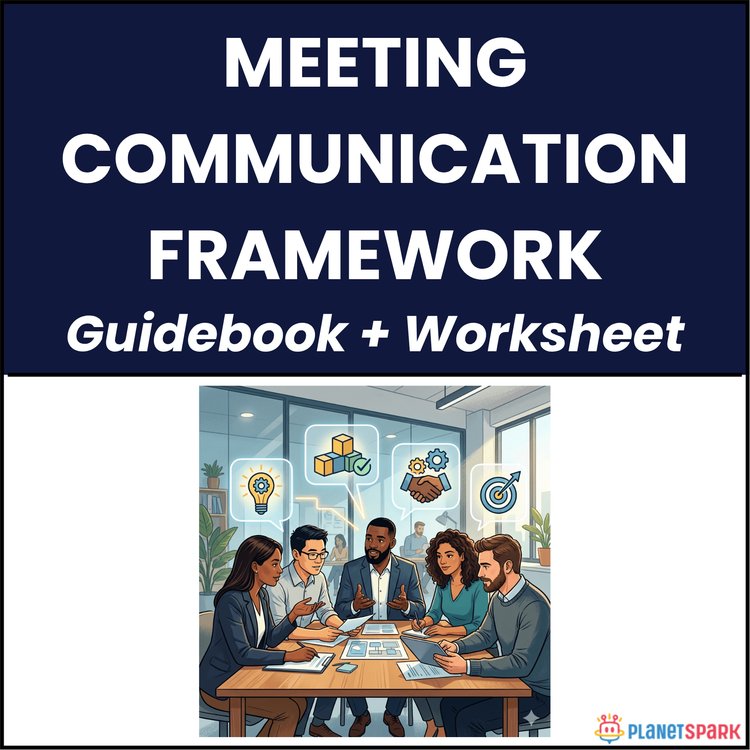
Meeting Communication Framework
Run Better Meetings with a Practical Framework to Improve Meeting Productivity, Clarity, and Outcomes
If your calendar is full but your progress feels slow, meetings are likely part of the problem.
Most working professionals spend a significant portion of their week in meetings—yet walk out of them with unclear decisions, vague next steps, and a sense that nothing really moved forward. Conversations drift, the same topics resurface repeatedly, and accountability is often missing.
The issue isn’t the number of meetings. It’s how they’re run.
That’s exactly why the resource “The Meeting Communication Framework” exists. It’s a practical, structured guide designed to help professionals run meetings that actually drive clarity, alignment, and action—without wasting time.
Instead of generic advice, this guide gives you a clear system to prepare, facilitate, and follow through on meetings with confidence and consistency.
Who Is This Resource For?
This resource is especially valuable if you are:
- A working professional with 0–15 years of experience
- A team lead or manager responsible for running meetings
- A consultant or client-facing professional handling discussions and calls
- Someone frustrated with unproductive or repetitive meetings
- A professional who wants to communicate more clearly and influence outcomes
- Anyone looking to build a strong reputation for execution and leadership
If you’ve ever thought “this meeting could have been an email” or “we didn’t actually decide anything,” this guide is built for you.
What Does This Resource Contain?
This is not just a guide—it’s a complete meeting system you can apply immediately.
Inside the resource, you’ll find:
- A three-phase Meeting Communication Framework: Before, During, and After the meeting
- A structured approach to defining meeting purpose, outcomes, and attendees
- A Meeting Agenda Builder worksheet to design focused, question-driven agendas
- A real-time Facilitator Checklist to guide conversations and manage time effectively
- Practical language frameworks for handling conflict, redirection, and decision-making
- Techniques to read the room and manage meeting dynamics
- A Meeting Minutes template to ensure clarity and accountability after every meeting
- The CRAFT framework for assigning clear, trackable action items
- A breakdown of different meeting types (status, decision, brainstorming, alignment, retrospective)
- Guidance for communicating with senior stakeholders effectively
- Best practices for virtual and hybrid meetings
- A self-evaluation tool to assess your current meeting effectiveness
- A reflection journal to improve through deliberate practice
- A 30-day structured plan to build consistent meeting habits
- Real-world case study showing measurable improvements in team performance
Everything is designed to be practical, repeatable, and easy to implement in real work scenarios.
Summary of the Resource
“The Meeting Communication Framework” is a step-by-step system that helps you transform meetings from time-consuming conversations into structured, outcome-driven discussions.
It teaches you how to prepare with clarity, facilitate with focus, and follow through with accountability—so every meeting leads to real progress.
If you want to spend less time in meetings but get more value from them, this resource gives you a clear path.
How Will This Resource Be Useful?
This guide helps you move from passive participation to intentional leadership in meetings.
You’ll gain:
- Clear structure for planning and running meetings
- Confidence in facilitating discussions without losing control
- Better decision-making and alignment within teams
- Stronger accountability and follow-through on action items
- Reduced meeting time with improved outcomes
- Increased professional credibility and leadership presence
Most importantly, it helps you stop attending meetings that go nowhere—and start leading conversations that drive results.
How Should You Use This Resource?
To get the best results, follow a phased approach aligned with the framework:
Start by reading the guide end-to-end to understand the three-phase model. This gives you a clear mental structure for all meetings.
Next, begin applying the “Before the Meeting” tools. Use the Agenda Builder worksheet to define purpose, outcomes, and structure before every important meeting.
During meetings, use the Facilitator Checklist and language frameworks to guide conversations, manage time, and ensure decisions are clearly made.
After meetings, apply the Meeting Minutes template and CRAFT framework to document outcomes and assign actionable next steps.
Finally, use the self-evaluation and reflection journal regularly to identify improvement areas and build long-term communication habits.
This resource is most effective when used repeatedly—not just read once.
Action Steps
After accessing this resource, take these steps immediately:
1. Identify your next important meeting
2. Use the Agenda Builder to define purpose and structure
3. Limit attendees to only essential participants
4. Open the meeting with a clear intent and outcome statement
5. Capture and confirm decisions during the meeting
6. Send meeting notes within 24 hours with clear action owners and deadlines
7. Complete the self-evaluation to identify your top improvement areas
Even small changes in how you run one meeting can significantly improve team productivity and clarity.
Meetings don’t have to be draining, repetitive, or unproductive. When designed and led well, they become one of the most powerful tools for alignment, decision-making, and execution.
This framework gives you everything you need to make that shift—from scattered conversations to structured outcomes.
Start small, stay consistent, and focus on progress over perfection. Over time, you’ll not only run better meetings—you’ll build a reputation as someone who gets things done.
Book your free session today!