
Moving From Planning to Action Without Delay

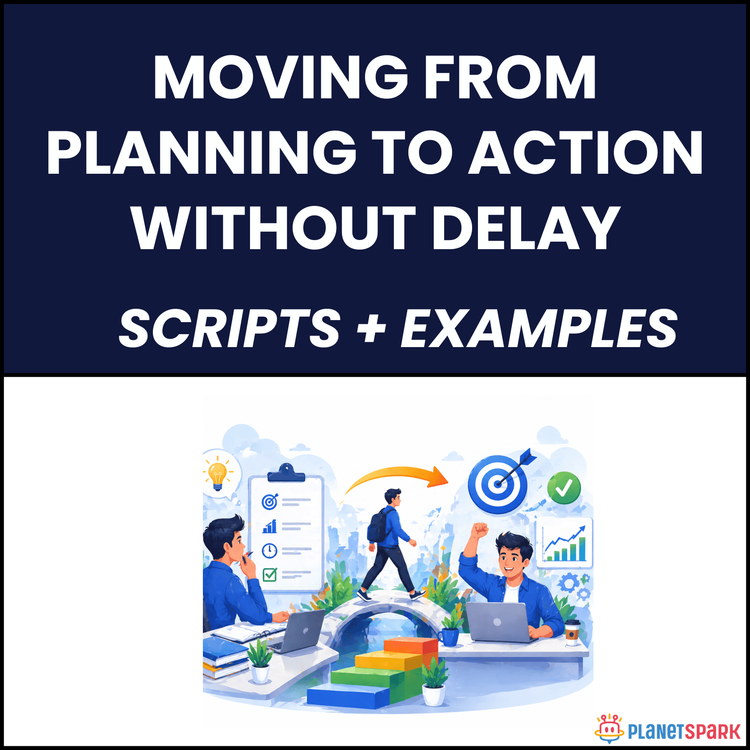
Moving From Planning to Action Without Delay
Move From Planning to Action Without Delay: Overcome Procrastination and Start Executing Today
We’ve all been there: a mountain of research, a well-organized to-do list, a fancy spreadsheet — but no progress. The gap between planning and action is one of the biggest challenges professionals face. It’s easy to get stuck in the cycle of over-planning and endless preparation, but nothing beats execution. If you find yourself spending more time planning than doing, it’s time to shift from inaction to execution. This guide will provide you with a practical playbook to help you move from planning to action with confidence, eliminate procrastination, and start delivering results today.
Who Is This Resource For?
This resource is designed for:
- Working professionals (0–15 years of experience) who are ready to stop over-planning and start executing
- Career switchers struggling to take the first step in a new field
- Managers, consultants, and team leaders who need to break free from perfectionism and create faster results
- Anyone feeling overwhelmed by too many options and unable to take the first step
What Does This Resource Contain?
This playbook helps you eliminate procrastination and move from planning to action by providing you with:
- A step-by-step approach to identifying the cause of your delay
- Proven frameworks to simplify your first actions and overcome inertia
- Scripts to push through hesitation and build accountability
- Time-blocking and accountability techniques to ensure you stay on track
- Real-world examples to help you apply these methods immediately
Summary of the Resource
This guide is focused on helping you move beyond analysis paralysis and turn your plans into action. By understanding the blockers holding you back (whether unclear outcomes, fear of failure, or too many options), you’ll learn how to break them down into simple, manageable steps. Using time-blocking and scripts for commitment, permission, and reframing, you’ll start executing right away — even on projects that feel daunting. The goal is to shift from over-planning to productive execution, ensuring you make real progress toward your goals.
How Will This Resource Be Useful?
By applying the steps in this playbook, you will:
- Identify your specific blockers and address them head-on
- Break down large tasks into small, manageable actions that you can complete right now
- Use pre-written scripts to eliminate hesitation and gain clarity
- Build better habits around execution and reduce procrastination
- Increase your productivity and get more done in less time
How Should You Use This Resource?
Step 1: Diagnose Your Delay
- Before you take action, you need to understand why you’re stuck. Delay is rarely caused by laziness — it’s usually rooted in unclear outcomes, fear of failure, or an overwhelming number of options.
- Identify which of the following blockers applies to your current task:
- Unclear Outcome: You don’t know exactly what “done” looks like.
- Fear of Failure: You’re afraid of making mistakes.
- Option Overload: You have too many choices and are stuck in decision fatigue.
- Reflect on how each of these factors might be contributing to your delay.
Step 2: Clarify Outcomes and Set a Finish Line
- Define what "done" looks like for the task at hand. Make it clear, specific, and measurable. Break the task into smaller components and set deadlines for each.
- Create a clear finish line that allows you to stop procrastinating and start executing. Step 3: Use Scripts to Push Through Hesitation
- When you feel hesitation, use these scripts to move yourself forward:
- "I will focus on making progress, not perfection."
- "This is good enough for now; I can refine it later."
- "The first step is the hardest, but once I begin, I will gain momentum."
- These scripts will help you eliminate excuses and focus on what needs to be done.
Step 4: Time-Box Your Actions
- Assign a fixed time period for each task or sub-task. For example, if you're writing a report, set a timer for 30 minutes to focus on writing the introduction, and then take a break.
- Time-boxing prevents perfectionism and ensures you're making steady progress without overthinking or overworking.
Step 5: Commit to Immediate Action
- After you identify the next step, commit to starting it within the next 15 minutes. Small, actionable tasks will help you build momentum and prevent procrastination from setting in.
Action Steps
- Diagnose your delay by identifying which blocker applies to your current task.
- Clarify what "done" looks like for the task and break it into smaller, manageable steps.
- Use pre-written scripts to overcome hesitation and push yourself to start.
- Time-box your tasks and commit to focusing on one task at a time.
- Take immediate action by committing to start the next task within 15 minutes.
The key to moving from planning to action without delay is understanding the barriers holding you back and addressing them head-on. By clarifying your outcomes, breaking tasks into manageable steps, and committing to small actions, you’ll quickly build momentum and reduce procrastination. Apply the strategies in this guide, and you’ll start making real progress toward your goals, faster and more confidently.