
Offer Comparison Matrix

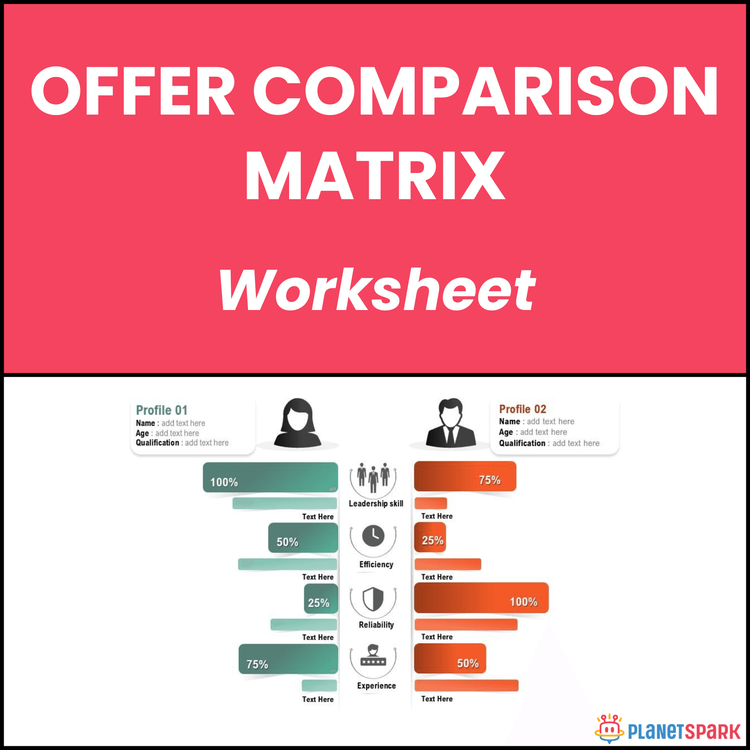
Offer Comparison Matrix
Offer Comparison Matrix: The Practical Framework to Evaluate Job Offers and Make Confident Career Decisions
Reaching the job offer stage is exciting. After weeks of applications, interviews, and follow-ups, you finally have one or more offers on the table. But this moment—often seen as the finish line—is actually one of the most critical decision points in your career.
Many professionals evaluate job offers quickly and emotionally. They scan the offer letter, focus on the salary number, and make a decision within hours. Later, they realise that other factors—growth opportunities, role scope, work culture, or management style—were far more important to long-term satisfaction.
The Offer Comparison Matrix was created to solve this exact problem. It provides a structured worksheet that allows professionals to compare multiple offers objectively, score them across meaningful criteria, and make a decision that aligns with both career goals and personal priorities.
Instead of guessing which opportunity is better, this framework helps you evaluate offers systematically and confidently.
Who Is This Resource For?
The Offer Comparison Matrix is designed for professionals who want to make thoughtful, strategic career decisions rather than reactive ones.
This resource is especially valuable for:
• Career switchers evaluating opportunities across industries
• Early-to-mid career professionals comparing multiple job offers
• Consultants and managers making high-stakes career moves
• Professionals who want clarity before accepting or negotiating an offer
• Anyone who wants to avoid accepting the wrong job due to incomplete evaluation
If you have ever felt unsure about choosing between offers—or worried about making the wrong decision—this worksheet provides a structured way to think through your options.
What Does This Resource Contain?
The Offer Comparison Matrix is not just a spreadsheet. It is a step-by-step framework that guides you through evaluating job offers using both data and reflection.
Clarity on Non-Negotiables
Before comparing offers, the worksheet prompts you to define your dealbreakers. These might include minimum salary, location preferences, work arrangement, role seniority, or industry alignment. Identifying these criteria ensures that unsuitable offers are eliminated early.
Information Gathering Framework
The resource provides a structured checklist to collect complete information about each offer. This includes compensation breakdown, role scope, growth opportunities, team structure, and workplace culture.
Weighted Scoring Matrix
At the core of the worksheet is a scoring system that allows you to compare offers objectively. Each offer is scored across criteria such as compensation, role scope, growth potential, culture fit, flexibility, and benefits.
These scores are multiplied by weights based on personal priorities. For example, compensation might be weighted at 25%, while career growth or role ownership could account for another 20% each. This weighted system ensures that your final decision reflects what actually matters to you.
Structured Scoring Guidelines
To maintain consistency, the worksheet includes scoring anchors for each criterion. For example, a high score for compensation might represent a salary significantly above your target range, while lower scores reflect offers that barely meet minimum expectations.
Decision Validation Tests
Numbers alone cannot capture every factor involved in career decisions. The worksheet therefore includes several reflection tests such as the Cover Test, Sunday Evening Test, Advisor Test, and a three-year career projection exercise.
These prompts help professionals validate whether their analytical decision aligns with their instincts and long-term goals.
Negotiation Preparation Tool
Once the best offer is identified, the matrix also helps you identify negotiation opportunities. By examining the lowest-scoring criteria, you can structure specific, data-backed requests to improve the offer.
Summary of the Resource
The Offer Comparison Matrix is a practical decision-making toolkit designed to help professionals evaluate job offers with clarity and confidence.
Instead of relying on instinct alone, the worksheet helps you:
• Define your career priorities before evaluating offers
• Gather complete and comparable information across opportunities
• Score offers objectively using weighted criteria
• Validate your decision using reflection exercises
• Identify negotiation opportunities based on data
By combining structured analysis with thoughtful reflection, this framework ensures that your final decision is intentional rather than impulsive.
How Will This Resource Be Useful?
This resource provides several practical benefits for professionals navigating job offers.
Better Decision Clarity
By defining non-negotiables and priorities in advance, you avoid comparing offers purely on headline salary or brand prestige.
Objective Offer Comparison
The weighted scoring matrix eliminates emotional bias and helps you evaluate offers consistently across multiple criteria.
Reduced Decision Anxiety
Having a structured framework reduces the stress of choosing between opportunities. Instead of second-guessing yourself, you can rely on a clear evaluation process.
Stronger Negotiation Position
The matrix reveals exactly where an offer falls short relative to your priorities, giving you a clear basis for negotiation.
Long-Term Career Alignment
By incorporating reflection exercises and future projections, the worksheet ensures that your decision supports your career trajectory rather than just short-term gains.
How Should You Use This Resource?
To get the most value from the Offer Comparison Matrix, follow the structured process built into the worksheet.
Step 1: Define Your Non-Negotiables
Before comparing offers, write down your dealbreakers. These may include minimum salary, preferred work arrangement, role level, or industry fit.
Step 2: Gather Complete Information
Collect detailed information about each offer, including compensation breakdown, role scope, team structure, growth opportunities, and workplace flexibility.
Step 3: Assign Weights to Each Criterion
Determine how important each factor is to you. For example, compensation might carry a 25% weight, while growth potential or role ownership could account for 20%.
Step 4: Score Each Offer
Rate each offer on a scale of 1 to 10 for every criterion. Multiply the scores by their respective weights to generate a total score.
Step 5: Run the Decision Checks
Use the worksheet's reflection exercises—such as imagining your first week at each company or seeking advice from a trusted mentor—to validate your choice.
Step 6: Negotiate Before Finalising
Once you identify the leading offer, use your analysis to negotiate improvements in areas where the offer scored lower.
Following this process ensures that your decision is based on thoughtful evaluation rather than pressure or uncertainty. :contentReference[oaicite:2]{index=2}
Action Steps
If you want to start using the Offer Comparison Matrix immediately, follow these steps:
1. Download the worksheet and list all current job offers you are evaluating.
2. Write down your non-negotiables and eliminate offers that do not meet them.
3. Gather complete information about each offer before comparing them.
4. Assign weights to the criteria based on your priorities.
5. Score each offer objectively and calculate the weighted totals.
6. Run the reflection tests to validate your decision.
7. Negotiate improvements where necessary before accepting an offer.
These steps transform a stressful career decision into a structured and confident process.
Making the right career move is rarely about choosing the offer with the biggest salary. The best decisions come from understanding your priorities, evaluating opportunities carefully, and recognising the trade-offs each option presents.
The Offer Comparison Matrix provides the structure needed to make that decision with clarity. By combining analytical scoring with thoughtful reflection, it helps professionals choose roles that support long-term growth, satisfaction, and career momentum.