
Professional Email Writing Guide

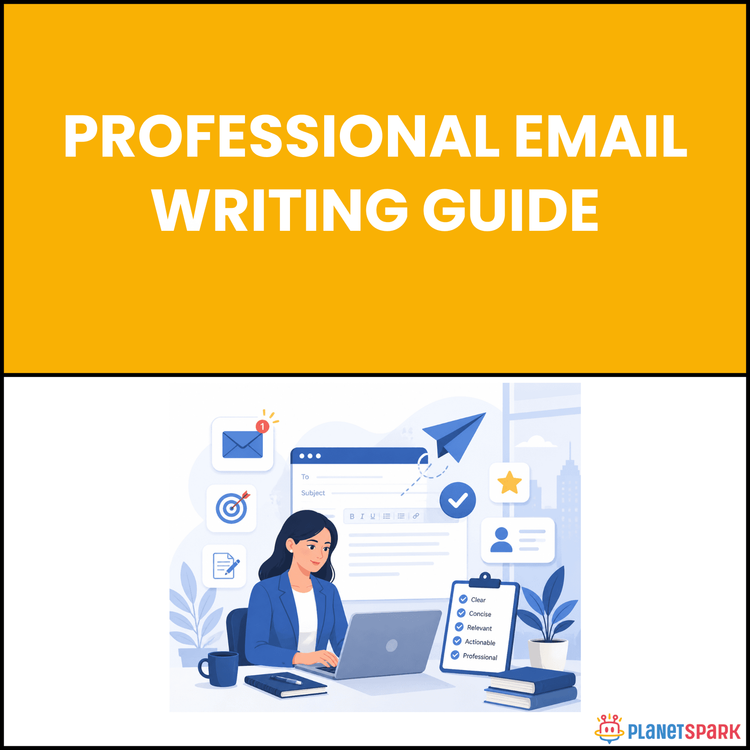
Professional Email Writing Guide
The Complete Guide to Writing Professional Emails: How to Write Emails That Get Read, Get Responses, and Build Your Professional Reputation
If you’ve ever sent an important email and waited… and waited… only to get no response, you’re not alone. For most working professionals, email is the primary mode of communication—yet very few have ever been taught how to use it effectively.
The result? Missed opportunities, delayed decisions, unclear communication, and a subtle but real impact on how others perceive your professionalism.
This is exactly the problem the Professional Email Writing Guide is designed to solve. It gives you a structured, practical system to write emails that are clear, concise, and action-driven—so you get faster responses and stronger professional credibility.
Who Is This Resource For?
This guide is especially valuable for:
- Job seekers who want to stand out in recruiter and hiring manager communication
- Career switchers looking to build credibility in a new industry
- Consultants and freelancers managing client communication
- Managers and team leads driving alignment, approvals, and decisions
- Early to mid-career professionals who rely heavily on email for daily work
- Anyone who feels their emails are ignored, misunderstood, or ineffective
If your role depends on influencing people, getting responses, or making decisions through email, this resource is directly relevant to you.
What Does This Resource Contain?
This is not a theoretical guide—it’s a complete playbook with actionable frameworks, templates, and tools you can apply immediately.
Here’s what you’ll find inside:
- The Anatomy of a High-Impact Email
A clear breakdown of the five essential components: subject line, opening, body, tone, and call to action
- Subject Line Framework (PACT Formula)
Learn how to write subject lines that get opened and drive action
- Strong Opening Techniques
Replace generic, ineffective openings with direct, purpose-driven first lines
- Email Body Structuring (BLUF Method)
Organize your message for clarity and fast scanning
- Call-to-Action (CTA) Formula
Write clear, specific asks with deadlines that actually get responses
- Tone Mastery Toolkit
Learn how to sound confident, professional, and respectful without being aggressive or passive
- Email Type Playbook
Frameworks for common scenarios like outreach, follow-ups, approvals, conflict, and updates
- Ready-to-Use Templates
Pre-built email templates you can copy, customize, and send
- Pre-Send Checklist
A 60-second quality check to avoid mistakes and improve clarity
- Reflection Worksheet
Analyze your past emails and identify immediate areas for improvement
- Real-World Case Study
See how a poorly written email was transformed into one that got a response in 2 hours
- Advanced Frameworks (CLEAR, Email Intelligence Matrix)
Handle difficult conversations and tailor emails based on audience and context
Summary of the Resource
At its core, this guide helps you do one thing extremely well: communicate clearly and get results through email.
Instead of guessing what works, you get proven frameworks that show you:
- What to say
- How to structure it
- How to make it easy for others to respond
- How to maintain a professional tone in any situation
It transforms email writing from a reactive task into a strategic skill.
How Will This Resource Be Useful?
The impact of improving your email writing goes far beyond better communication. It directly affects your professional outcomes.
Here’s what you can expect:
- Faster responses and fewer follow-ups
- Clearer communication with less back-and-forth
- Stronger professional credibility and trust
- Better decision-making speed within teams
- Increased influence without needing more meetings
- Reduced misunderstandings and conflicts
- More confidence in high-stakes communication
A well-written email can open doors, accelerate approvals, and position you as someone who is clear, competent, and reliable.
How Should You Use This Resource?
To get the most value from this guide, use it actively—not passively.
Here’s a simple approach:
1. Start with a quick read-through
Skim the full guide to understand the overall structure and key principles
2. Focus on your biggest gap
Identify whether your weakness is subject lines, clarity, tone, or CTAs
3. Apply immediately
Use the frameworks in your next real email instead of waiting to “master” them
4. Use templates as shortcuts
Copy, personalize, and send—don’t overcomplicate
5. Run every important email through the checklist
This alone can dramatically improve your effectiveness
6. Revisit regularly
Keep the guide accessible and refer to it before high-stakes communication
7. Audit your past emails
Use the reflection worksheet to identify patterns and improve quickly
This resource is designed to fit into your workflow, not add to your workload.
Action Steps
If you want to see immediate results, start here:
1. Open your last 3–5 sent emails
2. Check if each has:
- A clear subject line
- A direct opening
- One clear purpose
- A specific CTA with a deadline
3. Rewrite one email using the frameworks from this guide
4. Use one ready-made template for your next email
5. Apply the pre-send checklist before hitting send
These small actions can significantly improve your response rates within days.
The difference between an ignored email and a responded one is rarely about the idea—it’s about how clearly and confidently you communicate it. This guide gives you the exact tools to make that shift.
Your next opportunity, approval, or conversation might depend on a single email. Make sure it works in your favor.