
Professional Resilience Reflection Worksheet

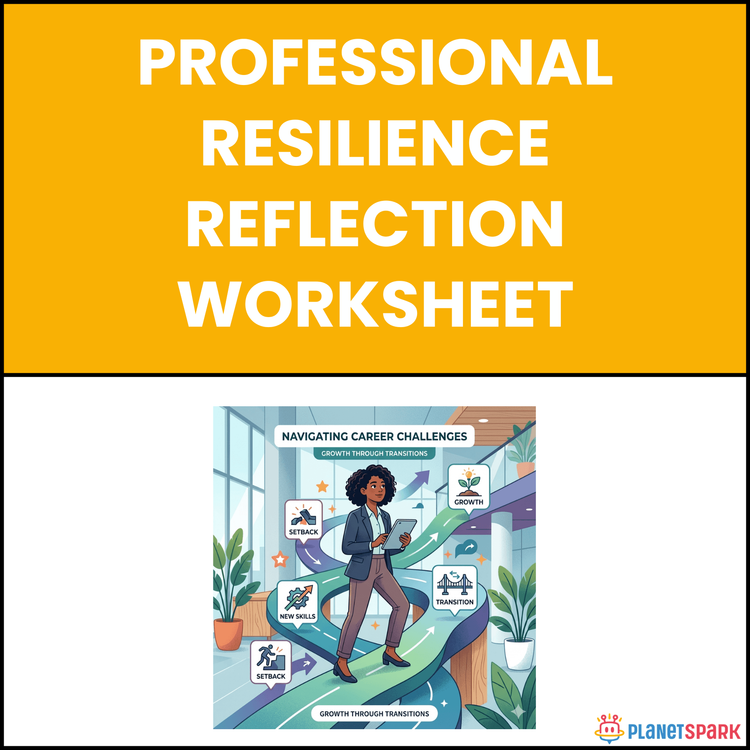
Professional Resilience Reflection Worksheet
How to Build Professional Resilience and Bounce Back Stronger: A Complete Reflection Worksheet Guide
In today’s unpredictable professional landscape, setbacks are not the exception—they are the norm. Missed promotions, high-pressure deadlines, difficult stakeholders, or unexpected career pivots are all part of modern work life.
What separates professionals who grow from those who feel stuck is not talent or experience. It is resilience—the ability to process challenges, recover with clarity, and move forward with intention.
The Professional Resilience Reflection Worksheet is designed to help you build that ability in a structured, repeatable way. Instead of reacting emotionally or inconsistently to challenges, this resource helps you understand your patterns, strengthen your response, and develop resilience as a core professional skill.
Who Is This Resource For?
This worksheet is ideal for:
- Working professionals navigating high-pressure environments
- Career switchers dealing with uncertainty or setbacks
- Managers and leaders handling complex team challenges
- Consultants and freelancers facing inconsistent outcomes
- Early to mid-career professionals building mental and emotional strength
- Anyone who wants to respond to setbacks with clarity instead of stress
If you often feel overwhelmed, self-critical, or unsure how to “bounce back” effectively, this resource will give you a practical system to improve.
What Does This Resource Contain?
This worksheet is structured into six powerful modules, each focusing on a different aspect of resilience:
1. Understanding Your Resilience Baseline
Helps you assess your current resilience level through:
- Stress response awareness
- Pattern recognition of default behaviors
- Self-assessment across five dimensions:
- Emotional regulation
- Cognitive flexibility
- Social support activation
- Purpose anchoring
- Recovery rituals
2. The Resilience Autopsy
A structured framework to analyze setbacks without blame:
- What happened
- How you responded
- What it cost you
- What you gained
This transforms difficult experiences into learning tools.
3. Before, During & After Response Map
A full-cycle resilience model that helps you:
- Prepare before challenges
- Stay regulated during pressure
- Recover effectively afterward
4. Building Your Resilience Architecture
A system to create sustainable resilience through:
- Daily habits
- Support networks
- Meaning anchors
- Reframe tools
5. Real-World Case Study
A practical example showing how a professional moved from reactive behavior to intentional recovery and growth.
6. 30-Day Resilience Micro-Plan
A simple but powerful framework to:
- Build consistent habits
- Strengthen recovery speed
- Turn reflection into action
Summary of the Resource
This worksheet helps you shift from reactive to intentional behavior by:
- Identifying how you currently respond to stress
- Breaking down past setbacks into actionable insights
- Creating systems to handle future challenges better
- Building small, consistent habits that strengthen resilience over time
It turns resilience from an abstract concept into a practical, trainable skill.
How Will This Resource Be Useful?
Using this worksheet regularly can significantly improve how you handle professional challenges:
- Faster Recovery: You bounce back more quickly from setbacks
- Emotional Clarity: You understand your reactions instead of being controlled by them
- Better Decision-Making: You respond thoughtfully instead of reacting impulsively
- Stronger Confidence: You trust your ability to handle difficult situations
- Improved Communication: You can articulate your resilience in interviews and reviews
- Sustainable Performance: You maintain energy and focus even under pressure
Over time, this builds a reputation of reliability and composure—qualities highly valued in any role.
How Should You Use This Resource?
To get the most value, follow this structured approach:
Step 1: Start With Self-Awareness
Complete the resilience baseline assessment honestly. This is your starting point.
Step 2: Reflect on a Real Setback
Use the Resilience Autopsy on a recent professional challenge. Be specific and honest.
Step 3: Map Your Behavior Patterns
Analyze how you typically prepare, respond, and recover in high-pressure situations.
Step 4: Build Your Resilience System
Define:
- One daily habit
- One support person
- One mindset shift (reframe tool)
Step 5: Commit to Small Actions
Use the 30-day micro-plan to create consistent habits that strengthen resilience.
Step 6: Reuse the Framework
Apply the same tools after every major challenge. Over time, patterns will shift.
Action Steps
If you want to start immediately, here are your next steps:
1. Reflect on your most recent stressful work situation
2. Identify your default reaction pattern (avoidance, overwork, overthinking, etc.)
3. Complete a Resilience Autopsy for that situation
4. Identify your two lowest resilience dimensions
5. Choose one small action to improve each dimension
6. Schedule a weekly 10-minute reflection session
7. Reach out to one person in your support network this week
8. Reframe one current challenge into a learning opportunity
These small, consistent actions will begin to shift how you respond to pressure.
Resilience is not about enduring more stress—it is about responding better to it. The professionals who grow consistently are not those who avoid challenges, but those who learn how to navigate them with clarity, structure, and intention.
When you build resilience deliberately, every setback becomes a source of strength, every challenge becomes data, and every experience contributes to a more confident, capable version of you.
Book your free session today!
https://www.planetspark.in/parents/c/start_v235?lp_type=181&utm_source=resources&utm_source_info=ps_resources/working-professionals/reflection-worksheet-on-professional-resilience-reflection-worksheet&utm_medium=ps_resources_tanvi_sharma_tas#card1