
Thinking System Optimization Guide

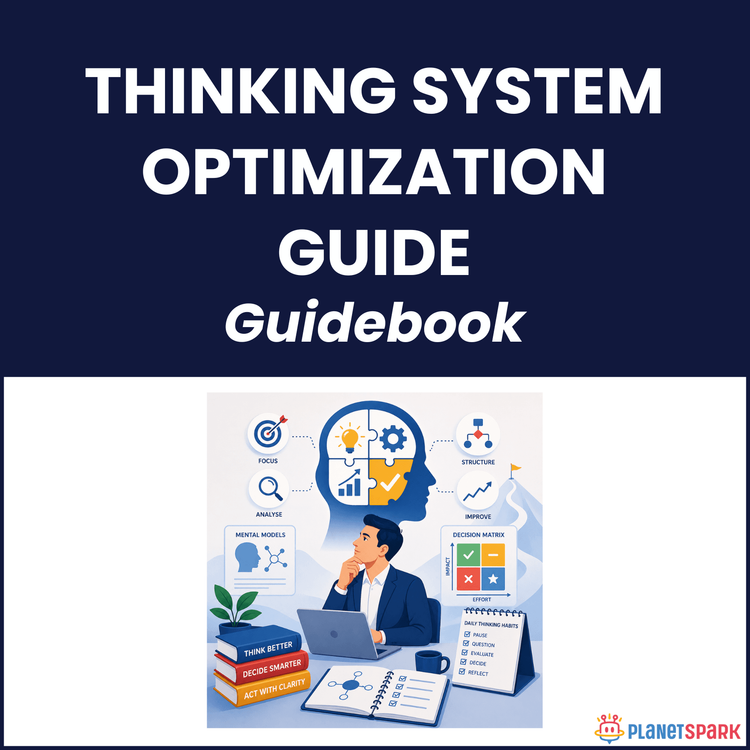
Thinking System Optimization Guide
Thinking System Optimization Guide: Build a Structured Thinking System for Better Decisions and Productivity
Most professionals rely on scattered, reactive thinking to get through their workday. One moment you’re solving a problem, the next you’re switching contexts, making quick decisions, and handling new inputs—all without a clear system. Over time, this leads to mental fatigue, inconsistent decisions, and reduced productivity. The Thinking System Optimization Guide is designed to help you fix this by building a structured, repeatable thinking system that improves clarity, focus, and outcomes.
Who Is This Resource For?
- Professionals managing multiple tasks and responsibilities
- Managers and team leads making frequent decisions
- Knowledge workers who rely heavily on thinking and analysis
- Consultants and analysts solving complex problems
- Anyone looking to improve focus, clarity, and productivity
What Does This Resource Contain?
- Frameworks to structure your thinking process
- Models to break down complex information into manageable parts
- Techniques to reduce cognitive overload and improve focus
- Systems for organizing thoughts, decisions, and priorities
- Reflection exercises to continuously refine your thinking approach
Summary of the Resource
The Thinking System Optimization Guide provides a practical approach to building a structured thinking system that helps you process information efficiently, make better decisions, and work with greater consistency.
How Will This Resource Be Useful?
- Reduces mental clutter and improves clarity
- Helps you think more systematically and logically
- Improves decision quality and consistency
- Enhances productivity by minimizing wasted effort
- Builds a repeatable system you can rely on across different situations
How Should You Use This Resource?
1. Start by assessing your current thinking habits and challenges
2. Identify areas where your thinking feels unstructured or inconsistent
3. Apply the frameworks provided to organize your thoughts
4. Build simple, repeatable systems for decision-making and problem-solving
5. Use reflection exercises to evaluate what’s working and what needs improvement
6. Continuously refine your thinking system as your responsibilities grow
Action Steps
- Identify one area where your thinking feels unclear or overwhelming
- Apply a structured framework from the guide to that area
- Create a simple system to organize your thoughts and decisions
- Test this system over a few days or weeks
- Refine based on what improves clarity and efficiency
Better outcomes start with better thinking systems. When you organize how you think, you improve how you work, decide, and perform. Over time, this creates a strong competitive advantage in any professional role.
Book your free session today!
```