
Skill Clustering Mind-Map Sheet

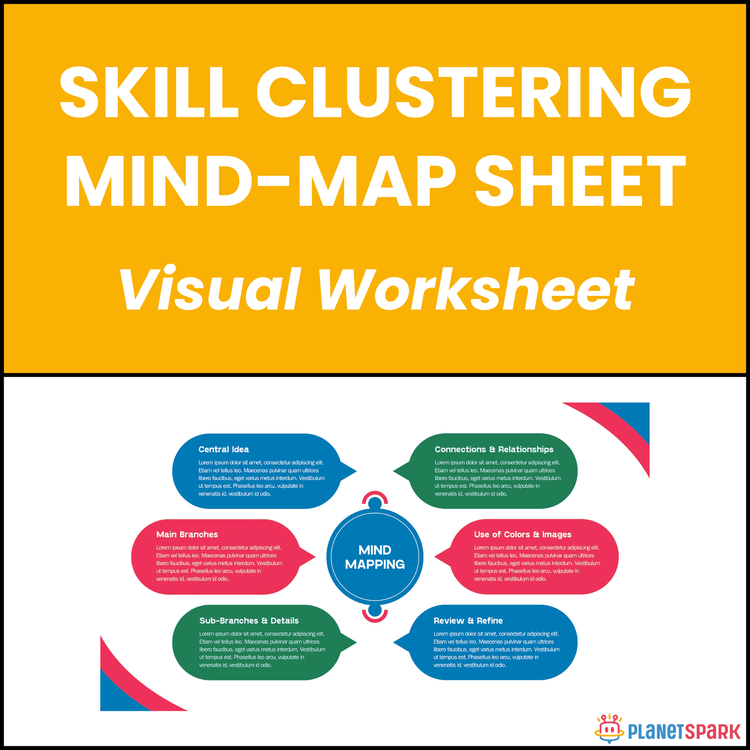
Skill Clustering Mind-Map Sheet
Skill Clustering Mind-Map Sheet: A Practical Guide to Organising Your Skills for Career Growth and Clarity
Most professionals don’t struggle because they lack skills. They struggle because they can’t clearly see, organise, or communicate what they already bring to the table.
You might have years of experience—handling projects, collaborating with teams, solving problems—but when it comes to interviews, career pivots, or positioning yourself for the next opportunity, everything feels scattered.
This is exactly the gap the Skill Clustering Mind-Map Sheet is designed to solve.
Instead of asking you to list your skills (which most people already do), this resource helps you structure, visualise, and strategically use them—so your career decisions feel intentional, not accidental.
Who Is This Resource For?
This worksheet is particularly valuable for:
- Working professionals with 0–15 years of experience looking for clarity in their career direction
- Career switchers who want to reposition their existing skills instead of starting from scratch
- Managers and consultants who need to articulate their value clearly
- Job seekers preparing for interviews, resume updates, or LinkedIn optimisation
- Professionals feeling “stuck” despite having experience but lacking a clear narrative
If you’ve ever thought, “I know I have skills, but I don’t know how to present them,” this resource is built for you.
What Does This Resource Contain?
The Skill Clustering Mind-Map Sheet is structured into practical modules that guide you step-by-step:
1. Brain Dump Exercise
You start by listing all your skills—technical, behavioural, and contextual—using prompts that help uncover hidden strengths.
2. The Five Cluster Zones Framework
A structured system to group your skills into five meaningful categories:
- Technical & Domain Skills
- Interpersonal & Communication
- Strategic & Analytical
- Execution & Delivery
- Leadership & Growth
3. Mind-Map Creation Guide
A visual method to organise your skills into a central map, helping you see patterns, overlaps, and strengths clearly.
4. Cluster Strength Evaluation
A scoring system to identify:
- Strong zones (5+ skills)
- Developing zones (3–4 skills)
- Gap zones (1–2 skills)
- Blind spots (0 skills)
5. Skill Narrative Framework
A formula to convert your internal skill map into a powerful external story for interviews, resumes, and LinkedIn.
6. Real-World Case Example
A practical example (Priya’s career pivot) showing how skill clustering enabled a successful transition into product management.
7. 30-Day Action Plan
A structured roadmap to move from insight to real career outcomes.
8. Self-Evaluation Sheet
A deeper assessment tool to rate your skill proficiency and identify high-impact development areas.
Summary of the Resource
This is not just a worksheet—it’s a career clarity tool.
In one focused session (15–20 minutes), you will:
- Map all your skills visually
- Group them into meaningful clusters
- Identify strengths and gaps
- Build a compelling career narrative
- Create a clear action plan for the next 30 days
Instead of guessing your next move, you start making informed, strategic decisions.
How Will This Resource Be Useful?
The real value of this resource lies in what it unlocks:
Clarity
You stop seeing your experience as random tasks and start recognising structured capability zones.
Confidence
When you understand your strengths, you communicate them better—in interviews, reviews, and networking conversations.
Better Career Decisions
You can clearly identify which skills to build and which ones to leverage.
Stronger Personal Branding
Your LinkedIn, resume, and conversations become sharper and more intentional.
Faster Career Progression
Instead of trying to “learn everything,” you focus on high-impact gaps aligned with your goals.
As highlighted in the resource, “clusters tell better stories than lists”—and that shift alone can transform how others perceive your value. :contentReference[oaicite:2]{index=2}
How Should You Use This Resource?
To get the most out of this worksheet, follow a structured approach:
Step 1: Do a Complete Brain Dump
List at least 20 skills without filtering. Focus on volume, not perfection.
Step 2: Cluster Your Skills
Use the Five Cluster Zones Framework to group your skills meaningfully.
Step 3: Build Your Mind-Map
Create a visual representation with yourself at the center and skill clusters branching outward.
Step 4: Evaluate Your Clusters
Identify your strong zones, developing areas, and gaps.
Step 5: Write Your Skill Narrative
Translate your map into a one-sentence story:
- What you’re known for
- What makes you versatile
- Where you’re growing
Step 6: Apply It Immediately
Update your LinkedIn, resume, or pitch using your new narrative.
Step 7: Revisit Regularly
Treat this as a living document—review it every 6 months as your career evolves.
Action Steps
If you’re starting today, here’s exactly what to do:
1. Block 20 minutes for uninterrupted focus
2. Complete your skill brain dump
3. Create your first mind-map (messy is fine)
4. Identify your strongest and weakest zones
5. Write your one-line skill narrative
6. Update one real asset (LinkedIn headline or resume summary)
7. Choose one gap skill to start improving this month
These small actions compound quickly—and create visible career momentum.
You don’t need a completely new skill set to move forward in your career. Most of the time, you need a clearer way to organise, understand, and communicate what you already have.
This resource gives you exactly that structure.
When you can clearly see your strengths, articulate your value, and act on your gaps, your career stops feeling uncertain—and starts becoming intentional.