
Handling Underperformance Framework

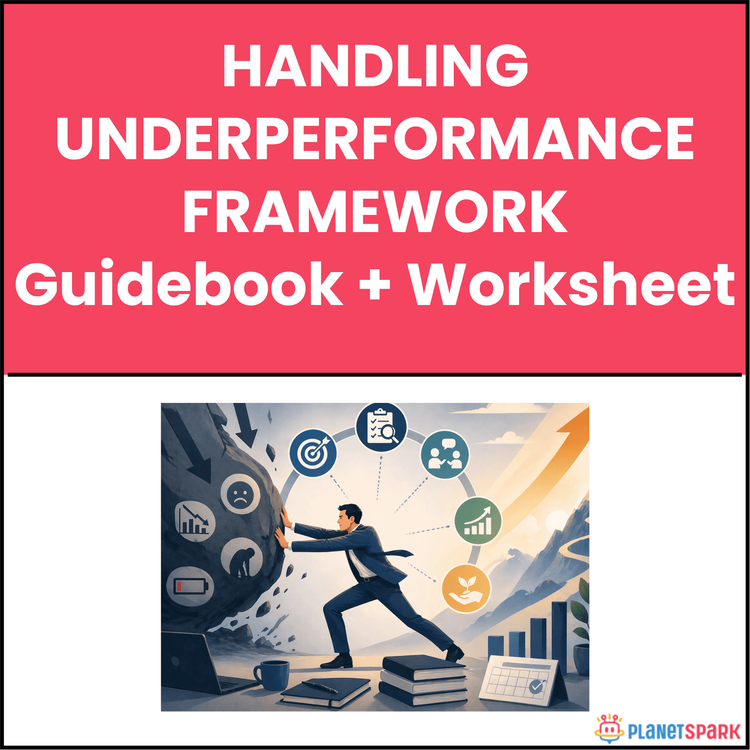
Handling Underperformance Framework
Handling Underperformance at Work and A Practical Framework for Managers and Team Leads.
Underperformance is one of the most uncomfortable challenges in any professional setting. You see the gap—missed deadlines, inconsistent quality, low ownership—but addressing it feels difficult. Many managers either delay the conversation or handle it in a way that damages trust instead of improving performance.
If you’ve ever found yourself thinking, “I know something is off, but I’m not sure how to handle it without making things worse,” this is exactly where the Handling Underperformance Framework becomes valuable.
This resource is designed to help you move from avoidance or frustration to clarity, structure, and confident action.
Who Is This Resource For?
This framework is especially useful for:
- First-time managers unsure how to address performance issues
- Team leads managing individual contributors with varying performance levels
- Mid-level managers handling repeated underperformance in teams
- Professionals transitioning into leadership roles
- Anyone responsible for giving feedback, setting expectations, or driving results
If you’ve struggled with either being too lenient or too harsh, this framework helps you find the balance.
What Does This Resource Contain?
The framework breaks down underperformance into a structured, actionable process. Inside, you’ll find:
- A clear definition of what underperformance actually looks like in a work context
- Common root causes (skill gaps, unclear expectations, motivation issues, external factors)
- A step-by-step approach to diagnosing performance issues before reacting
- Conversation frameworks for addressing underperformance constructively
- Guidance on setting clear expectations and measurable outcomes
- Tools for documenting performance and tracking improvement
- Real-world scenarios to help you handle difficult conversations with confidence
- Practical tips to avoid common mistakes like assumptions, delayed feedback, or vague communication
Each section is designed to help you act with clarity rather than emotion.
Summary of the Resource
This framework helps you shift from “reacting to problems” to “managing performance proactively.”
It enables you to:
- Identify the real cause behind underperformance
- Have structured, respectful, and effective conversations
- Set clear expectations that are easy to follow and measure
- Support improvement while maintaining accountability
For busy professionals, it serves as a repeatable system you can apply across different team members and situations.
How Will This Resource Be Useful?
When used consistently, this framework helps you:
- Address performance issues early before they escalate
- Reduce stress around difficult conversations
- Build a culture of clarity, accountability, and fairness
- Improve individual and team performance outcomes
- Strengthen trust instead of damaging relationships
In practice, this means fewer unresolved issues and more productive, aligned teams.
Growth comes from within—but performance improves when clarity, feedback, and accountability are consistently applied.
How Should You Use This Resource?
To get the most value from this framework, approach it step by step:
Step 1: Diagnose Before You Act
Use the root cause analysis section to understand why the underperformance is happening.
Step 2: Prepare the Conversation
Review the conversation framework and plan your discussion with clarity and intention.
Step 3: Have a Structured Discussion
Focus on facts, examples, and expectations—avoid assumptions or emotional reactions.
Step 4: Set Clear Expectations
Define what improvement looks like, including timelines and measurable outcomes.
Step 5: Follow Up Consistently
Track progress, provide feedback, and reinforce accountability over time.
This is not a one-time fix—it’s an ongoing management practice.
Action Steps
Start applying the framework immediately with these steps:
1. Identify one team member or situation where performance is below expectations
2. Write down specific examples of the performance gap
3. Analyze possible root causes instead of assuming intent
4. Schedule a focused, one-on-one conversation
5. Define clear next steps and follow-up checkpoints
Consistent follow-through is what transforms conversations into real improvement.
Handling underperformance is not about confrontation—it’s about clarity, fairness, and responsibility. When done well, it not only improves results but also strengthens professional relationships.
The Handling Underperformance Framework gives you a practical, structured way to approach one of the toughest aspects of leadership. Use it regularly, refine your approach, and build a team culture where performance is actively supported, not silently ignored.
Book your free session today!