
Strategic Thinking For Managers Guide

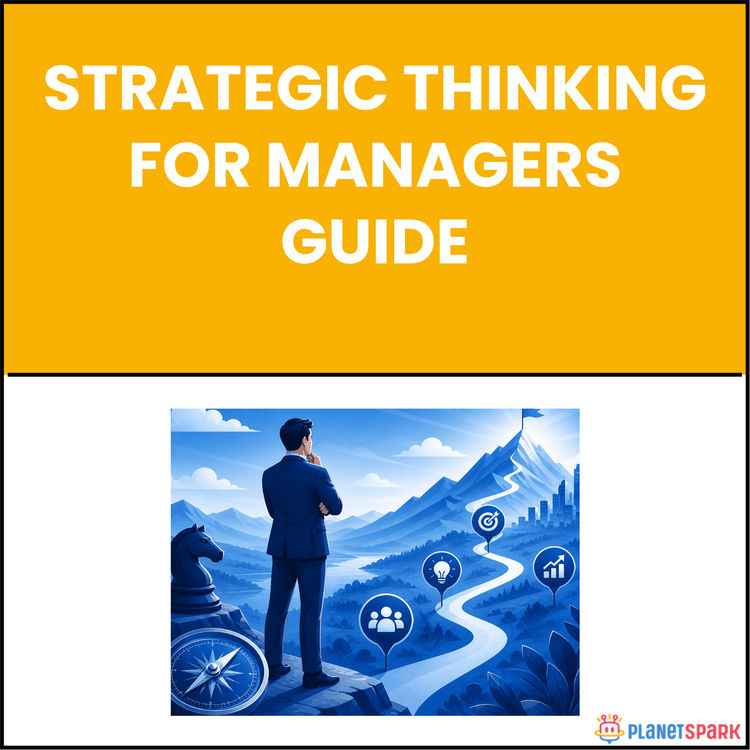
Strategic Thinking For Managers Guide
Strategic Thinking for Managers and A Practical Guide to Make Better Decisions and Drive Long-Term Impact
Many managers are excellent at execution—but struggle when it comes to thinking ahead. You’re managing deadlines, handling team issues, and delivering results, yet when it comes to long-term direction, prioritization, or big-picture decisions, things feel unclear or reactive.
This is a common gap. Strategic thinking isn’t something most professionals are formally taught—it’s something they’re expected to “just know.”
The Strategic Thinking for Managers Guide is designed to close that gap. It helps you move beyond day-to-day execution and start thinking, planning, and leading with intention.
Who Is This Resource For?
This guide is especially useful for:
- Managers transitioning from execution-focused roles to decision-making roles
- Team leads responsible for planning, prioritization, and resource allocation
- Mid-level professionals preparing for senior leadership positions
- Consultants and professionals who need to think beyond immediate tasks
- Anyone who feels stuck in reactive work instead of proactive leadership
If you often feel busy but not strategic, this guide will help you reset your approach.
What Does This Resource Contain?
The guide breaks strategic thinking into clear, actionable components. Inside, you’ll find:
- A simple explanation of what strategic thinking actually means in a professional context - Key principles that differentiate strategic managers from task-focused managers
- Frameworks for analyzing situations, identifying priorities, and making decisions
- Tools to evaluate trade-offs and focus on high-impact work
- Techniques for long-term planning without losing sight of short-term execution
- Reflection exercises to shift from reactive thinking to proactive thinking
- Real-world examples showing how strategic decisions are made in practice
Each section is designed to help you think more clearly, not just work harder.
Summary of the Resource
This guide helps you move from “doing the work” to “deciding what work matters.”
It enables you to:
- See the bigger picture beyond immediate tasks
- Prioritize effectively based on impact, not urgency
- Make more confident and informed decisions
- Align your team’s efforts with long-term goals
For time-poor managers, it acts as a practical playbook you can apply immediately.
How Will This Resource Be Useful?
When applied consistently, this guide helps you:
- Reduce reactive firefighting and increase proactive planning
- Improve decision quality and clarity
- Focus your time and energy on high-impact work
- Communicate direction more effectively to your team
- Build credibility as a thoughtful, forward-looking leader
Growth comes from within—but strategic growth requires clarity, perspective, and consistent practice.
How Should You Use This Resource?
To get the most value, approach the guide in a structured way:
Step 1: Understand the Core Concepts
Start by reading the key principles to shift your mindset from execution to strategy.
Step 2: Apply One Framework at a Time
Choose a framework (e.g., prioritization or decision-making) and apply it to a current work situation.
Step 3: Reflect on Your Current Work Style
Identify where you are being reactive and where you can think more proactively.
Step 4: Practice in Real Scenarios
Use your ongoing projects, meetings, and planning cycles as opportunities to apply strategic thinking.
Step 5: Revisit and Refine
Strategic thinking improves with repetition—return to the guide regularly to strengthen your approach.
Action Steps
Start building your strategic thinking skills today:
1. Identify one area of your work where you feel reactive
2. Write down the bigger goal or outcome behind that work
3. List 2–3 priorities that will create the highest impact
4. Evaluate trade-offs before taking action
5. Communicate your plan clearly to stakeholders or your team
Small shifts in thinking can lead to significant improvements in outcomes.
Strategic thinking is not about complexity—it’s about clarity, focus, and intentional decision-making. The Strategic Thinking for Managers Guide gives you a practical way to build this critical skill without overcomplicating your workflow.
Use it consistently, apply it in real situations, and gradually shift from being busy to being truly effective.
Book your free session today!