
Team Conflict Resolution Framework

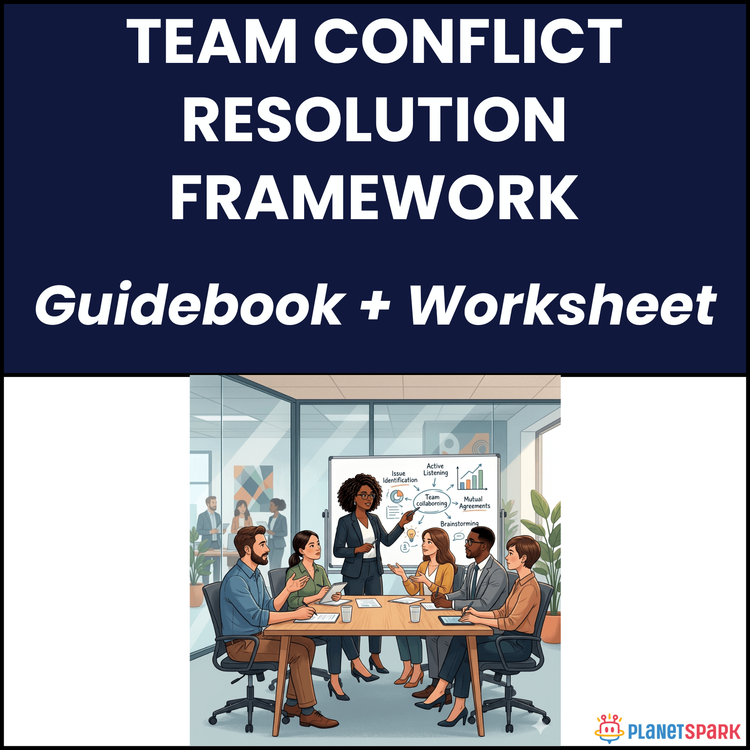
Team Conflict Resolution Framework
How to Resolve Workplace Conflict Effectively: A Practical Framework for Managers and Professionals
Conflict at work is inevitable—but mishandled conflict is optional.
Most professionals are never formally trained to deal with workplace disagreements. So when tension arises, the default response is often instinctive: avoid the conversation entirely, react emotionally in the moment, or push for a quick fix without fully understanding the problem. The result? Damaged relationships, stalled projects, and unresolved issues that quietly grow over time.
This is exactly the gap the “Team Conflict Resolution Framework” is designed to solve. It gives working professionals a clear, structured, and repeatable process to handle conflict with confidence, clarity, and control—whether you're in the middle of a tense situation or preparing for a difficult conversation.
If you’ve ever felt unsure about what to say, when to say it, or how to handle workplace conflict without making things worse, this resource gives you a practical way forward.
Who Is This Resource For?
This framework is especially useful if you are:
- A working professional with 0–15 years of experience
- A manager or team lead responsible for handling team dynamics
- A consultant balancing multiple stakeholder expectations
- A career switcher navigating new workplace environments
- Someone who avoids conflict or feels uncomfortable handling it
- A professional who wants to handle difficult conversations more confidently and effectively
If you want to move from reactive conflict handling to structured, confident resolution, this resource is built for you.
What Does This Resource Contain?
This is not a theoretical guide. It’s a practical system you can apply immediately in real workplace situations.
Inside the resource, you’ll find:
- A 5-phase Conflict Resolution Framework: Recognise, Pause, Diagnose, Resolve, Restore
- A detailed breakdown of different conflict types: task, relationship, process, and status
- Worksheet 1: Conflict Recognition Audit to identify triggers, patterns, and your role
- The Perspective Map tool to understand all viewpoints before taking action
- The Diagnostic Triad (positions, interests, fears) for deeper clarity
- The CLEAR Conversation Framework to structure resolution discussions
- A Resolution Agreement Template to formalise outcomes and ensure accountability
- A Conflict Resolution Master Checklist covering every phase of the process
- A practical phrase bank for handling difficult conversations with the right language
- A real-world case study showing how the framework works in action
- Common conflict resolution mistakes—and exactly how to fix them
- A self-assessment tool to understand your conflict style
- Advanced guidance for managers handling team conflicts
- A 30-day action plan to build conflict resolution skills consistently
Every section is designed for direct application—not passive reading.
Summary of the Resource
The “Team Conflict Resolution Framework” is a structured, step-by-step system that helps professionals move from confusion and emotional reactions to clarity and intentional action.
It walks you through the entire lifecycle of conflict—from identifying the issue early, to managing your response, to having productive conversations, and finally restoring trust and preventing recurrence.
If you want a repeatable process you can rely on in high-pressure situations, this resource delivers exactly that.
How Will This Resource Be Useful?
This framework helps you turn one of the most uncomfortable parts of work into a professional strength.
You’ll gain:
- Clarity on what’s actually causing conflict—not just surface-level symptoms
- Confidence in handling difficult conversations without escalation
- A structured approach instead of guessing what to do next
- Stronger relationships built on trust and transparency
- Better team alignment and collaboration
- Reduced stress when navigating tense situations
- The ability to resolve conflicts faster and more effectively
Most importantly, it helps you shift from reacting emotionally to responding strategically.
How Should You Use This Resource?
To get the most value, approach this resource in phases:
Start by reading through the entire framework once. This gives you a clear mental model of how conflict unfolds and how each phase connects.
Next, apply it to a real situation. Begin with the Conflict Recognition Audit to clearly define what’s happening instead of relying on assumptions.
Move into the Diagnose phase using the Perspective Map. This is where you build a full understanding of all parties involved before attempting to resolve anything.
Once you have clarity, use the CLEAR Conversation Framework to guide your discussion. Follow the structure closely—it keeps conversations productive and focused.
After the conversation, document outcomes using the Resolution Agreement Template. This ensures clarity and accountability.
Finally, don’t skip the Restore phase. Follow through on commitments, schedule a check-in, and address any structural issues that caused the conflict in the first place.
You can revisit this framework anytime you:
- Face a difficult conversation
- Notice tension within your team
- Manage disagreements between team members
- Want to improve your leadership and communication skills
Action Steps
After accessing this resource, take these steps immediately:
1. Identify one current or recent workplace conflict
2. Complete the Conflict Recognition Audit for that situation
3. Map perspectives using the Perspective Map tool
4. Schedule a structured conversation instead of delaying it
5. Use the CLEAR Framework to guide that discussion
6. Write down a clear agreement using the provided template
7. Schedule a 2-week follow-up check-in
Even applying this once can significantly improve how you handle conflict going forward.
Workplace conflict doesn’t go away on its own—it either gets resolved or it compounds. The difference lies in how you handle it.
When you approach conflict with structure, clarity, and intention, it stops being something you fear and becomes something you can manage—and even use—to strengthen relationships and outcomes.
This framework doesn’t just help you resolve conflict. It helps you build trust, improve communication, and grow as a professional who can handle complexity with confidence.
Book your free session today!