
Tracking AI-Assisted Output vs Manual Output Effectiveness

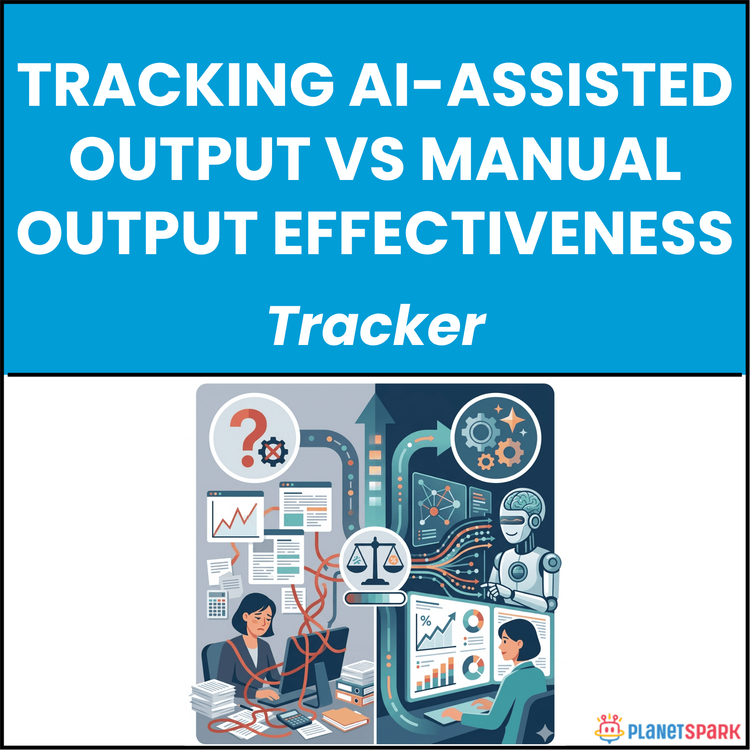
Tracking AI-Assisted Output vs Manual Output Effectiveness
Optimizing AI-Assisted vs Manual Output Effectiveness: A Comprehensive Guide for Working Professionals
As AI tools become increasingly integrated into everyday work, many professionals are turning to technology to boost efficiency, speed, and accuracy. However, most professionals use AI without a systematic method to track whether it truly improves their output. You may wonder: Is AI really making a difference in my work, or am I just relying on it out of habit? The answer often lies in the data—but without the right framework to track and compare AI-assisted work to manual efforts, the results are unclear.
This guide provides a practical template for tracking AI-assisted and manual output effectiveness, giving you the data-driven insights you need to optimize your use of AI. Whether you're drafting reports, analyzing data, or managing projects, this resource will help you make more informed decisions, reduce reliance on guesswork, and work smarter.
Who Is This Resource For?
This resource is perfect for professionals who are:
- Managers looking to assess how AI can optimize workflows and improve team productivity.
- Consultants evaluating AI tools for project delivery and wanting to measure their effectiveness.
- Career switchers or job seekers experimenting with AI to boost efficiency while refining new skills.
- Professionals across industries who want to make data-backed decisions about incorporating AI into their work routine.
If you use AI in your day-to-day work but aren’t sure whether it’s truly making a difference, this resource is for you.
What Does This Resource Contain?
This resource provides:
- A structured framework for measuring AI effectiveness, focusing on key dimensions such as output quality, time savings, cognitive load, revision cycles, and stakeholder reception.
- A 4-phase tracking process to compare AI-assisted vs manual output systematically.
- The Master Tracking Log: A practical weekly template for logging tasks, comparing performance, and identifying patterns over time.
- Pre-task decision checklist: A tool to help you decide whether AI or manual effort is the right choice for each task.
- The AI Effectiveness Matrix: A framework for mapping your tasks based on time savings and quality parity, helping you prioritize where to use AI most effectively.
- Real-world case studies and self-evaluation sheets to help you reflect on your progress and adjust your workflow accordingly.
With these tools, you’ll move beyond anecdotes and "gut feelings" to a data-driven approach to AI adoption.
Summary of the Resource
In just a few weeks, this resource will help you track the effectiveness of AI across multiple dimensions, guiding you to optimize your workflow. By comparing AI and manual outputs on quality, speed, cognitive load, revision cycles, and stakeholder reception, you'll build a clearer picture of where AI adds value and where manual effort still shines. The resource includes a 4-phase tracking framework, a practical log template, and an AI effectiveness matrix to help you make smarter, more informed decisions about when and how to use AI.
How Will This Resource Be Useful?
This resource will provide you with:
- Better decision-making: Track and compare AI vs manual output to know which tasks benefit most from AI assistance.
- Increased productivity: Identify the tasks where AI saves you time and focus on manual efforts where necessary.
- Optimized AI usage: Instead of guessing whether AI works for you, track its effectiveness and apply it strategically.
- Personalized insights: The data you collect will provide unique insights into how you work best, offering guidance to streamline your efforts and boost performance.
By the end of this process, you’ll have a clear, evidence-based approach to using AI and manual efforts, which will help you achieve better results faster.
How Should You Use This Resource?
To get the most out of this resource, follow these steps:
1. Read through the entire framework to understand the key dimensions you’ll be tracking and the process you’ll use to compare AI vs manual output.
2. Use the Pre-Task Decision Checklist before starting any significant task. This helps you choose whether AI or manual work is the best fit for the task at hand.
3. Start logging tasks in the Master Tracking Log. Record at least three tasks per week to build up your data. Don’t worry about perfection—consistency is key.
4. Apply the 4-Phase Tracking Framework to each task. Define your objectives, execute the task, evaluate the output, and make a decision on how to proceed next time.
5. Fill out the AI Effectiveness Matrix after a few weeks of tracking. This will help you visualize which tasks benefit most from AI assistance and where manual effort still provides the best results.
6. Conduct monthly self-evaluations. Reflect on your progress and use the insights to optimize your workflows and make better decisions moving forward.
Action Steps
1. Set up your Master Tracking Log. Start logging tasks and comparing AI vs manual efforts. Focus on the key dimensions: Quality, Time, and Revision Cycles.
2. Use the Pre-Task Checklist for every major task to help you decide whether to use AI or manual work.
3. Complete your first AI Effectiveness Matrix after two to three weeks of tracking. Use it to make data-driven decisions about when to use AI.
4. Review and refine your approach with the monthly self-evaluation sheet. This reflection will help you identify patterns and make smarter choices in the future.
5. Share insights with your team or manager. Use the data you’ve collected to demonstrate the value of AI and advocate for workflow improvements based on evidence.
AI is transforming the way we work, but to truly leverage its potential, we need to stop relying on assumptions and start making data-driven decisions. This resource provides you with the tools to measure and track AI effectiveness, helping you make smarter choices, optimize your workflows, and boost productivity. By tracking AI vs manual output, you'll gain the insights needed to navigate the evolving world of work with confidence and precision.