
Tracking Decision Confidence vs Outcome Accuracy

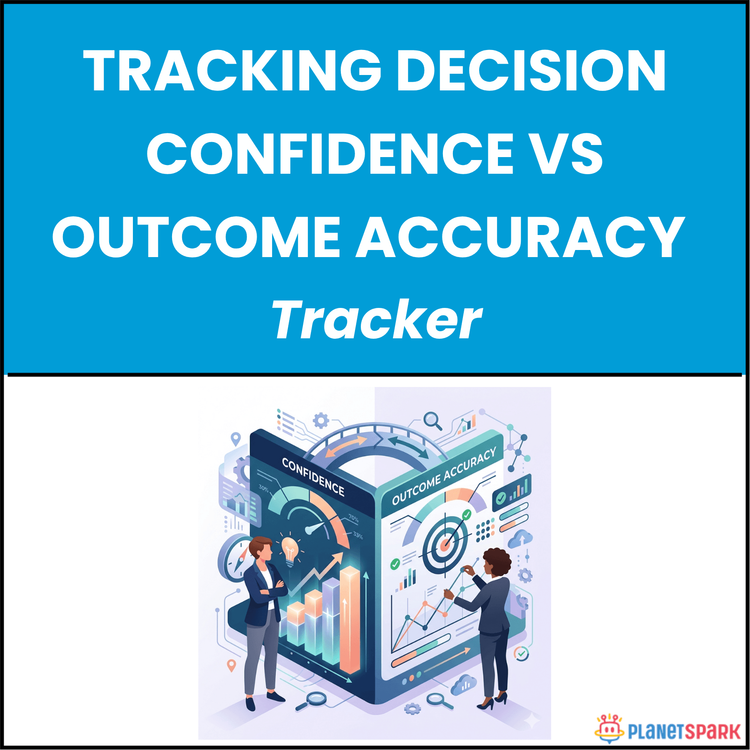
Tracking Decision Confidence vs Outcome Accuracy
Tracking Decision Confidence vs. Outcome Accuracy: A Practical Tracker for Sharper Decisions
In the fast-paced professional world, making decisions is a daily task. But while you may make countless decisions, the question remains: How confident are you in those decisions, and how accurate are they? Often, we feel confident about a choice, but the outcome doesn't align with our expectations. Conversely, we might feel uncertain, only to find that we were right. These gaps between confidence and accuracy are crucial to track for continuous growth.
“Tracking Decision Confidence vs. Outcome Accuracy” is a practical tracker designed to help working professionals calibrate their judgment and close the gap between how certain they feel and how right they actually are. By tracking both confidence and outcomes, you’ll uncover valuable insights that improve decision-making over time.
Who Is This Resource For?
This tracker is particularly valuable for:
- Career switchers who need to assess their decision-making in new fields
- Early to mid-career professionals making critical career and project decisions
- Consultants looking to refine their judgment and track how it aligns with outcomes
- Managers who want to understand how their decisions influence their teams and projects
This tool is designed for anyone who wants to make sharper decisions and understand their own judgment process.
What Does This Resource Contain?
The tracker offers a structured, simple method to log, assess, and refine decision-making:
1. The Confidence-Accuracy Gap Framework
Learn the core model that tracks decision confidence (how sure you feel at the time) and outcome accuracy (how closely your decision aligned with the intended result). This framework helps you understand the relationship between these two elements.
2. Decision Log Template
Log each decision in a simple format, noting your confidence level at the time and the key information you used. The goal is to capture the decision in the moment before hindsight bias alters your memory.
3. Outcome Rating
After the outcome is known, rate the decision’s accuracy. This step helps you separate luck from logic, ensuring you reflect honestly on your reasoning process.
4. Pattern Review
After tracking multiple decisions, look for patterns in your decision-making. Identify when you're overconfident, underconfident, or consistently accurate. These patterns help you adjust your decision-making process going forward.
5. Adjusting Your Decision-Making Defaults
Use the insights from your pattern review to make small, deliberate adjustments in your decision-making process. The goal is to create long-term behavioral shifts that make you a better, more calibrated decision-maker.
Summary of the Resource
This tracker provides:
- A framework for understanding and tracking decision confidence and accuracy
- A decision log template to capture your decisions and confidence at the time
- A method for scoring the outcome and identifying gaps between confidence and accuracy
- A pattern review process that helps you adjust your decision-making over time
- Actionable insights for improving your decision-making process
By using this tracker regularly, you’ll gain actionable insights into your decision-making habits and improve your judgment.
How Will This Resource Be Useful?
This tracker helps you:
- Calibrate your decision-making by comparing your confidence levels with your actual outcomes.
- Identify overconfidence or underconfidence in different decision domains.
- Track patterns to improve both the quality of your decisions and your self-awareness.
- Refine your decision-making process by adjusting your confidence levels to match reality, allowing for more accurate judgments in the future.
By consistently applying this tracker, you will develop a deeper understanding of your decision-making strengths and areas for growth, making your decisions sharper and more aligned with successful outcomes.
How Should You Use This Resource?
Here’s how to get started with the tracker:
1. Log your decisions regularly using the Decision Log Template. Capture both your confidence and the key information used to make the decision.
2. After the outcome is clear, rate the outcome using the same 1–10 scale. Be honest and avoid attributing success to luck or failure to external factors.
3. Every 4–6 weeks, review your patterns by analyzing your entries. Identify where you’re overconfident or underconfident and adjust your decision-making approach accordingly.
4. Set a personal goal to adjust one behavioral shift based on your findings. Commit to tracking it for 30 days to see if it improves your calibration.
Action Steps
Here’s what to do immediately:
1. Choose a format for logging your decisions—whether digital or paper—and set it up today.
2. Log your most recent decision as a practice entry, even if it’s a small one, and rate your confidence and outcome after the result.
3. Set a calendar reminder to review your patterns and track your progress every 4–6 weeks.
This toolkit gives you the structure to do exactly that.
Over time, the shift is powerful: less hesitation, faster execution, stronger confidence, and better decisions.
Book your free session today!