
Tracking Energy Recovery Effectiveness Across Different Activities

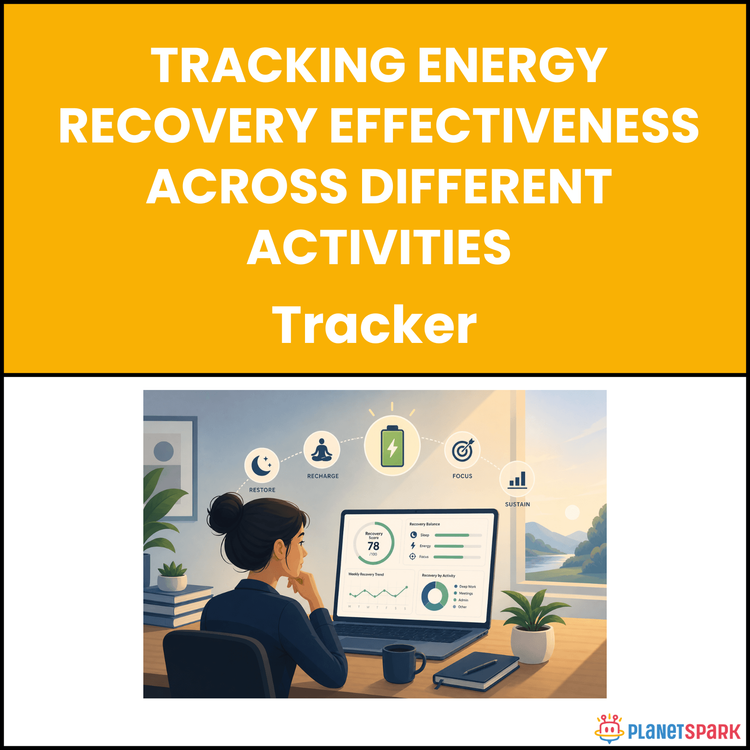
Tracking Energy Recovery Effectiveness Across Different Activities
Track Energy Recovery Effectiveness: A Practical System for Sustainable Performance at Work
If you end most workdays feeling drained—even after taking breaks—you’re not alone. Most professionals believe they’re “resting,” but still struggle with low energy, poor focus, and inconsistent performance.
The real issue isn’t a lack of effort. It’s ineffective recovery.
You might scroll through your phone, watch videos, or take long breaks—but still feel mentally exhausted. That’s because not all recovery activities actually restore your energy. Some simply pause the work without recharging you.
That’s exactly why the resource “Tracking Energy Recovery Effectiveness Across Different Activities” exists. It helps you move beyond guesswork and understand, with clarity, what actually restores your energy—and what silently drains it.
Who Is This Resource For?
This resource is especially valuable if you are:
- A working professional with 0–15 years of experience
- Someone who feels consistently tired despite taking breaks
- A manager or consultant handling high cognitive load and frequent context switching
- A professional experiencing mid-day slumps or end-of-week burnout
- Someone trying to improve productivity without working longer hours
- Anyone who wants to build sustainable energy—not just push through fatigue
If you feel like you’re doing everything “right” but still running on empty, this guide is built for you.
What Does This Resource Contain?
This is not generic advice about rest or productivity. It’s a structured, data-driven system to help you measure and optimise your energy recovery.
Inside the resource, you’ll find:
- A clear explanation of why recovery—not effort—drives performance
- The concept of energy as a renewable resource that must be actively restored
- The Three Energy Dimensions framework:
- Physical Energy (body and stamina)
- Mental Energy (focus and cognitive clarity)
- Emotional Energy (resilience and engagement)
- A Baseline Energy Audit system to track your energy across:
- Morning
- Midday
- End of day
- A Daily Energy Log worksheet to identify patterns over time
- An Activity-by-Activity Recovery Rating System (1–5 scale across all energy types)
- A structured method to evaluate which recovery activities actually work
- The Recovery Effectiveness Matrix to identify:
- High-impact, low-time recovery activities
- Hidden energy drains disguised as rest
- A step-by-step system to build your Personalised Recovery Protocol:
- Micro-Recovery (2–5 minutes)
- Short Recovery (10–20 minutes)
- Deep Recovery (45–90 minutes)
- Strategic Recovery (multi-day resets)
- A real-world case study showing how small recovery changes improved performance
- Weekly reflection prompts to deepen awareness
- A recovery effectiveness checklist to track consistency
- Common mistakes that prevent true recovery (like confusing distraction with rest)
- A final framework to continuously refine your energy system
Everything is designed to help you apply insights immediately—not just understand them.
Summary of the Resource
“Tracking Energy Recovery Effectiveness Across Different Activities” is a practical toolkit that helps you understand how your energy actually works—and how to restore it effectively.
Instead of relying on assumptions, it enables you to:
- Measure your energy across multiple dimensions
- Identify which activities truly recharge you
- Eliminate habits that feel like rest but drain you
- Build a personalised recovery system that fits your lifestyle
If you want consistent performance without burnout, this resource gives you a clear, structured path.
How Will This Resource Be Useful?
This resource helps you move from passive recovery to intentional energy management.
You’ll gain:
- Clear visibility into your physical, mental, and emotional energy levels
- Data-driven insights into what actually restores your energy
- The ability to eliminate ineffective “pseudo-rest” habits
- Better focus and productivity throughout the day
- Reduced burnout and mid-week fatigue
- A personalised system for sustained performance
Most importantly, it helps you stop guessing—and start making informed decisions about how you recover.
How Should You Use This Resource?
To get the best results, follow a structured approach:
Start by reading the full guide once to understand the core concepts—especially the three energy dimensions.
Next, begin tracking your baseline:
- Log your energy levels in the morning, midday, and evening
- Do this consistently for at least five working days
- Focus on identifying patterns, not perfection
Then move into activity tracking:
- Record different recovery activities you naturally use
- Rate each activity across physical, mental, and emotional energy
- Wait 20–30 minutes before rating to ensure accuracy
After collecting enough data:
- Use the Recovery Effectiveness Matrix to identify high-impact activities
- Eliminate low-value, energy-draining habits
Finally, build your recovery protocol:
- Define your go-to micro, short, and deep recovery activities
- Match them to different situations in your workday
- Review weekly and refine based on real results
This is a living system—not a one-time exercise.
Action Steps
After accessing this resource, take these steps immediately:
1. Block 20 minutes to understand the three energy dimensions
2. Start your 5-day baseline energy tracking
3. Log your energy at morning, midday, and end of day
4. Track at least 3 recovery activities in your first week
5. Rate each activity honestly across all three dimensions
6. Identify one activity that is not actually helping your recovery
7. Replace it with a higher-impact alternative
8. Protect at least one 10–20 minute recovery window daily
Small adjustments here can significantly improve your daily performance and long-term wellbeing.
Most professionals think productivity is about managing time better. But in reality, it’s about managing energy more effectively.
When you understand what truly restores you—and build your workday around it—you stop relying on willpower and start operating at your best, consistently.
Use this resource to build a recovery system that works for you. Because sustainable success doesn’t come from pushing harder—it comes from recovering smarter.
Book your free session today!