
Tracking Opportunities During Active Career Transitions

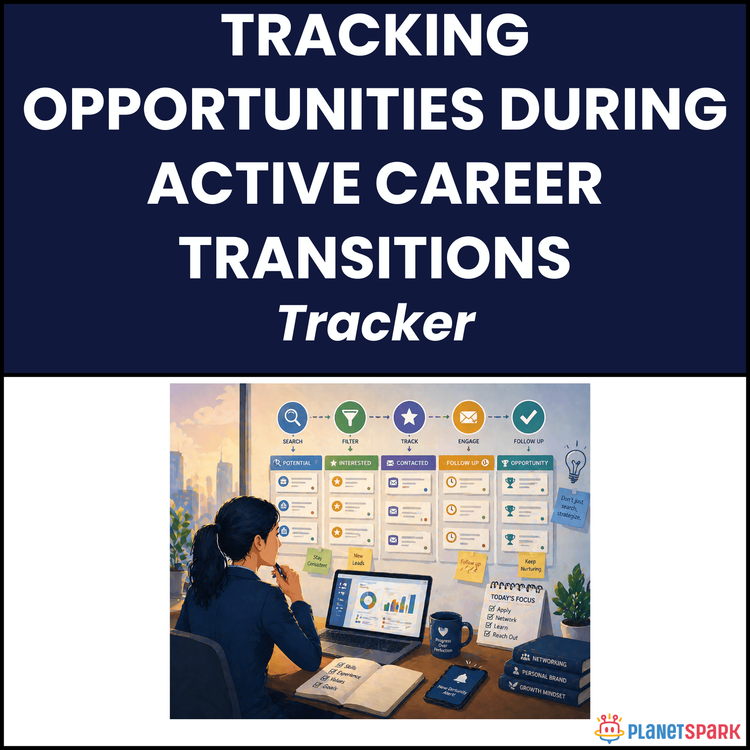
Tracking Opportunities During Active Career Transitions
Managing Opportunities During Career Transitions: A Practical System to Stay Organized, Focused, and in Control
If you’ve ever applied to multiple roles, lost track of follow-ups, forgotten recruiter conversations, or felt overwhelmed by scattered opportunities—you’re not alone.
Most professionals don’t struggle because they aren’t trying hard enough. They struggle because they don’t have a system.
A career transition—whether you're switching roles, industries, or career paths—is not just a phase. It’s a project. And like any project, it needs structure, visibility, and consistent execution.
That’s exactly where this resource comes in. It gives you a clear, practical system to track, evaluate, and act on opportunities—so you move with clarity, not chaos.
Who Is This Resource For?
This resource is specifically designed for working professionals who are actively navigating change in their careers. It is most useful for:
- Early to mid-career professionals (0–15 years of experience)
- Career switchers exploring new industries or roles
- Job seekers actively applying and interviewing
- Consultants and freelancers evaluating multiple opportunities
- Managers looking for structured, strategic career moves
If you are currently applying to jobs, exploring options, or feeling overwhelmed by your search process—this resource is built for you.
What Does This Resource Contain?
This is not just a checklist or template. It’s a complete playbook that helps you manage your job search end-to-end.
Here’s what you’ll find inside:
1. A Structured Opportunity Tracking System
A comprehensive “Master Tracker” template that helps you log every opportunity in one place, including role details, source, status, next actions, and fit score.
2. Target Profile Framework
Guidance to define what a “good opportunity” looks like for you—based on role, industry, company type, compensation, and career goals.
3. Opportunity Sources Matrix
A breakdown of different channels (job boards, referrals, recruiters, outreach, events) and how to use them effectively.
4. Fit Assessment Framework
A scoring system based on five dimensions—role alignment, skills match, company fit, growth potential, and instinct—to help you apply only to high-quality opportunities.
5. Weekly Pipeline Health Check
A simple 20-minute weekly review system to track progress, identify gaps, and maintain momentum.
6. Actionable Transition Checklist (6 Weeks)
A structured, week-by-week roadmap covering everything from profile updates and networking to applications and follow-ups.
7. Close-Out Review System
Reflection prompts to analyze each opportunity—whether successful or not—so your search improves over time.
8. Monthly Self-Evaluation Worksheet
A tool to assess your pipeline quality, activity levels, mindset, and strategic direction.
9. Real-World Case Study
A practical example showing how a professional successfully transitioned careers using this system.
Summary of the Resource
At its core, this resource gives you a repeatable system to manage your entire job search.
Instead of juggling opportunities in your head or scattered notes, you’ll have:
- A single source of truth for all opportunities
- A structured way to evaluate and prioritize roles
- A consistent rhythm for tracking progress and taking action
- A feedback loop to improve your approach over time
The result is a more focused, strategic, and less stressful career transition.
How Will This Resource Be Useful?
This resource delivers tangible, real-world benefits that directly impact your job search outcomes:
- Reduces overwhelm by organizing everything in one place
- Improves decision-making through structured evaluation
- Increases interview conversion by focusing on high-fit roles
- Prevents missed opportunities with clear tracking and follow-ups
- Builds consistency through weekly review systems
- Strengthens your network through intentional outreach
- Helps you learn from every opportunity, not just outcomes
Most importantly, it shifts your approach from reactive to strategic.
Instead of chasing opportunities randomly, you start managing them deliberately.
How Should You Use This Resource?
To get the most value, treat this as a working system—not a one-time read.
Follow this approach:
Step 1: Read the Resource Once End-to-End
Understand how all parts of the system connect before you start using it.
Step 2: Define Your Target Profile
Spend focused time identifying your non-negotiables, preferences, and deal-breakers.
Step 3: Set Up Your Master Tracker
Create your tracker using Excel, Google Sheets, Notion, or Airtable with the recommended fields.
Step 4: Start Logging Opportunities Immediately
Every opportunity—job posting, referral, recruiter message—should be recorded within 24 hours.
Step 5: Apply the Fit Scoring System
Only pursue roles that meet your quality threshold. This will improve outcomes significantly.
Step 6: Run Weekly Reviews
Block 20 minutes every week to review your pipeline, track progress, and identify gaps.
Step 7: Reflect and Refine
Use the close-out reviews and monthly worksheet to continuously improve your strategy.
Consistency is what makes this system powerful.
Action Steps
If you want to start immediately, follow these steps today:
1. Write down your target role profile (30 minutes max)
2. Create your opportunity tracker using the provided structure
3. Log all current opportunities you’re already considering
4. Close or follow up on any stalled opportunities
5. Identify at least 3 different channels to source opportunities
6. Reach out to 2–3 people in your network this week
7. Schedule your first weekly review session in your calendar
These actions will move you from scattered effort to structured progress.
Career transitions are rarely difficult because of a lack of opportunities. They become difficult when those opportunities are unstructured, unmanaged, and overwhelming.
This resource gives you clarity, structure, and control over your search.
Use it consistently. Treat it like a system, not a document. And remember—progress isn’t just measured in offers, but in the clarity and direction you build along the way.
Book your free session today!