
Tracking System Efficiency Across Different Life Areas

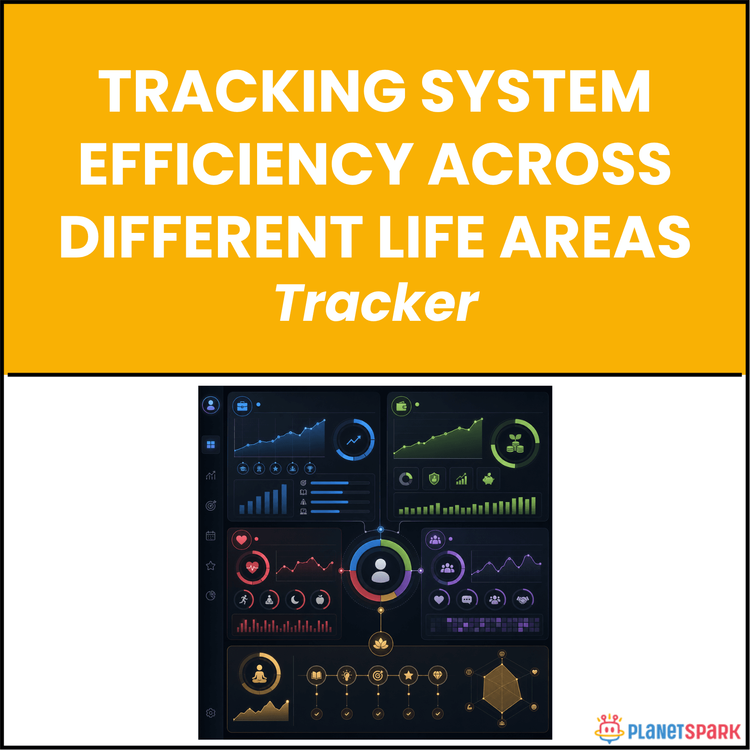
Tracking System Efficiency Across Different Life Areas
Tracking System Efficiency Across Different Life Areas: A Practical Guide for Working Professionals
Most working professionals are tracking something.
A productivity app. A finance spreadsheet. A habit tracker. A fitness dashboard. A reading list. A calendar packed with reminders.
But despite all this tracking, many professionals still feel overwhelmed, scattered, and constantly behind.
Why?
Because tracking more is not the same as tracking effectively.
The real problem is that most systems are disconnected, overly complicated, rarely reviewed, or built without a clear purpose. Instead of creating clarity, they create noise. Instead of helping you make better decisions, they quietly drain time, attention, and mental energy.
That’s exactly why the resource “Tracking System Efficiency Across Different Life Areas” was created.
This practical playbook helps working professionals audit, simplify, and optimise the systems they use across career growth, finances, health, relationships, learning, and personal wellbeing. Rather than pushing another productivity method or app, the resource helps you identify what is actually working, what is wasting your time, and how to build lean systems that support real progress.
If you’ve ever felt busy tracking but not truly improving, this resource is designed for you.
Who Is This Resource For?
This resource is especially useful for:
- Working professionals with 0–15 years of experience
- Managers balancing multiple responsibilities and priorities
- Career switchers trying to organise growth and transition goals
- Consultants and freelancers managing both personal and professional systems
- Professionals overwhelmed by too many apps, trackers, or dashboards
- Individuals who struggle with consistency despite strong intentions
- People who want a more structured, intentional approach to life management
It is particularly valuable for time-poor professionals who want practical systems that are sustainable, efficient, and easy to maintain.
What Does This Resource Contain?
This is not a motivational productivity guide filled with vague advice. It is a structured, action-oriented framework designed for immediate implementation.
Inside the resource, you’ll find:
- A complete audit framework to evaluate your current tracking systems
- The “Life Area Efficiency Framework” covering six major life domains:
- Career & Professional Growth
- Finances
- Health & Fitness
- Relationships
- Learning & Development
- Personal Wellbeing
- A detailed Tracking Inventory worksheet to uncover blind spots and inefficiencies
- The FAIR Efficiency Score framework:
- Frequency
- Actionability
- Integration
- Return on Time
- A practical scoring system to identify which trackers are worth keeping
- The KSCD Framework:
- Keep
- Simplify
- Consolidate
- Drop
- Common simplification and consolidation strategies for overloaded systems
- A step-by-step Weekly System Review ritual
- Reflection prompts that convert tracking into decision-making
- A real-world case study showing how a professional reduced clutter and improved efficiency
- The five most common “tracking traps” and how to avoid them
- A 7-day implementation roadmap to apply the system immediately
Everything inside the resource is designed to move readers from passive tracking to intentional, outcome-focused systems.
Summary of the Resource
“Tracking System Efficiency Across Different Life Areas” is a practical optimisation playbook for professionals who want to simplify their systems, reduce mental clutter, and improve decision-making across all major areas of life.
Instead of encouraging endless tracking, the resource teaches readers how to identify high-value systems, eliminate unnecessary complexity, and create sustainable review habits that actually lead to action.
The focus is not on perfection.
It is on clarity, consistency, and better signal-to-noise ratio.
If you often feel like your systems are running you instead of supporting you, this guide helps you regain control.
How Will This Resource Be Useful?
This resource helps professionals move from fragmented tracking to integrated clarity.
You’ll gain:
- Better visibility into how your current systems are actually performing
- A clear understanding of which trackers create value versus stress
- Reduced decision fatigue from simplified workflows
- More intentional use of time, energy, and attention
- Stronger alignment between tracking and real-life goals
- Practical systems that are easier to maintain consistently
- Improved self-awareness across career, health, finances, and wellbeing
- Faster decision-making using structured review habits
- Greater confidence in prioritising what truly matters
Most importantly, the resource helps you stop confusing activity with progress.
Many professionals spend enormous effort maintaining systems that never influence decisions. This guide helps you build systems that actively improve your life instead of simply documenting it.
How Should You Use This Resource?
To get the maximum benefit, use the resource in phases instead of rushing through it.
Start by reading the guide once from beginning to end. This gives you a clear understanding of the overall framework and how the different sections connect.
Next, complete the Tracking Inventory worksheet honestly. List every app, spreadsheet, notebook, or mental system you currently use across all six life areas. This step alone often reveals hidden inefficiencies and blind spots.
Then apply the FAIR Efficiency Score to each system. Evaluate:
- How frequently you use it
- Whether it leads to action
- How well it integrates with other systems
- Whether the return justifies the time investment
Once you’ve scored your systems, move into the KSCD Framework:
- Keep high-value systems
- Simplify overly complex systems
- Consolidate duplicate systems
- Drop systems that no longer serve you
After redesigning your ecosystem, implement the Weekly System Review ritual. This is where tracking becomes useful. The review process helps transform raw information into actual decisions and improvements.
You can revisit this resource quarterly to audit and optimise your systems as your goals, responsibilities, and life circumstances evolve.
Action Steps
After accessing this resource, take these steps immediately:
1. Block 60–90 uninterrupted minutes in your calendar
2. Complete the full Tracking Inventory exercise honestly
3. Identify your biggest “tracking clutter” area
4. Apply the FAIR score to every active system
5. Use the KSCD Framework to eliminate unnecessary complexity
6. Consolidate duplicate tools wherever possible
7. Schedule a recurring 20-minute Weekly System Review
8. Focus on improving one high-pain life area first
9. Resist the urge to build perfect systems immediately
10. Prioritise consistency and usability over complexity
Small structural improvements in your systems can create significant long-term gains in clarity, productivity, and personal wellbeing.
The goal of tracking is not to collect more data. The goal is to make better decisions with less friction.
Efficient systems create space — mental space, emotional space, and strategic space. They help you focus on what matters instead of drowning in dashboards, notifications, and unfinished intentions.
This resource is a reminder that productivity is not about managing more tools. It is about creating systems that genuinely support your growth across every important area of life.
Start simple. Review consistently. Remove what no longer serves you. And build systems that work for your real life — not an idealised version of it.
Book your free session today!