
Understanding the Difference Between Role Identity and Core Identity

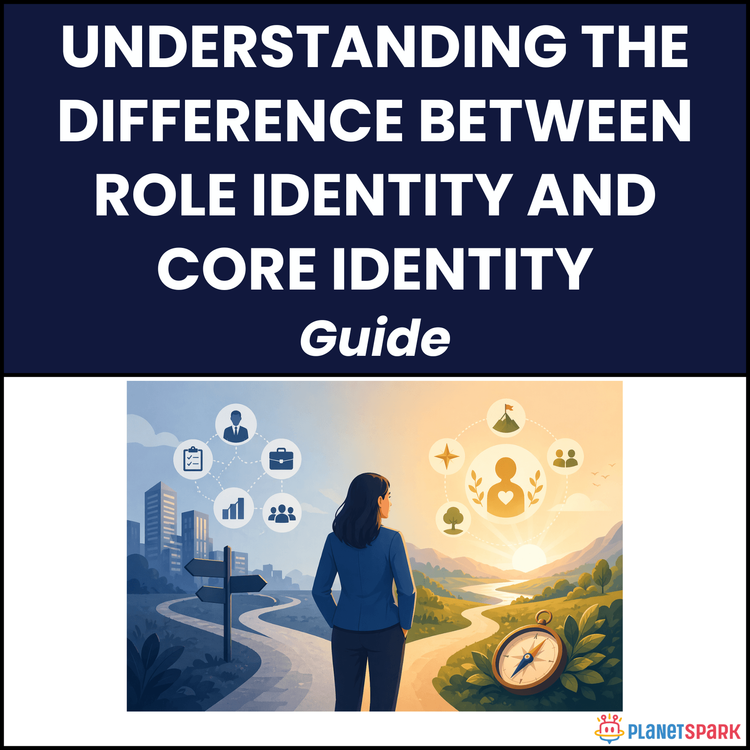
Understanding the Difference Between Role Identity and Core Identity
Assigned Identity vs Authentic Self: A Practical Guide to Building Career Clarity and Professional Confidence
At some point in your career, you’ve probably introduced yourself with your job title—and felt like that was enough. But what happens when that title changes, disappears, or no longer fits? For many professionals, that moment triggers confusion, self-doubt, or even a quiet identity crisis.
This is more common than we admit. In fast-moving, performance-driven environments, it’s easy to tie who you are to what you do. The result? Career decisions become stressful, transitions feel overwhelming, and setbacks feel deeply personal.
That’s exactly why the resource “Understanding the Difference Between Role Identity and Core Identity” exists. It helps you separate your professional roles from your true self—so you can navigate your career with clarity, resilience, and confidence.
Who Is This Resource For?
This guide is especially valuable if you are:
- A working professional with 0–15 years of experience navigating growth or uncertainty
- A career switcher exploring new roles, industries, or directions
- A manager or leader stepping into higher-responsibility positions
- A consultant or specialist building a strong, portable professional identity
- Someone recovering from setbacks like layoffs, missed promotions, or burnout
- A professional questioning, “Is this really who I am?”
If you want to make career decisions with clarity—not confusion—this resource is built for you.
What Does This Resource Contain?
This is not a theoretical discussion on identity. It is a structured, action-oriented guide designed for real-world application.
Inside the resource, you’ll find:
- A clear distinction between Role Identity (what you do) and Core Identity (who you are)
- A deep dive into Role-Identity Fusion and its impact on career decisions and confidence
- A self-assessment diagnostic to evaluate where you stand on the identity spectrum
- The Identity Compass framework—a four-quadrant model to map your complete identity
- A step-by-step 5-part system to:
- Audit your current role identity
- Excavated your core values, strengths, and traits
- Map alignment between role and core
- Build strong Identity Anchors
- Reframe how you introduce yourself professionally
- A comprehensive Identity Mapping Worksheet for hands-on application
- Reflection prompts to deepen self-awareness during transitions
- A real-world case study showing how identity clarity transforms careers
- Common mistakes professionals make—and how to fix them
- Contextual applications across career pivots, promotions, and setbacks
- A Core Identity checklist for quick decision-making
- A self-evaluation scorecard to assess your identity clarity
- A structured 30-day plan to build lasting identity awareness
Every section is designed to move you from insight to action.
Summary of the Resource
“Understanding the Difference Between Role Identity and Core Identity” is a practical guide that helps you separate your job from your identity—so you can build a career that is aligned, resilient, and self-directed.
Instead of defining yourself by titles or organisations, you learn to anchor your professional life in your values, strengths, and character—giving you stability across any role or transition.
How Will This Resource Be Useful?
This resource helps you move from confusion to clarity in your professional life.
You’ll gain:
- A clear understanding of who you are beyond your job title
- Greater resilience during career transitions, setbacks, or uncertainty
- Confidence in making career decisions aligned with your values
- The ability to pivot roles or industries without losing your sense of self
- Stronger professional positioning in interviews, networking, and leadership situations
- Reduced burnout by aligning work with your intrinsic motivations
Most importantly, it helps you stop defining yourself by external validation—and start operating from internal clarity.
How Should You Use This Resource?
To get the most value, approach this guide in phases:
Start by reading the entire resource once. This gives you a clear understanding of the concepts and frameworks.
Next, work through the exercises step by step:
- Begin with the Role Identity Audit to identify how you currently define yourself
- Move into Core Identity excavation using reflection prompts and peak moment analysis
- Map the relationship between your role and core to identify alignment or gaps
Then, build your Identity Anchors—short, powerful statements that define who you are across any context.
After that, complete the Identity Mapping Worksheet in one focused sitting to bring everything together.
Finally, apply your insights:
- Update how you introduce yourself professionally
- Align your career decisions with your Core Identity
- Use the checklist and self-evaluation tools regularly
Revisit this resource whenever you:
- Change roles or industries
- Face uncertainty or setbacks
- Prepare for interviews or leadership transitions
- Feel disconnected from your work
Action Steps
After accessing this resource, take these steps immediately:
1. Block 30–45 minutes for focused reflection
2. List all the roles you currently use to define yourself
3. Identify 3 core values and 3 signature strengths
4. Write 3–5 “I am someone who…” Identity Anchor statements
5. Draft a core-anchored professional introduction
6. Complete the Identity Mapping Worksheet
7. Review your current role for alignment with your core identity
Small steps here can significantly improve how you navigate your career.
Your career will change. Your roles will evolve. Titles will come and go. But your Core Identity—your values, strengths, and character—remains your most stable and valuable professional asset.
When you learn to lead from that core, you don’t just react to opportunities—you design your career with intention.
Use this resource to build that clarity. Not once, but continuously. Because the professionals who thrive long-term are not the ones with the most impressive titles—they are the ones who know exactly who they are behind every title they hold.