
Understanding The Psychology Of Groupthink In Teams

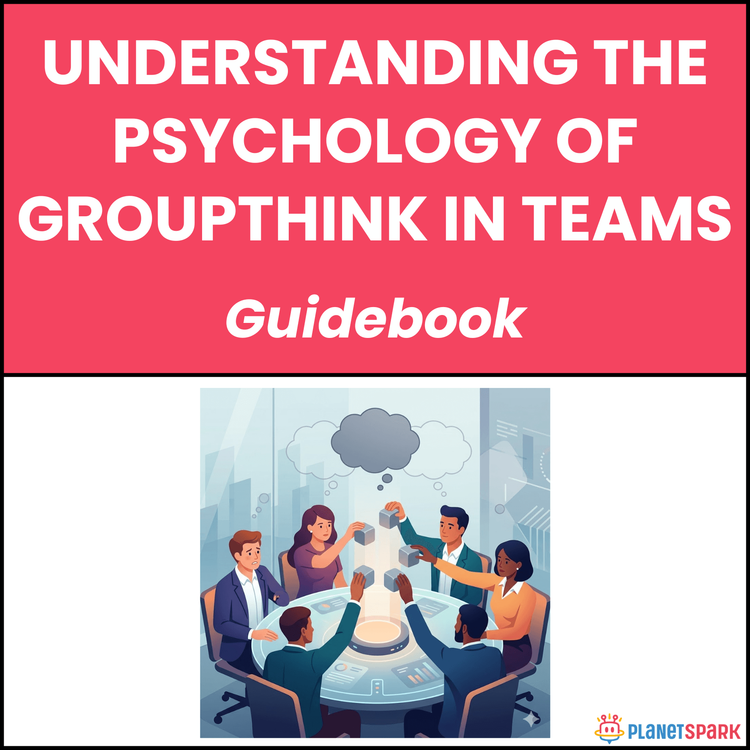
Understanding The Psychology Of Groupthink In Teams
The Psychology of Groupthink in Teams: How to Improve Decision-Making and Independent Thinking
You’ve been in that meeting. Everyone agrees quickly. No one challenges the idea. The decision gets approved faster than expected. It feels efficient. It feels aligned. But later, things fall apart. This is not alignment. This is groupthink.
The resource “Understanding the Psychology of Groupthink in Teams” helps professionals identify when agreement is genuine — and when it’s masking a dangerous lack of critical thinking. As highlighted in the introduction (page 2), groupthink happens when the desire for harmony overrides the need for accurate decision-making.
Who Is This Resource For?
This resource is designed for:
- Managers leading team discussions and decisions
- Consultants working in collaborative environments
- Mid-career professionals involved in strategy or execution
- Team members who hesitate to speak up in meetings
- Anyone working in environments where “everyone agrees too quickly”
If you’ve ever felt that decisions are made without proper debate, this guide is highly relevant.
What Does This Resource Contain?
This is a structured, practical guide with clear frameworks and real-world insights. It includes:
- A clear explanation of what groupthink is — and what it is not
- A comparison between healthy agreement and groupthink (page 3)
- The 8 classic symptoms of groupthink, including:
- Illusion of invulnerability
- Self-censorship
- Pressure on dissenters
- Illusion of unanimity
- Practical examples of how groupthink shows up in workplace scenarios
- Frameworks to identify groupthink in real time
- Strategies to challenge groupthink without creating conflict
- Tools to build psychologically safe team environments
- Methods to encourage dissent and improve decision quality
Summary of the Resource
This guide helps you recognise when your team is thinking — and when it is just agreeing.
Instead of assuming alignment equals correctness, you learn how to:
- Detect hidden conformity
- Encourage critical thinking
- Improve the quality of team decisions
The result is stronger outcomes, fewer blind spots, and better team performance.
How Will This Resource Be Useful?
This resource gives you a practical edge in team environments.
You will be able to:
- Identify groupthink before it leads to poor decisions
- Encourage healthy disagreement without damaging relationships
- Improve meeting effectiveness and discussion quality
- Avoid costly mistakes caused by unchallenged assumptions
- Build credibility as someone who thinks critically
As explained on page 2, groupthink is not caused by lack of intelligence — it is caused by social pressure. Understanding this changes how you approach team dynamics.
How Should You Use This Resource?
Follow this approach for best results:
Step 1: Understand the Concept
Read the initial sections to clearly distinguish groupthink from healthy agreement.
Step 2: Learn the Symptoms
Memorise at least 3–4 key symptoms so you can spot them in real time.
Step 3: Observe Your Team
In your next meeting, watch for:
- Silence during decisions
- Lack of alternative viewpoints
- Quick agreement without discussion
Step 4: Apply Small Interventions
Ask questions like:
- “What are we missing here?”
- “Does anyone see a risk?”
Step 5: Build a Culture of Safety
Encourage team members to share dissent without fear.
Step 6: Reflect After Decisions
Review whether the team explored enough alternatives.
Action Steps
Start immediately:
- Think of your last team decision
- Ask: Were all viewpoints genuinely explored?
- Identify one moment where dissent was missing
- In your next meeting, ask one challenging question
- Encourage at least one opposing perspective
- Observe how the team reacts
- Repeat consistently
Groupthink is not obvious. It feels like progress when it’s actually a blind spot.
When you learn to recognise it, you shift from passive agreement to active thinking.
That shift improves not just decisions — but your professional credibility.