
Understanding the Psychology of Influence Without Authority

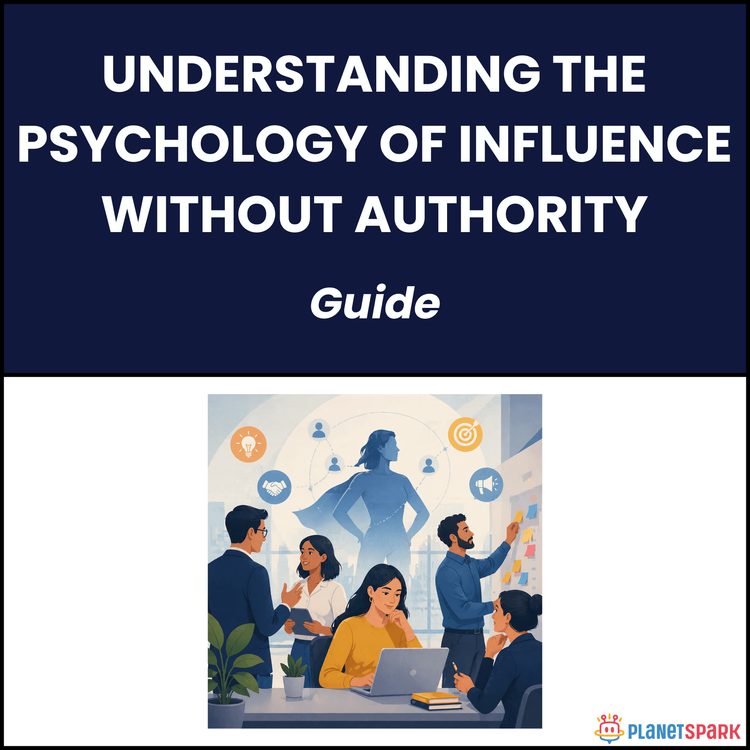
Understanding the Psychology of Influence Without Authority
Mastering Influence Without Authority: A Practical Guide to Leading, Persuading, and Driving Decisions at Work
If you’ve ever been in a meeting where you had a strong idea—but no one acted on it—you already know how frustrating it feels. Not because your idea wasn’t good, but because you didn’t have the authority to push it forward.
This is one of the most common challenges working professionals face today. You’re expected to collaborate across teams, influence stakeholders, manage clients, and drive outcomes—but without direct control over people or decisions.
That’s exactly why the resource “Understanding the Psychology of Influence Without Authority” exists. It’s designed to help professionals move from passive participation to active influence—using psychology, structured frameworks, and practical tools that work in real-world scenarios.
Instead of relying on title or hierarchy, this guide shows you how to build trust, align motivations, and influence decisions ethically and effectively.
Who Is This Resource For?
This resource is especially valuable if you are:
- A working professional with 0–15 years of experience
- A consultant or advisor working with clients you don’t control
- A mid-level manager navigating cross-functional teams
- A career switcher trying to establish credibility quickly
- Someone who struggles to get buy-in for ideas or initiatives
- A professional who wants to lead without waiting for a title
If your work depends on collaboration, alignment, and persuasion—this guide is built for you.
What Does This Resource Contain?
This is not a generic communication guide. It’s a structured, psychology-backed playbook for influence.
Inside the resource, you’ll find:
- A clear explanation of what influence really means (and what it doesn’t)
- The core psychological drivers behind decision-making and persuasion
- A breakdown of different influence styles (Analyst, Connector, Visionary, Pragmatist)
- An Influence Readiness Self-Check to assess your current position before key conversations
- A step-by-step framework to build trust (warmth + competence)
- A stakeholder mapping system to identify who matters and why
- A practical worksheet to plan influence strategies for real situations
- Message framing techniques to align your ideas with stakeholder priorities
- High-impact language patterns for meetings, emails, and conversations
- Strategies to handle resistance without conflict or force
- A coalition-building approach using social proof
- A real-world case study demonstrating influence in action
- A list of the most common influence mistakes—and how to avoid them
- The Reciprocity Loop framework to build long-term influence capital
- A 10-day influence practice sprint for immediate application
- A 30-day structured plan to turn learning into real career results
- A quick-reference field guide for high-stakes conversations
Everything is designed for immediate, real-world use—not just theory.
Summary of the Resource
“Understanding the Psychology of Influence Without Authority” is a practical, action-oriented guide that helps professionals influence decisions, build alignment, and drive outcomes—without relying on formal power.
It equips you with the mindset, frameworks, and tools needed to navigate complex workplace dynamics, gain stakeholder buy-in, and position yourself as someone who gets things done.
If you want to become someone whose ideas are heard, supported, and implemented—this resource shows you how.
How Will This Resource Be Useful?
This resource helps you shift from frustration to control.
You’ll gain:
- A clear understanding of how influence actually works in professional settings
- The ability to build trust intentionally, not accidentally
- Better stakeholder alignment and smoother collaboration
- Confidence in handling resistance and difficult conversations
- Stronger communication that connects with what people care about
- Faster decision-making and execution across teams
Most importantly, it helps you stop waiting for authority—and start creating impact regardless of your role or title.
How Should You Use This Resource?
To get the best results, follow a structured approach:
Start by reading the entire guide once to understand the overall framework and how each concept connects.
Next, assess yourself using the Influence Readiness Self-Check. This will give you clarity on where you currently stand.
Then, apply the stakeholder mapping and influence planning tools to a real situation you’re currently facing. This ensures immediate relevance.
As you move forward, practise the communication frameworks and language patterns in real conversations—especially in meetings, emails, and one-on-ones.
Use the 10-day influence sprint to build consistency in small, manageable actions.
Finally, follow the 30-day plan to integrate influence into your daily professional behaviour—not just isolated situations.
Revisit the guide whenever you:
- Prepare for important meetings or presentations
- Work on cross-functional projects
- Handle resistance or pushback
- Try to gain buy-in for new ideas
- Build long-term professional relationships
Action Steps
After accessing this resource, take these steps immediately:
1. Identify one real situation where you need to influence someone
2. Complete the Influence Readiness Self-Check for that context
3. Map your key stakeholders and their priorities
4. Reframe your message using the “So What” test
5. Initiate one conversation focused on understanding—not convincing
6. Apply one high-impact language pattern in your next interaction
7. Start the 10-day influence sprint for consistent practice
Small shifts in how you communicate and engage can dramatically improve how others respond to you.
Influence is not about control—it’s about connection, clarity, and credibility. When you understand how people think, decide, and respond, you stop pushing harder and start working smarter.
This resource is not just about improving conversations—it’s about transforming how you operate professionally. The ability to influence without authority is what separates those who participate from those who lead.
Start applying it today, and you’ll begin to see the difference in how people listen, respond, and support your ideas.
Book your free session today!