
Workplace Conflict Scenarios and Examples

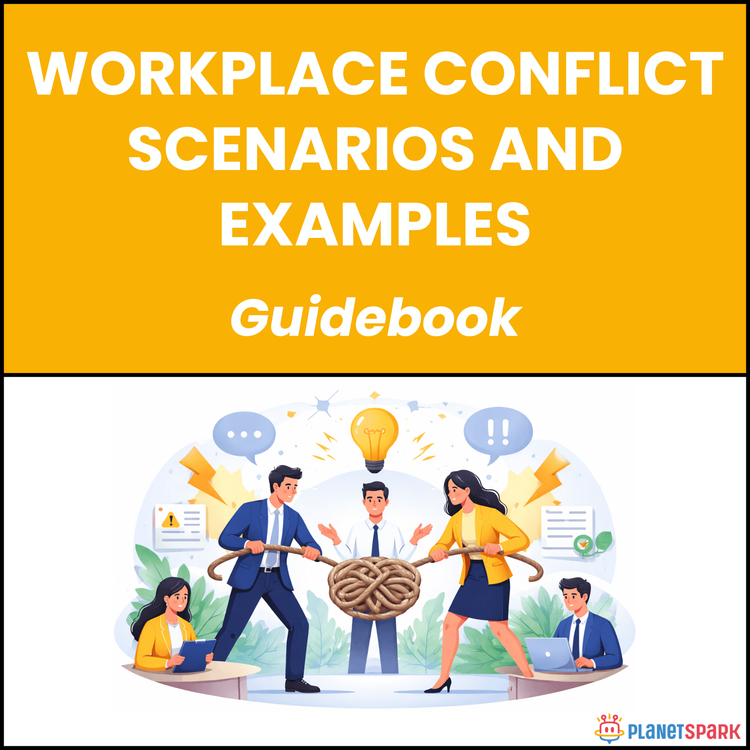
Workplace Conflict Scenarios and Examples
How to Handle Workplace Conflict Effectively: A Practical Guide with Real Scenarios and Proven Frameworks
Conflict at work is unavoidable—but mishandling it is not.
If you’ve ever avoided a difficult conversation, replayed a tense interaction in your head, or felt stuck dealing with a colleague, manager, or team dynamic—you’re not alone. Most working professionals are never formally trained to handle conflict. Yet, they are expected to manage high-stakes conversations with clarity and composure.
The result? Avoidance, miscommunication, resentment, or escalations that damage relationships and reputations.
That’s exactly why the resource “The Workplace Conflict Scenarios and Examples” exists. It’s designed to give you practical tools, ready-to-use language, and real-world frameworks so you can handle conflict with confidence—without overthinking or escalating unnecessarily.
Who Is This Resource For?
This resource is especially valuable if you are:
- A working professional with 0–15 years of experience navigating team dynamics
- A manager or team lead handling interpersonal challenges within teams
- A job seeker or career switcher wanting to demonstrate strong communication skills
- A consultant or cross-functional collaborator dealing with multiple stakeholders
- A professional struggling with difficult colleagues, unclear expectations, or workplace tension
- Someone who avoids conflict—or addresses it too late
If you want to handle uncomfortable situations with clarity, professionalism, and control, this guide is built for you.
What Does This Resource Contain?
This is not a theoretical guide on communication—it’s a practical playbook you can apply immediately.
Inside the resource, you’ll find:
- A diagnostic framework to identify different types of workplace conflict (task, relationship, process, status)
- The Conflict Escalation Ladder to recognise when and how conflict intensifies
- Six real-world workplace conflict scenarios, including:
- Credit theft
- Passive-aggressive behaviour
- Micromanagement
- Cross-functional delays
- Cultural misunderstandings
- Work overload and scope creep
- Step-by-step navigation strategies for each scenario
- Ready-to-use scripts and conversation starters for difficult discussions
- The L-A-S-P method (Listen, Acknowledge, State, Problem-solve) for structured conversations
- A complete “Before, During, After” conflict resolution playbook
- Pre-conversation preparation checklist for clarity and confidence
- Post-conversation follow-up strategies to lock in outcomes
- A personal conflict inventory worksheet for self-reflection
- A professional conflict checklist for quick application
- Common mistakes professionals make—and how to fix them
- A real-world case study showing conflict resolution in action
- A self-assessment tool to measure and improve your conflict intelligence
Everything is designed to move you from hesitation to action.
Summary of the Resource
“The Workplace Conflict Scenarios and Examples” is a practical, scenario-based guide that helps professionals diagnose, navigate, and resolve workplace conflict with confidence.
Instead of guessing what to say or avoiding difficult conversations, you’ll learn how to approach conflict systematically—using proven frameworks, structured communication methods, and real-world examples.
If you want a repeatable method for handling tough situations at work, this resource gives you exactly that.
How Will This Resource Be Useful?
This resource helps you shift from reactive to intentional communication.
You’ll gain:
- Clarity on what kind of conflict you’re dealing with—and how to approach it
- Confidence in handling difficult conversations without escalation
- Practical language you can use immediately in real situations
- Stronger relationships built through honest, constructive dialogue
- The ability to address issues early—before they become bigger problems
- Better decision-making on when to resolve directly vs. escalate
- Increased professional credibility and leadership presence
Most importantly, it helps you stop avoiding conflict—and start using it as a tool for growth, trust, and influence.
How Should You Use This Resource?
To get the most value, follow a structured approach:
Start by reading through the entire guide once. This helps you understand the overall frameworks and how different concepts connect.
Next, identify a real conflict you are currently facing—no matter how small. Use the diagnostic framework to understand its type and stage.
Then, go through the relevant scenario and adapt the suggested language to your situation. Use the L-A-S-P method to structure your conversation.
Before initiating the conversation, complete the pre-conversation checklist. This ensures you are clear, calm, and prepared.
After the conversation, follow the “after” framework—send a summary, act on agreements, and schedule a follow-up if needed.
Revisit this resource whenever you:
- Face a new workplace conflict
- Prepare for feedback or performance conversations
- Handle team disagreements or stakeholder challenges
- Want to improve your communication and leadership skills
Action Steps
After accessing this resource, take these steps immediately:
1. Identify one current workplace tension you’ve been avoiding
2. Use the conflict diagnostic framework to classify it
3. Map it on the escalation ladder to understand urgency
4. Prepare using the pre-conversation checklist
5. Write down your opening line and key points
6. Schedule and have the conversation within the next few days
7. Follow up with a summary and agreed next steps
Consistent small actions here can significantly improve your professional relationships and outcomes.
Conflict is not a disruption to your work—it is part of it. The professionals who grow fastest are not the ones who avoid difficult conversations, but the ones who handle them with clarity and composure.
When you learn to address issues early, communicate effectively, and follow through with intent, you don’t just resolve problems—you build trust, credibility, and leadership presence.
Use this resource to strengthen one of the most underrated skills in your career. Because how you handle conflict often defines how far you grow.