
Workplace Conflict System Design

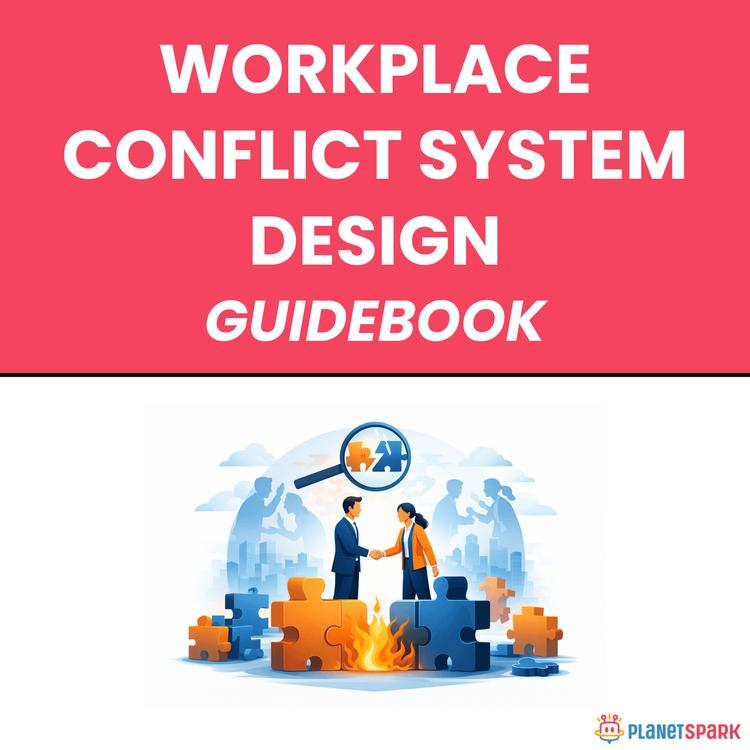
Workplace Conflict System Design
Workplace Conflict Management Guide: A Practical System to Handle Conflict with Confidence
Conflict at work is inevitable—but feeling unprepared for it doesn’t have to be.
Most working professionals have experienced moments where a conversation went sideways, a disagreement lingered unresolved, or a team dynamic became quietly uncomfortable. In those moments, the real challenge isn’t just the conflict itself—it’s not knowing what to do next.
This is exactly where the Workplace Conflict System Design guidebook comes in. Instead of treating conflict as a one-off problem, this resource helps you build a repeatable system to handle it with clarity, structure, and confidence.
Who Is This Resource For?
This guidebook is designed for professionals who want to handle workplace challenges more effectively without relying on guesswork.
It is especially useful for:
- First-time managers navigating team dynamics and difficult conversations
- Mid-career professionals dealing with cross-functional conflicts
- Consultants managing client expectations and stakeholder disagreements
- Career switchers adapting to new workplace environments
- Individual contributors who want to communicate assertively without damaging relationships
If you’ve ever hesitated to speak up, avoided a difficult conversation, or felt drained after unresolved conflict, this resource is built for you.
What Does This Resource Contain?
This is not a theoretical guide. It is a structured, practical system with clear frameworks and tools you can apply immediately.
Inside the guidebook, you will find:
- A complete conflict management system
A step-by-step approach to diagnose, navigate, and resolve conflict situations
- Conflict type framework
A breakdown of five key conflict categories:
- Values conflict
- Process conflict
- Goal conflict
- Relationship conflict
- Resource conflict
- Conflict escalation ladder
A visual and practical model showing how conflict evolves—from tension to full-blown disputes—and how to intervene early
- Diagnostic tools
Methods to identify the real root of the conflict before reacting
- Response frameworks
Structured approaches tailored to each type of conflict
- Practical templates and worksheets
Ready-to-use tools to apply in real workplace situations
- Team system design principles
Guidance on creating norms and processes that prevent recurring conflict
Summary of the Resource
This guidebook helps you move from reacting to conflict emotionally to handling it strategically.
Instead of guessing your way through difficult situations, you learn how to:
- Identify the type of conflict quickly
- Understand what is actually causing it
- Apply the right response for that specific situation
- Prevent similar conflicts from repeating
In short, it gives you a clear system for something most professionals handle instinctively—and often inconsistently.
How Will This Resource Be Useful?
The real value of this guide lies in how it translates directly into workplace outcomes.
By using this resource, you will be able to:
- Respond to conflict with clarity instead of hesitation
- Avoid unnecessary emotional escalation
- Save time by addressing the root cause, not just the symptoms
- Improve working relationships through structured communication
- Build confidence in handling difficult conversations
- Reduce stress caused by unresolved tension
- Create a more predictable and professional work environment
One of the most powerful insights from the guide is that most workplace conflicts are not personal—they are structural. Once you understand this, your approach becomes calmer, more objective, and far more effective.
How Should You Use This Resource?
To get the most value from this guidebook, it’s important to use it in a structured way.
1. Start with a full read-through
Go through the entire guide once to understand the overall system and mental models.
2. Use it as a reference tool
When you face a real conflict situation, revisit the relevant sections—especially the conflict type framework and escalation ladder.
3. Apply the worksheets
Use the built-in tools to diagnose live situations. This is where real clarity comes from.
4. Build your personal conflict system
Adapt the frameworks into your own style so you have a repeatable approach ready for future situations.
5. Revisit regularly
Conflict patterns repeat. The more you use the system, the faster and more natural your responses will become.
Action Steps
If you’re ready to apply this resource, here’s what you can do immediately:
1. Think of a recent conflict you experienced
2. Identify which type of conflict it was
3. Map it on the escalation ladder
4. Reflect on how you responded
5. Rework your response using the framework from the guide
6. Prepare a better approach if a similar situation arises again
Even one cycle of this exercise can significantly improve how you handle future situations.
Conflict is not something to avoid—it’s something to manage well.
The professionals who grow fastest in their careers are not the ones who face less conflict, but the ones who handle it better. When you have a system in place, conflict stops being stressful and starts becoming a tool for better communication, stronger relationships, and smarter decisions.
Book your free session today!