
10 Simple Sentences for Kids: Easy English Sentences | PlanetSpark
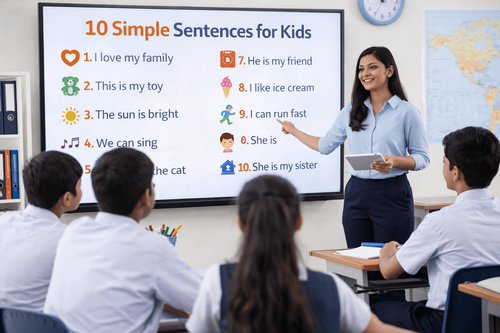

Table of Contents
- Why Simple Sentences Are Important for Kids
- What Are Simple Sentences for Kids?
- 10 Simple Sentences for Kids (Detailed Explanation)
- Types of Simple Sentences for Kids
- Structure of Simple Sentences
- Common Mistakes Kids Make
- Fun Activities to Practice Simple Sentences
- Tips for Parents to Teach Simple Sentences
- Advanced Practice with Simple Sentences
- Importance of Spoken English for Kids
- Why Kids Struggle with Sentence Formation
- PlanetSpark Spoken English Course
- Building Strong English Foundations Starts Here
Learning English starts with building a strong foundation, and simple sentences are the first step toward confident communication. This blog is designed to help kids and students understand how to form, read, and use simple English sentences in daily life. You’ll discover examples, structures, tips, and fun activities to make learning engaging and effective.
Why Simple Sentences Are Important for Kids
Simple sentences form the backbone of language learning. Before children can write essays or speak fluently, they need to understand how to form basic sentences correctly.
Key Benefits of Learning Simple Sentences
- Helps in building strong grammar basics
- Improves speaking confidence
- Enhances reading and writing skills
- Makes communication clearer and easier
- Develops logical thinking and sentence structure
How Simple Sentences Support Language Growth
Children who master simple sentences early:
- Learn faster in school
- Participate more actively in class
- Express thoughts without hesitation
- Build vocabulary naturally
What Are Simple Sentences for Kids?
A simple sentence is a group of words that expresses a complete idea. It usually contains:
- A subject (who or what)
- A verb (action or state)
Examples of Simple Sentences
- I play.
- She runs.
- The dog barks.
- We eat food.
These are short sentences for kids that are easy to understand and use in daily life.
10 Simple Sentences for Kids (Detailed Explanation)
Here are 10 simple sentences for kids that are easy, practical, and useful. Each sentence is designed to help children understand daily actions, improve vocabulary, and build confidence in speaking and writing English.
Basic Everyday Sentences
These simple sentences for kids focus on daily routines and common activities that children can easily relate to:
- I wake up early.
This sentence teaches kids how to talk about their daily routine. It helps them understand the use of “I” and action words like “wake up.” - She goes to school.
A great example to explain third-person usage. Kids learn how to talk about others and understand verbs like “goes.” - He plays football.
This sentence introduces hobbies and sports. It also helps children learn how to describe activities they enjoy. - We eat lunch together.
This sentence teaches togetherness and group actions. It also introduces the concept of “we” and shared activities. - They read books.
A useful sentence to encourage reading habits while teaching plural subjects like “they.”
Slightly Expanded Sentences
These easy sentences for kids are a step ahead, helping children add more meaning and detail:
- The sun rises in the east.
This sentence introduces basic general knowledge while helping kids understand sentence structure with subjects and facts. - My mother cooks food.
A simple way to teach family-related vocabulary and daily activities. - The cat drinks milk.
This sentence helps kids connect animals with actions, making learning more visual and engaging. - I like my teacher.
Encourages emotional expression and helps children talk about their feelings. - We love our country.
This sentence builds values while teaching kids how to express pride and emotions in English.
Why These Sentences Matter
These short sentences for kids are not just examples, they are building blocks for communication. When children practice such sentences regularly:
- They become more confident in speaking English
- Their vocabulary improves naturally
- They learn correct sentence structure
- They start forming their own sentences easily
By practicing these english sentences for kids daily, children can gradually move from simple speaking to fluent communication with clarity and confidence.
Help your child practice these sentences with expert guidance. Join PlanetSpark Spoken English Course today.
Types of Simple Sentences for Kids
Understanding different types helps children use sentences in real-life situations.
Declarative Sentences (Statements)
- I am happy.
- The sky is blue.
Interrogative Sentences (Questions)
- What is your name?
- Where do you live?
Imperative Sentences (Commands or Requests)
- Close the door.
- Please sit down.
Exclamatory Sentences (Strong Feelings)
- What a beautiful day!
- Wow, that is amazing!
Structure of Simple Sentences
Basic Formula
Subject + Verb + Object
Examples
- I (subject) eat (verb) food (object)
- She reads books
- They play games
Tips to Build Simple Sentences
- Start with naming objects around you
- Use daily activities
- Keep sentences short and clear
- Practice regularly
Turn learning into a fun habit with PlanetSpark Spoken English Course where kids practice through games and live sessions.
Common Mistakes Kids Make
Mistake 1: Missing Verb
Wrong-I school
Right-I go to school
Mistake 2: Wrong Word Order
Wrong-Eats she apple
Right-She eats apple
Mistake 3: Incomplete Sentence
Wrong-The dog
Right-The dog runs
How to Avoid Mistakes
- Practice speaking daily
- Read simple books
- Repeat sentences aloud
- Get feedback from teachers
Fun Activities to Practice Simple Sentences
Learning becomes much more effective when children enjoy the process. Fun and interactive activities not only improve understanding but also help kids retain what they learn. These activities are designed to make simple sentences for kids easy, engaging, and practical for everyday use.
Activity 1: Picture Description
This activity helps children observe, think, and express ideas in simple sentences.
How to do it:
- Show a picture of daily life, such as a park, classroom, or home
- Ask the child to carefully observe what they see
- Encourage them to describe the picture using one simple sentence
Examples:
- The boy is playing.
- The girl is reading a book.
- The dog is running.
How it helps:
- Improves observation skills
- Builds vocabulary
- Encourages sentence formation
Pro Tip: Start with very simple pictures and gradually move to more detailed ones as the child improves.
Activity 2: Fill in the Blanks
This is a great way to help kids understand sentence structure and correct word usage.
How to do it:
- Give incomplete sentences
- Provide options or let the child think of answers
- Ask them to read the full sentence aloud
Examples:
- I ___ (eat/play/run) → I play
- She ___ to school → She goes to school
- The cat ___ milk → The cat drinks milk
How it helps:
- Teaches verb usage
- Improves grammar basics
- Builds confidence in forming correct sentences
Pro Tip: Turn this into a game by giving points for correct answers.
Activity 3: Sentence Building Game
This activity boosts creativity and helps children learn how to arrange words correctly.
How to do it:
- Give 3–5 random words
- Ask the child to form a meaningful sentence
- Help them if needed and correct gently
Examples:
- Words: boy, playing, park → The boy is playing in the park
- Words: cat, milk, drinks → The cat drinks milk
How it helps:
- Improves sentence structure
- Enhances logical thinking
- Encourages creativity
Pro Tip: Use flashcards or word slips to make it more interactive.
Activity 4: Daily Speaking Practice
Consistency is key to mastering easy sentences for kids.
How to do it:
- Ask kids to speak at least 5 sentences every day
- Choose topics like school, family, or favorite activities
- Encourage them to speak confidently without fear
Examples:
- I went to school today
- I played with my friends
- I ate my lunch
How it helps:
- Builds speaking confidence
- Improves fluency
- Reduces hesitation
Pro Tip: Make it a daily routine, like speaking practice before dinner.
Activity 5: Storytelling with Simple Sentences
This activity helps kids connect multiple simple sentences into a meaningful flow.
How to do it:
- Give a simple topic like “My Day” or “My Favorite Toy”
- Ask kids to speak or write 3–5 simple sentences
- Guide them to connect ideas
Example:
- I wake up early
- I go to school
- I play with my friends
How it helps:
- Improves thinking and sequencing
- Enhances communication skills
- Builds confidence in expressing ideas
Pro Tip: Encourage kids to add one new sentence every day to improve gradually.
Why These Activities Work
These activities are designed to make short sentences for kids easy to learn and practice. When children engage in such exercises regularly:
- They learn faster without feeling bored
- They gain confidence in speaking English
- They start forming sentences naturally
- They enjoy the learning process
With the right mix of fun and practice, children can quickly master english sentences for kids and build a strong foundation for future learning.
Turn learning into a fun habit with PlanetSpark Spoken English Course where kids practice through games and live sessions.
Tips for Parents to Teach Simple Sentences
Make Learning Natural
- Talk to kids in English daily
- Encourage them to respond in simple sentences
Use Real-Life Situations
- During meals, ask questions
- During playtime, describe actions
Encourage Practice
- Appreciate efforts
- Avoid over-correction
- Focus on confidence
Use Visual Aids
- Flashcards
- Storybooks
- Videos
Advanced Practice with Simple Sentences
Once kids are comfortable, they can expand sentences.
From Simple to Slightly Complex
- I eat → I eat apples
- She runs → She runs fast
- He plays → He plays cricket
Add Details
- Time: I wake up early in the morning
- Place: She plays in the park
- Emotion: I feel happy today
Importance of Spoken English for Kids
Speaking is as important as writing. Kids who practice speaking:
- Develop confidence
- Improve pronunciation
- Learn faster
- Perform better academically
Why Kids Struggle with Sentence Formation
Common Challenges
- Lack of practice
- Fear of making mistakes
- Limited vocabulary
- No proper guidance
How to Overcome
- Consistent practice
- Interactive learning
- Professional guidance
- Positive environment
PlanetSpark Spoken English Course
PlanetSpark offers a structured and engaging way for kids to master English communication skills. The program is designed to go beyond basic sentence learning and build complete confidence in speaking, writing, and expressing ideas.
With 1:1 personal trainers, every child receives personalised attention based on their learning style and pace. Trainers provide instant feedback, helping children improve fluency, grammar, storytelling, and public speaking skills effectively.
The personalised curriculum and learning roadmap ensures that each child progresses step-by-step, from simple sentence formation to advanced communication. Regular updates based on performance make learning adaptive and impactful.
PlanetSpark integrates technology through SparkX, an AI-enabled video analysis tool, which evaluates voice clarity, body language, grammar, and confidence. This gives parents detailed insights into their child’s progress.
Children also benefit from AI-led practice sessions, allowing them to practise independently while receiving real-time feedback. The Spark Diary helps develop writing habits through daily journaling and creative exercises.
Learning remains engaging with gamified modules, quizzes, and interactive activities. Regular parent-teacher meetings and progress reports ensure transparency and consistent improvement.
Additionally, learning clubs, competitions, and Sparkline platform provide opportunities for kids to showcase their skills, collaborate, and build confidence in a safe environment.
Give your child the confidence to speak English fluently. Enroll in PlanetSpark spoken english course today and see the transformation.
Building Strong English Foundations Starts Here
Mastering 10 simple sentences for kids is more than just a basic exercise, it is the first step toward confident communication and lifelong learning. Simple sentences help children express ideas clearly, build grammar skills, and gain confidence in both speaking and writing.
With consistent practice, engaging activities, and the right guidance, children can quickly progress from forming short sentences to speaking fluently and confidently. Parents play a crucial role by encouraging daily practice and creating a supportive learning environment.
However, structured learning programs like PlanetSpark can accelerate this journey by combining expert guidance, personalised learning, and interactive tools. When kids learn in a fun and supportive environment, they not only improve their English but also develop critical life skills like confidence, creativity, and communication.
Start early, practice daily, and watch your child grow into a confident English speaker.
Ready to boost your child’s English skills? Join PlanetSpark Spoken English Course and unlock their full potential.
You can also read:
Frequently Asked Questions
Simple sentences are short and easy sentences that contain a subject and a verb and express a complete idea. For example, “I play” or “She eats.” These sentences help kids understand basic grammar and improve communication skills.
Kids can learn simple sentences through:
Daily speaking practice
Reading simple books
Playing sentence-building games
Listening and repeating sentences
Practicing with parents or teachers
Consistency and fun activities make learning more effective.
Simple sentences are important because they:
Build grammar foundation
Improve communication skills
Boost confidence
Help in reading and writing
Prepare kids for advanced learning
They are the first step toward fluency in English.
Kids should practice at least 5–10 sentences daily. Regular practice helps improve fluency, pronunciation, and confidence. Gradually, they can increase the number and complexity of sentences.
PlanetSpark helps kids learn simple sentences through personalised 1:1 classes, interactive activities, AI-based feedback tools, and structured learning plans. With expert trainers and engaging methods, children not only learn sentence formation but also gain confidence in speaking, storytelling, and communication skills.