Advanced communication helps children move beyond
basic English speaking and start expressing ideas clearly, confidently, and meaningfully. For kids, advanced communication does not mean using complex words or sounding formal. It means speaking with better clarity, stronger sentence flow, and confidence in everyday situations. When children develop advanced communication early, spoken English becomes easier and more natural. They learn how to explain ideas, ask questions, and participate actively in conversations at school and at home.
PlanetSpark supports children in mastering advanced communication through structured spoken English practice designed specifically for young learners.
What Is Advanced Communication for Kids
Advanced communication for kids means learning
how to use spoken English with clarity, confidence, and purpose rather than speaking in short or unclear sentences. It focuses on helping children organize their thoughts before speaking so they know what they want to say and how to say it. When ideas are organized in the mind, children find it easier to speak clearly and confidently.
Instead of memorizing lines or repeating set phrases, children learn how to form their own sentences in spoken English. They practice explaining opinions, sharing ideas, and responding naturally in conversations. This builds independence in speaking and helps children feel more comfortable expressing themselves. Advanced communication skills help children move from giving one-word or short answers to having meaningful spoken English interactions where they can explain, ask, and respond with confidence.
How Advanced Communication Is Different from Basic Speaking
Basic speaking usually focuses on learning vocabulary and forming simple sentences. While this is important, it is only the first step. Advanced communication goes further by teaching children how to connect ideas and speak with structure and flow.
Advanced communication helps children: • connect ideas smoothly so speech sounds natural • speak in complete, well-structured sentences • express thoughts confidently without hesitation • respond clearly in conversations and discussions
This shift helps children sound more confident and expressive while speaking English. They are no longer just using words they know but communicating ideas clearly and purposefully.
Why Advanced Communication Skills Matter in Spoken English
Advanced communication skills play a key role in how children use spoken English in real-life situations. Many children know English words and grammar but still struggle to speak because they are unsure how to organize their thoughts while talking.
When children build advanced communication skills, they speak with better clarity and confidence. They learn how to explain ideas clearly, ask meaningful questions, and participate actively in classroom discussions and everyday conversations. Spoken English starts to feel natural and comfortable instead of stressful or confusing.
Strong advanced communication also improves listening skills. Children become better at understanding what others are saying and responding appropriately. This two-way communication helps them build stronger connections, participate confidently, and enjoy using spoken English in different situations.
How Advanced Communication Builds Confidence in Children
Advanced communication helps children feel confident while speaking English because they know how to organise their thoughts and express ideas clearly. When children understand how to structure sentences and communicate with purpose, speaking no longer feels confusing or stressful. They feel prepared, which reduces nervousness and hesitation while speaking.
Confidence grows naturally as children experience successful communication. Each positive speaking experience encourages them to participate more and trust their ability to express themselves in English. Over time, children become more comfortable using spoken English in different situations.
As confidence builds, children begin to: • speak without hesitation or fear • share ideas openly during conversations • ask questions confidently in class • participate actively in discussions and activities
This confidence supports both academic learning and social interaction. Children who communicate confidently are more engaged in learning and more comfortable interacting with peers.
Developing Advanced Communication Skills Through Practice
Advanced communication skills develop through regular speaking practice rather than theory alone. Children learn best when they actively use spoken English in real situations instead of only learning rules. Practice helps them turn understanding into confident communication.
Guided practice allows children to experiment with language, make mistakes safely, and improve steadily. With the right support, children learn how to speak clearly and confidently without pressure.
Practice That Improves Spoken English
Effective speaking practice focuses on clarity, structure, and confidence. With consistent practice, children learn how to organize thoughts and express ideas smoothly.
Effective practice helps children: • organize thoughts before speaking • speak in complete, well-structured sentences • improve pronunciation and clarity • communicate ideas smoothly and naturally
With guided practice, children understand how to use spoken English naturally in everyday conversations. This helps them apply advanced communication skills beyond the classroom.
Advanced Communication in Everyday Situations for Kids
Advanced communication is useful in everyday situations such as classroom discussions, storytelling, and conversations with friends and family. Children learn how to adjust spoken English based on the situation and audience.
By practising advanced communication regularly, children become more flexible and confident speakers. They understand when to explain more, when to listen, and how to respond appropriately.
Advanced communication helps children: • explain ideas clearly during class • tell stories with confidence and structure • express opinions politely and respectfully • communicate comfortably with others
These skills help children feel confident using English across different environments, whether at school, home, or social settings.
How Advanced Communication Supports Academic and Social Growth
Advanced communication plays an important role in both academic performance and social development. Children who communicate clearly are more confident learners and more effective communicators.
In academic settings, strong communication helps children participate actively and express understanding clearly. Socially, it helps them connect with others and build healthy relationships.
Academic Benefits of Advanced Communication
Advanced communication helps children: • answer questions clearly and confidently • participate actively in class discussions • explain ideas effectively during presentations • improve overall spoken English performance
These skills support better academic engagement and learning outcomes.
Social Benefits of Advanced Communication
Socially, advanced communication helps children: • make friends more easily • express feelings clearly and respectfully • resolve misunderstandings calmly • build positive and confident relationships
Together, these academic and social benefits support well-rounded growth. Children who develop advanced communication skills early are better prepared to succeed in learning, relationships, and everyday life.
Why Advanced Communication Helps Children Succeed
Advanced communication helps children express ideas clearly, listen carefully, and speak with confidence in different situations. When children understand how to organize thoughts and communicate with purpose, spoken English becomes easier and more enjoyable. They no longer struggle to find words or feel hesitant while speaking.
With strong advanced communication skills, children become more active participants in conversations and learning. They feel confident sharing ideas, asking questions, and responding thoughtfully. This confidence encourages consistent improvement in both spoken English and overall communication.
Advanced communication supports: • confident spoken English in everyday situations • better classroom participation and engagement • clearer expression of thoughts and ideas • stronger social communication with peers and adults
These skills help children succeed academically by improving understanding and participation. Socially, advanced communication helps children build positive relationships, express feelings clearly, and interact confidently, supporting balanced and long-term success.
How Advanced Communication Improves Listening and Understanding
Advanced communication is not only about speaking better, but also about listening more effectively. When children develop advanced communication skills, they learn how to pay attention, understand meaning, and respond thoughtfully during conversations.
Strong listening skills help children follow instructions, understand questions clearly, and engage better in discussions. This makes spoken English more interactive and meaningful instead of one-sided.
Listening as a Key Part of Advanced Communication
Advanced communication teaches children that good communication involves listening as much as speaking. Children learn to: • focus on what others are saying • understand the main idea of a conversation • wait for their turn to respond • give appropriate and clear replies
By improving listening and understanding, children become better communicators who can participate confidently in conversations and classroom activities.
Building Long-Term Communication Habits Through Advanced Communication
Advanced communication helps children develop strong communication habits that stay with them as they grow. Instead of relying on memorized phrases, children learn how to think, speak, and respond naturally in spoken English.
These habits help children feel confident using English in new situations without fear or hesitation.
Developing Consistent Speaking Confidence
With regular practice, advanced communication helps children: • speak English comfortably in different situations • adapt language based on the audience • express ideas without hesitation • communicate clearly even under pressure
These long-term habits support academic growth, social confidence, and everyday communication. Children who build advanced communication early are better prepared to express themselves clearly and confidently as they progress through school and life.
How Advanced Communication Supports Clear Thinking and Expression
Advanced communication helps children think clearly before they speak. When children learn how to organise thoughts, spoken English becomes easier and more structured. Clear thinking allows children to explain ideas step by step instead of feeling confused or stuck while speaking.
By practicing advanced communication, children develop the habit of planning what they want to say. This improves both thinking and expression, making spoken English more confident and meaningful.
Turning Thoughts into Clear Spoken English
Advanced communication teaches children how to turn ideas in their mind into clear spoken sentences. Children learn to: • arrange thoughts in the right order • choose words that express ideas clearly • explain opinions without rushing • speak with confidence and clarity
These skills help children express themselves better in class, during conversations, and while sharing ideas. Clear thinking and expression together build strong spoken English skills that support long-term communication success.
About PlanetSpark
PlanetSpark transforms how children learn spoken English and communication with confidence. Through live 1:1 sessions, expert mentors, and immersive speaking activities, learners develop clarity, confidence, and expression. Every session is designed to help children speak effectively, listen attentively, and connect meaningfully in real conversations.
• 1:1 Expert Coaching Students receive focused guidance on voice clarity, tone, pronunciation, and articulation from certified communication coaches.
• Real World Speaking Practice Interactive debates, storytelling sessions, role plays, and discussions allow children to apply spoken English skills confidently in real time.
• Video Feedback and Analysis Learners review recorded speaking sessions with mentors to refine body language, fluency, confidence, and delivery.
• Leadership and Expression Focus Each lesson builds stage confidence, emotional awareness, and authentic self-expression through spoken English.
• Continuous Growth Tracking Progress is consistently measured through structured performance insights that strengthen spoken English fluency and communication skills at every level.
Pranav’s Journey: From Curious Learner to Confident Spoken English Communicator
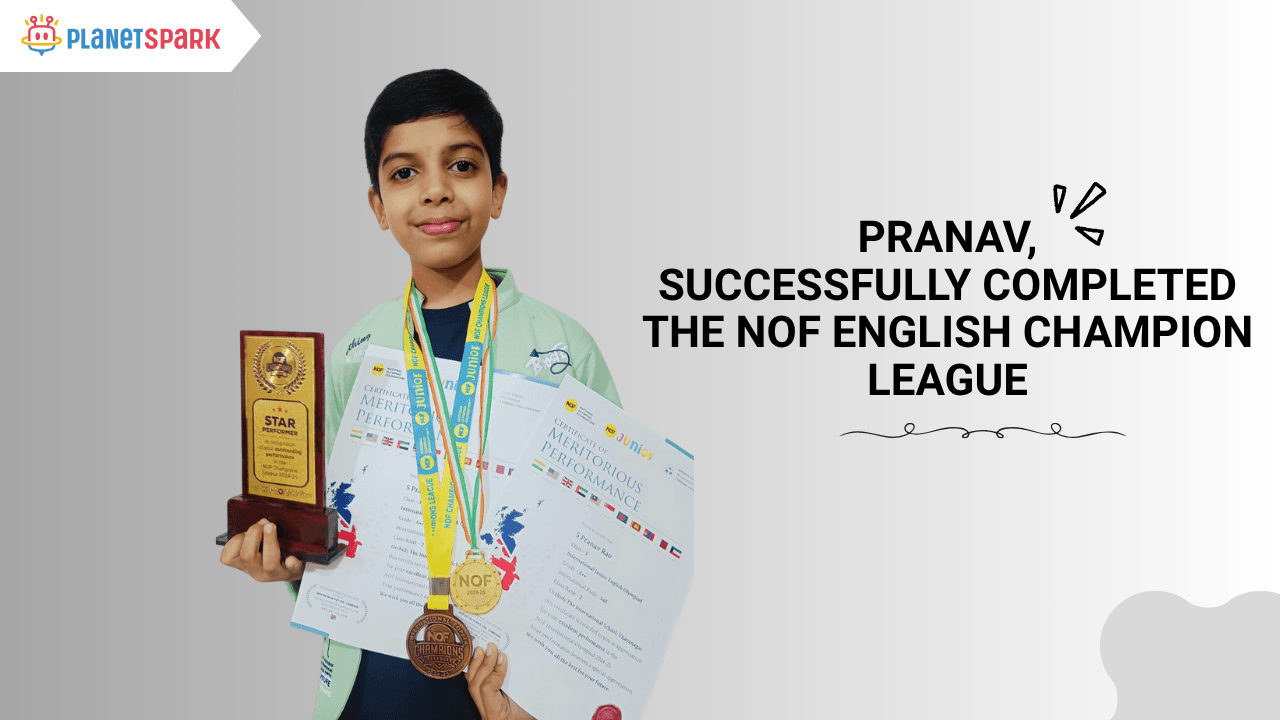
Pranav, a bright Grade 3 learner, successfully completed the NOF English Champion League, where he demonstrated growing confidence in spoken English and advanced communication skills. What began as simple speaking activities and guided conversations gradually helped him express ideas more clearly and confidently. Through regular practice, Pranav learned how to frame sentences smoothly, use the right words, and speak with better clarity and flow. With consistent support and encouragement, he became more comfortable sharing his thoughts in discussions and presentations. His journey shows how focused spoken English practice can turn early curiosity into confident, effective communication.
Final Thoughts on Advanced Communication in Spoken English
Advanced communication is an essential skill that helps children speak English clearly, confidently, and with purpose. When children learn how to organize their thoughts and express ideas effectively, spoken English no longer feels difficult or forced. Instead, it becomes natural, meaningful, and enjoyable. Children feel more comfortable sharing ideas, asking questions, and participating actively in conversations.
PlanetSpark’s structured spoken English coaching helps children develop advanced communication skills step by step through guided practice and real speaking experiences. This approach builds confidence gradually and ensures children apply what they learn in everyday situations. As a result, children are prepared not only to speak English well, but also to communicate confidently in school, social interactions, and daily life.
Advanced communication for kids means learning how to speak English with clarity, confidence, and purpose. It helps children organise thoughts, form clear sentences, and express ideas naturally in everyday conversations. This skill allows children to move beyond short answers and communicate meaningfully in spoken English.
Advanced communication skills help children use spoken English more confidently and clearly. They improve sentence flow, reduce hesitation, and make speaking English feel natural instead of stressful. These skills also help children express ideas accurately and be better understood by others.
Basic English speaking focuses on vocabulary and simple sentences, while advanced communication focuses on structure, clarity, and expression. Advanced communication helps children connect ideas and speak confidently in complete sentences. It also teaches children how to respond naturally in conversations rather than memorizing lines.
Advanced communication builds confidence by helping children know what to say and how to say it. When children speak clearly and are understood, they feel more comfortable participating in class and conversations. This confidence encourages children to speak more often and share ideas openly.
Children can practise advanced communication through regular speaking activities, storytelling, discussions, and guided spoken English practice. Real conversation practice helps children improve clarity, pronunciation, and confidence. Consistent practice allows children to use spoken English comfortably in different situations.
PlanetSpark helps children develop advanced communication through live 1:1 spoken English sessions, expert feedback, and structured speaking activities. This guided approach helps children speak English clearly, confidently, and naturally. Over time, children build strong communication habits that support everyday speaking.