
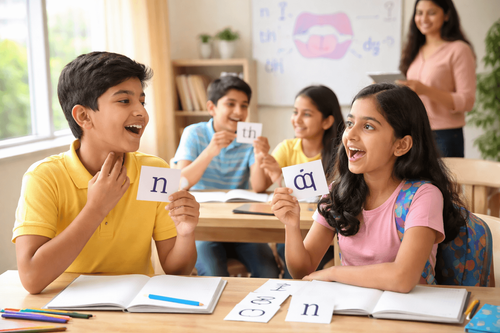

Have you ever noticed your child saying words that sound a bit “clipped” or unnatural, even though they know the right pronunciation? Many parents overlook a key factor in natural speech: assimilation in pronunciation. Assimilation is how sounds change and blend when we speak, helping language flow smoothly and sound more natural. Understanding this concept can make a big difference in your child’s fluency, confidence, and clarity.
In this blog, we’ll break down what assimilation is, its importance, and simple ways to help your child master it. You’ll also discover how structured guidance, like PlanetSpark’s personalized sessions, can make pronunciation practice fun and effective.
What is Assimilation in Pronunciation?
Assimilation meaning in linguistics refers to the way sounds change when they occur together in speech. In simple terms, when we speak naturally, some sounds adjust to make speech smoother and easier to say. For children, this is an essential skill because it helps them speak fluently and be easily understood.
For example, the phrase “good boy” is often pronounced as “goob boy,” where the “d” sound blends with the “b.” Similarly, “green park” may sound like “greem park.” These subtle changes happen automatically in fluent speech but can be tricky for children who are learning how to pronounce words naturally.
The difference between written and spoken language is important here. While a sentence on paper shows every letter clearly, real-life speech blends sounds together. Teaching children assimilation helps bridge this gap. When kids learn to notice and practice these changes, they begin speaking more naturally, improving both fluency and confidence in everyday conversations.
Why Assimilation Matters for Kids
Assimilation is not just a technical concept, it has a direct impact on a child’s communication skills. Natural, fluent speech helps children express ideas clearly, participate confidently in class, and connect better with peers. Without understanding assimilation, children may speak in a choppy or overly careful way, which can affect clarity and make them hesitant to talk.
Pronunciation affects how well children are understood. Even if a child knows the right words, mispronounced or “unblended” sounds can confuse listeners. Over time, repeated struggles may lower confidence and willingness to participate in conversations or presentations.
Additionally, assimilation strengthens listening skills. When children notice how sounds blend in speech, they can follow instructions and understand conversations more easily. This skill also supports reading aloud and storytelling, helping them become confident communicators. In short, mastering assimilation gives children a solid foundation for clear, natural, and confident speech.
Common Types of Assimilation
There are several types of assimilation that children can learn to recognize and practice:
1. Progressive Assimilation
A sound changes because of the preceding sound.
Example: “cats” pronounced as “kats” with the “s” blending naturally.
2. Regressive Assimilation
A sound changes because of the following sound.
Example: “input” may sound like “imput,” where the “n” adjusts to the “p.”
3. Reciprocal Assimilation
Two neighboring sounds influence each other.
Example: “handbag” often pronounced as “hambag.”
Understanding these types helps children become aware of how words flow together in everyday speech. Using simple, repeated examples, kids learn to anticipate changes in sound and practice them until speaking naturally becomes easier.
Tips to Teach Assimilation to Children
Parents can make assimilation practice fun and interactive with small, consistent exercises:
Listening Exercises: Play audio of natural speech and ask your child to repeat it. Focus on blended sounds.
Storytelling Practice: Encourage children to read short stories aloud, highlighting phrases where sounds merge.
Tongue Twisters & Rhymes: Games like “red lorry, yellow lorry” teach children to transition sounds smoothly.
Reading Aloud: Have kids read sentences slowly at first, then gradually faster, paying attention to sound changes.
Consistency is key. Short daily practice sessions, 5 to 10 minutes can significantly improve fluency. Reward effort, not perfection, and make learning playful to keep children motivated.
How PlanetSpark Helps Kids Master Pronunciation
PlanetSpark provides personalized, mentor-led sessions designed to help children practice natural pronunciation in a supportive environment. Instead of focusing solely on individual words, sessions emphasize sentence flow, sound blending, and expressive speaking.
Activities include:
Storytelling & Roleplay: Children practice natural speech while expressing ideas creatively.
Fluency Drills: Guided exercises that focus on correct assimilation of sounds.
Confidence-Building: Gentle corrections and positive reinforcement ensure children feel safe to experiment and speak.
This structured approach helps children speak clearly, sound natural, and gain confidence in real-life communication situations. Parents can also track progress and get practical tips for home practice.
Success Story Spotlight: Nirvana Mehta, Age 10

Nirvana Mehta, a 10-year-old student, truly exemplifies the impact of consistent practice and guided learning. She participated in the Intersection Poem Recitation competition and emerged as the First Prize Winner, impressing judges with her confidence, expression, and precise voice control.
Before joining PlanetSpark, Nirvana often hesitated while speaking in front of an audience and struggled to convey her thoughts with clarity. Through structured sessions focused on expressive speaking, storytelling, and public speaking techniques, she gradually built her verbal confidence and learned to deliver content with poise.
Her journey highlights how children can transform their communication skills when provided with the right guidance and supportive environment. From classroom hesitation to confidently presenting on stage, Nirvana’s success underscores the value of nurturing strong communication and public speaking skills from an early age.
Parent Tips: Supporting Practice at Home
Parents can reinforce assimilation skills with simple daily practices:
Daily Reading Aloud: Encourage your child to read sentences with blended sounds slowly, then naturally.
Listening & Repeating Games: Play recordings or read short dialogues, and have your child imitate natural speech.
Model Natural Speech: Speak clearly and smoothly at home, showing how sounds blend.
Praise and Encourage: Focus on effort and improvement rather than perfection.
Even short, consistent practice helps children notice patterns in speech, improve fluency, and gain confidence. Combining home support with structured sessions like PlanetSpark’s ensures steady, measurable progress.
Common Misconceptions About Assimilation in Speech
Many parents and even educators misunderstand assimilation in pronunciation. A common myth is that children must pronounce every letter exactly as written to speak correctly. While correct pronunciation is important, speech naturally involves blending sounds. Expecting children to speak rigidly can make them hesitant and self-conscious.
Another misconception is that assimilation is only for older children or advanced speakers. In reality, children of all ages can learn how sounds interact in speech, which helps them sound natural and fluent. Some parents also believe that practicing assimilation is only necessary for public speaking or reading aloud, but it actually benefits everyday conversation, comprehension, and social interaction.
Understanding these myths helps parents approach pronunciation practice more effectively. Recognizing that speech is fluid, and that blending sounds is natural, allows children to focus on clarity and expression instead of perfection. With guided practice, children can overcome hesitation, improve fluency, and communicate confidently in all settings.
Written vs Spoken Language: Why Kids Struggle with Natural Pronunciation
Children often struggle to speak naturally because written language and spoken language are different. In writing, every word is distinct, and letters are pronounced individually. In speech, sounds frequently merge, change, or adapt depending on the words around them. This difference can confuse children learning to read aloud or speak fluently.
For instance, the phrase “want to” is written separately, but when spoken naturally, it sounds like “wanna.” Without guidance, children may read exactly what’s written, which can make their speech sound stiff or unnatural. This gap affects not only fluency but also confidence in class or social situations.
Parents can help by emphasizing listening and repetition of natural speech patterns. Children should hear how sentences flow, how sounds blend, and how rhythm affects comprehension. By bridging the gap between written and spoken language, children can internalize pronunciation patterns, speak confidently, and improve overall communication skills.
How Assimilation Helps Children Sound Fluent and Confident
Assimilation allows children to speak smoothly, naturally, and without unnecessary pauses. When kids learn to blend sounds correctly, sentences flow effortlessly, making their speech easier to understand. This fluency is directly linked to confidence, as children are less likely to hesitate or repeat themselves.
Fluent speech also improves classroom participation. Children who can speak naturally are more willing to answer questions, share ideas, and participate in discussions. It boosts peer interaction and encourages leadership in group activities.
Other benefits include:
Enhanced Listening Skills: Understanding blended sounds helps children follow instructions better.
Improved Reading Aloud: Awareness of sound patterns allows smoother storytelling.
Stronger Self-Esteem: Clear, fluent communication increases confidence in both academic and social settings.
Overall, mastering assimilation gives children a solid foundation for effective communication, helping them succeed in school and everyday life.
Book a Free Demo: See how PlanetSpark can help your child master natural pronunciation.
Fun Classroom and Home Activities to Teach Assimilation
Making assimilation practice fun keeps children engaged and motivated. Activities can be short, interactive, and designed for both home and classroom environments.
Storytelling Practice: Ask children to read short stories aloud, emphasizing natural blending of sounds.
Rhymes and Songs: Nursery rhymes or songs help children notice and replicate sound patterns.
Tongue Twisters: Phrases like “red lorry, yellow lorry” train mouth muscles and improve smoothness.
Echo Games: Parents or teachers say a sentence naturally, and children repeat it, mimicking blended sounds.
Roleplay Exercises: Kids act out dialogues, focusing on how sounds change in conversation.
These playful exercises make assimilation feel like a game rather than a chore. Consistent practice using such activities helps children internalize patterns, improving both pronunciation and fluency.
Common Mistakes Kids Make While Learning Assimilation
Children often make predictable mistakes when practicing assimilation, but knowing these can help parents guide them effectively:
Overcorrecting Each Word: Focusing on each letter rather than the flow of speech can make children hesitant.
Skipping Blended Sounds: Children may pronounce words too rigidly, missing natural sound changes.
Rushing Through Words: Speaking too quickly without attention to blended sounds can reduce clarity.
Avoiding Practice: Children may feel frustrated if the exercises seem repetitive or difficult.
Parents and educators can prevent these mistakes by encouraging slow, attentive practice, using games, and praising effort. Highlighting progress rather than perfection ensures children stay motivated and develop natural, confident speech patterns over time.
Step-by-Step Guide to Practicing Assimilation at Home
Parents can help children master assimilation with simple, structured steps:
Listen First: Play recordings or read aloud naturally, letting the child hear correct blending of sounds.
Repeat Slowly: Have the child mimic sentences slowly, focusing on smooth transitions between words.
Highlight Patterns: Point out common changes, like “want to → wanna” or “handbag → hambag.”
Use Fun Activities: Incorporate rhymes, storytelling, or tongue twisters for repeated practice.
Gradually Increase Complexity: Move from simple phrases to longer sentences as confidence grows.
Praise and Encourage: Celebrate small improvements to reinforce learning and confidence.
With consistent daily practice, children begin to internalize sound patterns, speak more fluently, and gain the confidence to communicate effectively in all settings.
How Assimilation Improves Reading Aloud and Storytelling Skills
Assimilation in pronunciation plays a vital role in helping children read aloud smoothly and tell stories effectively. When children understand how sounds blend together naturally, they can focus on the flow of sentences rather than pausing awkwardly between words. This makes their reading sound fluent, engaging, and expressive.
For example, phrases like “don’t know” often blend into “don’no.” A child aware of this change can read more naturally, making stories enjoyable to listen to. Teachers and parents notice children becoming more confident as their reading becomes smoother, and classmates are more likely to engage with them during storytelling sessions.
Other benefits include:
Improved comprehension: When speech flows naturally, children can focus on the meaning rather than decoding each word.
Better expression: Children can add emotion, tone, and rhythm to their storytelling.
Increased participation: Confident reading aloud encourages kids to volunteer for presentations or classroom activities.
By practicing assimilation regularly, children not only improve pronunciation but also develop fluency, expression, and storytelling confidence that lasts beyond the classroom.
Impact of Natural Speech on Classroom Participation
Children who struggle with pronunciation or choppy speech often hesitate to participate in class. Natural speech, supported by assimilation, helps children speak smoothly and be easily understood, which directly boosts classroom involvement.
When children know their sentences will be clear and fluent, they feel confident answering questions, sharing ideas, or reading aloud. This confidence encourages active participation, peer interaction, and collaborative learning. Teachers also notice a positive change in engagement and responsiveness.
Key impacts include:
Enhanced clarity: Smooth speech reduces misunderstandings during discussions.
Higher self-esteem: Children feel proud to contribute in front of classmates.
Better peer relationships: Clear communication helps children form connections and work in groups effectively.
Encouraging natural speech through assimilation ensures that children are not just present in the classroom, they are active, confident participants who can express themselves without fear of mistakes.
Why Early Practice Strengthens Listening and Speaking Skills
Starting assimilation practice early has lasting benefits. Young children are naturally more adaptable to new speech patterns, making it easier to internalize how sounds blend in everyday language. Early practice builds a foundation for fluent speech, better comprehension, and stronger communication skills.
When children regularly practice blending sounds, they also become better listeners. They can recognize how words change in conversation, which improves understanding of instructions, questions, and peer dialogue. This skill is essential not only for speaking but also for reading comprehension and active learning.
Benefits of early practice include:
Faster fluency development: Consistent exposure helps children speak smoothly sooner.
Stronger confidence: Early wins motivate children to engage in conversations.
Long-term communication skills: Children retain natural pronunciation habits into school and social interactions.
Early practice ensures that children gain both listening and speaking proficiency, giving them a strong advantage academically and socially.
Try a Trial Class: Give your child hands-on experience with fun, mentor-led speaking activities.
How Mispronunciation Affects Self-Esteem and Peer Interaction
Children who struggle with pronunciation may feel self-conscious about speaking in front of others. Mispronounced words can lead to teasing, misunderstandings, or repeated corrections, which may reduce a child’s self-esteem and willingness to communicate.
Peer interaction is also affected. Children who are hesitant to speak may withdraw from group discussions, skip reading aloud, or avoid participating in class activities. Over time, this can create a cycle of reduced confidence and limited language practice, making progress slower.
Key points:
Reduced confidence: Children may fear mistakes and avoid speaking.
Social challenges: Difficulty expressing ideas can affect friendships and group work.
Academic impact: Hesitation in class participation can limit learning opportunities.
Awareness of these effects helps parents and educators act early, providing structured support and positive reinforcement to help children overcome pronunciation challenges.
Building Confidence Through Structured Speaking Practice
Structured speaking practice is one of the most effective ways to help children overcome pronunciation challenges and gain confidence. Activities such as storytelling, roleplay, reading aloud, and guided discussions allow children to practice natural speech in a supportive environment.
Mentors can gently correct mispronunciations, model fluent speech, and gradually increase the complexity of sentences. This approach ensures children feel safe experimenting with words and sounds without fear of judgment. Regular, structured practice also reinforces assimilation patterns, helping children speak smoothly and clearly.
Benefits include:
Improved fluency: Children develop natural rhythm and flow in speech.
Enhanced clarity: Pronunciation becomes more accurate and understandable.
Boosted confidence: Children feel proud of their ability to communicate effectively.
When children consistently practice in structured, supportive settings, they develop not just pronunciation skills but self-assurance, verbal spontaneity, and readiness to participate confidently in any social or academic situation.
Why Choose PlanetSpark?
PlanetSpark offers a structured, mentor-led approach to help children speak naturally and confidently. Instead of focusing solely on individual words, the sessions emphasize sentence flow, sound blending, and expressive speech, helping children internalize the patterns of assimilation effortlessly.
Personalized Learning: Each child receives tailored guidance based on their current pronunciation level and learning style. Mentors identify specific areas where the child needs support and design activities that address these gaps while keeping sessions engaging.
Interactive Practice: Through storytelling, roleplay, and guided discussions, children practice natural speech in meaningful contexts. This hands-on approach ensures that assimilation and fluent pronunciation are not abstract concepts but part of real-life communication.
Confidence Building: PlanetSpark provides a safe, encouraging environment where children can experiment with sounds and sentence flow without fear of mistakes. Positive reinforcement and gentle correction help children build confidence alongside fluency.
Conclusion
Mastering assimilation in pronunciation is key to helping children speak fluently, naturally, and confidently. When kids understand how sounds blend in everyday language, they can read aloud smoothly, participate actively in class, and communicate their ideas clearly with peers and teachers. Early practice strengthens listening, speaking, and comprehension skills, laying a strong foundation for long-term academic and social success.
PlanetSpark provides children with structured, personalized sessions that make learning pronunciation fun, interactive, and effective. With expert mentors, engaging activities, and consistent guidance, children not only improve their fluency but also gain confidence in expressing themselves in every setting. By combining home practice with PlanetSpark’s professional support, your child can transform pronunciation challenges into opportunities for confident communication.