
Digraph Words Made Simple: Improve Reading Skills with PlanetSpark
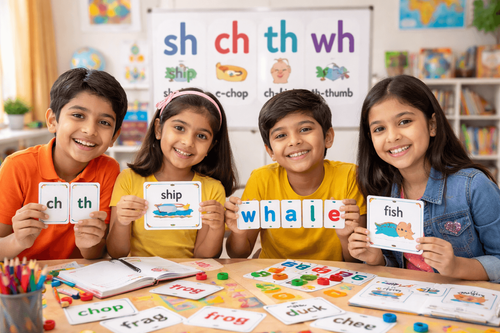

Table of Contents
- Why Do Digraph Words Confuse Many Young Readers?
- What Is a Digraph? (Simple Explanation for Parents)
- Why Learning Digraph Words Is Important for Reading Skills
- Common Types of Digraph Words Kids Learn
- Digraph Words List for Daily Reading Practice
- Common Mistakes Kids Make With Digraph Words
- Success Story Spotlight
- Easy Ways Parents Can Teach Digraph Words at Home
- Fun Activities to Practice Digraph Words
- How PlanetSpark Helps Kids Master Digraphs
- When Should Parents Seek Extra Phonics Support?
- Conclusion
Reading fluently is more than just recognising letters, it’s about understanding how sounds work together in words. One area where many children struggle is digraph words, where two letters come together to make a single sound. When children don’t recognise these sounds, they may pause, mispronounce words, or guess, which affects both confidence and comprehension.
Learning digraphs is essential for building strong phonics skills. When children can identify and pronounce digraph words correctly, they read more smoothly, speak clearly, and enjoy learning. In this guide, we will explain digraphs in a simple, parent-friendly way, share a helpful digraph words list, and show how structured support from PlanetSpark can help your child master reading and pronunciation with confidence.
Why Do Digraph Words Confuse Many Young Readers?
Many young children struggle with reading because they encounter letter combinations that behave differently than single letters. Digraph words—where two letters come together to create one sound, often cause hesitation and mispronunciation. For example, a child may read “ship” as “sip” or “chip” as “cip,” not realising that the two letters work together to make a single sound. This is especially common with digraphs like ch, th, sh, and ph.
Parents often notice that their child pauses frequently, guesses words, or skips over challenging words entirely. These signs indicate difficulty decoding the digraph correctly. When children are unsure of how to pronounce a word, reading becomes slow and choppy. Over time, this can affect not only fluency but also confidence, making children reluctant to read aloud in class or at home.
How this confusion affects children:
Slow reading: Pauses after digraph words break sentence flow.
Pronunciation errors: Mispronouncing digraph words may make reading less clear.
Loss of confidence: Repeated mistakes can make children avoid reading aloud.
Guessing words: Children may guess unfamiliar words instead of decoding them.
Understanding digraphs early on helps children overcome these struggles. When kids learn the patterns of digraphs, they read more smoothly, gain confidence, and enjoy stories rather than feeling frustrated.
What Is a Digraph? (Simple Explanation for Parents)
Digraph Meaning in Child-Friendly Language
A digraph is a group of two letters that come together to make one sound. Unlike single letters, where each letter has its own sound, a digraph combines letters so that the child hears a single, blended sound. For example:
ch in chip
sh in ship
th in think
The key is that children must recognise both letters together and understand that together they make a unique sound. This distinction helps children decode words correctly instead of reading each letter separately.

Why both letters matter:
Removing one letter changes the word’s pronunciation.
Recognising the digraph ensures accurate spelling.
Understanding the pattern supports reading fluency.
Digraph vs Consonant Blends
Parents often confuse digraphs with consonant blends, but they are different.
Digraph: Two letters make one sound.
Examples: ch in chip, sh in ship
Consonant blend: Two or more letters make separate sounds, which are heard together.
Examples: bl in black, st in stop
By explaining this difference simply, parents can guide their child to recognise when letters form a single sound versus when each letter must be pronounced. Understanding this distinction is crucial for reading accuracy and building confidence with new words.
Why Learning Digraph Words Is Important for Reading Skills
Learning digraph words is a foundational step in improving a child’s reading fluency and overall phonics skills. When children master digraphs, they can recognise and pronounce these sounds automatically, which makes reading faster, smoother, and more enjoyable.
Key benefits of learning digraph words:
Improves pronunciation accuracy: Children learn to say words correctly, reducing errors that make reading unclear.
Helps children read smoothly without guessing: Recognising digraphs ensures children decode words rather than guessing them, improving comprehension.
Builds strong phonics foundations: Understanding digraph patterns helps children tackle more complex words and lays the groundwork for advanced reading skills.
Supports spelling and speaking skills: When children know how digraphs sound, they can spell words correctly and speak with greater clarity.
Mastering digraphs also boosts confidence. Children who struggle with pronunciation or frequently guess words can feel frustrated or anxious when reading aloud. Learning digraph words systematically allows them to approach reading calmly, enjoy stories, and participate actively in classroom discussions. It’s a critical skill that bridges the gap between basic letter recognition and fluent, confident reading.
Common Types of Digraph Words Kids Learn
CH Digraph Words
The CH digraph produces a unique sound that is different from the sounds of the letters “C” and “H” individually. Children often struggle because they may try to say each letter separately, resulting in mispronounced words. Teaching the CH digraph early helps children recognise words like chip, chess, chair, and cheese more quickly.
Why CH digraphs matter:
They appear frequently in everyday vocabulary.
Correct pronunciation supports smoother reading.
Understanding CH helps with spelling patterns later.
Tips for practice:
Emphasise the single “ch” sound when reading aloud.
Ask your child to repeat words slowly, then gradually faster.
Use familiar words from their environment to build recognition.
Want your child to read digraph words confidently? Book a free reading and speaking demo with PlanetSpark today.
SH Digraph Words
The SH digraph makes a soft, hushing sound that children often confuse with “s” or “h” individually. Words like ship, shop, shut, and sheep help children practise this sound in different contexts. Mispronouncing SH words is common because the lips and tongue must work together to produce the right sound.
Key practice points for SH digraphs:
Show children how the lips round slightly for the “sh” sound.
Provide multiple examples in short sentences for context.
Encourage listening to the sound before reading the word aloud.
Correct recognition of SH digraph words builds confidence in reading and helps children avoid guessing, improving both fluency and comprehension.
TH Digraph Words
The TH digraph is particularly tricky because it has two variations: soft /θ/ as in think, and hard /ð/ as in this. Children often mix these sounds up, which can make reading aloud confusing. Words like think, thank, that, and these are common examples.
Why TH digraphs need extra practice:
The tongue placement is different for each sound.
Both sounds appear frequently in spoken and written English.
Consistent practice improves pronunciation and reading speed.
Parents can help by modelling the sounds clearly, repeating words slowly, and using fun activities to reinforce learning.
Digraph Words List for Daily Reading Practice
Having a simple, beginner-friendly digraph words list allows children to practise consistently at home. Daily reading of digraph words helps build fluency and confidence. The list should focus on common digraphs like CH, SH, and TH.
Examples of digraph words:
CH words: chip, chess, chair, cheese, church
SH words: ship, shop, shut, sheep, shape
TH words: think, thank, this, these, thin
Tips for daily practice:
Spend 5–10 minutes each day reading the words aloud.
Encourage your child to pronounce the digraph sound first, then the rest of the word.
Use word cards, picture books, or flashcards to make practice interactive.
Praise correct pronunciation and gently correct mistakes without pressure.
Consistent use of a digraph words list helps children internalise patterns, making it easier to decode new words and read fluently.
Common Mistakes Kids Make With Digraph Words
Learning digraph words takes time, and mistakes are completely normal. Recognising these mistakes allows parents to support children without frustration.
Common mistakes:
Saying letters separately: For example, reading chip as “c-h-ip” instead of “chip.”
Guessing words instead of decoding: Children may guess the word from context rather than sounding it out.
Mixing digraph sounds with blends: Confusing CH, SH, and TH with consonant blends like CL or ST.
Skipping tricky words: Children may avoid words they find difficult, slowing fluency.
How parents can help:
Correct gently and model the correct pronunciation.
Encourage repetition in a calm, positive environment.
Use short, consistent practice sessions to reinforce learning.
Understanding that these mistakes are a normal part of reading development helps children feel confident and motivated to continue learning.
Success Story Spotlight

Success Story: Ashwin Sathish, Age 13
Ashwin Sathish, a Grade 8 student from New Delhi, struggled with clear pronunciation and confidence in speaking. Although he had good ideas, he found it challenging to present them in front of an audience, often stumbling over tricky words.
With structured phonics practice and guided pronunciation support, Ashwin improved his clarity and fluency. Daily exercises focusing on sound patterns and word recognition helped him overcome hesitations and mistakes. Over time, he developed the confidence to express his ideas effectively.
Today, Ashwin stands tall as a TEDx Speaker, inspiring audiences with his clear, articulate communication. His journey highlights the power of structured phonics learning, persistence, and confidence-building activities. Parents can see how focused guidance at the right time can transform both reading and speaking skills.
Easy Ways Parents Can Teach Digraph Words at Home
Parents can play a vital role in helping children master digraph words through simple, consistent practice.
Effective strategies:
Model correct pronunciation: Read aloud and emphasise the digraph sound.
Short daily routines: Five to ten minutes of focused practice works better than long sessions.
Use picture words and storybooks: Connect words to images for easier recall.
Encourage repetition without pressure: Let children repeat words naturally, praising effort.
Start with familiar words: Choose words your child encounters every day to build recognition.
Practising at home regularly reinforces classroom learning and makes children more comfortable with reading aloud. The key is consistency, patience, and encouragement.
Struggling with your child’s reading fluency? Try a personalised trial class to improve pronunciation, comprehension, and confidence.
Fun Activities to Practice Digraph Words
Making learning playful helps children enjoy practising digraphs while improving reading and phonics skills.
Activities:
Sound spotting games: Ask your child to find digraph words in books or stories.
Sentence reading activities: Create simple sentences using digraph words and read them aloud together.
Digraph word hunts: Place cards around the room and let your child identify digraph words.
Speaking games: Encourage storytelling using digraph words to reinforce pronunciation naturally.
Fun, interactive practice improves retention and makes children confident readers. It also turns learning into a positive experience rather than a chore.
How PlanetSpark Helps Kids Master Digraphs
Mastering digraph words can be challenging for many children, especially when learning independently. PlanetSpark provides a structured, supportive approach that helps children overcome these hurdles while building confidence in reading and speaking.
Structured phonics-based approach:
PlanetSpark’s curriculum focuses on systematic phonics learning. Children are introduced to digraphs step by step, starting with simple sounds and gradually progressing to complex words. This ensures that every child builds a strong foundation in phonics, making reading smoother and more accurate.
Personalised reading and speaking practice:
Every child learns at their own pace. PlanetSpark trainers personalise lessons to match each child’s strengths and areas for improvement. This tailored approach ensures that children receive the right level of challenge without feeling overwhelmed.
Live feedback from expert trainers:
Immediate guidance helps children correct mistakes in real-time. Trainers observe pronunciation, reading fluency, and comprehension, providing actionable feedback that accelerates learning.
Focus on confidence, clarity, and expression:
Beyond phonics, PlanetSpark encourages children to read aloud, speak clearly, and express themselves confidently. This holistic approach ensures children not only master digraph words but also enjoy reading and communicating effectively.

When Should Parents Seek Extra Phonics Support?
Even with consistent home practice, some children may need additional support to master digraph words. Recognising these signs early ensures children do not develop reading anxiety or lag behind.
Signs home practice is not enough:
Persistent pauses or hesitation while reading digraph words
Frequent mispronunciations despite repeated practice
Difficulty recognising digraphs in new words
When mispronunciation affects confidence:
Children who struggle with reading aloud may avoid participation in class or reading activities. Low confidence can reduce motivation and slow progress.
How guided learning accelerates progress:
Structured support from trained educators provides clarity, corrects mistakes in real-time, and builds strong phonics skills. With personalised guidance, children gain confidence, read fluently, and enjoy learning.
Conclusion
Learning digraph words is an essential step in developing strong reading and phonics skills. Children progress at different rates, and patience is key. Parents should provide regular, supportive practice while recognising that occasional mistakes are part of learning.
With consistent effort, patience, and the right support, children can move from hesitant reading to confident fluency. PlanetSpark’s structured and personalised approach ensures that every child develops the skills and confidence to read, speak, and communicate effectively.
Frequently Asked Questions
A digraph is a combination of two letters that make one sound, like CH in chip, SH in ship, or TH in think. Learning digraphs helps children read smoothly and pronounce words correctly.
CH digraph words include common examples like chip, chair, chess, and cheese. Practising these regularly helps children recognise the “ch” sound and read confidently.
TH digraphs have two sounds: soft /θ/ as in think and hard /ð/ as in this. Children often confuse the sounds, making pronunciation and reading tricky without guided practice.
A digraph words list provides focused practice for children. Reading words with CH, SH, and TH daily improves recognition, pronunciation, and fluency, building a strong phonics foundation.
Children are usually ready to learn digraph words between ages 5 and 7, after they are comfortable with basic letter sounds and simple words. Individual readiness may vary.
PlanetSpark combines structured phonics, personalised practice, and live feedback from expert trainers. Children learn digraphs clearly, read fluently, and gain confidence in pronunciation and speaking.