
Master the “EG” Sound Words with Fun Phonics & Reading Lessons


Table of Contents
- What Are EG Sound Words?
- Understanding the EG Sound Pattern
- Why EG Sound Words Matter in Early Learning
- EG Sound Words as a Word Family
- Common EG Sound Words for Children
- How to Pronounce EG Sound Words Correctly
- Difference Between EG Sound Words and Similar Sounds
- Using EG Sound Words in Sentences
- Reading Practice with EG Sound Words
- Spelling Practice for EG Sound Words
- Fun Activity: Make EG Sound Words
- Strengthening Reading Skills with EG Sound Words
- Blending Sounds in EG Words
- Segmenting EG Sound Words
- Writing Practice with EG Sound Words
- Using EG Sound Words in Daily Conversation
- Common Mistakes Children Make with EG Sound Words
- Comparing EG Sound Words with Other Word Families
- Fun Classroom Activity: EG Sound Circle
- Fun Home Activity: EG Word Match
- Reading Short Passage with EG Sound Words
- Spelling Challenge for EG Sound Words
- Checkpoint 2: Skill Assessment
- Tips for Parents to Support Learning
- Tips for Teachers for Classroom Teaching
- Building Confidence Through Repetition
- Advanced Practice with EG Sound Words
- Identifying EG Sound Words in Paragraphs
- Creative Writing Using EG Sound Words
- Speaking Practice with EG Sound Words
- EG Sound Words and Listening Skills
- Common Confusions and How to Fix Them
- Revision Table for EG Sound Words
- Daily Practice Plan for EG Sound Words
- Fun Game: EG Sound Treasure Hunt
- Self-Assessment Checklist for Children
- Parent Support Tips for Long-Term Learning
- Teacher Guidance for Classroom Success
- Why EG Sound Words Are an Important Foundation
- Final Learning Outcomes
- About PlanetSpark : Spoken English
Understanding how letters form sounds is key to confident reading. The EG sound pattern helps children in Classes 5 and 6 read fluently, spell accurately, and speak with confidence. These simple words build strong language foundations and make learning enjoyable.
At PlanetSpark, expert coaches guide kids step by step with interactive lessons and live practice, making phonics fun and effective. Children master EG sound words while improving fluency, vocabulary, and confidence, turning reading and speaking into an exciting journey.
What Are EG Sound Words?
EG sound words are words that end with the letters “eg” and produce a short “e” vowel sound followed by a hard “g” sound. The sound is quick and crisp, which makes it easy for children to pronounce once they understand the pattern.
Examples of EG sound words include :
leg
beg
peg
keg
These words follow a simple structure and are often among the first word families children learn in phonics.
"Boost Your Child’s Reading Confidence – Book a Free Demo Class Today!"
Understanding the EG Sound Pattern
Every EG sound word follows the same basic pattern:
Beginning consonant + “eg”
This pattern helps children decode words easily. Once they recognise the “eg” ending, they only need to focus on the starting sound.
For example:
l + eg = leg
b + eg = beg
p + eg = peg
This pattern recognition reduces guessing and increases reading speed .
Why EG Sound Words Matter in Early Learning
EG sound words are important because they help children:
Develop phonemic awareness
Recognise sound patterns in words
Improve reading fluency
Strengthen spelling accuracy
Build confidence in speaking
When children understand sound families like EG, they stop reading letter by letter and begin reading whole words smoothly.
EG Sound Words as a Word Family
A word family is a group of words that share the same ending sound. EG sound words belong to the “eg” word family.
Learning word families helps children:
Learn many words at once
Predict how new words sound
Improve vocabulary naturally
Instead of memorising each word separately, children learn one pattern and apply it to many words.
Common EG Sound Words for Children
Here is a list of commonly used EG sound words that children should recognise:
| EG Sound Word | Meaning |
|---|---|
| leg | A body part used for standing and walking |
| beg | To ask for something earnestly |
| peg | A small pin or clip |
| keg | A container used to store liquids |
| egg | Food from a bird (similar sound pattern) |
Practising these words regularly helps children gain fluency.
How to Pronounce EG Sound Words Correctly
To pronounce EG sound words correctly, children should focus on two sounds:
Short “e” sound
Hard “g” sound
Pronunciation tips:
Say the vowel sound quickly
Do not stretch the word
End clearly with the “g” sound
Example:
leg → leh-g
beg → beh-g
Parents can ask children to repeat the word slowly first and then say it faster.
Difference Between EG Sound Words and Similar Sounds
Children often confuse EG sound words with other similar word families such as AG or IG.
Comparison helps clear confusion.
| Sound Family | Examples |
|---|---|
| EG | leg, beg, peg |
| AG | bag, tag, rag |
| IG | big, pig, dig |
Listening carefully to the vowel sound is the key difference.
Book a Free Demo Class Today
Discover how guided learning can improve your child’s reading and speaking skills.
Using EG Sound Words in Sentences
Using words in sentences helps children understand meaning and usage.
Examples:
I hurt my leg while playing.
Do not beg for chocolates.
Use a peg to hang clothes.
The juice is kept in a keg.
Encourage children to form their own sentences using EG sound words.
Reading Practice with EG Sound Words
Reading aloud strengthens sound recognition and confidence.
Short reading practice:
The cat hurt its leg.
The boy did not beg.
She used a peg to hang socks.
Parents should encourage slow, clear reading.
Spelling Practice for EG Sound Words
Spelling becomes easier when children understand sound patterns.
Simple spelling steps:
Say the word aloud
Listen to the “eg” sound
Write the word
Read it again
Daily spelling practice improves memory and accuracy.
Fun Activity: Make EG Sound Words
Activity name: Word Builder
Steps:
Write “eg” on a page
Add different letters before it
Read each word aloud
Examples:
beg
leg
peg
This activity builds word confidence.
Strengthening Reading Skills with EG Sound Words
Once children recognise EG sound words, the next step is to practise them in reading. Reading helps children see how these words appear naturally in sentences and stories. When EG sound words are practised regularly, children begin to read faster and with more confidence.
Reading does not need to be difficult or boring. Short sentences and simple stories work best at this stage.
Examples for reading practice:
The dog hurt its leg.
Please do not beg for toys.
Use a peg to hold the paper.
Children should read slowly first and then try reading smoothly.
Blending Sounds in EG Words
Blending is the process of joining sounds together to form a word. EG sound words are excellent for teaching blending because they are short and clear.
Blending steps:
Say the starting sound
Say the “eg” sound
Join them together
Example:
b + eg → beg
l + eg → leg
Parents can ask children to tap their fingers for each sound and then say the full word.
Segmenting EG Sound Words
Segmenting is the opposite of blending. It means breaking a word into individual sounds. This skill helps children with spelling.
Segmenting example:
leg → l / e / g
beg → b / e / g
Children should practise saying each sound clearly before writing the word.
Writing Practice with EG Sound Words
Writing helps children remember words better. When children write EG sound words, they connect sounds with letters.
Writing activities:
Write each EG word three times
Circle the “eg” part in each word
Use coloured pencils to highlight sounds
Example writing list:
leg
beg
peg
keg
Encourage neat handwriting and correct spelling.
Using EG Sound Words in Daily Conversation
Children learn faster when words are used in real-life conversations. Parents and teachers can gently include EG sound words during the day.
Examples:
Be careful with your leg.
Do not beg for snacks.
Use a peg to clip the paper.
This helps children understand that learning words is useful beyond books.
Common Mistakes Children Make with EG Sound Words
Children may sometimes confuse EG sound words with similar-sounding words.
Common mistakes:
Saying “bag” instead of “beg”
Mixing up “leg” and “log”
Forgetting the short E sound
Correction tips:
Ask children to listen carefully
Repeat the word slowly
Compare with other word families
Gentle correction builds confidence.
Comparing EG Sound Words with Other Word Families
Comparing word families helps children hear sound differences.
| Word Family | Example Words |
|---|---|
| EG | leg, beg, peg |
| AG | bag, rag, tag |
| OG | log, dog, fog |
Ask children to say each word aloud and notice how the vowel sound changes.
Fun Classroom Activity: EG Sound Circle
Activity name: Sound Circle
Steps:
Children sit in a circle
Teacher says an EG word
Each child says a new EG word
The game continues until no new word is found
This activity improves listening and speaking skills.
Support Your Child’s English Journey
Clear sound patterns make learning English simple and fun.
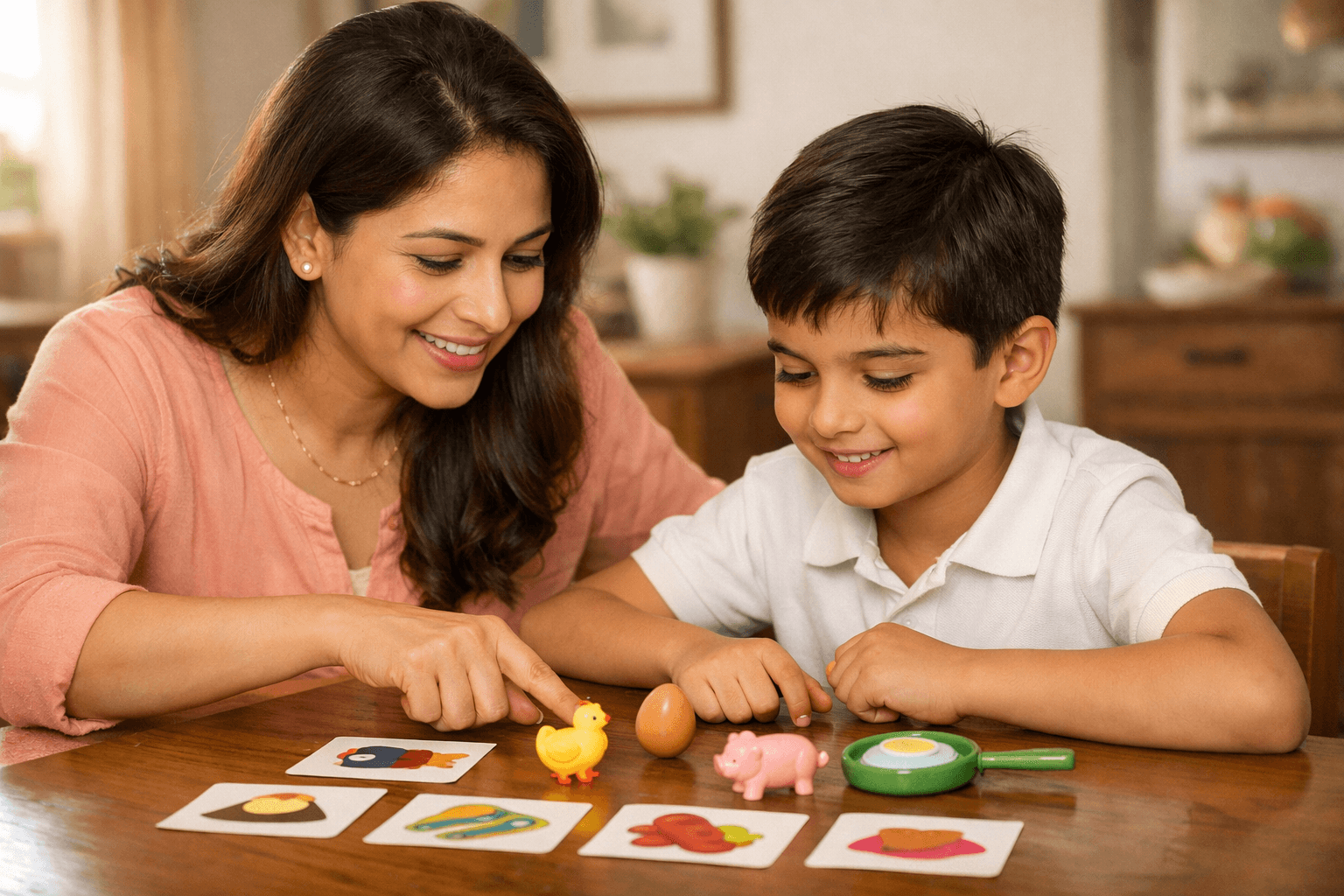
Fun Home Activity: EG Word Match
Activity name: Word Match Game
Steps:
Write EG words on cards
Write pictures or meanings on other cards
Match the word with the correct picture
This makes learning playful and engaging.
Reading Short Passage with EG Sound Words
Short passages help children see how words work together.
Sample passage:
The boy hurt his leg while running. He did not beg for help. His friend gave him a peg to hold his paper. The boy felt better soon.
Ask children to read aloud and identify EG sound words.
Spelling Challenge for EG Sound Words
Spelling challenges encourage focus.
Spelling list:
leg
beg
peg
keg
Parents can say the word aloud and ask the child to write it.
Checkpoint 2: Skill Assessment
Children should now be able to:
Blend and segment EG words
Read EG words in sentences
Spell EG words correctly
Use EG words while speaking
If children struggle, revision through games is recommended.
Tips for Parents to Support Learning
Parents can:
Read with children daily
Practise word families together
Praise effort, not just accuracy
Keep learning stress-free
A calm environment encourages better learning.
Tips for Teachers for Classroom Teaching
Teachers can:
Use flashcards
Encourage group reading
Reinforce sound patterns
Give positive feedback
This builds a supportive classroom atmosphere.
Building Confidence Through Repetition
Repetition is key to mastery. Reading, writing, and speaking EG sound words regularly helps children become confident readers and writers.
Children should practise a little every day rather than studying for long hours.
Advanced Practice with EG Sound Words
After children have learned to read, spell, and use EG sound words, it is important to deepen their understanding through advanced practice. Advanced practice does not mean difficult learning. It means using the same words in richer ways so children feel confident using them naturally.
At this stage, children should be encouraged to:
Read EG sound words without hesitation
Recognise them inside longer sentences
Use them confidently while speaking
Spell them correctly without prompts
This stage focuses on mastery, not memorisation.
Identifying EG Sound Words in Paragraphs
Children should now move from single sentences to short paragraphs. This helps them understand how EG sound words appear naturally in reading material.
Sample paragraph:
The boy hurt his leg while playing in the park. He did not beg his friend for help. Instead, he stood up and smiled. His teacher used a peg to clip his drawing on the board.
Activity instructions:
Ask children to read the paragraph aloud
Circle all the EG sound words
Read only the EG sound words again
This activity strengthens recognition and reading fluency.
Build Strong Reading Skills from the Basics
Phonics learning helps children become confident readers and speakers.
Creative Writing Using EG Sound Words
Creative writing helps children apply learning independently. EG sound words can be easily included in short stories.
Writing prompt:
Write 4–5 sentences using at least three EG sound words.
Sample answer:
The boy hurt his leg in the playground. He did not beg for help. His teacher used a peg to hang his drawing. He felt happy again.
Encourage children to write freely and focus on correct spelling.
Speaking Practice with EG Sound Words
Speaking practice builds confidence. Children should feel comfortable saying EG sound words clearly during conversations.
Speaking activity:
Ask children to explain their favourite game
Encourage them to include one EG sound word naturally
Gently correct pronunciation if needed
This activity improves clarity and expression.
EG Sound Words and Listening Skills
Listening is just as important as reading and writing. Children should practise listening carefully to hear EG sounds.
Listening game:
Adult says a mix of words
Child raises hand when they hear an EG sound word
Word list example:
leg, bag, pen, beg, dog, peg
This improves sound discrimination.
Common Confusions and How to Fix Them
Some children may still confuse EG sound words with similar sounds.
Common confusions:
Saying bag instead of beg
Saying log instead of leg
Replacing short E with short A
Correction strategies:
Repeat both words slowly
Ask children to notice mouth movement
Compare sounds side by side
Patience is key during correction.
Revision Table for EG Sound Words
| Word | Sound | Sentence |
|---|---|---|
| leg | short E | My leg hurts today. |
| beg | short E | Do not beg for toys. |
| peg | short E | Use a peg to clip papers. |
| keg | short E | The juice is kept in a keg. |
Revision tables help visual learners remember better.
Daily Practice Plan for EG Sound Words
Short daily practice works better than long study sessions.
Suggested plan:
Day 1: Read EG words aloud
Day 2: Write EG words
Day 3: Use EG words in sentences
Day 4: Play listening games
Day 5: Revise all words
This balanced approach keeps learning stress-free.
Vivansh’s Inspiring Journey: From Learner to Author
Vivansh, a bright 5th grader, has achieved something remarkable at just 10 years old. With creativity and determination, he became an author and successfully sold 17 copies of his very first book! His story shows that age is no barrier to achieving dreams and that with the right guidance and effort, young minds can accomplish incredible things.

Fun Game: EG Sound Treasure Hunt
Activity name: Treasure Hunt
Steps:
Write EG sound words on slips of paper
Hide them around the room
Ask children to find and read them aloud
Use each word in a sentence
This game makes phonics exciting.
Self-Assessment Checklist for Children
Children can check their own learning.
Checklist:
I can read EG sound words easily
I can spell EG sound words correctly
I can use EG sound words in sentences
I can hear the EG sound clearly
Self-check builds independence.
Parent Support Tips for Long-Term Learning
Parents can support learning by:
Reading together daily
Encouraging slow and clear pronunciation
Making learning playful
Avoiding pressure
Positive support leads to confident learners.
"Help Your Child Read, Spell, and Speak Better – Claim a Free Class!"
Teacher Guidance for Classroom Success
Teachers can:
Reinforce sound families
Encourage peer reading
Use revision charts
Praise improvement
A supportive classroom boosts learning outcomes.
Why EG Sound Words Are an Important Foundation
EG sound words may seem small, but they form a strong base for reading and spelling. When children master simple sound patterns, they find it easier to learn longer and more complex words later.
Phonics learning builds step by step, and EG sound words are one important step in that journey.
Final Learning Outcomes
By the end of this blog, children should be able to:
Identify EG sound words confidently
Read them fluently
Spell them accurately
Use them naturally in speech and writing
These skills help children become strong, independent readers.
About PlanetSpark : Spoken English
PlanetSpark helps children speak English fluently, clearly, and confidently through engaging 1:1 live classes. Our Spoken English Program strengthens pronunciation, fluency, vocabulary, and conversational skills enabling kids to express themselves confidently in school and everyday life.
1. 1:1 Expert Spoken English Coaching
Every child learns with a certified spoken English trainer who personalises sessions based on the child’s pace, level, and learning style ensuring clear speech and steady improvement.
2. Personalised Learning Path
A customised curriculum builds grammar, vocabulary, listening skills, and sentence formation step by step guiding learners from basic speaking to fluent communication.
3. AI-Powered Pronunciation & Fluency Feedback
With SparkX video analysis and AI-led speaking practice, students receive instant feedback on pronunciation, clarity, tone, and pacing turning practice into measurable progress.
4. Interactive & Gamified Learning
Fun tools like Word Wisdom, Listen & Spell, Fluency Quests, and daily challenges make English practice exciting and consistent, helping kids learn through play.
5. Confidence for Real Conversations
Through storytelling, roleplays, and daily conversation practice, children gain the confidence to speak naturally and clearly anytime, anywhere.
Frequently Asked Questions
EG sound words are words that end with the letters “eg” and have a short “e” vowel sound followed by a hard “g” sound, such as leg, beg, and peg.
EG sound words help children understand phonics patterns, improve reading fluency, strengthen spelling skills, and build confidence in speaking.
Children usually begin learning EG sound words in early grades, but Classes 5 and 6 benefit from revising them to improve accuracy and confidence.
Parents can read aloud, play word games, practise spelling, and encourage children to use EG sound words in daily conversation.
Yes. Understanding basic sound families like EG helps children decode longer and more complex words in the future.