
How to Improve English Communication Skills at PlanetSpark


Learning English is not just about knowing words. It is about using those words confidently in real life. For children, strong English communication skills help in school, friendships, presentations, and future opportunities. Parents often ask how we can improve our English at an early age so that children feel confident and fluent. The answer is that kids can learn English faster when practice is fun, structured, and interactive. This blog explains how to improve English speaking skills step by step, using proven methods inspired by global learning experts and adapted specially for kids. From daily speaking habits to confidence building, every section focuses on helping children speak English clearly, naturally, and without fear.

How to Improve English Communication Skills
Improving English communication involves balancing fluency, vocabulary, pronunciation, and confidence. For children, this growth occurs only when they have regular opportunities to talk, listen, and think in English. Simply reading textbooks or watching videos is not enough. Real progress begins when kids actively speak English and engage in English Talking Practice during everyday situations such as school discussions, playtime conversations, or storytelling at home.
Strong English communication skills are built on a few important pillars:
- Speaking English daily using simple, complete sentences to build fluency
- Learning new words in context, so children know when and how to use them correctly
- Listening carefully to correct pronunciation, tone, and sentence flow
- Practising real-life conversations that mirror everyday situations
- Receiving regular feedback and encouragement to improve without fear of mistakes
When these elements work together, children stop hesitating and start expressing their thoughts clearly. Over time, they naturally understand how to speak English easily, confidently, and without translating in their minds.
Help your child speak English with confidence in real-life situations. Start the right learning approach today.
Speak English Every Day
Daily practice is the fastest and most effective way to improve speaking skills. Even ten to fifteen minutes of focused practice each day can create noticeable improvement. Children should be encouraged to speak English naturally at home, during playtime, or while sharing stories about their day. The more English becomes part of their routine, the more comfortable they feel using it.
Simple and effective daily speaking activities include:
- Talking about school events or class activities in English
- Describing a favourite toy, cartoon character, or book
- Answering simple questions in complete sentences
- Practising short conversations with parents, siblings, or friends
Consistency plays a key role in building fluency. When children speak English every day, they stop translating thoughts from their native language. Instead, they begin to think and respond naturally in English, which improves speed, clarity, and confidence.
Small daily practice leads to big speaking confidence. Make English a daily habit. Book Your Free Trial Now!
Learn Through Fun Conversations
Children learn language fastest when they are relaxed and enjoying the process. Fun conversations remove the fear of making mistakes and encourage kids to participate freely. Instead of memorising answers, children learn how to respond naturally, just like they would in real life.
When kids pretend to be a shopkeeper, act out a classroom presentation, or play simple question-and-answer games, they practice real communication. These playful situations help them understand tone, sentence flow, and response timing. Over time, such activities teach children how to speak English fluently in everyday situations rather than depending on memorised lines.
By turning practice into play, children begin to speak English without pressure and enjoy expressing their thoughts.
Turn learning into play and watch your child speak freely. Book Your Free Trial Now!
Listen More to Speak Better
Good speakers are always good listeners first. When children regularly listen to correct English, they naturally pick up sentence structure, pronunciation, and rhythm. Listening helps them understand how English sounds in real conversations.
- Hearing English stories, watching educational videos, and listening to trained speakers expose children to correct pronunciation and natural sentence flow.
- When kids repeat what they hear, they slowly build clarity and accuracy in their speech.
- This process helps them understand how to speak correct English correctly without confusion or hesitation.
The more children listen, the easier it becomes for them to speak English clearly and confidently.
Better listening today leads to clearer speaking tomorrow. Claim Your Free Trial Now!
Build English Vocabulary
Vocabulary is the foundation of strong communication. Children often struggle to express themselves, not because they lack ideas, but because they lack the right words. Learning vocabulary in context helps children understand how words are used in real sentences.
Instead of memorising word lists, children should learn phrases, word groups, and everyday expressions. Using new words in daily conversations and revising them through speaking makes learning long-lasting. This approach strengthens overall English speaking skills and allows children to communicate clearly and confidently.
With the right vocabulary, children find it easier to speak English in different situations.
Give your child the right words to express every idea. Book a Trial Now!
Practice Clear Pronunciation
Clear pronunciation makes English easy to understand and helps children feel confident while speaking. When words are pronounced clearly, listeners understand the message without confusion. Many children face pronunciation challenges due to mother tongue influence, where sounds from their native language affect how English words are spoken. With regular and guided practice, these challenges can be corrected step by step.
For example, Children often confuse sounds like “v” and “w”, “b” and “p”, or silent letters in words like knife or listen.
Learning phonetic sounds helps children understand how each letter or sound should be spoken. Practising word stress, such as saying PRE-sent (noun) and pre-SENT (verb), teaches them how meaning can change based on pronunciation. Intonation practice helps children sound more natural, especially in questions and conversations.
Speaking slowly in the beginning allows children to focus on clarity instead of speed. Gentle corrections from teachers or parents help kids improve without feeling embarrassed or afraid of making mistakes. As pronunciation improves, children start speaking more confidently and clearly. They also begin to understand how I improve my speaking skills practically and effectively.
Clear speech encourages children to speak English confidently in classrooms, during presentations, while talking to friends, and in everyday social situations.
Clear speech builds strong confidence. Start English practice early with Planet Spark!
Think in English
Thinking in English is one of the most important steps toward fluency. When children think in English, they do not pause to translate their thoughts. This helps them speak faster, sound more natural, and feel more confident while communicating.
Simple daily habits can help children develop this skill, especially when practised at home:
- Naming objects around the house in English, such as a table, a window, or a school bag
- Describing actions while doing them using short sentences like “I am opening the book” or “I am drawing a picture.”
- Thinking of simple English sentences in the mind before speaking
- Reducing dependence on translating from the native language
Over time, these small but consistent practices train the brain to process English directly. This makes speaking easier and helps children understand how to learn English at home in a natural and stress-free way. When children think in English, they find it much easier to speak English without hesitation.
Help your child think in English and speak without hesitation. Book Your Free Trial Now!
Speak with Confidence
Confidence is just as important as grammar or vocabulary when learning a language. Children need a safe and supportive environment where they feel comfortable making mistakes. Mistakes are not failures; they are an important part of the learning process.
Confidence grows when effort is appreciated more than perfection. Simple praise, positive feedback, and encouragement help children feel motivated. Practising speaking in small steps, such as sharing a short story at home or answering questions in class, helps children overcome fear gradually. Tracking progress through regular assessments or visible milestones also shows children how much they have improved.
Confident children are more willing to speak English wherever necessary, whether during classroom discussions, presentations, group activities, or everyday conversations. As confidence increases, communication becomes clearer, stronger, and more natural.
Confidence turns practice into powerful communication. Start English practice early with Planet Spark!
Learn English with PlanetSpark
Build fluency, strong vocabulary, clear pronunciation, and everyday conversational confidence.
What Makes PlanetSpark Effective:
- Daily Live English Conversations: Interactive sessions focused on real-life situations like school, home, travel, and interviews.
- Accent Neutralisation and Clear Speech: Targeted practice to reduce mother tongue influence using phonetics and pronunciation modules.
- Smart Vocabulary Building: Words, phrases, and collocations taught in context through active dialogue.
- Real-Life Role Play: Practice practical conversations such as ordering food, public speaking, asking questions, and explaining ideas.
- Instant Feedback and AI Reports: Real-time corrections with AI-powered fluency and progress insights.
- Confidence Progress Tracking: Regular assessments and visible growth trackers to motivate kids and inform parents.
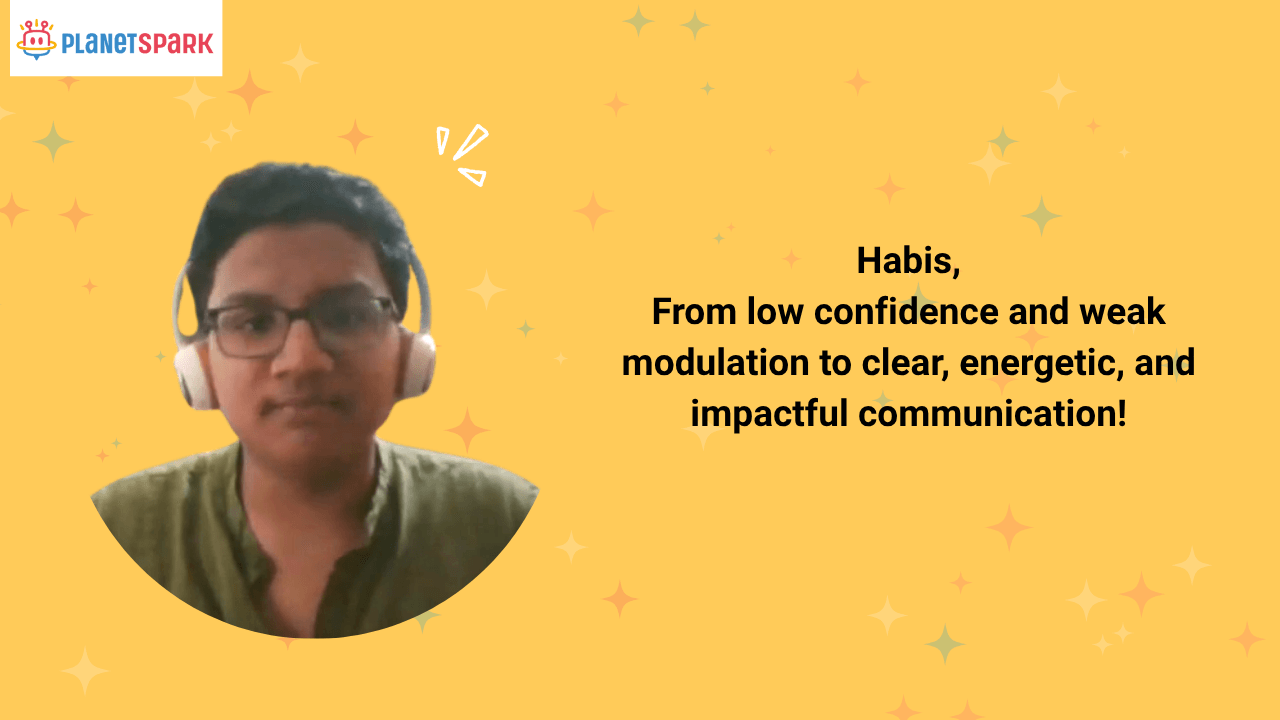
Habis was once a shy speaker who struggled to express his thoughts clearly. With regular speaking practice and guided feedback at PlanetSpark, he transformed his communication skills. Today, Habis delivers his ideas with clarity, confidence, and a strong stage presence, proving how structured spoken English practice can help students speak English fluently and fearlessly.
Final Thoughts
Learning to speak English confidently is a journey that combines consistent practice, fun activities, and guided learning. By building fluency, vocabulary, pronunciation, and confidence, children can communicate clearly in classrooms, social settings, and real-life situations. Structured programs like PlanetSpark provide daily English Talking Practice, interactive conversations, and personalised feedback to make learning effective and enjoyable. When children practice regularly, think in English, and engage in playful yet purposeful activities, they not only learn how to improve English Speaking Skills but also discover how to speak English easily and fluently. Whether it is presenting in school, interacting with peers, or expressing ideas creatively, these skills empower children for lifelong success.
Turn everyday conversations into confident English speaking. Enrol with PlanetSpark today.
Frequently Asked Questions
Children can improve their English at home by practising daily speaking exercises, naming objects in English, describing actions, listening to English stories, and engaging in short conversations with family members. Consistency is key to building fluency and confidence.
Structured practice through interactive activities, role plays, and guided feedback helps kids improve fluency, vocabulary, and pronunciation. Programs like PlanetSpark provide daily live sessions that give children practical experience in speaking English naturally.
Fluency comes from regular practice, thinking in English, and building confidence. Children should speak English every day, listen to correct pronunciation, use new words in context, and participate in fun conversational activities to reduce fear of mistakes.
Focusing on phonetic sounds, word stress, and intonation while speaking slowly and clearly helps. Guided corrections from teachers or trainers, coupled with English Talking Practice, allow children to improve pronunciation and speak confidently.
Effective home learning combines short daily speaking exercises, listening to English stories, practising vocabulary in context, and thinking in English. Structured guidance and regular feedback ensure children practice correctly and build long-term communication skills.