
TOEFL Reading Exam: Tips to Score High with Confidence


Table of Contents
- What is the TOEFL Reading Exam?
- Structure and Format of the TOEFL Reading Section
- Types of Questions in the TOEFL Reading Exam
- Common Challenges Students Face in the TOEFL Reading Exam
- Best Strategies to Prepare for the TOEFL Reading Exam
- Reading Tips for IELTS That Also Help in TOEFL
- Time Management Tips for TOEFL Reading Success
- Mistakes to Avoid in the TOEFL Reading Exam
- Tips for IELTS Reading to Improve Overall Performance
- Why Choose PlanetSpark for TOEFL Reading Preparation
- Conclusion
The toefl reading exam is one of the most important sections for anyone aiming to study or work in an English-speaking environment. It evaluates how well you can understand academic texts, interpret meanings, and analyze information under time pressure. Many candidates underestimate this section, assuming reading is easy, but the reality is quite different.
The reading passages are often dense, filled with complex vocabulary, and require strong comprehension skills. You are not just reading for general understanding, but also for detail, inference, and logical connections. This makes preparation essential rather than optional.
A well-prepared candidate approaches the exam with a clear strategy. Instead of reading every word, they know how to skim, scan, and identify key ideas quickly. This is where techniques similar to reading tips for ielts become highly useful. Both exams require strong analytical reading skills, time management, and the ability to handle unfamiliar topics confidently.
To succeed, you need more than just good English. You need:
- Strong focus and concentration
- The ability to identify keywords quickly
- Practice with academic-style passages
- Smart answering techniques
Many learners struggle because they read passively. They go through the text without actively engaging with it. This leads to confusion, wasted time, and incorrect answers. On the other hand, successful candidates treat reading as an active process.
Here is a quick comparison of passive vs active reading:
| Approach | Behavior | Result |
|---|---|---|
| Passive Reading | Reads without focus | Low accuracy |
| Active Reading | Identifies key points, predicts answers | High accuracy |
Another important aspect is confidence. When you practice regularly and use proven methods, your confidence naturally improves. This directly impacts your performance during the exam.
The toefl reading exam is not about memorization. It is about understanding patterns, practicing consistently, and applying the right techniques. Once you develop these skills, scoring high becomes much more achievable.
What is the TOEFL Reading Exam?
The toefl reading exam is a standardized test section designed to assess your ability to read and understand academic English. It is part of the TOEFL test, which is widely accepted by universities and institutions across the world.
This section focuses on how well you can:
- Understand complex written material
- Identify main ideas and supporting details
- Interpret vocabulary in context
- Make logical inferences
Unlike general reading, this exam uses passages similar to university textbooks. These passages cover subjects like history, science, environment, and social studies. You do not need prior knowledge of these topics, but you must be able to understand them quickly.
Key Features of the TOEFL Reading Exam
- Passages are academic in nature
- Questions test both direct and indirect understanding
- Time is limited, requiring speed and accuracy
- Vocabulary plays a crucial role
The goal is not just to check if you can read English, but whether you can function in an academic environment where reading is essential.
Skills Tested in the Exam
To perform well, you need to develop multiple reading skills. These include:
- Skimming: Quickly understanding the main idea
- Scanning: Finding specific information
- Inference: Reading between the lines
- Vocabulary recognition: Understanding words from context
Interestingly, many of these skills overlap with tips for ielts reading. This means that if you prepare strategically, you can improve performance in both exams simultaneously.
Difference Between TOEFL Reading and General Reading
| Aspect | TOEFL Reading | General Reading |
|---|---|---|
| Purpose | Academic understanding | Basic comprehension |
| Difficulty Level | High | Moderate |
| Time Pressure | Strict | Flexible |
| Question Types | Analytical | Simple |
Why This Section Matters
The reading section often sets the tone for your overall TOEFL score. A strong performance here can significantly boost your total score. It also reflects your ability to handle academic coursework in English-speaking environments.
Many test-takers make the mistake of focusing only on grammar or speaking. However, reading is equally important because it builds the foundation for other sections like writing and listening.
“Confidence begins when you start speaking.”
Build fluency with PlanetSpark spoken English course today.
Structure and Format of the TOEFL Reading Section
Understanding the structure of the toefl reading exam is the first step toward scoring high. When you clearly know what to expect, you can plan your strategy better and avoid surprises during the test. This section follows a fixed pattern, and mastering it gives you a strong advantage.
The reading section typically consists of multiple passages followed by a set of questions. Each passage is academic and similar to content you would find in university textbooks. The topics can vary widely, but the format remains consistent.
Overview of the Exam Format
Here is a simple breakdown:
| Component | Details |
|---|---|
| Number of Passages | 3 to 4 |
| Questions per Passage | 10 |
| Total Questions | 30 to 40 |
| Time Duration | 54 to 72 minutes |
Each passage is around 700 words long, which means you must manage both reading and answering efficiently.
How the Section is Structured
- Each passage appears first
- Questions follow immediately after the passage
- You can navigate between questions within the same passage
- You cannot return to previous sections once completed
This structure demands focus and quick decision-making.
Passage Types You Can Expect
The passages are usually based on:
- Scientific topics
- Historical events
- Environmental studies
- Social sciences
You do not need prior knowledge of these subjects. Everything you need to answer is provided within the passage itself.
Time Allocation Strategy
Time management is critical in the toefl reading exam. A smart approach is:
- Spend 3 to 4 minutes skimming the passage
- Spend 12 to 15 minutes answering questions
- Keep 1 to 2 minutes for review
This structured timing helps avoid rushing at the end.
Comparison with IELTS Reading Format
Many candidates also prepare using reading tips for ielts, and it helps to understand the difference:
| Feature | TOEFL Reading | IELTS Reading |
|---|---|---|
| Format | Computer-based | Paper or computer |
| Question Style | Mostly multiple choice | Variety of types |
| Navigation | Easy switching | Limited navigation |
| Timing | Per section | Overall timing |
Even though formats differ, the core skills remain similar. That is why applying tips for ielts reading can improve your performance here as well.
Important Observations
- Questions follow the order of the passage
- Some questions require deep understanding, not just scanning
- Long passages can feel overwhelming without practice
To handle this effectively:
- Focus on paragraph-level understanding
- Identify topic sentences quickly
- Avoid reading every word in detail
“Your voice deserves to be heard clearly.”
Improve your communication skills with PlanetSpark spoken English course.
Types of Questions in the TOEFL Reading Exam
The toefl reading exam includes a variety of question types designed to test different reading skills. Knowing these question types in advance can significantly improve your accuracy and save time during the exam.
Each question is not just about finding information. It tests how well you understand, analyze, and interpret the text.
Main Types of Questions
Below are the most common question types you will encounter:
| Question Type | What It Tests |
|---|---|
| Factual Information | Direct details from the passage |
| Inference | Understanding implied meaning |
| Vocabulary | Meaning of words in context |
| Sentence Simplification | Ability to identify key idea |
| Insert Text | Logical placement of sentences |
| Summary | Understanding overall passage |
Factual Information Questions
These are the easiest type. You need to locate specific information directly from the passage.
Tips:
- Scan for keywords
- Match exact details
- Avoid overthinking
Inference Questions
These require deeper thinking. The answer is not directly stated but can be understood from the context.
To solve:
- Look for clues in surrounding sentences
- Understand tone and implication
- Eliminate extreme options
This is where strategies similar to reading tips for ielts become useful, as both exams emphasize inference skills.
Vocabulary Questions
You will be asked the meaning of a word based on how it is used in the passage.
Effective approach:
- Read the sentence carefully
- Replace the word mentally
- Choose the option that fits best
Sentence Simplification Questions
You need to identify the sentence that best captures the main idea of a complex sentence.
Focus on:
- Removing extra details
- Keeping the core meaning intact
Insert Text Questions
You are given a sentence and asked where it fits best in the passage.
Strategy:
- Look for connecting words
- Identify logical flow
- Match ideas before and after
Summary Questions
These are usually at the end of a passage and require selecting key points.
Tips:
- Focus on main ideas only
- Ignore minor details
- Check logical consistency
Common Mistakes to Avoid
- Choosing answers that sound correct but are not in the passage
- Ignoring context in vocabulary questions
- Rushing through inference questions
Smart Strategy
To handle all question types effectively:
- Practice each type separately
- Learn elimination techniques
- Improve reading speed gradually
Many learners also benefit from combining preparation with tips for ielts reading, as it strengthens overall comprehension and analytical ability.
“Fluency is a skill you can master.”
Start your journey with PlanetSpark spoken English course.
Common Challenges Students Face in the TOEFL Reading Exam
The toefl reading exam may seem straightforward at first, but many students face consistent challenges that affect their performance. These difficulties are not always due to weak English skills. In most cases, they arise from a lack of strategy, poor time management, or unfamiliarity with the exam format.
Understanding these challenges is important because once you identify them, you can work on solving them effectively.
Difficulty in Understanding Complex Passages
One of the biggest challenges is dealing with long and complex passages. The language used is academic, and sentences are often lengthy with advanced vocabulary.
Common issues include:
- Getting stuck on difficult words
- Losing track of the main idea
- Misinterpreting the context
Instead of trying to understand every word, focus on the overall meaning. This is where techniques similar to reading tips for ielts can be helpful, as they train you to read efficiently rather than perfectly.
Time Pressure and Poor Time Management
Many students struggle to complete all questions within the given time. They either spend too much time reading or rush through questions at the end.
Typical mistakes:
- Reading the passage too slowly
- Spending too much time on one question
- Not leaving time for review
A lack of time strategy can lead to unnecessary stress and lower accuracy.
Weak Vocabulary Skills
Vocabulary plays a major role in the toefl reading exam. Students often find it difficult to understand words used in unfamiliar contexts.
Challenges include:
- Confusing similar words
- Not understanding academic terms
- Relying on memorization instead of context
To overcome this, practice learning words in context rather than in isolation.
Difficulty in Inference-Based Questions
Inference questions are tricky because answers are not directly stated. Many students either overthink or choose answers that are too extreme.
Common errors:
- Assuming information not given
- Ignoring subtle clues
- Misreading tone or intent
Improving logical thinking is key to solving these questions.
Lack of Active Reading Skills
Passive reading is a major problem. Students read without engaging with the text, which leads to poor retention.
Signs of passive reading:
- Forgetting what was read
- Re-reading the same lines multiple times
- Difficulty answering questions quickly
Active reading involves:
- Identifying keywords
- Noticing transitions
- Predicting answers
Comparison with IELTS Challenges
Many of these issues are also seen in IELTS preparation. That is why applying tips for ielts reading can help build stronger reading habits.
| Challenge | TOEFL Reading | IELTS Reading |
|---|---|---|
| Time Pressure | High | High |
| Vocabulary | Academic | Mixed |
| Inference | Frequent | Moderate |
| Passage Length | Long | Variable |
Best Strategies to Prepare for the TOEFL Reading Exam
Preparation for the toefl reading exam should be strategic, not random. Simply reading articles or solving questions is not enough. You need a structured approach that builds your skills step by step.
The right strategies can improve your speed, accuracy, and confidence significantly.
Build a Strong Reading Habit
Start by reading academic content daily. This helps you get comfortable with complex language and unfamiliar topics.
Recommended reading sources:
- Science articles
- History texts
- Research-based blogs
Focus on understanding ideas rather than translating every word.
Practice Skimming and Scanning
These are essential skills for success.
- Skimming: Read quickly to get the main idea
- Scanning: Look for specific information
Practice by setting a timer and trying to identify key points within a short time.
Use Smart Question-Solving Techniques
Instead of reading the entire passage first, try this approach:
- Read the question
- Identify keywords
- Locate the relevant part in the passage
This saves time and improves accuracy.
Improve Vocabulary in Context
Do not memorize long word lists. Instead:
- Learn words while reading passages
- Note how they are used in sentences
- Practice replacing them with synonyms
This method is more effective and long-lasting.
Follow a Practice Schedule
Consistency is more important than intensity. Create a weekly plan:
| Day | Activity |
|---|---|
| Monday | Practice 1 passage |
| Tuesday | Vocabulary + review |
| Wednesday | Practice 2 passages |
| Thursday | Analyze mistakes |
| Friday | Timed practice |
| Weekend | Full mock test |
This structured approach ensures balanced preparation.
Analyze Your Mistakes
One of the most powerful strategies is reviewing errors.
Ask yourself:
- Why did I choose the wrong answer?
- Did I misunderstand the question?
- Was it a vocabulary issue?
Learning from mistakes prevents repetition.
Apply Cross-Exam Techniques
Many strategies overlap with reading tips for ielts. Using tips for ielts reading such as skimming, scanning, and keyword identification can strengthen your performance in both exams.
Focus on Accuracy First, Then Speed
Do not rush in the beginning. First aim for correct answers, then gradually improve speed.
Steps to follow:
- Practice without time limit
- Focus on understanding
- Introduce time pressure gradually
Stay Consistent and Confident
Preparation is a gradual process. Avoid last-minute cramming. Instead, build your skills over time.
“Speak smart, speak with confidence.”
Join PlanetSpark spoken English course and transform your communication.
Reading Tips for IELTS That Also Help in TOEFL
Many students prepare for multiple English proficiency tests at the same time. The good news is that several reading tips for ielts can also improve your performance in the toefl reading exam. Both exams test similar core skills such as comprehension, speed, and analytical thinking.
Instead of preparing separately, you can use a combined strategy to strengthen your reading ability overall.
Focus on Skimming for Main Ideas
Skimming is one of the most powerful techniques used in both exams. It helps you quickly understand what a passage is about without reading every word.
How to apply it:
- Read the first and last sentence of each paragraph
- Identify the central theme
- Ignore unnecessary details initially
This technique saves time and improves clarity.
Use Scanning to Find Specific Information
Scanning helps you locate answers quickly. This is especially useful when dealing with factual questions.
Steps to follow:
- Identify keywords in the question
- Look for synonyms in the passage
- Move your eyes quickly across the text
This method is widely used in tips for ielts reading and works equally well here.
Understand Keywords and Synonyms
One common challenge in both exams is that the exact words from the question may not appear in the passage.
Example:
| Question Word | Passage Word |
|---|---|
| Important | Significant |
| Increase | Rise |
| Problem | Issue |
Training your brain to recognize synonyms can significantly boost your accuracy.
Avoid Reading Word by Word
Reading every word slows you down and reduces efficiency. Instead:
- Focus on phrases
- Identify key ideas
- Skip less important words
This habit is essential for handling long passages in the toefl reading exam.
Practice Active Reading
Active reading means engaging with the content rather than passively going through it.
You can do this by:
- Asking questions while reading
- Predicting answers
- Noticing transitions like however, therefore, in contrast
This improves retention and understanding.
Handle Difficult Vocabulary Smartly
You do not need to know every word. Instead:
- Guess meaning from context
- Look at surrounding sentences
- Eliminate incorrect options
This approach is a core part of reading tips for ielts and works effectively in TOEFL as well.
Improve Speed Without Losing Accuracy
Speed comes with practice, not pressure. Start slow and gradually increase your pace.
Suggested method:
- Practice untimed reading
- Focus on accuracy
- Introduce time limits gradually
Common Strategies That Work for Both Exams
- Identify the main idea of each paragraph
- Pay attention to transition words
- Practice regularly with academic texts
- Review mistakes carefully
“Every great speaker was once a beginner.”
Level up with PlanetSpark spoken English course.
Time Management Tips for TOEFL Reading Success
Time management plays a crucial role in the toefl reading exam. Even if you understand the passages well, poor time handling can lead to incomplete sections and lower scores.
Managing time effectively is not about rushing. It is about using your time wisely for maximum accuracy.
Understand Time Distribution
You are given a fixed time to complete multiple passages. Without a plan, it is easy to lose track.
Here is a recommended time split:
| Task | Time Allocation |
|---|---|
| Skimming the passage | 3 to 4 minutes |
| Answering questions | 12 to 15 minutes |
| Reviewing answers | 1 to 2 minutes |
Following this structure ensures balance between speed and accuracy.
Do Not Spend Too Much Time on One Question
A common mistake is getting stuck on difficult questions.
Better approach:
- Spend a maximum of 1 minute per question
- If unsure, mark and move on
- Return later if time allows
This prevents time loss and stress.
Start with Easier Questions
Build momentum by answering easy questions first.
Benefits:
- Boosts confidence
- Saves time for difficult questions
- Improves overall flow
Use Elimination Technique
Instead of searching for the correct answer directly, eliminate wrong options first.
Steps:
- Remove clearly incorrect choices
- Narrow down to 2 options
- Choose the most logical answer
This technique improves accuracy and reduces confusion.
Keep Track of Time Regularly
Do not wait until the end to check the clock.
Tips:
- Check time after each passage
- Adjust speed if needed
- Stay aware without panicking
Practice with Timed Tests
Time management improves with practice.
Effective practice method:
- Take full-length mock tests
- Simulate real exam conditions
- Analyze time spent on each question
This builds familiarity and confidence.
Avoid Overthinking
Overthinking wastes valuable time. Trust your preparation and instincts.
Common signs of overthinking:
- Changing answers repeatedly
- Doubting correct choices
- Spending too long on simple questions
Apply Techniques from IELTS Preparation
Many reading tips for ielts focus heavily on time control. Applying tips for ielts reading such as skimming quickly and scanning efficiently can greatly improve your timing in TOEFL as well.
Quick Time Management Checklist
- Do not read every word
- Focus on keywords
- Move quickly between questions
- Stay calm and focused
“Strong communication opens endless opportunities.”
Unlock your potential with PlanetSpark spoken English course.
Mistakes to Avoid in the TOEFL Reading Exam
Even well-prepared candidates make avoidable mistakes in the toefl reading exam. These mistakes can reduce accuracy, waste time, and impact overall scores. The key to improving performance is not just learning strategies, but also understanding what not to do.
By identifying these common errors, you can refine your approach and avoid repeating them during the actual exam.
Reading the Entire Passage Too Carefully
One of the biggest mistakes is trying to understand every single word in the passage.
Why this is a problem:
- It consumes too much time
- It reduces focus on key ideas
- It leads to mental fatigue
Instead, focus on:
- Main ideas of paragraphs
- Important keywords
- Overall structure of the passage
This approach aligns with reading tips for ielts, where selective reading is encouraged.
Ignoring the Question Before Reading
Many students read the entire passage first without knowing what they are looking for.
Better approach:
- Read the question first
- Identify keywords
- Then locate relevant information
This helps you read with purpose and saves time.
Falling for Trap Answers
Trap answers are designed to look correct but are slightly inaccurate.
Common types of traps:
- Answers with extreme words like always or never
- Options that are partially correct
- Choices that sound logical but are not in the passage
To avoid this:
- Always verify answers with the passage
- Do not rely on assumptions
Poor Time Management
Spending too much time on one question can affect the entire section.
Mistakes include:
- Not tracking time
- Getting stuck on difficult questions
- Rushing through the last passage
Following a structured timing strategy is essential for success in the toefl reading exam.
Overlooking Keywords and Synonyms
Many questions use different words than the passage. Students often miss correct answers because they look for exact matches.
Example:
| Question | Passage |
|---|---|
| Rapid growth | Quick expansion |
Training yourself to recognize synonyms is crucial. This is also a core concept in tips for ielts reading.
Not Practicing Enough Mock Tests
Some students rely only on theory and avoid full-length practice.
This leads to:
- Lack of familiarity with exam pressure
- Poor time management
- Lower confidence
Regular mock tests help simulate real exam conditions.
Changing Answers Without Reason
Second-guessing often leads to incorrect answers.
Avoid:
- Changing answers without strong evidence
- Doubting your first instinct unnecessarily
Trust your preparation and logical reasoning.
Passive Reading Habit
Reading without engagement results in poor understanding.
Signs include:
- Forgetting what you just read
- Re-reading multiple times
- Difficulty answering questions
Active reading is essential for accuracy and speed.
Quick Summary of Mistakes
- Reading too slowly
- Ignoring question keywords
- Falling for trap options
- Poor time control
- Lack of practice
“Speak better, express stronger.”
Enhance your fluency with PlanetSpark spoken English course.
Tips for IELTS Reading to Improve Overall Performance
Improving your reading skills is not limited to one exam. Many tips for ielts reading can help enhance your overall performance in the toefl reading exam as well. Both exams test your ability to understand, analyze, and respond to written content efficiently.
By adopting a broader approach, you can strengthen your reading skills in a more effective way.
Develop a Consistent Reading Routine
Daily reading is one of the most effective ways to improve.
You can include:
- Academic articles
- Newspapers
- Informational blogs
Focus on understanding the structure and main ideas rather than memorizing content.
Enhance Vocabulary Naturally
Vocabulary improvement should be practical and contextual.
Effective methods:
- Learn words while reading
- Note synonyms and usage
- Practice using new words in sentences
This helps in both exams where context-based understanding is important.
Practice Different Question Types
Exposure to various question formats builds confidence.
You should practice:
- Multiple choice
- True or false
- Matching information
- Summary-based questions
This variety improves adaptability and accuracy.
Work on Reading Speed
Speed is a major factor in both exams.
Ways to improve:
- Use a timer during practice
- Gradually reduce reading time
- Avoid subvocalization
Faster reading with understanding is the goal.
Strengthen Comprehension Skills
Understanding the passage is more important than finishing quickly.
Focus on:
- Identifying main ideas
- Understanding paragraph structure
- Recognizing supporting details
Use a Structured Practice Plan
A planned approach ensures steady improvement.
| Day | Focus Area |
|---|---|
| Day 1 | Reading practice |
| Day 2 | Vocabulary building |
| Day 3 | Timed test |
| Day 4 | Mistake analysis |
| Day 5 | Mixed practice |
Consistency leads to better results over time.
Apply Logical Thinking
Both exams test reasoning skills. Avoid emotional or assumption-based answers.
Always:
- Refer back to the passage
- Look for evidence
- Eliminate incorrect options
Stay Calm and Focused
Stress can affect performance. Develop a calm mindset during preparation and the exam.
Tips:
- Practice regularly
- Take breaks
- Avoid last-minute pressure
Combine Preparation Techniques
Using reading tips for ielts along with TOEFL strategies creates a strong foundation. It helps you become a more efficient and confident reader.
Why Choose PlanetSpark for TOEFL Reading Preparation
Preparing for the toefl reading exam requires more than just practice. It demands the right guidance, structured learning, and continuous improvement. PlanetSpark offers a focused approach to help learners build strong reading and comprehension skills in an effective way.
PlanetSpark is designed to improve overall communication and analytical abilities, which are essential for handling complex reading passages. With expert support and a personalized approach, learners can identify their weak areas and work on them consistently. The platform ensures that students do not just practice randomly but follow a clear and result-oriented learning path.
It also incorporates techniques similar to reading tips for ielts, helping learners strengthen their reading speed, accuracy, and understanding across different exam formats.
Key benefits include:
- Personalized learning plans based on individual performance
- Focus on active reading and comprehension skills
- Regular feedback and performance tracking
- Practice with structured and exam-relevant content
- Improvement in vocabulary through contextual learning
With the right support system and consistent practice, preparing for the toefl reading exam becomes more manageable and effective.
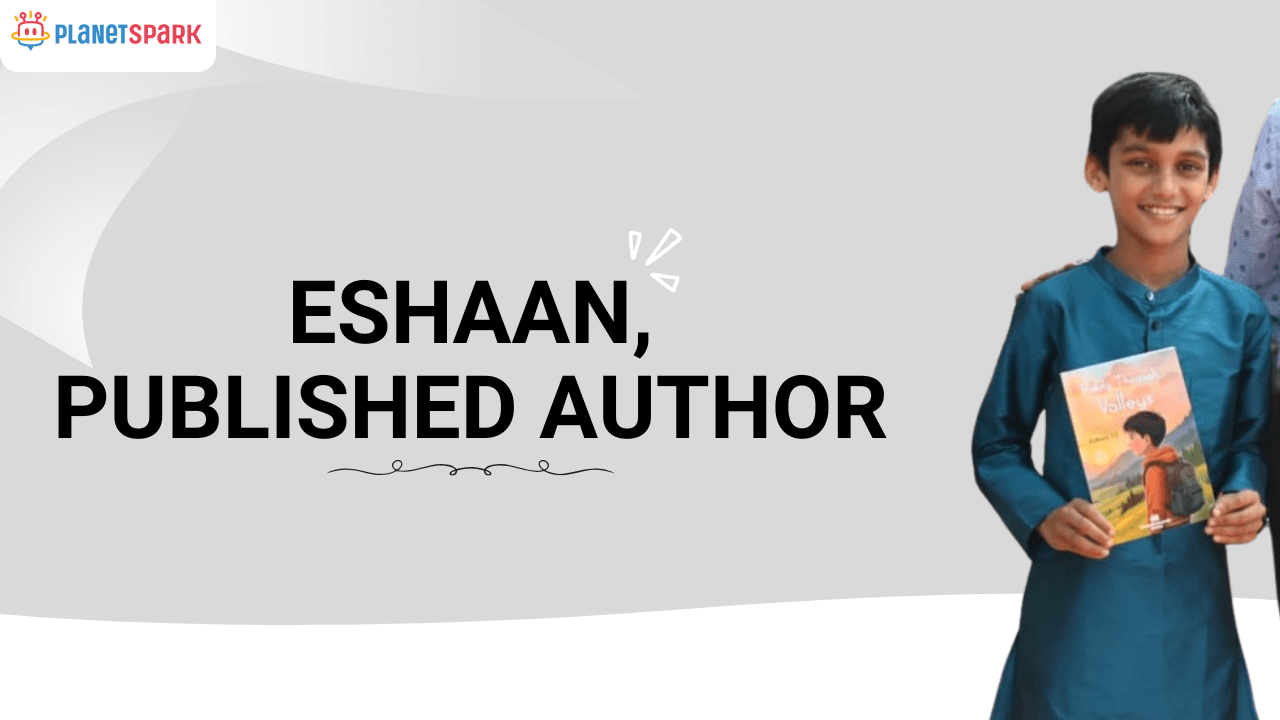
Young Author Achievement: Eshaan’s Inspiring Success Story
Eshaan, a Grade 7 learner, has proudly become a published author, transforming a simple classroom activity into a captivating and creative storybook. His journey reflects imagination, dedication, and strong storytelling skills, showcasing how consistent learning can lead to remarkable achievements.
Conclusion
The toefl reading exam is a crucial part of your overall test performance, and mastering it requires the right combination of strategy, practice, and consistency. It is not just about reading quickly, but about understanding complex ideas, identifying key information, and answering accurately under time pressure.
By now, it is clear that success depends on building strong reading habits, improving vocabulary in context, and applying smart techniques like skimming and scanning. These methods, along with reading tips for ielts, help you become a more efficient and confident reader.
Consistent practice, proper time management, and learning from mistakes are the key factors that lead to improvement. Instead of rushing, focus on understanding patterns and developing accuracy first. With the right approach, even challenging passages become easier to handle.
In the end, the toefl reading exam is not difficult if you prepare strategically. Stay consistent, stay focused, and your progress will reflect in your score.
“Confidence grows when you practice speaking.”
Practice daily with PlanetSpark spoken English course.
Frequently Asked Questions
The toefl reading exam tests your ability to understand academic English passages. It is important because it reflects how well you can handle university-level reading tasks in English-speaking environments.
The section usually includes 3 to 4 passages, each followed by around 10 questions. The total number of questions ranges between 30 to 40.
You can improve by practicing regularly, focusing on skimming and scanning techniques, building vocabulary in context, and analyzing your mistakes after each practice test.
Yes, vocabulary plays a key role. However, instead of memorizing words, you should learn to understand meanings based on context within the passage.
The toefl reading exam is computer-based and focuses more on multiple-choice questions, while IELTS includes a variety of question types. Still, many reading tips for ielts can help improve TOEFL performance.
Some effective reading tips for ielts include skimming for main ideas, scanning for specific details, identifying keywords, and understanding synonyms. These techniques are equally useful in TOEFL.