
Polite Sentences in English: Speak with Respect & Ease
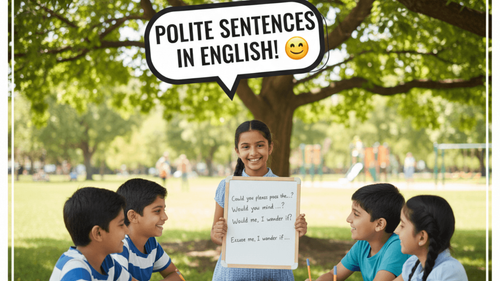

If you’re learning how to form polite sentences in English, you are setting the stage for clearer, kinder communication. Polite sentences show respect. They build goodwill. They make conversations smoother. In this blog, we will explore how to use polite sentences in English in everyday speech. You will learn simple patterns, common words, and how to sound polite without being overly formal. Whether you’re chatting with friends, classmates, or in a work setting, these skills will help.
We’ll keep our language simple. We’ll use short sentences. We’ll avoid passive voice. And we’ll stay friendly yet effective.
Why Politeness Matters
Politeness works like social glue. When you use polite sentences in English, you show that you care about the other person’s feelings. You make them feel valued. You make them more likely to listen or help. In professional settings, being polite often leads to better collaboration and trust. In personal settings, it leads to smoother relationships and fewer misunderstandings.
Using polite phrases also reflects self-confidence. You don’t need to shout your point. You can ask respectfully. You can state your request with dignity. And you create a positive atmosphere.
Basic Forms of Polite Sentences
Here are simple forms you can use:
- “Could you please …?”
- “Would you mind …?”
- “I would appreciate it if …”
- “May I …?”
- “Would you be so kind as to …?”
- Each of these helps you ask or express something without imposing.
Example phrases
- “Could you please pass the salt?”
- “Would you mind closing the window?”
- “I would appreciate it if you could send the report by tomorrow.”
- “May I borrow your pen for a moment?”
- “Would you be so kind as to check this document for me?”
Notice that all of them show respect for the listener’s choice or comfort.

Polite Sentences for Different Situations
In everyday conversation
- “Thanks so much for your help.”
- “Would you like some tea?”
- “If it’s okay with you, can we meet at 3 pm?”
- “I’m sorry to interrupt, but I have a quick question.”
- “Whenever you’re ready, we can begin.”
At work or study
- “Could you review this file when you have time?”
- “Would you mind giving feedback on this draft?”
- “I appreciate your input on the project.”
- “If possible, could you update me by Friday?”
- “May I schedule a meeting for next week?”
With friends or family
- “Would it be alright if I joined you?”
- “Thank you for being so understanding.”
- “I’d love to hear your thoughts on this.”
- “If you don’t mind, could you help me with this chore?”
- “I’m grateful for your support.”
Words That Make Sentences Polite
Here are common words and phrases you can use to make your tone gentle, warm, and respectful. These expressions soften your speech and help you sound considerate in any situation:
- please
- thank you
- excuse me
- pardon / pardon me
- may / might
- would / should
- if possible
- when you have time
- kindly
- sorry
- appreciate
- could you
- would you mind
- at your convenience
- if you don’t mind
- I’d be grateful
- I understand
- no worries
- take your time
- after you
- please feel free
- I beg your pardon
- I’m afraid
- if it’s alright
- as you wish
- hope you don’t mind
- that’s very kind of you
- much appreciated
- you’re welcome
- do you mind
- allow me
- if it’s not too much trouble
- many thanks
- thank you so much
- be my guest
- may I
- with your permission
- I’d like to
- let me know
- could I
- would it be okay
- thank you for understanding
- if that’s fine with you
- I really appreciate it
- hope it’s convenient
- when you get a moment
- I respect that
- please don’t worry
- please let me know
- please take care
- excuse the delay
- thanks for your patience
- thanks for your time
- please forgive me
- just a gentle reminder
- I value your time
- you’re too kind
- I hope you don’t mind waiting
- please continue
- please go ahead
- thanks again
- I truly appreciate your help
- please share your thoughts
- when you’re ready
- that would be lovely
- thank you kindly
- gladly
- I’ll be happy to
- with respect
- please allow me to
- that’s very thoughtful of you
- thanks for your support
- your help means a lot
- if you wouldn’t mind
- please do
- if it suits you
- I’d love to
- thanks for letting me know
- thank you for your time
Using such polite words and phrases adds warmth and respect to your conversations. They make your sentences sound softer, not demanding. With regular use, they help you build positive and confident communication in English.
Polite speech opens doors. Try PlanetSpark’s free trial class today!
Mistakes to Avoid
Here are some common mistakes people make while trying to sound polite in English; and how to fix them. Avoiding these will make your polite sentences sound natural, not forced or awkward.
- Don’t skip “please” or “thank you.”
- Don’t assume the listener will do your task without asking.
- Avoid blunt commands like “Give me that.” Instead say “Could you give me that, please?”
- Don’t use long, complicated sentences that confuse the listener.
- Avoid negative phrases: Instead of “You must not…”, try “Would you please avoid…?”
- Don’t forget to match your tone: polite sentences should sound friendly and sincere.
- Don’t interrupt when someone is speaking; wait for your turn.
- Avoid using sarcasm or harsh humor when making a request.
- Don’t rush your sentences; speak calmly and clearly.
- Avoid sounding overly formal in casual situations.
- Don’t overuse “sorry”; say it when needed, not in every sentence.
- Avoid repeating polite words too often; it can sound unnatural.
- Don’t use a flat or irritated tone when saying “please.”
- Avoid abrupt endings; always close politely with “thank you” or “have a nice day.”
- Don’t ignore body language; smiling helps your polite words sound real.
- Avoid using all caps or too many exclamation marks in written messages.
- Don’t sound unsure; be polite but confident.
- Avoid starting with demands like “I need” or “You must.” Start with “Could you…” or “Would you mind…”
- Don’t assume politeness is only about words; your attitude matters too.
- Avoid phrases that sound bossy, even if softened slightly.
- Don’t forget to listen politely when others speak.
- Avoid correcting others in a harsh tone; say, “Maybe we can try it this way?”
- Don’t mix formal and informal expressions in one sentence.
- Avoid repeating “please” in the same sentence unnecessarily.
- Don’t make your request sound like an order by stressing words too strongly.
- Avoid being impatient when the listener doesn’t respond immediately.
- Don’t end polite requests with “okay?” if it sounds like pressure.
- Avoid using “you should” or “you must” unless you’re giving clear instructions.
- Don’t sound fake; genuine politeness is simple and honest.
- Avoid skipping greetings; start with “hello,” “good morning,” or “hope you’re doing well.”
- Don’t forget to acknowledge help; always thank people for their time or effort.
- Avoid taking politeness too far; being overly sweet can sound insincere.
- Don’t forget that tone, pace, and smile are part of politeness too.
- Avoid responding to polite gestures with silence; reply with gratitude.
- Don’t speak over someone even when you disagree; wait for them to finish.
- Avoid assuming everyone uses the same level of formality; adapt to context.
- Don’t rush polite exchanges; a few seconds of patience make a difference.
- Avoid negative body language like crossing arms or frowning while speaking.
- Don’t let frustration show in polite requests; stay calm and kind.
- Avoid skipping farewells; say “thank you,” “take care,” or “see you soon.”
Politeness is not just about words. It’s about how you make others feel. By avoiding these mistakes, your polite sentences in English will sound more natural, genuine, and respectful in every interaction.
Practising With Short Dialogues
Here are short dialogues showing polite sentences in English:
A: “Excuse me, may I ask you a question?”
B: “Of course. Please go ahead.”
A: “Would you mind telling me where the nearest bank is?”
B: “Certainly. It’s two blocks down on your right.”
A: “Thank you very much for your help!”
B: “You’re welcome. Have a good day.”
Another:
A: “Could you send me the slides by this evening, please?”
B: “Yes, I’ll send them by 6 pm.”
A: “I appreciate the quick response.”
B: “No problem at all.”
Building Your Own Polite Sentences
Use this simple pattern:
- Start with a polite opener: “Could you…”, “Would you mind…”, “May I…”.
- State what you need: “…help me with the report.”
- Add a polite word: “please”, “if possible”, “at your convenience”.
- For example: “Would you mind reviewing this document at your convenience, please?”
Try writing five sentences about tasks you need done and include a polite opener and “please”. Then practice aloud. This builds your comfort.
Speak clearly, confidently, politely; join PlanetSpark today for a free trial class!
Politeness in Different Cultures
Politeness works across cultures, but the forms may vary. In English-speaking contexts, the word “please” and phrases like “Would you mind…” are common. But always watch tone. In some cultures, too much formality may feel stiff. The key is sincerity. Use polite sentences that match the situation and the relationship you have with the listener. The goal is to be respectful, not robotic.
Advanced Tips for Polite Communication
- Tone matters: Speak clearly and calmly.
- Use open-ended questions: “Would you like to share your thoughts?” rather than “Do you like it?”
- Offer choices: “Would you prefer tea or coffee?” gives freedom.
- Acknowledge the listener’s effort: “Thanks for taking the time to read this.”
- Avoid over-apologizing: One apology is enough; don’t weaken your statement with “I’m sorry, but…”.
- Use “I” statements: “I would appreciate it if…” sounds polite and personal.
- Check for clarity: “If you have any questions, please feel free to ask.”
- Follow up politely: “Just a gentle reminder, if you could send the report by tomorrow, please.”
These help take your polite sentences in English from basic to effective.
Why Choose PlanetSpark
When it comes to improving your English communication skills, the platform PlanetSpark stands out for several reasons:
- Live 1:1 sessions: You get direct attention from an expert in each class.
- AI-powered personalized paths: The curriculum adapts to your pace and level.
- Focus on real skills: It’s not just grammar. It’s confidence, speaking fluency, creative writing, public speaking.
- Global community: Learners from 13+ countries join, so you get exposure beyond just your local context.
- Progress tracking & parent-teacher interactions: If you’re a student (or parent of one), you see structured updates and milestones.
All this means if you truly want to master polite sentences in English; and general communication; PlanetSpark gives you both the structure and flexibility. Try a free trial class and see how it fits you.
Conclusion
Learning polite sentences in English is a smart move. It enhances your relationships, improves your professional image and eases communication. Start simple. Use patterns like “Could you please…”, “Would you mind…”, “I would appreciate it if…”. Choose your words carefully. Practice them each day. And if you want a structured way to improve your communication, remember that PlanetSpark offers live personalized classes and helps you build lasting confidence.
Politeness isn’t about being overly flowery. It’s about being clear, respectful and effective. Your words matter. Use them well.
Frequently Asked Questions
A good example is: “Could you please send me the file when you have a moment?” This shows respect and avoids urgency.
Politeness means using respectful words. It treats others kindly. It listens before speaking. It thanks and asks gently. It creates positive relation.
Here are ten: please, thank you, excuse me, sorry, may, might, could, would, kindly, appreciate.
“Please” is often treated as the most polite word in English because it directly signals respect when asking.
Use short, clear sentences. Start with “Could you…”, “Would you mind…”. Add “please”. Thank the listener. Use soft tone and show respect.
There isn’t a strict number. But you can consider types like formal politeness, informal politeness, professional politeness, cultural politeness. Each has its style.
PlanetSpark teaches polite expressions through guided conversations, real-life role-plays, and speaking exercises that help you sound respectful, confident, and natural in everyday communication.
Absolutely. PlanetSpark simplifies polite English with step-by-step lessons, examples, and practice sessions, helping beginners use respectful phrases correctly and confidently in daily situations.
Yes. Learners practice polite phrases through live interactions, feedback-based speaking tasks, and real-life scenarios that build respectful communication habits and smooth conversational skills.