
Small Words for Kids A to Z Easy English Vocabulary Building
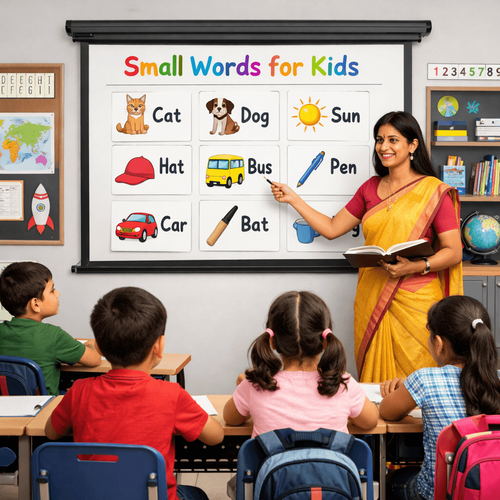

Table of Contents
- Why Small Words for Kids Matter in Early Learning
- A to Z Small English Words for Kids
- 70 Small Words for Kids (High-Frequency Words List)
- 20 A to Z 4 Letter Words for Very Small Kids
- Fun Activities to Teach Small English Words for Kids
- Small English Words for Kids PDF - Why It Helps
- Common Mistakes Parents Should Avoid
- How to Build a Strong Vocabulary Step by Step
- Why Speaking Practice is Important Along with Vocabulary
- PlanetSpark Spoken English Course for Kids
- Building Strong Vocabulary, One Word at a Time
Building a strong vocabulary starts with learning small words for kids that are easy to understand, remember, and use in daily conversations. This blog covers simple English words from A to Z, including 2, 3, and 4-letter words, curated lists like 70 small words for kids, and structured learning tips to make early vocabulary fun and effective. Whether your child is just starting or improving their basics, this guide will help them build confidence in English step by step.
Why Small Words for Kids Matter in Early Learning
The Foundation of Language Development
Small English words for kids play a critical role in early language learning. These words are:
- Easy to pronounce
- Simple to understand
- Frequently used in daily life
They act as the building blocks of sentences and help children:
- Recognise patterns in language
- Improve memory retention
- Develop speaking confidence early
Key Benefits of Learning Small Words
- Enhances reading skills
- Builds strong sentence formation ability
- Improves communication clarity
- Boosts confidence in speaking
A to Z Small English Words for Kids
A to E Easy Words
A Words
- ant
- apple
- arm
- ask
B Words
- bat
- ball
- bed
- big
C Words
- cat
- cup
- car
- cow
D Words
- dog
- door
- day
- doll
E Words
- egg
- ear
- eat
- end
F to J Easy Words
F Words
- fan
- fish
- fun
- fox
G Words
- goat
- girl
- game
- gift
H Words
- hat
- hen
- hot
- hop
I Words
- ice
- ink
- ill
- it
J Words
- jam
- jug
- jet
- job
K to O Easy Words
K Words
- kid
- kit
- key
- king
L Words
- leg
- lid
- log
- lamp
M Words
- man
- mat
- map
- milk
N Words
- net
- nap
- nose
- nut
O Words
- owl
- ox
- oil
- on
P to T Easy Words
P Words
- pen
- pot
- pig
- pan
Q Words
- queen
- quiz
R Words
- rat
- red
- run
- rope
S Words
- sun
- sit
- sad
- soap
T Words
- toy
- top
- tap
- ten
U to Z Easy Words
U Words
- up
- us
- urn
V Words
- van
- vet
W Words
- win
- wet
- way
X Words
- box
- fox
Y Words
- yes
- yak
Z Words
- zip
- zoo
70 Small Words for Kids (High-Frequency Words List)
Commonly Used Small Words
Here is a curated list of 70 small words for kids:
- a, am, an, at, as
- be, by, big, bat, bed
- can, cat, cup, cut, cap
- do, did, dog, day, dip
- go, get, got, gum, gap
- he, his, her, hat, hop
- is, in, it, ice, ink
- me, my, man, map, mat
- no, not, net, nap, nut
- on, or, ox, one, off
- up, us, use, urn
- we, was, wet, win
- you, yes, yet
- zoo, zip
Why These Words Are Important
- These are high-frequency words used in daily communication
- They improve reading fluency
- Help in faster sentence formation
20 A to Z 4 Letter Words for Very Small Kids
Simple 4-Letter Words List
- able
- ball
- call
- doll
- earn
- fall
- game
- help
- idea
- jump
- kind
- love
- milk
- nest
- open
- play
- quit
- rain
- sing
- tree
How to Teach 4-Letter Words
- Use flashcards
- Create word games
- Encourage sentence formation
- Practice daily speaking
Fun Activities to Teach Small English Words for Kids
Interactive Learning Methods
1. Flashcard Games
- Show word cards with images
- Ask kids to identify and pronounce
2. Word Matching Games
- Match words with pictures
- Improves visual learning
3. Storytelling with Small Words
- Create simple stories using easy words
- Boosts imagination and vocabulary
4. Daily Practice Routine
- 5 new words every day
- Revision every week
5. Speaking Practice
- Use words in daily conversations
- Encourage kids to form sentences
Small English Words for Kids PDF - Why It Helps
Benefits of Using Word Lists in PDF Format
- Easy to download and print
- Structured learning
- Can be used anytime
- Helps in revision
What Should a Good PDF Include
- A to Z word lists
- Pictures for better understanding
- Practice exercises
- Writing and speaking tasks
Common Mistakes Parents Should Avoid
Overloading Kids with Words
- Focus on quality over quantity
Ignoring Pronunciation
- Teach correct pronunciation from the start
Lack of Practice
- Consistency is key
Not Using Words in Context
- Encourage sentence formation
How to Build a Strong Vocabulary Step by Step
Building a strong vocabulary is not about memorising long lists of words, it’s about helping children understand, use, and retain words in real-life situations. A structured, gradual approach ensures that learning stays effective, engaging, and stress-free.
Step-by-Step Approach
1. Start with 2-letter words
Begin with the simplest building blocks of language. Words like am, is, at, in, on help children:
- Understand basic sentence structure
- Recognise common patterns in English
- Gain early confidence in reading and speaking
At this stage:
- Focus on pronunciation
- Use these words in short sentences like “I am happy” or “The cat is on the mat”
- Repeat frequently to improve retention
2. Move to 3-letter words
Once children are comfortable, introduce slightly longer words like cat, dog, pen, sun, bat. These words:
- Improve phonetic understanding
- Help children connect sounds with letters
- Build early reading fluency
Make it interactive by:
- Using pictures to associate words with objects
- Playing word recognition games
- Encouraging kids to read aloud
3. Introduce 4-letter words
After mastering basic words, move to 4-letter words like play, jump, tree, book. This stage is important because:
- It expands vocabulary depth
- Helps children understand word variations
- Prepares them for sentence building
You can:
- Ask kids to form simple sentences like “I play daily”
- Introduce opposites (big-small, fast-slow)
- Encourage storytelling using these words
4. Use words in sentences
Learning words in isolation is not enough. Children need to understand how words function in context.
Focus on:
- Simple sentence formation
- Real-life examples like “I eat food” or “This is my book”
- Gradually increasing sentence complexity
This helps children:
- Improve grammar naturally
- Understand word usage
- Build meaningful communication skills
5. Practice speaking daily
Speaking is the most important step in vocabulary building. Without it, words remain passive knowledge.
Encourage:
- Daily conversations at home
- Describing objects, actions, or daily routines
- Answering simple questions in English
For example:
- “What did you do today?”
- “What is your favourite toy?”
This builds:
- Fluency
- Confidence
- Real-world communication ability
Tips for Faster Learning
Keep sessions short and fun
Children learn best when they are not overwhelmed.
- 15–20 minute sessions are ideal
- Use games, stories, and activities instead of rote learning
- Keep the environment relaxed and enjoyable
Use visual aids
Visual learning improves understanding and memory.
- Flashcards with images
- Picture books
- Real-life objects for demonstration
For example, show an apple while teaching the word “apple” to create strong associations.
Encourage repetition
Repetition strengthens memory.
- Revise old words daily
- Use words multiple times in different contexts
- Practice through speaking, reading, and writing
Consistency is more important than speed.
Reward progress
Positive reinforcement motivates children.
- Praise efforts, not just results
- Give small rewards like stickers or stars
- Celebrate milestones like learning 20 new words
This builds enthusiasm and confidence.
Why Speaking Practice is Important Along with Vocabulary
Learning small words is only the first step. True language development happens when children actively use those words in speaking.
Real Growth Happens When Kids:
Use words in conversations
When children use words while talking:
- They understand context better
- They learn how to structure sentences naturally
- They become comfortable expressing thoughts
For example, instead of just knowing the word “dog,” they say, “I have a dog.”
Practice pronunciation
Correct pronunciation is essential from the beginning. Speaking regularly helps children:
- Improve clarity
- Reduce hesitation
- Develop better listening and speaking coordination
It also prevents the formation of incorrect speech habits.
Build confidence in speaking
Confidence is as important as vocabulary. Regular speaking practice:
- Reduces fear of making mistakes
- Encourages participation in conversations
- Helps children express ideas clearly
Confident speakers are more likely to succeed academically and socially.
The Key Insight
Without speaking practice, vocabulary remains passive. Children may recognise words but struggle to use them in real life.
To make vocabulary truly effective:
- Combine word learning with daily conversations
- Encourage expression, not perfection
- Focus on communication, not just memorisation
When children start using words naturally, vocabulary transforms into a powerful communication skill.

PlanetSpark Spoken English Course for Kids
PlanetSpark offers a structured and highly personalised approach to help children transform their vocabulary into confident communication skills.
Every child gets 1:1 personal trainers who understand their learning pace and provide real-time feedback. This ensures that kids not only learn small words but also use them effectively in conversations, storytelling, and public speaking.
The personalised curriculum is designed after assessing each child’s strengths and gaps. It focuses on vocabulary, grammar, fluency, and confidence building in a step-by-step manner.
With SparkX AI video analysis, children receive detailed feedback on voice clarity, body language, and sentence structure, making improvement measurable and consistent.
The platform also includes AI-led practice sessions, where kids engage in real-life speaking scenarios like storytelling and conversations, helping them apply vocabulary practically.
Through Spark Diary, children develop writing habits, while gamified learning modules make vocabulary building fun and engaging.
Parents stay involved through regular PTMs and detailed progress reports, ensuring transparency and continuous improvement.
Additionally, kids participate in learning clubs, contests, and showcases, boosting confidence and real-world communication skills.
The Spoken English Course focuses on:
- Daily live conversations
- Accent neutralisation
- Vocabulary enhancement
- Role plays and situational dialogues
- Instant AI feedback and fluency tracking
Building Strong Vocabulary, One Word at a Time
Small words for kids are the first step toward mastering the English language. They build the foundation for reading, writing, and speaking skills. With consistent practice, interactive methods, and the right guidance, children can quickly move from learning simple words to forming sentences and expressing ideas confidently.
The key lies in making learning fun, structured, and practical. When vocabulary is combined with speaking practice, children not only learn words but also gain the confidence to use them effectively in real-life situations.
Start early, stay consistent, and support your child’s journey with the right tools and guidance to ensure long-term success in communication.
You can also read:
Frequently Asked Questions
Small words for kids are short and simple English words, usually consisting of 2 to 4 letters. These include words like “cat,” “bat,” “sun,” and “pen.” They are easy to understand and form the foundation of early vocabulary learning.
Ideally, children should learn:
3 to 5 new words daily
Revise previously learned words regularly
This helps in better retention and avoids overwhelming the child.
A to Z word lists:
Provide structured learning
Improve alphabet recognition
Help kids associate letters with words
Build systematic vocabulary
You can make learning engaging by:
Using games and flashcards
Storytelling activities
Daily speaking practice
Interactive quizzes
Consistency and creativity are key to making learning enjoyable.
PlanetSpark combines vocabulary learning with real-life speaking practice. Through 1:1 live sessions, AI-powered feedback, gamified learning, and structured curriculum, children not only learn small words but also use them confidently in conversations, storytelling, and public speaking. This ensures holistic communication development beyond just memorising words.