
Speed Reading vs Deep Reading: Techniques, Differences
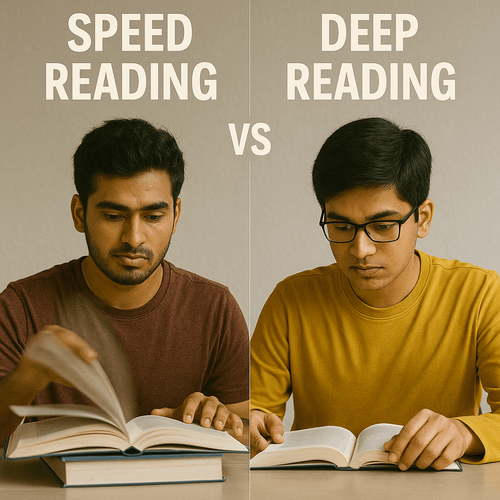

Reading is more than just moving your eyes over words, it’s about how you absorb, understand, and retain information. Some situations call for lightning-fast scanning, while others demand slow, thoughtful reflection. Speed reading helps you cover large volumes quickly, capturing main ideas, whereas deep reading allows you to dive into details, analyze meaning, and retain knowledge longer. Understanding the techniques, benefits, and differences of both can transform the way you learn and communicate effectively.
What is Speed Reading?
Speed reading is the practice of reading text quickly while maintaining adequate comprehension. It focuses on scanning, skimming, and processing multiple words or phrases at a glance, rather than reading word by word. This technique is particularly useful for handling large volumes of information efficiently.
For example, a student reviewing multiple research articles before an exam can use speed reading to identify key points, headings, and statistics without reading every line in detail. Similarly, professionals scanning reports, emails, or news updates can save time while still capturing essential information through speed reading strategies.

What is Deep Reading?
Deep reading is a slow, immersive, and reflective approach to reading that emphasizes full comprehension and critical thinking. Unlike speed reading, it involves carefully analyzing language, structure, and meaning to fully understand the content. For example, a literature student reading Shakespeare’s Macbeth examines themes, metaphors, and character motivations, absorbing nuances and insights.
Similarly, a researcher studying a complex scientific paper reads each section thoroughly, reflecting on methodology and implications. Deep reading fosters retention, empathy, and analytical skills, making it ideal for understanding challenging texts, exploring ideas in depth, and developing a thoughtful perspective.
Techniques for Speed Reading
Speed reading is an essential skill for students, professionals, and avid readers who need to process large amounts of information quickly. By employing specific techniques, readers can increase their pace without sacrificing comprehension. These strategies focus on eye movement, cognitive processing, and identifying key elements of text efficiently.
Skimming
Skimming involves quickly moving through text to grasp the main ideas, headings, and keywords while ignoring less important details. This technique allows readers to capture the essence of content efficiently and prioritize sections for deeper reading later. It works well when reviewing lengthy documents, articles, or notes under time constraints.
Example: A student skims lecture notes, focusing on chapter summaries and highlighted terms to understand key points quickly.
Scanning
Scanning is a focused method used to locate specific information or keywords within a text. Instead of reading sequentially, the reader searches for target facts, figures, or phrases, saving time and effort. This technique is particularly useful for research, exam preparation, and reviewing professional reports.
Example: A researcher scans a scientific paper for relevant statistics, tables, and important keywords without reading the entire text.
Chunking
Chunking is reading multiple words or phrases together instead of word by word, which helps the brain process meaning faster. By grouping words into blocks, readers reduce unnecessary eye movement and cognitive pauses, improving both speed and comprehension. Chunking is ideal for textbooks, articles, and online content with dense information.
Example: Reading “economic growth rate has increased steadily” as two chunks rather than six individual words, enhancing reading flow.
Read smarter, not faster — find your balance between speed and comprehension with PlanetSpark’s demo class for speaking.
Minimizing Subvocalization
Subvocalization is silently pronouncing words while reading, which slows down the pace. Minimizing this habit allows the eyes and brain to process words visually and in larger groups. Over time, reducing subvocalization significantly increases reading speed while maintaining comprehension and retention.
Example: While reading a news article, a student focuses on visual recognition of phrases instead of mentally “saying” every word.
Using a Pointer or Meta Guiding
Meta guiding involves using a finger, pen, or cursor to guide the eyes along lines of text. This technique improves focus, prevents backtracking, and increases reading speed by providing a visual cue for eye movement. It is especially effective when reading long paragraphs or dense material.
Example: A student moves their finger along the text while reading a research paper to maintain pace and avoid distraction.
Previewing
Previewing is examining headings, subheadings, visuals, summaries, and highlighted points before reading the full text. This approach prepares the brain with a mental map of the content, allowing readers to identify key areas and read faster without losing comprehension. Previewing is valuable for textbooks, reports, and research papers.
Example: A student reviews a chapter’s title, bullet points, and diagrams before studying the material in detail, creating a roadmap for faster reading.

Techniques for Deep Reading
Deep reading is a reflective and immersive reading approach that emphasizes comprehension, critical thinking, and retention. Unlike speed reading, it encourages readers to slow down, analyze details, and engage with the content meaningfully. By applying specific techniques, learners can gain deeper insights, understand complex ideas, and appreciate nuances in text.
Close Reading
Close reading involves analyzing every detail of the text, including word choice, sentence structure, and literary devices. This technique encourages readers to focus on meaning, context, and subtle nuances. It is particularly useful for literature, philosophical works, and complex academic materials.
Example: A student reading Macbeth examines metaphors, character motivations, and thematic elements to fully understand Shakespeare’s intentions, going beyond just the storyline.
Annotation and Note-Taking
Annotation and note-taking help readers engage actively with the text. Highlighting, underlining, and writing reflections improve comprehension and retention by creating a personal interaction with the material.
Example: While reading a research paper, a student highlights key points and writes margin notes to summarize complex arguments, making it easier to review and understand later.
Reflective Reading
Reflective reading involves pausing to think about the meaning, implications, and connections of the text. It encourages critical thinking and helps readers internalize ideas.
Example: While studying a historical text, a student pauses to consider the societal impact of events described, linking them to modern contexts and forming a deeper understanding.
Rereading
Rereading allows readers to revisit challenging sections for better comprehension. It reinforces understanding, clarifies confusing passages, and uncovers details missed during the first read.
Example: A researcher rereads a dense scientific article multiple times to fully grasp the methodology and results, ensuring accurate interpretation and application of findings.
Discussion and Interpretation
Discussing and interpreting text with peers or mentors deepens understanding and provides multiple perspectives. Engaging in dialogue encourages critical analysis and retention.
Example: Students in a literature class debate the symbolism in To Kill a Mockingbird, exchanging interpretations that uncover layers of meaning they might have missed individually.
Connecting with Personal Experience
Linking the text to personal experiences or prior knowledge enhances engagement and comprehension. It creates relevance and emotional resonance with the content.
Example: While reading a memoir about overcoming challenges, a reader reflects on similar experiences in their own life, making the lessons more meaningful and memorable.
Speed Reading vs Deep Reading: Key Differences
Reading Speed
Speed reading focuses on reading fast, often skipping details, to get the main idea quickly. Deep reading is slower, taking time to understand every word and idea.
Example: A student speed reads news articles to know the headlines quickly. The same student deep reads a novel to enjoy the story, understand characters, and notice details.
Understanding and Retention
Speed reading helps remember key points but not all details. Deep reading helps fully understand and remember information for longer.
Example: Skimming a research paper gives the main statistics, but reading it deeply helps understand methods, results, and implications.
Focus and Attention
Speed reading uses quick scanning and scanning techniques, which can be surface-level. Deep reading requires full attention, thinking, and reflection.
Example: Quickly scanning a report may catch trends, but deep reading the same report allows the reader to analyze reasoning and connections between ideas.
Type of Material
Speed reading works best for short articles, reports, or emails. Deep reading is ideal for novels, textbooks, research papers, and complex content.
Example: Professionals speed read emails for important updates but deep read technical manuals or academic books to fully understand them.
Purpose
Speed reading is used to save time and get information quickly. Deep reading is used to learn, analyze, and think critically about content.
Example: A student speed reads study notes before a quiz, but deep reads a textbook chapter to really understand the subject.
Learn how to switch between deep reading for focus and speed reading for efficiency with PlanetSpark demo class.
How to Choose Between Speed and Deep Reading
Choosing the right reading approach can make a big difference in how effectively you understand and retain information. Speed reading is great for quickly grasping main ideas, while deep reading is ideal for thorough comprehension and critical thinking. The choice depends on your goal, the type of material, time available, and personal learning style.
Identify Your Reading Goal
Your purpose determines which reading style to use. If your goal is to gather key points quickly, speed reading works best. For understanding, analyzing, or retaining ideas, deep reading is ideal.
Example: A student quickly skims lecture slides before class (speed reading), but reads a textbook chapter thoroughly to fully grasp the concepts (deep reading).
Consider the Type of Material
Different materials suit different reading styles. Short articles, emails, or reports can be read quickly, while complex texts like novels, research papers, or manuals need careful reading.
Example: A professional skims a daily news update (speed reading) but carefully reads a technical manual to understand procedures (deep reading).
Evaluate Time Availability
Time constraints can guide your choice. When pressed for time, speed reading allows you to cover more content efficiently. If time allows, deep reading ensures thorough comprehension.
Example: Preparing for a meeting, a manager skims reports for key figures, but spends hours deep reading an annual strategy document.
Assess Complexity of Content
Simple content can often be speed-read, while dense, detailed, or abstract material benefits from deep reading.
Example: A student skims easy news articles, but carefully reads scientific studies to understand methodology and conclusions.
Reflect on Learning Style
Some people naturally retain information better through quick scanning, while others need slow, reflective reading to internalize ideas. Understanding your learning style helps decide which approach to use.
Example: Visual learners may speed read slides with charts, whereas reflective learners deeply read accompanying text to grasp context.
Combine Both Methods Strategically
Often, a combination works best. Skim first to identify important sections, then deep read critical parts for understanding and retention.
Example: A student skims a research paper for relevant sections, then carefully reads the methods and results to fully understand the study.
Boost your reading power — enhance speed, focus, and understanding through PlanetSpark’s interactive learning sessions.
How Planet Spark Helps in Improving Communication
Planet Spark focuses on developing confident, clear, and effective communicators through interactive learning and expert guidance.
- Live Expert-Led Classes: Certified English trainers guide students through speaking exercises, discussions, and storytelling to improve clarity and expression.
- Voice Modulation & Tone Practice: Learners practice pitch, pace, and emphasis to make speech engaging and persuasive.
- Interactive Speaking Activities: Debates, presentations, and role-plays help students gain fluency and confidence in spoken communication.
- Personalized Feedback: Mentors provide one-on-one feedback on pronunciation, sentence structure, and articulation for continuous improvement.
- Body Language & Non-Verbal Skills: Students learn gestures, posture, and eye contact to reinforce their message effectively.
Both speed reading and deep reading have unique advantages depending on your goals, material, and time. Speed reading helps you quickly grasp key points, while deep reading allows thorough understanding and critical thinking. At Planet Spark, students learn how to balance both techniques, improving comprehension, retention, and overall communication skills. Join Planet Spark today to enhance your reading skills, learn effectively, and unlock your full learning potential!
Frequently Asked Questions
Speed reading is a technique to read text quickly while still understanding the main ideas. It’s useful for scanning articles, emails, or reports efficiently.
Deep reading is slow, focused reading that emphasises comprehension, reflection, and retention. It’s best for textbooks, novels, and complex materials.
Use speed reading when you need to gather key points quickly or review large volumes of information, like news, summaries, or emails.
Deep reading is ideal for understanding details, analyzing concepts, or learning new ideas, such as in research papers, literature, or academic textbooks.
Yes! Skim or scan first to identify important sections, then use deep reading for critical parts to fully understand and retain information.