
Stages of Language Development in Children: A Complete Guide
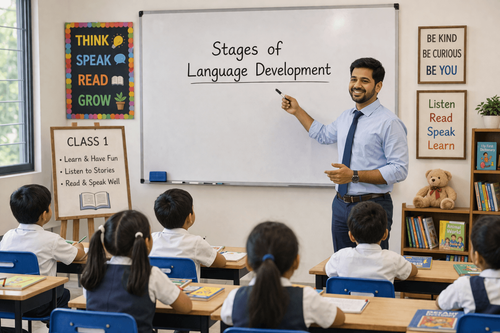

Table of Contents
- What Are the Stages of Language Development?
- Why Understanding Language Development Matters
- Stages of Language Development in Children
- Factors Affecting Language Development in Children
- Signs of Delayed Language Development
- Practical Tips to Support Language Development
- Role of Technology in Early Language Learning Stages
- How Structured Learning Accelerates Language Growth
- Why PlanetSpark Spoken English Course is a Game-Changer
- Final Thoughts on Language Development in Children
Understanding the stages of language development helps parents and educators support children at the right time with the right strategies. From babbling in infancy to forming complex sentences, every phase plays a critical role in shaping communication skills. This blog covers language development in children, key milestones, practical tips, and expert insights to help you track and nurture your child’s progress effectively.
What Are the Stages of Language Development?
Language development is a gradual process through which children learn to understand and use language for communication. It includes listening, speaking, reading, and writing skills that evolve over time.
Key Characteristics of Language Development
- Begins from birth and continues through adolescence
- Influenced by environment, interaction, and exposure
- Includes both verbal and non-verbal communication
- Progresses in predictable stages, though pace may vary
Understanding these stages allows parents to identify whether their child is meeting child language milestones or needs additional support.
Why Understanding Language Development Matters
Recognising the early language learning stages is crucial for several reasons:
Benefits for Parents and Educators
- Helps identify speech delays early
- Supports targeted learning strategies
- Builds confidence in children
- Enhances academic readiness
- Strengthens social and emotional skills
Children who develop strong communication skills early tend to perform better in academics and social interactions.
Help your child speak confidently and fluently with the PlanetSpark Spoken English Course, designed to build strong communication skills.
Stages of Language Development in Children
Let’s explore the detailed stages of speech development and what to expect at each phase, along with deeper insights into how children learn, think, and communicate as they grow.
Stage 1 - Pre-Linguistic Stage (0 to 12 Months)
This is the foundational phase of language development in children, where babies are not yet speaking words but are actively learning how communication works. During this time, they develop listening skills, recognise sounds, and begin to interact with their environment.
Key Milestones
- Crying with purpose
Babies use different types of cries to signal hunger, discomfort, or the need for attention. Over time, parents can distinguish these variations. - Cooing and gurgling (2 to 4 months)
Soft vowel-like sounds such as “oo” and “aa” emerge, indicating early vocal experimentation. - Babbling (6 to 9 months)
Repetitive consonant-vowel combinations like “ba-ba” or “da-da” begin. This is a critical step toward speech. - Sound recognition and response
Babies start turning their heads toward familiar voices and reacting to tones. - Understanding simple words
They may not speak yet, but they begin recognising commonly used words like “mama,” “no,” or their own name. - Use of gestures
Pointing, waving, and reaching out become early forms of communication.
How to Support
- Talk to your baby throughout the day, even during routine activities
- Maintain eye contact to build connection and attention
- Use expressive facial gestures and hand movements
- Sing rhymes and repeat simple sounds
- Encourage imitation by responding to their babbling
This stage is crucial because it builds listening comprehension, which directly influences future speaking ability.
Stage 2 - One-Word Stage (12 to 18 Months)
At this stage, children begin using single words, often called “holophrases,” where one word conveys a complete idea.
Key Milestones
- Vocabulary growth (5 to 50 words)
Words are usually simple and related to daily life, like “mama,” “milk,” or “toy.” - Use of nouns and familiar labels
Children name objects, people, or actions they frequently encounter. - Understanding instructions
They can follow simple commands like “come here” or “give me the ball.” - Pointing and naming connection
They often point to objects while attempting to name them. - Imitation of sounds and words
Repeating words heard from parents or surroundings.
Example
A child saying “milk” may mean “I want milk” or “I see milk.”
How to Support
- Label objects clearly and repeatedly
- Encourage your child to repeat words without pressure
- Use simple, slow, and clear speech
- Celebrate every attempt to speak
- Ask simple questions like “What is this?”
This stage strengthens word association and meaning-building, which is essential for vocabulary expansion.
Stage 3 - Two-Word Stage (18 to 24 Months)
Children begin combining two words to form meaningful phrases, marking a significant step in early language learning stages.
Key Milestones
- Rapid vocabulary expansion (50 to 200+ words)
- Two-word combinations such as “want toy,” “go park,” or “eat food”
- Basic grammar understanding begins
- Expression of needs and desires more clearly
- Simple questioning ability
Developmental Insights
- Children start understanding relationships between words
- They grasp basic sentence structure, even if grammar is not perfect
- Communication becomes more intentional and functional
How to Support
- Expand their phrases, for example, if they say “want toy,” respond with “You want the red toy?”
- Encourage back-and-forth conversations
- Ask open-ended questions to stimulate thinking
- Introduce storytelling through pictures
Stage 4 - Early Multiword Stage (2 to 3 Years)
At this stage, children begin forming short sentences and developing a clearer understanding of grammar.
Key Milestones
- 3 to 4 word sentences like “I want juice”
- Use of pronouns such as “I,” “you,” and “me”
- Understanding of basic grammar rules
- Frequent questioning using “what,” “why,” and “where”
- Improved comprehension of conversations
Example
“I want chocolate” or “Where is mama?”
Developmental Insights
- Children begin experimenting with sentence structures
- They may make grammatical errors, which are a natural part of learning
- Curiosity increases, leading to more questions
How to Support
- Encourage storytelling and imaginative play
- Gently correct mistakes by modelling the right sentence
- Read interactive books and ask questions
- Engage in daily conversations about their experiences
This stage is essential for developing sentence formation and logical thinking.
Stage 5 - Later Multiword Stage (3 to 5 Years)
Language becomes more refined, structured, and expressive during this phase.
Key Milestones
- Longer and more complex sentences
- Use of tenses such as past, present, and future
- Improved pronunciation and clarity
- Ability to narrate stories and experiences
- Understanding of sequencing and logic
Developmental Insights
- Children can describe events in order
- They start using descriptive language and emotions
- Social communication skills improve significantly
How to Support
- Introduce new and advanced vocabulary
- Encourage role-playing and pretend play
- Practice storytelling with beginning, middle, and end
- Ask reasoning questions like “Why do you think this happened?”
Stage 6 - School-Age Stage (5+ Years)
This stage focuses on refining and mastering language skills for academic and social success.
Key Milestones
- Fluent and structured speech
- Understanding complex instructions and concepts
- Development of reading and writing skills
- Ability to express thoughts, opinions, and ideas clearly
- Participation in discussions, debates, and presentations
Developmental Insights
- Language becomes a tool for learning across subjects
- Children develop critical thinking and reasoning skills
- Communication becomes more purposeful and audience-aware
How to Support
- Encourage regular reading and writing habits
- Provide opportunities for public speaking
- Engage in meaningful discussions and debates
- Offer constructive feedback to improve clarity and confidence
Build your child’s confidence in speaking, storytelling, and public communication with the PlanetSpark Spoken English Course, designed for real-world success.
Factors Affecting Language Development in Children
Several factors influence how children acquire language skills.
Biological Factors
- Hearing ability
- Brain development
- Genetic influences
Environmental Factors
- Parental interaction
- Exposure to language
- Socioeconomic conditions
Social Factors
- Peer interaction
- School environment
- Cultural background
Cognitive Factors
- Memory and attention
- Problem-solving skills
- Learning abilities
Signs of Delayed Language Development
Early detection of delays is important.
Warning Signs
- No babbling by 12 months
- Limited vocabulary by 2 years
- Difficulty forming sentences by 3 years
- Trouble understanding instructions
- Lack of social communication
If you notice these signs, consider consulting a speech expert.
Practical Tips to Support Language Development
Daily Activities That Help
- Talk regularly with your child
- Read books together
- Encourage storytelling
- Limit screen time
- Play interactive games
Communication Strategies
- Be patient and attentive
- Encourage questions
- Use positive reinforcement
- Model correct language usage
Role of Technology in Early Language Learning Stages
Modern tools can enhance learning when used correctly.
Benefits
- Interactive learning apps
- Audio-visual engagement
- Personalised feedback
Caution
- Avoid excessive screen time
- Choose age-appropriate content
- Balance with real-world interaction
How Structured Learning Accelerates Language Growth
While natural development is important, structured programs can significantly boost progress.
Key Advantages
- Guided curriculum
- Expert feedback
- Consistent practice
- Confidence building
Why PlanetSpark Spoken English Course is a Game-Changer
PlanetSpark offers a comprehensive, personalised, and tech-enabled approach to developing communication skills in children.
- 1:1 Personal Trainers ensure focused attention and faster improvement
- Personalised Curriculum adapts to each child’s learning needs
- SparkX AI Tool provides detailed performance analysis
- AI Practice Sessions enable independent learning
- Spark Diary builds consistent writing habits
- Gamified Learning keeps children engaged
- Regular PTMs keep parents informed
- Detailed Progress Reports track measurable growth
- Learning Clubs enhance collaboration and creativity
- Sparkline Platform boosts confidence through safe sharing
- Competitions and Showcases build real-world skills
This holistic ecosystem ensures children not only learn English but excel in communication.
Give your child the advantage of expert-led communication training with the PlanetSpark Spoken English Course and see measurable improvement in their speaking skills.
Final Thoughts on Language Development in Children
The stages of language development provide a roadmap to understanding how children grow into confident communicators. Each stage, from babbling to fluent speech, plays a vital role in shaping their ability to express thoughts, build relationships, and succeed academically.
As a parent or educator, your role is to observe, support, and encourage. While every child develops at their own pace, consistent guidance, interaction, and the right learning environment can make a significant difference.
Structured programs, combined with daily communication practices, can accelerate growth and build lasting confidence. Investing in your child’s communication skills today will empower them for lifelong success.
You can also read:
Frequently Asked Questions
The main stages include pre-linguistic, one-word, two-word, early multiword, later multiword, and school-age stages. Each stage reflects growth in vocabulary, grammar, and communication skills.
Most children begin speaking simple words by 12 months and form sentences by 2 to 3 years. Clear speech develops gradually and improves with practice and exposure.
Delays can be caused by hearing issues, lack of interaction, developmental disorders, or limited exposure to language-rich environments.
Parents can talk regularly, read books, encourage storytelling, and engage in interactive conversations to improve language skills effectively.
Structured programs like PlanetSpark provide personalised learning, expert guidance, and AI-driven feedback, helping children improve fluency, confidence, and communication skills faster than traditional methods.