
Become a Confident Storyteller and Captivate Your Audience with PlanetSpark
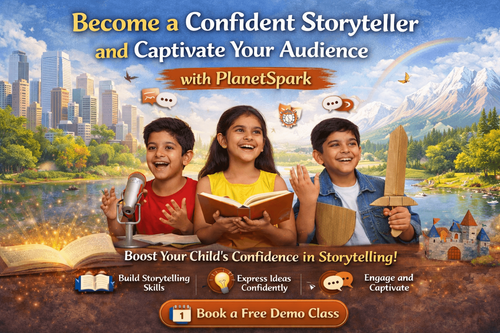

Table of Contents
- What Does It Mean to Be a Confident Storyteller?
- Why Storytelling Skills Are Important for Students
- Key Elements of Effective Storytelling
- Common Challenges in Storytelling
- How PlanetSpark Helps You Become a Confident Storyteller
- Benefits of Learning Storytelling with PlanetSpark
- Tips to Become a Better Storyteller
- Real-Life Applications of Storytelling Skills
- Conclusion
Storytelling has become an essential skill in today’s world, as it helps individuals communicate ideas in a clear, engaging, and memorable way. Whether it is in academics, professional environments, or everyday conversations, storytelling allows people to express thoughts effectively and connect with others on a deeper level. In an age where attention spans are limited, the ability to tell a compelling story can make a significant difference in how your message is received.
Confidence plays a crucial role in storytelling. A well-written story may fail to create impact if it is not delivered confidently. A confident storyteller knows how to present ideas smoothly, use the right tone, and maintain audience engagement. This confidence not only improves storytelling but also enhances overall communication skills.
PlanetSpark is a platform that focuses on building storytelling and communication skills among students. Through structured programs, expert mentorship, and regular practice, it helps learners develop confidence and creativity, enabling them to become impactful storytellers.
What Does It Mean to Be a Confident Storyteller?
A confident storyteller is someone who can present ideas clearly, express emotions effectively, and engage the audience without hesitation. It is not just about telling a story but about delivering it in a way that captures attention and keeps the audience interested. Confidence allows the storyteller to maintain flow, adapt to the audience, and communicate with clarity and purpose.
A confident storyteller also understands their narrative deeply and believes in what they are saying. This belief reflects in their voice, expressions, and body language, making the story more impactful and engaging.
Clarity, Expression, and Engagement
Clarity in storytelling ensures that the audience can easily follow the story without confusion. A confident storyteller organizes thoughts logically and presents them in a structured manner. Expression adds life to the story through voice modulation, tone, and emotions, making it more engaging. Engagement, on the other hand, focuses on maintaining the audience’s interest by creating curiosity and interaction throughout the narrative.
Difference Between Average and Impactful Storytelling
Average storytelling often lacks structure, emotional depth, and confident delivery, which makes it less engaging. In contrast, impactful storytelling combines clear structure, strong emotional connection, and confident presentation. It not only conveys information but also leaves a lasting impression on the audience.
Why Storytelling Skills Are Important for Students
Storytelling skills play a vital role in a student’s academic and personal growth. It helps students organize their thoughts, present ideas clearly, and communicate effectively in different situations. In academics, storytelling improves the quality of writing by adding structure and clarity, making answers more engaging and easy to understand.
Beyond academics, storytelling enhances creativity and imagination. It encourages students to think beyond textbooks and develop unique ideas. It also builds confidence, especially in public speaking, helping students overcome fear and express themselves more effectively.
Helps in Academics (Essays, Presentations)
Storytelling helps students structure their answers logically, making essays more engaging and presentations more impactful. Instead of simply presenting facts, students can explain concepts through examples and narratives, improving understanding and retention.
Improves Communication Skills
By practicing storytelling, students learn how to express ideas clearly and effectively. It enhances both verbal and written communication, helping them interact better in academic and social settings.
Builds Creativity and Imagination
Storytelling encourages students to think creatively and develop original ideas. It allows them to explore different perspectives and enhances their ability to solve problems creatively.
Boosts Confidence in Public Speaking
Regular storytelling practice helps students become more comfortable speaking in front of others. It reduces stage fear, improves delivery, and builds overall confidence.
Help your child become a confident storyteller! Book a PlanetSpark Demo Class today and unlock powerful story development and communication skills.
Key Elements of Effective Storytelling
Effective storytelling is built on a combination of important elements that work together to create an engaging and meaningful narrative. These elements ensure that the story is clear, expressive, and capable of holding the audience’s attention from beginning to end.
A strong story is not just about content but also about how it is presented. Clarity, vocabulary, emotional connection, and expression play a crucial role in making storytelling effective.
Clarity of Thought
Clarity of thought is essential for effective storytelling because it ensures that ideas are well-organized and easy to understand. When a storyteller has clear thoughts, the narrative flows smoothly, and the audience can follow it without confusion. A clear structure, including a beginning, middle, and end, helps in maintaining logical progression and coherence in the story.
Strong Vocabulary
Having a strong vocabulary allows storytellers to express ideas more precisely and effectively. It helps in describing situations, emotions, and characters in a more engaging way. However, it is important to use simple and appropriate language so that the audience can easily understand the story without difficulty.
Emotional Connection
Emotional connection is what makes a story memorable. When the audience can relate to the story or feel the emotions being conveyed, they become more engaged. A story that evokes feelings such as happiness, excitement, or empathy leaves a stronger impact and stays with the audience for a longer time.
Body Language & Expression
Body language and expression play a crucial role, especially in verbal storytelling. Eye contact, gestures, and voice modulation help in conveying emotions and enhancing the storytelling experience. These elements make the story more dynamic and engaging, helping the storyteller connect better with the audience.
Common Challenges in Storytelling
Many learners face challenges while developing storytelling skills, especially in the beginning. These challenges can affect confidence and performance, but with practice and proper guidance, they can be overcome.
Understanding these challenges is important because it helps individuals identify areas of improvement and work on them effectively.
Lack of Confidence
Lack of confidence is one of the most common challenges in storytelling. It often leads to hesitation and difficulty in expressing ideas clearly. This usually happens due to fear of making mistakes or being judged by others.
Fear of Public Speaking
Fear of speaking in front of an audience can significantly impact storytelling. Nervousness can affect voice, expression, and overall delivery, making it difficult to communicate effectively.
Difficulty in Structuring Stories
Many learners struggle to organize their ideas into a proper story format. Without a clear structure, stories can become confusing and difficult to follow.
Limited Vocabulary
A limited vocabulary restricts the ability to express ideas and emotions effectively. It can make storytelling less engaging and repetitive.
Want your child to write engaging and creative stories? Join a PlanetSpark Demo Class and learn storytelling from expert trainers.
How PlanetSpark Helps You Become a Confident Storyteller
Developing storytelling skills requires the right guidance, consistent practice, and a structured approach. PlanetSpark provides all these elements through its well-designed programs that focus on building communication, creativity, and confidence.
The platform emphasizes practical learning, ensuring that students not only understand storytelling concepts but also apply them effectively in real-life situations.
Structured Learning Programs
PlanetSpark offers step-by-step learning programs that guide students from basic storytelling concepts to advanced techniques. This structured approach helps learners build a strong foundation and gradually improve their skills.
Live Interactive Classes
Live sessions with expert trainers provide an interactive learning experience. Students receive real-time feedback, which helps them improve quickly and understand their mistakes.
Personalized Attention
Each student receives individual guidance based on their strengths and weaknesses. This personalized approach ensures better learning outcomes and faster improvement.
Practice-Based Learning
Regular exercises, assignments, and storytelling activities help students apply what they learn. Continuous practice is key to building confidence and improving storytelling skills.
Public Speaking Training
PlanetSpark also focuses on public speaking skills, including voice modulation, body language, and stage presence. This helps students become confident speakers along with skilled storytellers.
Turn imagination into impactful stories! Enroll in a PlanetSpark Demo Class now and build strong story development skills step by step.
Benefits of Learning Storytelling with PlanetSpark
Learning storytelling through a structured platform like PlanetSpark offers several advantages that contribute to overall personal and academic development.
Improved Communication Skills
Students learn how to express their ideas clearly and effectively, which improves both verbal and written communication.
Better Academic Performance
Structured storytelling helps in writing better answers and delivering more engaging presentations, leading to improved academic results.
Increased Confidence
Regular practice and guidance help students overcome fear and become more confident in expressing themselves.
Enhanced Creativity
Storytelling encourages creative thinking and helps students develop unique ideas and perspectives.
Tips to Become a Better Storyteller
Becoming a better storyteller requires consistent effort, practice, and the right techniques. By following certain strategies, individuals can improve their storytelling skills significantly.
Practice Regularly
Regular practice helps in building confidence and improving fluency. The more you practice, the more comfortable you become with storytelling.
Read and Observe Different Stories
Reading books and observing different storytelling styles helps in understanding how stories are structured and presented.
Focus on Structure (Beginning, Middle, End)
A clear structure ensures that the story flows logically and is easy to understand.
Use Simple and Clear Language
Using simple language makes the story more accessible and engaging for the audience.
Real-Life Applications of Storytelling Skills
Storytelling is a practical skill that can be used in various real-life situations. It enhances communication and helps individuals express their ideas effectively.
School Presentations
Storytelling makes presentations more engaging and helps in explaining concepts clearly.
Interviews and Group Discussions
It helps in expressing ideas confidently and creating a strong impression.
Content Creation and Social Media
Storytelling is essential for creating engaging content that captures audience attention.
Everyday Communication
It improves daily conversations by making them more interesting and expressive.
Conclusion
Storytelling is a powerful skill that helps individuals communicate effectively, build confidence, and connect with others. For students, it plays a crucial role in academics and personal development. Becoming a confident storyteller requires practice, clarity, and the right guidance.
PlanetSpark provides a supportive and structured environment where students can develop these skills and become confident communicators. With consistent effort and proper training, anyone can master storytelling and use it as a tool for success.
Frequently Asked Questions
You can become a confident storyteller by practicing regularly, improving your vocabulary, and following a clear structure while telling stories.
Yes, storytelling helps students improve communication, creativity, and confidence, making it an essential skill for overall development.
PlanetSpark provides training in voice modulation, body language, and stage presence, helping students become confident speakers.
Yes, with the right guidance and consistent practice, beginners can easily learn and improve storytelling skills.
Improvement depends on practice, but with regular effort, noticeable progress can be seen within a few weeks.