Circumlocution meaning refers to expressing an
idea indirectly or in a roundabout way rather than stating it plainly. In storytelling, this technique shapes narrative voice by adding subtlety, politeness, mystery, or emotional distance. Students often use circumlocution instinctively, especially when they want to sound thoughtful or avoid blunt statements, but learning how it works helps them use it with intention.
PlanetSpark supports students in developing narrative
voice through structured storytelling practice, helping them balance clarity with expressive style. Understanding circumlocution meaning allows students to decide when indirect language strengthens a story and when it weakens clarity. When used purposefully, circumlocution enriches narrative voice and deepens reader engagement.
What Is Circumlocution Meaning in Simple Terms
Circumlocution meaning, in simple terms, is talking around an idea instead of naming it directly. Rather than stating something plainly, writers choose longer or indirect phrasing to approach meaning in a softer, more descriptive, or more creative way. This technique allows storytellers to suggest ideas without being blunt, which can add emotion, mystery, or subtlety to a narrative. For example, instead of saying “He was poor,” a storyteller might write, “He lived with little more than hope and borrowed time,” allowing the reader to feel the situation rather than simply be told.
Students often rely on circumlocution when they are unsure of the exact word they want to use or when they want to avoid sounding harsh or direct. It is also commonly used to create a gentle, formal, or reflective tone in storytelling. Learning this concept helps students recognise how indirect language shapes a story’s pacing, mood, and clarity. With practice, they learn when circumlocution enriches narrative voice and when direct language communicates more effectively, helping them write with greater intention and control.
Circumlocution Meaning in English Writing
Circumlocution meaning in English writing is closely tied to tone, purpose, and audience. Indirect phrasing can make writing sound polite, reflective, or emotionally careful, which is useful when a writer wants to soften meaning or avoid blunt statements. However, when circumlocution is overused, writing can start to feel vague, slow, or unnecessarily wordy, causing the main idea to lose strength.
Skilled storytellers understand this balance. They know when indirect language adds depth, subtlety, or emotional distance, and when direct language communicates more powerfully. This awareness helps writers control how readers interpret tone and meaning rather than leaving it to chance.
Circumlocute Meaning and Writer Intent
Circumlocute meaning refers to the act of using circumlocution in speech or writing. When a writer circumlocutes, they intentionally choose description, suggestion, or implication instead of direct naming. This choice is rarely random. It often reflects what the writer wants the reader to feel or notice.
Circumlocution can reveal important character traits. A character who speaks indirectly may appear hesitant, formal, polite, evasive, or emotionally restrained. In narration, circumlocution can suggest uncertainty, sensitivity, or reflection. Students who recognise when they circumlocute gain greater control over their writing decisions. They learn to adjust how direct or indirect their language should be based on audience, mood, and narrative goals.
Circumlocution in literature appears across genres and time periods. Authors use it to build distinct character voices, reflect social rules, or soften difficult or sensitive subjects. In dialogue, circumlocution can show politeness, fear, avoidance, or respect. In narration, it can create distance, suspense, or emotional restraint.
By studying circumlocution in literature, students begin to see how indirect language communicates more than just meaning. It reveals character psychology, social context, and emotional state without spelling everything out. This makes stories feel richer and more realistic.
How Circumlocution Shapes Narrative Voice
Narrative voice is shaped by how directly or indirectly a story speaks to the reader. Circumlocution can make a narrator sound formal, cautious, ironic, thoughtful, or emotionally guarded. A more direct voice may feel confident and immediate, while an indirect one may feel reflective or reserved.
Understanding how circumlocution shapes narrative voice helps students create stories that feel consistent and intentional. Instead of shifting tone accidentally, they learn to choose indirect or direct language deliberately. This control strengthens storytelling and helps students develop a clear, purposeful narrative style.
Circumlocution Examples in Storytelling
Circumlocution examples make the concept clear and easy to understand because they show how indirect language works in real writing. Phrases like “the place where learning happens” instead of “school,” or “a person of advanced years” instead of “old,” demonstrate how meaning is approached gently rather than stated directly. These examples show that circumlocution replaces simple words with longer descriptions to create a particular tone or effect.
By looking at such examples, students begin to notice how indirect phrasing changes the way a sentence feels. Sometimes it adds politeness, softness, or humour. Other times, it simply makes the sentence longer without improving meaning. Recognising this difference is the first step toward using circumlocution intentionally.
Learning Through Circumlocution Examples
When students analyse circumlocution examples, they learn to think critically about their writing choices. They begin to ask important questions: Does this indirect phrasing add personality to the character? Does it create a formal or reflective tone? Or does it slow the story and confuse the reader?
This kind of analysis builds strong editing instincts. Students learn that good storytelling is not just about ideas, but about how those ideas are expressed. Over time, studying examples sharpens narrative control and helps students revise their writing with confidence.
When Circumlocution Is Used Effectively
Circumlocution works best when writers use it with a clear purpose in mind. It is especially effective when a story requires subtlety or emotional care rather than blunt expression.
Circumlocution is effective when writers want to: • soften sensitive or emotional topics • suggest meaning without stating it directly • build a formal, polite, or reflective tone • add depth and subtlety to narrative voice
In storytelling, effective circumlocution feels intentional and natural. It supports the emotional needs of the story rather than distracting from them.
When Circumlocution Weakens Storytelling
Circumlocution weakens writing when it replaces clarity instead of enhancing meaning. Students may overuse indirect language to avoid choosing precise words or because they think longer sentences sound better. When this happens, the story can lose focus and momentum.
Overuse of circumlocution can: • reduce clarity and confuse the reader • slow narrative momentum unnecessarily • weaken important story moments • make the narrative voice feel unfocused
Learning circumlocution meaning helps students recognise when indirect language is helpful and when direct language communicates more effectively.
Students often struggle with circumlocution because they associate indirect language with advanced writing. This belief can lead them to add unnecessary words or descriptions, thinking it improves quality. Without feedback, they may not notice that their ideas are becoming unclear.
Guided practice helps students see that strong writing balances expressiveness with precision. With support, they learn that simplicity and clarity can be just as powerful as elaborate language.
How Learning Circumlocution Improves Narrative Voice
Understanding circumlocution meaning gives students greater control over how their stories sound and feel. Instead of writing automatically, they learn to adjust distance, tone, and clarity deliberately based on the story’s needs.
Improvements include: • clearer storytelling decisions • a stronger and more consistent narrative voice • better sentence control and pacing • more confident and intentional expression
Students who master circumlocution write with awareness and stylistic confidence. Their stories feel purposeful, balanced, and engaging, showing clear growth in narrative voice and storytelling skill.
Why Understanding Circumlocution Matters for Students
Understanding circumlocution meaning helps students become more adaptable and thoughtful storytellers. As students learn how indirect language works, they begin to see how word choice influences tone, pacing, and the way readers connect with a story. This awareness allows them to adjust their writing style depending on purpose, audience, and emotional intent rather than relying on one fixed way of writing.
Strong control of circumlocution supports: • effective narrative voice that feels intentional and consistent • sharper literary analysis by recognising indirect expression in texts • improved exam responses through clearer and more purposeful language • confident creative storytelling with better control over tone and clarity
When students understand how and when to use circumlocution, their writing becomes more flexible, precise, and engaging across both academic and creative contexts.
PlanetSpark: Structured Storytelling Growth for Children
PlanetSpark helps children become expressive and confident storytellers through live 1:1 sessions and structured narrative training. Each class builds imagination, clarity and delivery so students learn to tell stories that engage and connect.
1:1 Expert Coaching Children learn storytelling with certified communication trainers who guide them on body language, voice modulation, speech structuring, and delivery through personalized 1:1 sessions.
Step-by-Step Storytelling Skill Building The curriculum includes storytelling techniques, speech structuring, persuasive elements, and content organization, helping children build clear and engaging narratives.
Real-Time Storytelling Practice Kids participate in storytelling circles, panel discussions, and group activities where they narrate stories and receive live feedback from global peers.
AI-Based Story Analysis with SparkX Children upload their storytelling videos for AI evaluation on voice clarity, body language, grammar usage, confidence, and organization, enabling measurable improvements.
Consistent Progress Tracking Structured progress reports assess content quality, critical thinking, grammar, voice modulation, confidence, and delivery, with trainer notes and customized action plans.
Ashwin’s Journey: From Confident Speaker to Imaginative Story Builder
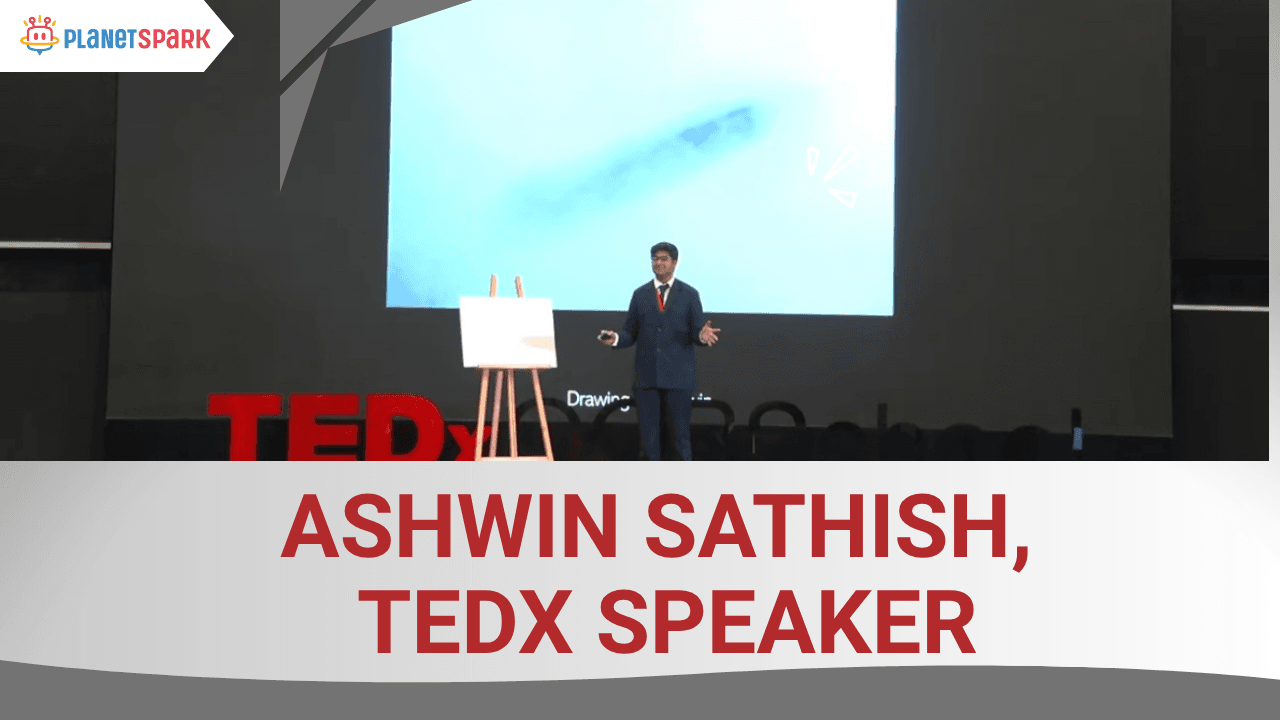
Ashwin Sathish, a sharp Grade 8 learner aged 13, has grown far beyond classroom discussions, using his strong expressive skills to shape vivid stories and meaningful ideas. Known for his TEDx appearance in New Delhi, Ashwin’s confidence on stage has naturally flowed into his writing, helping him build worlds that feel alive and purposeful. With steady practice and a curiosity for “what could be,” he continues to turn simple ideas into rich, engaging narratives that show the power of imagination and clarity of thought.
Final Thoughts on Circumlocution Meaning
Circumlocution meaning goes beyond a simple definition. It teaches students how indirect language shapes stories, influences tone, and guides reader interpretation. When used intentionally, circumlocution enriches narrative voice by adding subtlety, emotional distance, or reflection. It allows writers to suggest ideas rather than state them outright, creating depth and nuance. When used carelessly, however, circumlocution can obscure meaning, slow pacing, and weaken clarity.
With structured storytelling practice, students learn how to balance indirect expression with clear communication. They develop the ability to choose when circumlocution strengthens a narrative and when direct language is more effective. This balance helps students create stories that are thoughtful, expressive, and engaging, demonstrating confident control over narrative voice and storytelling craft.
Circumlocution meaning refers to expressing an idea indirectly instead of stating it plainly. Writers use extra or descriptive words to approach meaning gently or creatively. This technique is often used to soften tone, create emotional distance, or add subtlety to storytelling. It allows readers to infer meaning rather than being told directly.
Writers use circumlocution to soften ideas, create emotional distance, or shape narrative voice. It helps suggest meaning without being blunt or overly direct. This technique can reveal character personality, mood, or intention. When used intentionally, circumlocution adds depth, nuance, and stylistic control to stories.
Circumlocution in literature is used to reveal character traits, social norms, or emotional restraint. Authors often use it in dialogue and narration to show politeness, hesitation, or avoidance. It allows writers to convey meaning indirectly while enriching character development. This makes stories feel more layered and realistic.
Circumlocution is intentional indirect expression, while unclear writing lacks focus or purpose. When used carefully, circumlocution adds tone, style, and meaning to a sentence. Unclear writing, on the other hand, confuses the reader without adding value. Understanding this difference helps students write with precision.
Yes, circumlocution can improve narrative voice by controlling tone and emotional distance. It helps narrators sound reflective, formal, cautious, or emotionally guarded. This strengthens storytelling when aligned with the story’s purpose. A controlled narrative voice makes writing more engaging and intentional.
Students often believe indirect language sounds more advanced or sophisticated. This belief can lead to unnecessary repetition and wordy sentences. Without guidance, students may not realize how circumlocution affects clarity. Learning this concept helps them balance expressiveness with precision.