
Storytelling vs Creative Writing for Kids: Key Differences
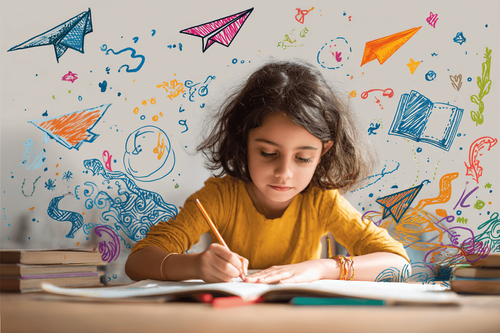

Table of Contents
- What is Storytelling?
- What is Creative Writing?
- Storytelling vs Creative Writing for Kids: Key Differences
- Storytelling vs Writing Examples to Understand Better
- Storytelling Skills for Kids: What Do They Learn?
- Creative Writing Skills for Children: What Do They Learn?
- Importance of Storytelling for Kids in Learning and Growth
- Which is Better: Storytelling or Creative Writing?
- Why Choose PlanetSpark?
- Conclusion: Helping Kids Become Complete Communicators
Imagine a child sitting with a notebook. One day, they excitedly narrate a story about a brave lion to their parents. The next day, they quietly write a detailed story about a magical forest. Both moments are creative, both are powerful, but they are not the same. This is where the debate of storytelling vs creative writing for kids begins.
Many parents and students often assume that storytelling and creative writing are interchangeable. However, understanding the difference between storytelling and creative writing can help children develop stronger communication, imagination, and thinking skills. Whether a child loves speaking or writing, each form builds a unique set of abilities.
In today’s learning environment, both skills are equally important. While storytelling enhances verbal expression and confidence, creative writing builds structured thinking and language mastery. This blog will break down these differences in a simple and engaging way so that students can clearly understand which skill suits them and why they should learn both.
What is Storytelling?
Storytelling is the art of sharing a story verbally or through expressive actions. It has been part of human culture for centuries, from grandparents narrating bedtime tales to teachers explaining lessons through stories.
When we talk about storytelling skills for kids, we refer to the ability to:
- Narrate events in a sequence
- Use voice modulation and expressions
- Engage listeners emotionally
- Think spontaneously
Storytelling does not always require writing. A child can simply imagine a plot and narrate it. This makes storytelling more flexible and immediate.
Example of Storytelling
A child says:
“Once there was a clever rabbit who tricked a lion to save his friends…”
Notice how the focus is on narration, tone, and engagement rather than perfect grammar or structure.
Importance of Storytelling for Kids
The importance of storytelling for kids goes beyond entertainment. It helps children:
- Build confidence in speaking
- Improve listening and comprehension
- Enhance imagination
- Develop emotional intelligence
Storytelling is often the first step in a child’s creative journey.
What is Creative Writing?
Creative writing, on the other hand, is the process of expressing ideas through written words. It involves structuring thoughts, choosing the right vocabulary, and building a complete narrative.
When we talk about creative writing skills for children, we focus on:
- Grammar and sentence formation
- Story structure like beginning, middle, and end
- Descriptive language
- Character and plot development
Unlike storytelling, creative writing requires time, planning, and revision.
Example of Creative Writing
A child writes:
“The rabbit noticed the lion’s reflection in the well. With a clever plan, he tricked the lion into jumping into the water.”
Here, the emphasis is on clarity, structure, and written expression.
Help your child become a confident speaker with PlanetSpark’s storytelling-focused live classes and expert mentors.
Book a free trial
Storytelling vs Creative Writing for Kids: Key Differences
Understanding the difference between storytelling and creative writing becomes easier when we compare them side by side.
| Aspect | Storytelling | Creative Writing |
|---|---|---|
| Medium | Spoken or performed | Written |
| Focus | Expression and engagement | Structure and clarity |
| Preparation | Often spontaneous | Requires planning |
| Skills Developed | Speaking and confidence | Writing and grammar |
| Flexibility | High | Moderate |
| Audience Interaction | Immediate | Indirect |
This table highlights how both skills complement each other rather than compete.
Storytelling vs Writing Examples to Understand Better
Let’s look at storytelling vs writing examples to make the difference clearer.
Situation: A Rainy Day
Storytelling Version:
“It was raining heavily, and I jumped into puddles, splashing water everywhere while my friends laughed!”
Creative Writing Version:
“The rain poured relentlessly as I stepped into puddles, creating ripples that reflected my joy.”
The storytelling version feels lively and conversational, while the writing version is more descriptive and polished.
Storytelling Skills for Kids: What Do They Learn?
Developing storytelling skills for kids helps them grow in multiple areas beyond just speaking. Here’s what children learn:
- Confidence building
Storytelling helps children become comfortable speaking in front of others. For example, when a child narrates a short story in class or at home, they slowly overcome stage fear and start expressing themselves without hesitation. - Quick thinking
Kids learn to think on their feet while narrating stories. If they forget a part, they naturally create something new to continue. For instance, during a storytelling activity, a child might instantly add a twist to keep the story going. - Emotional expression
Storytelling allows children to express feelings using tone, facial expressions, and gestures. For example, while narrating a sad scene, a child may lower their voice, or while describing a happy moment, they may smile and use excitement in their voice. - Better communication skills
Children learn how to organize their thoughts and present them clearly. For example, when telling a story with a beginning, middle, and end, they understand how to keep the listener engaged and avoid confusion. - Listening and understanding
Good storytellers are also good listeners. When children listen to others’ stories, they learn different styles, ideas, and ways to present a story, which improves their own skills. - Creativity and imagination
Storytelling encourages kids to think beyond reality. For example, they might create stories about talking animals or magical worlds, which strengthens their imagination.
Storytelling is especially helpful in group activities, classroom presentations, and daily conversations, as it builds both confidence and clarity in communication.
Creative Writing Skills for Children: What Do They Learn?
Similarly, creative writing skills for children play a crucial role in academic and personal growth.
1. Strong Vocabulary
Writing exposes children to new words and expressions.
2. Logical Thinking
They learn how to organize ideas in a structured way.
3. Creativity and Imagination
Children can build entire worlds through writing.
4. Attention to Detail
Creative writing teaches precision and clarity.
These skills are essential for exams, essays, and future communication.
Importance of Storytelling for Kids in Learning and Growth
The importance of storytelling for kids becomes even more evident in education, as it makes learning more meaningful and enjoyable. Here’s how it helps:
- Simplifies complex concepts
Storytelling turns difficult ideas into easy-to-understand situations. For example, instead of explaining honesty as a rule, a teacher can share a story about a boy who lied and faced consequences. This helps children understand the concept in a real-life context. - Makes learning engaging
Lessons become more interesting when taught as stories. For instance, a history lesson about kings and wars becomes exciting when narrated like an adventure, keeping students attentive and involved. - Improves memory retention
Children remember stories better than plain facts. A student may forget a science definition but will recall a story about how plants absorb water through roots, making learning long-lasting. - Encourages active participation
Storytelling invites kids to speak, imagine, and share their own ideas. For example, asking a child to create their own ending to a story helps them think creatively instead of just listening. - Builds curiosity
Stories often spark questions. A story about space might make a child curious about planets or black holes, encouraging them to explore more and learn beyond textbooks. - Develops communication skills
When children narrate stories, they learn to express ideas clearly and confidently. This helps them in school presentations, conversations, and public speaking. - Boosts confidence and expression
Sharing stories in front of others helps children overcome hesitation and build confidence, which is essential for overall personality development.
In fact, many successful speakers and leaders began by mastering storytelling, as it helps them connect with people and communicate ideas effectively.
Which is Better: Storytelling or Creative Writing?
Now comes the big question in the debate of storytelling vs creative writing for kids.
The answer is simple: neither is better. Both are essential.
Storytelling helps children speak confidently and think creatively in real time. Creative writing helps them organize thoughts and express ideas clearly on paper.
Instead of choosing one, students should focus on developing both skills together.
How to Balance Both
- Practice storytelling through daily conversations
- Write short stories regularly
- Participate in school activities
- Read books and observe different styles
When children combine storytelling and writing, they become powerful communicators.
Why Choose PlanetSpark?
Great storytelling is a powerful skill that builds confidence, creativity, and influence. At PlanetSpark, we help children master storytelling techniques that make their ideas engaging, persuasive, and memorable.
Structured Storytelling Frameworks
Students learn how to craft strong openings, build suspense, and deliver impactful conclusions using proven storytelling techniques.Voice Modulation & Expression Training
Our expert mentors guide children in using tone, pauses, and emotions effectively, making every story more impactful.Creative Thinking Development
Through interactive activities and prompts, children strengthen imagination and originality.Public Speaking Practice
Regular live sessions help students narrate confidently in front of an audience.Personalised Feedback & Improvement
One-on-one guidance ensures continuous improvement in clarity, confidence, and delivery
Conclusion: Helping Kids Become Complete Communicators
Understanding storytelling vs creative writing for kids is not about picking a winner. It is about recognizing how each skill contributes to a child’s overall development.
Storytelling builds confidence, expression, and spontaneity. Creative writing builds structure, clarity, and depth. Together, they shape children into confident speakers and thoughtful writers.
For students, this means better performance in school, improved communication skills, and stronger creativity. For parents and educators, it means guiding children in the right direction by encouraging both forms of expression.
In the end, every great writer is a storyteller, and every great storyteller has the potential to become a writer.
Frequently Asked Questions
Storytelling helps children build confidence, improve communication, and express ideas clearly in both academic and social settings.
Storytelling focuses on verbal narration and expression, while creative writing involves structured written content with grammar and format.
Kids can practice storytelling by narrating daily events, participating in group activities, and engaging in guided programs like PlanetSpark.
PlanetSpark offers live 1:1 sessions, expert mentors, and interactive storytelling activities that help kids build confidence and communication skills.
PlanetSpark combines creativity with structure. Children learn not only to imagine freely but also to shape their stories using frameworks and present them confidently.