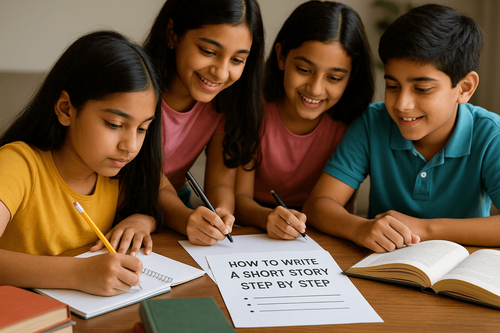
Writing a short story is one
of the best ways to begin your creative writing journey. It allows you to express emotions, build imagination, and share powerful ideas in just a few pages. Unlike novels, short stories focus on one key theme or event, making them perfect for beginners who want to practice storytelling without feeling overwhelmed.
In this guide, you’ll learn how
to write a short story step by step, from finding your first idea and creating characters to editing and polishing your final draft. Each step is simple, practical, and designed to help you write confidently, even if you’re just starting out. Whether you’re writing for school, a competition, or just for fun, these steps will make your story engaging and memorable.
How to Write a Short Story Step by Step for Beginners
Writing a short story step by step helps beginners turn simple ideas into engaging, well-structured narratives. The steps below will guide you through creating your first short story with confidence, creativity, and clarity.
Step 1: Find Your Story Idea
Every great short story begins with a strong idea. Your story idea doesn’t have to be complicated, it just needs to spark curiosity or emotion. Think about moments, experiences, or thoughts that made you wonder, “What if?”
Start by observing your surroundings, people, and everyday situations. Inspiration can come from a real-life incident, a dream, or even a random thought. You can also use writing prompts or questions like:
What would happen if someone made a life-changing choice in one day?
How would a person react if they faced their biggest fear?
Keep your idea small and focused since a short story should revolve around one main conflict or message. Once you have that core idea, you can start building everything else characters, setting, and plot around it.
Step 2: Build Your Main Character
Your main character is the heart of your short story. Readers connect with emotions, struggles, and choices and that connection starts with a believable character. Focus on creating one strong central character instead of introducing too many.
Begin by giving your character a clear goal or problem. What do they want, and what’s stopping them from getting it? This goal drives the story forward. Add traits that make them feel real, fears, strengths, habits, or flaws. These small details help readers relate and care about what happens next.
Show, don’t tell. Instead of describing your character’s personality directly, reveal it through actions, dialogue, and reactions. Keep supporting characters minimal so the story remains focused on your main character’s journey.
Step 3: Decide the Setting and Mood
The setting of your short story creates the world where your characters live and your plot unfolds. It helps readers visualize scenes and feel the emotions you want to convey. A good setting doesn’t just describe a place, it sets the mood and supports the theme of your story.
Start by deciding where and when your story happens. It could be a small village, a futuristic city, or even a single room, what matters is how the setting adds meaning to your story. Use sensory details to make readers feel present. Describe what your character sees, hears, smells, or touches.
Match the setting with the tone of your story. For example, a dark alley fits a suspense story, while a sunny park suits a lighthearted romance. When done right, your setting becomes more than just a backdrop, it becomes an emotional part of your storytelling.
Step 4: Create a Plot Outline
A strong plot gives your short story direction and flow. It’s the sequence of events that keeps readers curious and emotionally invested. Even though short stories are brief, they still need a clear beginning, middle, and end.
Start by outlining the main stages of your story. The introduction sets the scene and introduces the characters. The conflict reveals the main problem or challenge your character faces. The climax is the most intense or dramatic point, where the character must make an important decision. Finally, the resolution shows how the story ends and what lesson or change has occurred.
Keep your plot simple and focused on one key conflict. Avoid unnecessary twists or side plots that distract from the main story. A well-structured plot helps readers stay engaged and makes your story satisfying to read from start to finish.
Step 5: Write the First Draft
Once your outline is ready, it’s time to bring your story to life. The first draft is all about getting your ideas down on paper without worrying about perfection. Don’t stop to edit or overthink sentences, just focus on telling the story from start to finish.
Begin with an engaging opening that captures the reader’s attention right away. Introduce your main character, the setting, and the conflict naturally through action or dialogue. Keep the pacing steady, and make sure every line moves the story forward.
Remember, your first draft doesn’t need to be flawless. It’s the foundation you’ll refine later during editing. The key is to keep writing consistently until you complete your story.
Your title is the first thing readers notice, so it should capture attention and hint at your story’s theme or mood. A strong title gives a quick glimpse into what the story is about without revealing too much.
Start by thinking about the central emotion, event, or message in your story. Use that as inspiration for your title. Keep it short, memorable, and meaningful usually between one to five words. Avoid overly generic titles like “My Story” or “A Day in Life.” Instead, choose something that sparks curiosity, such as a key phrase, symbol, or moment from your story.
You can also finalize your title after completing the story. Once you understand your story’s tone and message fully, it’s easier to pick a title that fits perfectly.
Step 8: Share or Publish Your Story
Once your story is polished and complete, it’s time to share it with others. Sharing your work helps you gain confidence and receive valuable feedback that improves your writing skills.
Start small by showing your story to friends, family, or classmates. Join online writing communities where you can post your stories and read others’ work. You can also participate in writing contests or submit your story to magazines, blogs, or storytelling platforms.
If you’re building a personal writing portfolio, consider publishing your story on your own blog or social media page. The more you share, the more you grow as a writer. Each story you publish helps you learn, connect with readers, and discover your unique writing style.
Common Mistakes Beginners Should Avoid
Writing a short story can be an exciting and rewarding experience, but beginners often make certain mistakes that can weaken their story and confuse readers. Being aware of these common pitfalls can help you craft a clearer, stronger, and more engaging story that keeps readers hooked from start to finish. Understanding what to avoid is just as important as learning the steps to write a story.
Starting without a clear idea or theme. Many beginners jump straight into writing without knowing the central focus of their story. A clear theme or idea ensures your story remains cohesive and meaningful.
Including too many characters or side plots. Short stories are concise by nature. Introducing too many characters or unrelated subplots can distract readers and dilute the main message of your story.
Overexplaining emotions instead of showing them through actions. Rather than telling readers how a character feels, demonstrate it through behavior, dialogue, or reactions. This makes your characters more relatable and your story more immersive.
Creating weak conflicts or rushed endings. Conflict drives a story. If the conflict is too simple or the ending feels abrupt, readers may feel unsatisfied. Take the time to develop tension and resolve it naturally.
Ignoring proper editing and proofreading. Even the best ideas lose their impact if the story contains grammar mistakes, awkward sentences, or unclear phrasing. Editing polishes your work and improves readability.
Using overly complex language that distracts from the story’s message. Keep your language clear and concise, focusing on the story rather than showing off vocabulary. Simplicity often makes a story more powerful.
Improving your short story writing skills takes practice, observation, and a willingness to learn from every story you write. Even after mastering the basic steps, these additional tips can help you refine your craft and develop a unique voice that engages readers.
Read short stories regularly. Observing how established authors structure plots, develop characters, and create tension will inspire your own writing and expose you to different writing styles.
Write consistently, even in small amounts. Daily practice, even for 15 to 20 minutes, helps you build discipline, refine your writing habits, and increase creativity over time.
Pay attention to real-life conversations and scenarios. Dialogue and actions in your stories become more natural and relatable when inspired by real people and experiences.
Experiment with different genres and styles. Trying new approaches encourages creativity and helps you discover the type of stories you enjoy writing most.
Keep a notebook or digital file for ideas. Jot down interesting situations, phrases, or character traits whenever inspiration strikes. These notes can become the foundation for future stories.
Revise with intention. Focus on improving clarity, flow, and emotional impact during each round of editing rather than making random changes.
Why Choose PlanetSpark?
Writing a short story is more than just putting words on paper, it’s about expressing ideas, emotions, and creativity in a structured way. At PlanetSpark, we nurture young writers through our creative writing programs, helping them explore storytelling, character development, and plot creation while building confidence in English expression.
Personalized Learning: PlanetSpark offers tailored lessons to improve children’s creative writing, storytelling skills, and understanding of narrative structures. Each student learns at their own pace with guidance suited to their level.
Interactive Sessions: Engaging online classes make learning fun, including practical exercises for crafting characters, building plots, and writing compelling short stories.
Focus on English Fluency for Kids: Lessons are designed to enhance vocabulary, sentence formation, and clear expression, ensuring students can communicate their ideas effectively in their stories.
Practical Worksheets and Activities: Kids practice storytelling concepts through exercises, worksheets, and real-life writing applications, helping them apply grammar and creativity together.
Expert Mentors: Experienced teachers guide students through every step of writing a short story, from brainstorming ideas to editing and polishing the final draft.
Flexible Learning: Online sessions allow kids to learn from home at their own pace, making creative writing education accessible, convenient, and enjoyable.
Conclusion
Writing a short story is a rewarding way to express creativity, develop writing skills, and communicate ideas effectively. By following a step-by-step approach, from finding an idea and building characters to creating a plot, writing a draft, and revising carefully, beginners can craft engaging and memorable stories. Consistency, practice, and attention to detail are key to improving storytelling skills. Avoid common mistakes, apply the tips shared, and use structured learning methods to refine your craft.
With the right guidance and resources, such as PlanetSpark’s creative writing programs, learners can gain confidence, enhance English fluency, and discover the joy of writing. Start your journey today and turn your ideas into captivating short stories that inspire and entertain.
Frequently Asked Questions
A short story is a brief narrative that focuses on a single theme, event, or character. It usually ranges from 1,000 to 7,500 words and delivers a complete story in a compact form.
Ideas can come from personal experiences, observations, dreams, or writing prompts. Focus on one main theme or conflict to keep the story clear and engaging.
Keep the number of characters small, usually one main character with one or two supporting characters. This helps maintain focus and allows readers to connect deeply with the main character.
Most short stories range between 1,000 and 7,500 words. Beginners can start with shorter stories to practice structure and clarity.
Yes. Editing is crucial to improve clarity, sentence flow, grammar, and plot structure. Revising your draft makes your story polished and engaging.
Absolutely. Following step-by-step guidance, practicing regularly, and learning from examples can help beginners write effective and interesting short stories.