
Metanarrative Learning Made Fun and Simple with PlanetSpark


Table of Contents
- Metanarrative Meaning in Simple Terms
- What Is a Metanarrative Exactly for Beginners
- Metanarrative Definition for Students with Simple Examples
- Define Metanarrative in Academic Context
- How Metanarratives Shape Human Thinking
- Difference Between Narrative and Metanarrative
- Hidden Story Patterns Across Literary Works
- Why Students Struggle With Story Layers
- Learning Metanarrative Through Structured Guidance
- From Ideas to Confident Storytelling Success
- Benefits of Understanding Metanarrative Early
- Turning Ideas into Meaningful Student Stories
- Why PlanetSpark Is the Best Place to Build Exceptional Skill
- Learning to See the Bigger Story With PlanetSpark
Metanarrative refers to the deeper message or overarching idea that connects stories, themes, and perspectives within a text. It helps students look beyond the surface plot and understand how meaning is shaped. This guide explains the concept in a simple, student-friendly way, with clear examples and practical insights. PlanetSpark supports learners by strengthening reading comprehension, critical thinking, and creative expression through expert-led storytelling and writing programs.
Metanarrative Meaning in Simple Terms
The metanarrative meaning refers to a big story that explains smaller stories. It is a broad idea or belief that helps people understand how the world works.
Instead of focusing on one character or event, a metanarrative looks at the bigger picture. It connects many stories under one shared idea. For example, the belief that “knowledge leads to progress” appears in science fiction, education systems, and historical narratives.
Metanarratives influence how people think, behave, and judge situations. They often feel natural because they are repeated across books, films, and social conversations. Once students understand this meaning, they begin to notice how stories shape opinions and values.

What Is a Metanarrative Exactly for Beginners
So, what is a metanarrative in clear terms?
A metanarrative is a grand explanation or guiding idea that gives meaning to many different stories.
It helps answer large questions such as:
What is considered truth?
Who holds power?
What defines success?
What is morally right or wrong?
Unlike a normal narrative, which tells what happened, a metanarrative explains why stories matter. It sits beneath the surface, guiding interpretation rather than action.
Understanding this concept allows students to read stories thoughtfully rather than passively. They learn to question ideas instead of simply accepting them.
Metanarrative Definition for Students with Simple Examples
The metanarrative definition can be explained simply for learners. A metanarrative is a big idea that connects many stories and experiences into one shared meaning.
This definition applies across subjects. In literature, it shapes themes. In history, it influences how events are remembered. In society, it affects beliefs about growth, justice, and identity.
Common examples of metanarratives include:
Good versus evil: Many stories share the idea that good ultimately overcomes evil.
Freedom and justice: Historical narratives often reflect the belief that people deserve fairness and rights.
Progress through education: Biographies and school stories show learning as a path to success.
Survival and resilience: Adventure stories highlight human strength in difficult situations.
Identity and belonging: Literature explores how individuals search for acceptance and purpose.
When students clearly understand the definition, they are better prepared to analyze texts, write structured answers, and express opinions logically in exams and discussions.
Help your child understand deeper story meanings through guided storytelling lessons at PlanetSpark!
Define Metanarrative in Academic Context
To define metanarrative in academic language, it refers to an understanding that stories are never neutral. Every narrative reflects a broader belief system.
These belief systems guide how stories are written and interpreted. Some metanarratives support tradition and order, while others challenge authority and question truth.
Learning to define metanarrative accurately helps students move from basic comprehension to higher-level interpretation. This is especially useful in literature essays, debates, and critical writing tasks.
In an academic context, metanarratives also:
Provide a framework for analyzing power, ideology, and cultural influence in texts
Help identify dominant perspectives and marginalized voices
Support comparative analysis across genres, authors, and historical periods
Encourage questioning of ideas presented as universal truths
Strengthen critical thinking in literary and theoretical studies
How Metanarratives Shape Human Thinking
Metanarratives act like invisible lenses through which people understand the world. They influence how individuals interpret experiences and form beliefs about:
Success and failure in education and life
Right and wrong in moral decisions
Identity and belonging in society
Progress and growth over time
For students, recognizing these patterns changes how they learn and think. It helps them:
Question information instead of accepting it blindly
Understand how culture and history shape stories
Compare different viewpoints more confidently
Develop independent and critical thinking skills
Build strong storytelling and interpretation skills with PlanetSpark’s expert-led programs!
Difference Between Narrative and Metanarrative
Understanding the distinction between narrative and metanarrative helps students move beyond surface-level reading to identify deeper meanings, themes, and belief systems that shape how stories are created and interpreted.
Hidden Story Patterns Across Literary Works
In literature, metanarratives connect themes across different texts. Classic works often reinforce cultural beliefs, while modern texts question ideas like authority, truth, and power. Identifying these patterns helps students understand deeper meanings.
Examples of Metanarrative in Literature
1. Heroism Always Defeats Evil: Epic tales and myths promote bravery, sacrifice, and moral victory.
2. Fate Controls Human Lives: Tragic stories highlight destiny as unavoidable.
3. Authority Deserves Obedience: Older texts often support social and political hierarchy.
4. Truth Has Multiple Perspectives: Modern stories challenge single absolute truths.
5. Power Structures Can Be Challenged: Contemporary literature questions control and dominance.
Turn reading into meaningful learning with PlanetSpark’s storytelling-focused curriculum!
Why Students Struggle With Story Layers
Students struggle with story layers because deeper meanings are rarely stated clearly. Many focus on plot details and hesitate to question themes, symbols, or ideas, limiting their ability to interpret texts critically and confidently.
Focus stays on the plot: Students concentrate on events and characters, missing the deeper message.
Solution: Teach them to ask “What does this story suggest?” not just “What happens?”Hidden meanings are not obvious: Themes and symbols are rarely stated directly in the text.
Solution: Use guided questions and examples to uncover meaning step by step.Limited exposure to critical reading: Many learners are not trained to question ideas in stories.
Solution: Encourage discussion, comparison, and reflection after reading.Fear of giving the wrong interpretation: Students hesitate to share ideas without certainty.
Solution: Create a safe space where multiple interpretations are accepted.
This approach helps students gradually move from surface reading to deeper understanding.
Learning Metanarrative Through Structured Guidance
Structured guidance helps students understand metanarrative by breaking complex ideas into clear steps, encouraging questioning, discussion, and reflection while building confidence to identify deeper meanings across texts in classrooms today.
Pattern recognition: Teachers guide students to spot patterns across stories, helping them connect themes beyond individual plots.
Guided questioning: Guided questioning trains learners to ask why ideas repeat instead of accepting narratives passively and blindly.
Cross-subject examples: Examples from literature and history show how metanarratives operate across subjects, improving transfer of learning.
Practice and feedback: Regular practice and feedback build confidence, allowing students to express interpretations clearly in writing discussions.
From Ideas to Confident Storytelling Success
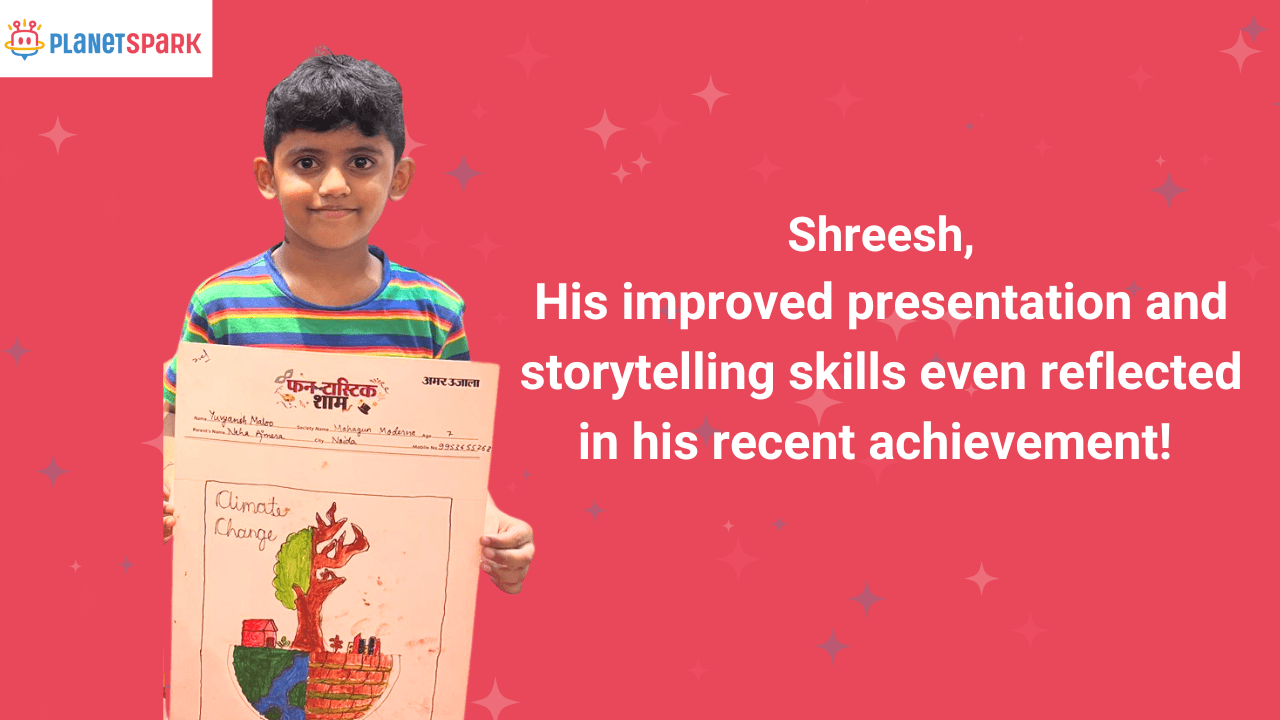
“PlanetSpark has helped Shreesh express his ideas creatively and confidently. His improved presentation and storytelling skills even reflected in his recent achievement — winning second place in the Junior Category of a drawing competition on ‘Climate Change’ organized by the Amar Ujala team.”
Inspired by Shreesh’s journey?
Join PlanetSpark to build confidence, creativity, and powerful storytelling skills that help students shine both in academics and beyond.
Benefits of Understanding Metanarrative Early
Understanding metanarrative early helps students think beyond surface stories, recognize deeper ideas, and develop critical reading habits that support academic growth, confident expression, and thoughtful interpretation across subjects.
Stronger critical thinking: Students learn to question assumptions, analyze perspectives, and evaluate ideas rather than memorizing information.
Improved reading comprehension: Early awareness helps learners connect themes, symbols, and messages across texts more effectively.
Better writing and analysis skills: Students express ideas clearly, support arguments, and structure answers with deeper insight.
Greater academic confidence: Understanding big ideas reduces confusion and builds confidence in discussions, essays, and exams.
Turning Ideas into Meaningful Student Stories
When students understand metanarrative, storytelling becomes more intentional and thoughtful. They begin to see stories as vehicles for ideas, values, and questions, not just sequences of events. This understanding helps them plan characters, conflicts, and endings that communicate a deeper meaning to readers clearly.
This awareness also encourages creative freedom. Students feel confident experimenting with themes, challenging common beliefs, and presenting unique perspectives. Instead of copying familiar plots, they design narratives that reflect personal thinking, cultural awareness, and imagination, making their stories more engaging, original, and intellectually meaningful.
Why PlanetSpark Is the Best Place to Build Exceptional Skills
PlanetSpark offers a complete learning ecosystem that helps children become confident, expressive, and imaginative writers. With expert-led classes, AI-powered tools, and engaging activities, students don’t just learn writing—they master the art of storytelling, clarity, structure, and creativity. Here’s how PlanetSpark transforms every child into a skilled young author:
What PlanetSpark Offers for Storytelling Excellence
1:1 Personal Trainers who guide children through grammar, storytelling, vocabulary, and expression
Personalised Writing Curriculum tailored to your child’s level, goals, and pace
Spark Diary for daily writing practice that builds consistency and creativity
Genre-Based Learning covering stories, poems, essays, book reviews, speeches, and more
Creative Stimulus Activities like story dice, picture prompts, and imagination games
Real Publishing Opportunities through blogs, e-magazines, anthologies, and showcases
SparkX AI Video Analysis to refine delivery when presenting written work
Gamified Tools like SparkBee and quizzes that strengthen grammar, vocabulary, and spelling
PlanetSpark ensures your child not only writes better but thinks sharper, imagines deeper, and communicates with confidence that lasts a lifetime.
Learning to See the Bigger Story With PlanetSpark
To sum it up, understanding metanarrative helps students see stories beyond plots and characters. It trains them to identify deeper ideas, question assumptions, and connect themes across texts, strengthening critical reading and analytical thinking skills.
With this understanding, students become confident readers and thoughtful thinkers. They learn to interpret literature with clarity, express insights effectively, and appreciate how stories reflect larger beliefs shaping culture, society, and human experience.
Also Read:
Best Summer Reading Books for Kids to Enjoy
Story Conflict Techniques for Stronger Student Writing
Frequently Asked Questions
A metanarrative is a big underlying idea that connects many stories. It explains shared beliefs, values, or assumptions behind narratives, helping readers understand deeper meanings beyond characters, events, or plots.
Metanarrative helps readers identify hidden themes and cultural beliefs within texts. It improves interpretation by showing how stories reflect ideas about power, truth, morality, and society across different time periods.
A narrative tells a specific story with characters and events. A metanarrative explains the larger idea behind many stories, guiding how narratives are written, interpreted, and understood across cultures.
Metanarrative is often implied rather than directly taught in schools. Students usually encounter it through theme analysis, critical questions, and essay writing, especially in higher grades and advanced literature studies.
PlanetSpark teaches metanarrative through guided reading, discussion-based learning, and storytelling activities. Students learn to identify themes, explain interpretations clearly, and build strong analytical responses with confidence.
PlanetSpark simplifies complex concepts like metanarrative using structured lessons and expert mentoring. It helps students strengthen reading comprehension, critical thinking, and expressive writing skills essential for academic success.