
Fun Nursery Rhymes That Make Learning Fun And Engaging For Kids


Table of Contents
- What Are Nursery Rhymes?
- How Nursery Rhymes Make Learning Fun and Engaging
- Types of Nursery Rhymes
- Best & Short Nursery Rhymes for Children with Easy Words
- How Parents Can Use Nursery Rhymes at Home
- Tips to Choose the Right Nursery Rhymes for Different Ages
- Why PlanetSpark Is Great for Learning Nursery Rhymes
- Conclusion
Nursery rhymes are one of the happiest ways to help children learn new words, sounds, actions, and ideas. These playful songs have been loved for generations because they combine music, rhythm, and storytelling in a simple format that children enjoy. From clapping hands to repeating funny lines, nursery rhymes turn learning into a game.
Many parents and teachers use nursery rhymes during playtime, study time, and bedtime because they hold a child’s attention naturally. Children often remember tunes faster than spoken lessons. This is why nursery rhymes are helpful for language growth, listening skills, memory improvement, and confidence building.
The best part about nursery rhymes is that they can be enjoyed anywhere. At home, in school, during travel, or before sleep, these songs create fun moments while teaching important basics. Whether a child is learning numbers, animals, actions, or sounds, rhymes make the process exciting.
Short songs are especially effective because children can quickly learn and repeat them. That is why many families search for short nursery rhymes for children that are easy to sing every day.
Nursery rhymes are not only songs. They are learning tools wrapped in joy. A child may laugh while singing, but at the same time they are practicing speech, rhythm, and thinking skills. That is what makes them special.
As children grow, nursery rhymes also become a stepping stone toward reading. Recognizing repeated sounds and word patterns can help prepare them for phonics and vocabulary later.
In this blog, we will explore how nursery rhymes make learning fun, different types of rhymes, and the best songs children can enjoy every day.
What Are Nursery Rhymes?
Nursery rhymes are short poems or songs written especially for young children. They usually have simple words, repeating sounds, playful rhythms, and easy melodies. These features make them enjoyable and easy to remember. Many famous nursery rhymes have been passed down through generations and are still loved today.
These songs often include themes such as animals, numbers, stars, rain, family members, daily habits, and funny situations. Because the words are simple and rhythmic, children can join in quickly even if they hear the rhyme only a few times.
Nursery rhymes are different from regular songs because they are designed to support early learning. They help children recognize sounds, understand patterns, and learn new vocabulary while having fun.
Main Features of Nursery Rhymes
- Short and easy to remember
- Musical rhythm and rhyme patterns
- Repetition of key words
- Fun storytelling elements
- Actions or gestures in many songs
- Friendly and child-focused topics
For example, when children sing a rhyme about stars, they learn words like bright, sky, and twinkle. If they sing a counting rhyme, they begin understanding numbers naturally.
Why Nursery Rhymes Are Timeless
Children across the world enjoy rhymes because music and rhythm are universal. Even when languages change, the joy of repeating sounds and moving with actions remains the same. That is why nursery rhymes continue to be popular in homes and classrooms.
Examples of Learning Through Rhymes
| Rhyme Theme | Learning Outcome |
|---|---|
| Alphabet songs | Letter recognition |
| Counting rhymes | Number learning |
| Animal rhymes | Vocabulary growth |
| Action rhymes | Coordination |
| Bedtime rhymes | Calm routine |
Parents often choose nursery rhymes because they are a screen-free and joyful learning option. Instead of forcing lessons, rhymes make children curious and active participants.
Today, nursery rhymes are available in books, audio versions, animated videos, and live interactive classes. This gives children many ways to enjoy them while learning at their own pace.
When children repeat rhymes daily, they build speaking confidence and stronger memory skills. Even shy children often join in once they become familiar with the tune.
That is why nursery rhymes remain one of the easiest and most effective tools for early childhood learning.
How Nursery Rhymes Make Learning Fun and Engaging
Children learn best when they are happy, active, and curious. That is exactly why nursery rhymes are so effective. Instead of presenting learning as a task, rhymes turn it into an enjoyable experience through music, movement, and repetition. A child singing happily is often learning without even realizing it.
The rhythm in nursery rhymes helps children remember words faster. When lines repeat in a musical pattern, the brain finds it easier to store and recall information. This is why many children can sing full rhymes from memory after hearing them only a few times.
Another reason nursery rhymes are engaging is that they invite participation. Children clap, jump, point, smile, and act out scenes while singing. This keeps their attention active and reduces boredom. A child who may lose focus during regular lessons often stays involved during rhyme time.
How Rhymes Support Learning
| Learning Area | How Rhymes Help |
|---|---|
| Vocabulary | Introduces new words naturally |
| Memory | Repetition improves recall |
| Listening | Builds focus on sounds and words |
| Speaking | Encourages pronunciation practice |
| Confidence | Helps children sing and speak aloud |
| Creativity | Inspires imagination through stories |
Children also enjoy guessing what comes next in a rhyme. This builds prediction skills and pattern recognition. For example, if a rhyme repeats sounds, children begin expecting the next matching word. That playful thinking supports language development.
Why Children Stay Interested
- Catchy tunes are easy to enjoy
- Funny characters make songs memorable
- Movement keeps energy high
- Repeating lines create confidence
- Group singing feels social and exciting
Many nursery rhymes include actions such as tapping feet, waving hands, hopping, or spinning. These movements connect body and mind, making learning more active. Children often remember action-based rhymes faster because they link words with motion.
Rhymes can also improve emotional connection with learning. When children associate songs with laughter, warmth, and family time, they begin seeing learning as something positive. This early mindset can help later in school.
Short practice sessions work especially well. Singing for five to ten minutes daily can create strong learning habits without pressure. Parents and teachers often use morning rhymes, transition rhymes, or bedtime rhymes to make routines smoother.
Short nursery rhymes for children are useful because they keep attention strong and avoid overload. Young learners can quickly understand them, repeat them, and feel successful.
In simple words, nursery rhymes make learning fun because they combine sound, motion, joy, and repetition. They transform ordinary lessons into playful experiences children want to repeat again and again.
Every child has a story worth sharing.
Join PlanetSpark’s Storytelling Course and help your child speak with confidence.
Types of Nursery Rhymes
Not all nursery rhymes are the same. Different types of rhymes teach different skills and match different moods. Some are energetic and playful, while others are calm and soothing. Knowing the types of nursery rhymes helps parents and teachers choose the best songs for each moment.
Some rhymes are great for movement time, some for counting practice, and some for bedtime relaxation. Using a variety of rhymes keeps children interested and supports many areas of development.
Action Nursery Rhymes That Build Motor Skills
These rhymes include physical movements such as clapping, jumping, stomping, turning, or touching body parts. Children listen to instructions and move accordingly.
Benefits:
- Improves balance and coordination
- Builds listening skills
- Releases energy positively
- Strengthens body awareness
Examples include songs with hand actions, jumping cues, or dance motions.
Animal Nursery Rhymes Kids Love to Sing
Animal-themed rhymes are always popular because children are naturally curious about animals. These songs may include farm animals, jungle animals, pets, or birds.
Benefits:
- Teaches animal names and sounds
- Expands vocabulary
- Encourages imagination
- Creates excitement and laughter
Counting and Alphabet Nursery Rhymes for Learning
These rhymes focus on early academic basics in a playful way. They are useful for introducing numbers, letters, shapes, and patterns.
| Type | Skill Built |
|---|---|
| Counting rhymes | Number recognition |
| Alphabet rhymes | Letter memory |
| Shape rhymes | Visual learning |
| Pattern rhymes | Logical thinking |
Children often learn faster when lessons are sung instead of spoken.
Bedtime Nursery Rhymes for Calm Evenings
These are slow, soft, and comforting rhymes used before sleep or quiet time. They help children relax after active play.
Benefits:
- Creates peaceful bedtime routines
- Reduces restlessness
- Encourages emotional comfort
- Builds bonding moments with parents
How to Choose the Right Type
Choose rhymes based on time and purpose:
- Morning: action songs
- Study time: counting or alphabet songs
- Playtime: animal or story rhymes
- Night: bedtime songs
Using many types of nursery rhymes keeps learning fresh and enjoyable. It also helps children discover what they love most. Some may enjoy movement songs, while others prefer soft musical stories.
When children experience different styles, they gain language, rhythm, movement, and confidence in many ways.
Best & Short Nursery Rhymes for Children with Easy Words
Children enjoy songs that are simple, cheerful, and easy to repeat. That is why short nursery rhymes for children are so popular. They use clear words, catchy rhythm, and playful lines that help children remember them quickly. Short rhymes are ideal for daily learning because they hold attention and can be repeated many times without feeling tiring.
These rhymes are especially useful for young learners who are just starting to speak or listen carefully. Easy words help children copy pronunciation and build confidence. Repetition helps them remember new vocabulary naturally.
Why Short Rhymes Work So Well
- Easy to learn in a few repetitions
- Great for short attention spans
- Helps improve memory quickly
- Builds confidence through fast success
- Can be sung anywhere and anytime
Popular Short Rhymes Children Love
| Nursery Rhyme | What Kids Learn |
|---|---|
| Twinkle Twinkle Little Star | Nature words and rhythm |
| Baa Baa Black Sheep | Counting and listening |
| Humpty Dumpty | Story sequence |
| Jack and Jill | Action words |
| Rain Rain Go Away | Weather words |
| Row Row Row Your Boat | Rhythm and teamwork |
These classic nursery rhymes continue to be favorites because they are fun, repetitive, and easy to sing.
How to Make Rhyme Time More Fun
Parents and teachers can make short rhymes even more engaging by adding actions:
- Point to the sky during star rhymes
- Clap hands on repeating words
- Use toy animals for animal songs
- Rock gently during calm rhymes
- Use facial expressions for characters
Children often remember rhymes better when actions are included. Movement turns words into experiences.
Creating a Daily Rhyme Routine
Try using different rhymes throughout the day:
- Morning: cheerful rhyme
- Study time: counting rhyme
- Playtime: action rhyme
- Bedtime: soft rhyme
This keeps learning fresh and organized.
Why Easy Words Matter
Simple language helps children understand meaning faster. Instead of struggling with hard vocabulary, they focus on sound, rhythm, and enjoyment. Once confidence grows, children become more open to learning new words.
The best nursery rhymes are not always the longest or most complex. Often, the shortest songs bring the biggest smiles and strongest learning results. A two-minute rhyme repeated daily can build memory, speech, and happiness over time.
That is why short nursery rhymes for children remain one of the smartest and easiest tools for playful early learning.
Confidence begins with one spoken story.
Enroll in PlanetSpark’s Storytelling Course today.
How Parents Can Use Nursery Rhymes at Home
Home is one of the best places for children to enjoy nursery rhymes. A relaxed and familiar environment helps kids sing freely, move confidently, and enjoy learning without pressure. Parents do not need special training to use nursery rhymes effectively. A few minutes each day can create joyful learning moments.
Nursery rhymes can be added naturally into everyday routines. Instead of making learning feel formal, parents can turn regular moments into playful experiences with music and repetition.
Simple Ways to Use Rhymes at Home
| Time of Day | Rhyme Activity |
|---|---|
| Morning | Sing a cheerful welcome rhyme |
| Bath time | Use water-themed songs |
| Meal time | Sing counting or thank-you rhymes |
| Playtime | Action songs with movement |
| Bedtime | Calm and gentle rhymes |
This routine helps children connect songs with daily habits.
Easy Activities Parents Can Try
- Clap along while singing
- Use hand puppets or toys
- Ask children to fill missing words
- Repeat favorite lines together
- Create actions for each rhyme
- Use picture books with rhyme themes
These simple ideas make rhyme time more interactive.
Benefits of Singing Together
When parents sing with children, learning becomes more meaningful. It is not only about words. It also builds emotional connection and confidence.
Benefits include:
- Stronger parent-child bonding
- Better speech confidence
- More joyful family time
- Improved listening habits
- Positive learning attitude
Children often feel proud when they can sing a rhyme alone after practicing with family.
How to Encourage Participation
Some children sing immediately, while others observe first. Both are normal. Parents can encourage gently by:
- Singing with expression and fun energy
- Avoiding pressure to perform
- Repeating favorite rhymes often
- Praising effort, not perfection
- Letting children choose songs
Use Rhymes Beyond Singing
Nursery rhymes can also become creative activities:
- Draw scenes from a rhyme
- Count objects mentioned in songs
- Act out characters
- Learn animal sounds
- Make bedtime storytelling routines
This extends learning into art, language, and imagination.
Even five to ten minutes of nursery rhymes daily can make a big difference. Children learn best through repetition, joy, and connection. When parents bring nursery rhymes into home routines, they create a warm space where learning feels natural and fun.
Tips to Choose the Right Nursery Rhymes for Different Ages
Choosing the right nursery rhymes can make learning easier, more enjoyable, and more effective for children. Every child grows at a different pace, but interests and attention spans often change over time. Some children love movement songs, while others enjoy calm storytelling rhymes. The best approach is to match songs with a child’s stage of learning, mood, and personality.
A good nursery rhyme should be easy to follow, fun to repeat, and suitable for the child’s understanding level. Songs that are too difficult may cause frustration, while songs that are too simple may lose attention quickly.
What to Look for in a Good Nursery Rhyme
- Clear and simple words
- Catchy rhythm and melody
- Repetition of key phrases
- Positive and playful theme
- Easy actions or gestures
- Age-appropriate length
Shorter rhymes are usually better for beginners because they are easier to memorize and repeat. That is why many parents prefer short nursery rhymes for children during early learning stages.
Choosing by Interest
Every child responds differently. Use their interests as a guide.
| Child Interest | Best Type of Rhyme |
|---|---|
| Loves animals | Animal rhymes |
| Full of energy | Action rhymes |
| Curious about numbers | Counting rhymes |
| Enjoys stories | Character rhymes |
| Needs calm time | Bedtime rhymes |
When children like the topic, they participate more actively.
Signs a Rhyme Is a Good Match
- Child smiles or laughs while singing
- Repeats lines willingly
- Remembers words after practice
- Requests the rhyme again
- Joins actions with excitement
These signs show strong engagement and learning.
Keep Variety in the Routine
Using only one type of rhyme can become repetitive. Mix songs through the week:
- Monday: action rhyme
- Tuesday: animal rhyme
- Wednesday: counting rhyme
- Thursday: story rhyme
- Friday: bedtime calm rhyme
Variety keeps learning fresh and enjoyable.
Avoid Overcomplicating It
Parents sometimes think educational songs must be advanced. In reality, simple rhymes often work best. Repetition, rhythm, and enjoyment matter more than complexity.
Follow the Child’s Response
If a rhyme does not connect, switch to another style. Learning should feel inviting, not forced. Let children choose favorites and repeat them often.
The right nursery rhymes can build language, confidence, memory, and happiness. By selecting songs based on interest, simplicity, and mood, parents can create a rich learning environment where children naturally enjoy growing every day.
Why PlanetSpark Is Great for Learning Nursery Rhymes
PlanetSpark makes nursery rhymes more exciting by turning simple songs into interactive learning experiences. Instead of only listening and repeating, children get opportunities to speak clearly, use expressions, and participate actively. This helps them enjoy rhyme time while improving communication skills. When children perform rhymes with actions and voice modulation, they become more confident and expressive. Learning feels playful, not forced.
Another reason PlanetSpark stands out is its focus on engaging methods that keep children interested. Nursery rhymes become a tool for vocabulary building, pronunciation practice, and creativity. Through guided sessions, children can learn rhythm, speaking flow, and listening skills in a fun environment. Parents also benefit because structured sessions save time while giving children meaningful learning support at home.
How PlanetSpark Helps Children
- Makes nursery rhymes interactive and fun
- Improves speaking confidence
- Builds clear pronunciation
- Encourages creativity and expression
- Strengthens listening skills
- Keeps children engaged through activities
- Turns learning into enjoyable practice
Fun songs + smart learning = happy growth for kids.

Success Story: Yuvyansh Shines with Creativity and Confidence
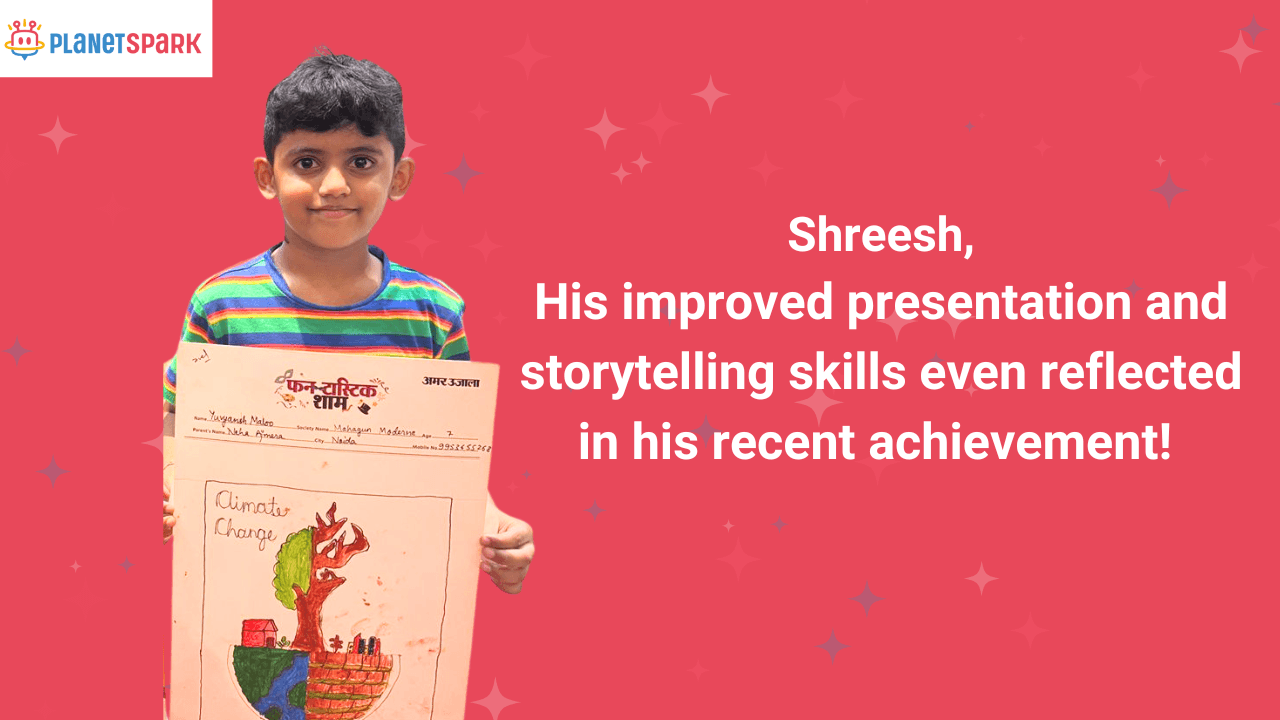
Yuvyansh has grown into a more confident and creative learner with the support of PlanetSpark. His improved presentation, communication, and storytelling skills have helped him express ideas more effectively. This progress was beautifully reflected in his recent achievement of winning Second Place in the Junior Category at a drawing competition on Climate Change, organized by the Amar Ujala team.
Conclusion
Nursery rhymes are a joyful way to help children learn language, rhythm, memory, and confidence from an early age. Their simple words, catchy tunes, and playful actions make learning easy and enjoyable. From action songs to bedtime melodies, nursery rhymes support many important skills while keeping children engaged.
By using nursery rhymes regularly at home or through interactive platforms like PlanetSpark, parents can create fun learning moments every day. Whether you choose classic songs or short nursery rhymes for children, these timeless melodies can make early learning brighter, smarter, and more exciting for every child.
Great storytellers grow into great leaders.
Boost your child’s creativity with PlanetSpark Storytelling Classes.
You must read:
Learn Rhyme Scheme Easily with Examples and Simple Steps
500 Rhyming Words in English | Learn & Speak with PlanetSpark
Frequently Asked Questions
Nursery rhymes are short songs or poems for children with simple words, rhythm, and repetition that make learning fun and engaging.
Nursery rhymes help improve vocabulary, memory, listening skills, pronunciation, creativity, and confidence in children.
Children can start listening to nursery rhymes from an early age. Simple rhymes with actions and repetition are great for young learners.
They introduce new words, improve pronunciation, and help children understand sounds and sentence patterns through repetition.
Popular short nursery rhymes for children include Twinkle Twinkle Little Star, Baa Baa Black Sheep, Humpty Dumpty, and Rain Rain Go Away.
Yes, repeating catchy lines and rhythms helps children remember words, patterns, and sequences more easily.