


Reduplication meaning refers to the repetition of a word or a part of a word to add emphasis, rhythm, or style to language. Instead of expressing an idea only once, the writer repeats sounds or words to shape how the sentence feels when it is read or heard. This repetition is not accidental. It is a creative choice that makes language more memorable and expressive. Common examples include words like “bye-bye,” “no-no,” “zig-zag,” and “tick-tock,” which use repetition to create movement, sound, or emotion.
For students, reduplication demonstrates how repetition can strengthen expression rather than weaken it. It shows that repeating certain sounds can make language feel playful, dramatic, comforting, or lively. Simple words are transformed into rhythmic phrases that catch attention and stay in the reader’s mind. This technique is especially useful in storytelling, poetry, and dialogue, where the sound of language plays an important role in creating mood, character voice, and emotional impact.
Reduplication Meaning in Creative Language
In creative language, reduplication is not about adding extra words randomly or repeating sounds without thought. It is about choosing repetition carefully to support tone, mood, and emotional effect. When writers use reduplication intentionally, they guide how the reader feels while reading a sentence. Reduplicated words often sound playful, intense, comforting, or dramatic, depending on context, helping the reader experience the story rather than simply understand its events.
This technique teaches students that language is not only about meaning but also about feeling. The rhythm created through repetition can slow a moment down, add excitement, or soften a scene. When used with awareness, reduplication becomes a powerful tool for expressive storytelling.
Why Reduplication Is Used in Storytelling
Storytelling relies heavily on how language sounds when it is read aloud or imagined in the reader’s mind. Reduplication adds musical quality, rhythm, and flow, making sentences more engaging and memorable. It helps stories sound natural instead of stiff or mechanical, which is why it appears frequently in children’s stories, folktales, poems, and expressive narration.
Writers use reduplication to:
• add rhythm and movement to sentences
• highlight emotions or repeated actions
• make dialogue sound realistic and conversational
• create phrases that stay in the reader’s memory
When students use reduplication thoughtfully, their stories feel more alive. The language begins to move, sound, and breathe, drawing readers into the narrative.
Join now with PlanetSpark to help your child become a confident and expressive storyteller.
Reduplication Examples in Everyday Language and Stories
Reduplication examples are easy to spot in everyday language and storytelling. Words like “chit-chat,” “flip-flop,” “teeny-tiny,” and “hush-hush” repeat sounds to create meaning that feels stronger than the individual words alone. These repetitions suggest action, size, secrecy, or movement in a way that feels immediate and expressive.
Such examples show students that reduplication is already part of natural language. Writers simply learn how to use it consciously to improve storytelling rather than leaving it to chance.
Learning Through Reduplication Examples
By studying reduplication examples, students begin to notice how repetition changes tone and mood. A sentence with reduplication may sound softer, more playful, more dramatic, or more emotional than a direct version. This comparison helps students understand the impact of sound and rhythm in writing.
Analysing examples also builds strong editing skills. Students learn to ask whether repetition adds value to a sentence or distracts from meaning. This awareness strengthens narrative control and improves overall writing quality.
Reduplication Words and Their Effect on Narrative Voice
Reduplication words strongly influence narrative voice because they shape how a narrator or character sounds to the reader. Language is not only read for meaning but also “heard” in the reader’s mind, and reduplication plays a key role in that inner sound. A character who uses playful reduplication may appear young, excited, informal, affectionate, or curious. For example, repeated sounds can make a character feel lively or emotionally open. On the other hand, a narrator who uses rhythmic repetition may sound poetic, dramatic, reflective, or thoughtful, slowing the reader down and adding emotional weight to the moment.
Understanding reduplication words helps students shape narrative voice deliberately instead of writing in a single flat tone throughout a story. They learn that voice changes based on who is speaking, what they are feeling, and what the situation demands. By adjusting repetition, students can make scenes feel light or serious, fast or calm, playful or intense. This awareness allows them to control mood and emotion more effectively, making their narratives richer, more layered, and more engaging for the reader.
Ablaut Reduplication Explained Simply
Ablaut reduplication is a specific type of reduplication where vowel sounds change in a fixed and familiar order, such as “zig-zag,” “ping-pong,” or “tick-tock.” These word pairs sound natural and balanced because they follow sound patterns that English speakers instinctively recognise. Even without knowing the technical term, students often feel that one order “sounds right” while the reverse sounds awkward.
Students do not need to memorise linguistic rules to use ablaut reduplication effectively. Instead, they learn to listen carefully to how sounds flow together. This listening skill helps them develop an ear for rhythm and balance in language. Recognising these patterns allows students to write sentences that feel smooth and satisfying, especially in descriptive passages, dialogue, and expressive storytelling.

When Reduplication Is Used Effectively
Reduplication is most effective when it serves a clear purpose within the story. It should support emotion, pacing, imagery, or character voice rather than appear as decoration. When used thoughtfully, repetition enhances meaning instead of distracting from it.
Reduplication works well when writers want to:
• emphasise an action or strong feeling
• create playful, warm, or poetic language
• add rhythm and movement to narration
• make dialogue sound natural and believable
When repetition aligns with the emotional needs of the scene, it strengthens storytelling. It helps readers feel the moment rather than simply understand it.
When Reduplication Weakens Writing
Reduplication weakens writing when it is overused or added without intention. Too much repetition can make sentences feel childish, exaggerated, or distracting, especially in serious or emotionally heavy scenes. Instead of deepening impact, unnecessary repetition can pull readers out of the story.
Overuse of reduplication can:
• reduce clarity and focus
• slow the story without reason
• weaken emotional intensity
• make writing feel repetitive or unfocused
Learning reduplication meaning helps students recognise when repetition adds strength and when simplicity communicates more powerfully.
Why Students Struggle With Using Reduplication
Students often struggle with reduplication because they misunderstand repetition. Some avoid it completely, believing repetition is always a mistake. Others overuse it, assuming repetition automatically makes writing more interesting. Both approaches limit expressive growth.
Without guidance, students may not realise how repetition affects tone and pacing. Guided practice helps them understand balance. They learn that reduplication is a stylistic choice, not a rule, and that strong storytelling depends on intention rather than habit.
Enroll now at PlanetSpark and build strong storytelling skills with expert guidance.
How Learning Reduplication Improves Storytelling Skills
Understanding reduplication meaning gives students greater control over creative language. They begin to see how sound, rhythm, and repetition shape the reader’s experience, not just the sentence’s meaning. This awareness helps them make thoughtful choices while writing.
Learning reduplication helps students:
• write more expressive and vivid sentences
• develop a stronger, more flexible narrative voice
• improve rhythm and flow in storytelling
• use language creatively and confidently
These skills help students move beyond basic storytelling into more engaging and emotionally resonant writing.
Why Reduplication Matters for Creative Language Development
Reduplication is a small but powerful tool in creative language development. It teaches students that how words sound is just as important as what they mean. This understanding deepens their relationship with language and strengthens expressive ability.
Students who understand reduplication write with greater sensitivity to rhythm, tone, and mood. Their stories feel intentional rather than accidental, expressive rather than flat, and enjoyable rather than mechanical. As a result, their storytelling becomes more confident, engaging, and memorable for readers.
PlanetSpark: Structured Storytelling Growth for Children
PlanetSpark helps children become expressive and confident storytellers through live 1:1 sessions and structured narrative training. Each class builds imagination, clarity and delivery so students learn to tell stories that engage and connect.
1:1 Expert Coaching
Children learn storytelling with certified communication trainers who guide them on body language, voice modulation, speech structuring, and delivery through personalized 1:1 sessions.
Step-by-Step Storytelling Skill Building
The curriculum includes storytelling techniques, speech structuring, persuasive elements, and content organization, helping children build clear and engaging narratives.
Real-Time Storytelling Practice
Kids participate in storytelling circles, panel discussions, and group activities where they narrate stories and receive live feedback from global peers.
AI-Based Story Analysis with SparkX
Children upload their storytelling videos for AI evaluation on voice clarity, body language, grammar usage, confidence, and organization, enabling measurable improvements.
Consistent Progress Tracking
Structured progress reports assess content quality, critical thinking, grammar, voice modulation, confidence, and delivery, with trainer notes and customized action plans.
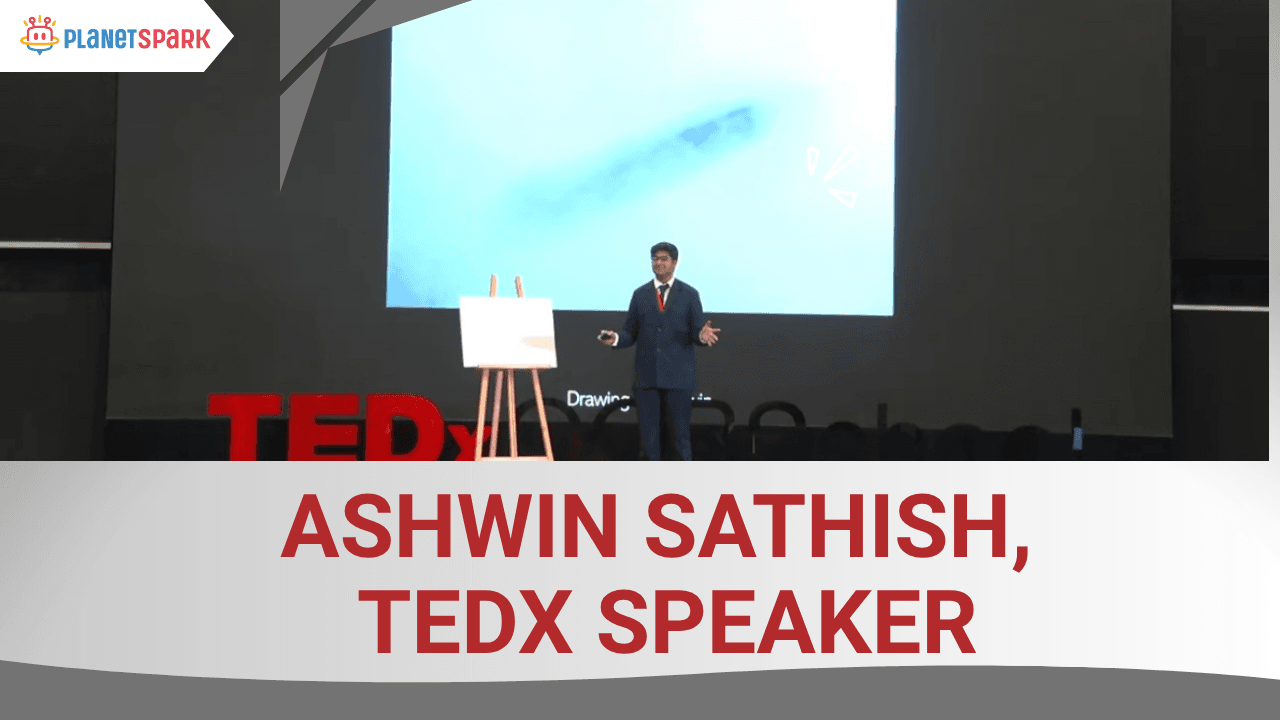
Ashwin’s Journey: From Confident Speaker to Imaginative Story Builder
Ashwin Sathish, a sharp Grade 8 learner aged 13, has grown far beyond classroom discussions, using his strong expressive skills to shape vivid stories and meaningful ideas. Known for his TEDx appearance in New Delhi, Ashwin’s confidence on stage has naturally flowed into his writing, helping him build worlds that feel alive and purposeful. With steady practice and a curiosity for “what could be,” he continues to turn simple ideas into rich, engaging narratives that show the power of imagination and clarity of thought.
Final Thoughts on Reduplication Meaning
Reduplication meaning goes far beyond simple repetition of words or sounds. It helps students understand that language can be playful, rhythmic, and emotionally expressive when used with care and intention. In storytelling, reduplication adds colour, movement, and feeling to sentences, allowing writers to create moments that sound alive rather than plain or mechanical. It teaches students that how language feels to the reader is just as important as what it communicates.
With structured storytelling practice, students learn how to use reduplication thoughtfully instead of relying on it randomly. They develop the ability to balance repetition with clarity, choosing when repetition strengthens expression and when simplicity communicates better. This balance helps students create stories that sound natural, engaging, and creatively confident, showing strong control over language and narrative voice.