
Riddles for Kids What Am I to Boost Thinking Skills


Table of Contents
- What Are “What Am I” Riddles?
- Why “What Am I” Riddles Are Fun for Kids
- Easy “What Am I” Riddles for You
- Answers to the Riddles
- Tips to Solve Riddles Like a Pro
- Make Your Own “What Am I” Riddles
- How PlanetSpark Builds Thinking Skills Through Fun Learning
- Conclusion The Power of “What Am I” Riddles in Building Thin
Riddles are one of the most enjoyable ways for children to learn while having fun. Riddles for kids what am I are simple guessing games where clues are given, and kids use their thinking skills to find the answer. These riddles are exciting because they turn learning into a playful challenge rather than a boring task.
For kids, solving riddles feels like solving a mystery. Each clue makes them curious and eager to guess what comes next. For parents and working professionals, riddles for kids are a quick and effective way to keep children engaged without screens. They help kids think deeply, improve attention, and enjoy meaningful learning moments at home.
Unlike long lessons, easy riddles for kids are short and simple. They can be played anywhere, at home, during travel, or before bedtime. These riddles help children develop thinking skills, problem-solving ability, and imagination in a natural and enjoyable way.
In this blog, you will explore what “What Am I” riddles are, why kids love them so much, and how they help in boosting thinking skills. The riddles are designed to be easy, fun, and suitable for young minds while also being helpful for adults who want to support a child’s learning journey.
What Are “What Am I” Riddles?
“What Am I” riddles are a popular type of riddle where an object, animal, or thing describes itself using clues. The reader listens or reads carefully and guesses the correct answer based on those hints. These riddles are especially loved by children because they feel like a guessing game.
How “What Am I” Riddles Work
In riddles for kids what am I, each line gives a small hint. Kids combine all clues to reach the final answer.
For example:
I have pages
I tell stories
You read me every day
Children think about all clues together to guess the answer. This process improves focus and logical thinking.
Why This Riddle Style Is Easy for Kids
These riddles are easy to understand because:
The language is simple
The clues are clear
The answers are familiar to kids
That is why they are also known as easy riddles for kids.
Common Types of “What Am I” Riddles
Riddles for kids come in many fun categories:
| Type of Riddle | Description |
|---|---|
| Animal Riddles | Guess animals using sound, size, or habitat clues |
| Object Riddles | Everyday items like toys, books, or bags |
| Nature Riddles | Sun, moon, rain, trees, and sky |
| Food Riddles | Fruits, snacks, and sweet treats |
| Place Riddles | School, park, home, or playground |
These types keep children interested and curious.
Skills Used While Solving Riddles
When kids solve riddles for kids what am I, they use:
Thinking skills to connect clues
Memory to recall similar objects
Imagination to picture hints
Reasoning to choose the best answer
This makes riddles a powerful learning tool.
“Every story begins with a thought.”
Help your child turn ideas into powerful stories with PlanetSpark’s storytelling course.
Why “What Am I” Riddles Are Fun for Kids
Riddles for kids what am I are fun because they mix learning with excitement. Kids do not feel like they are studying. Instead, they feel like they are playing a game.
Turns Learning into Play
Children enjoy learning more when it feels playful. Riddles create curiosity and excitement with every clue.
Reasons kids enjoy riddles:
They feel challenged but not pressured
They can guess freely
Every answer feels rewarding
This makes easy riddles for kids perfect for daily learning.
Boosts Thinking and Imagination
Each riddle encourages kids to imagine different possibilities. They learn to think step by step instead of jumping to conclusions.
For example:
A clue about color makes them think visually
A clue about sound makes them imagine noises
A clue about use makes them think logically
This improves creative and logical thinking together.
Builds Confidence and Expression
Solving riddles helps kids feel confident. Even when they guess wrong, they learn something new.
Confidence grows because:
There is no fear of failure
Kids can try multiple answers
Adults can praise effort, not just results
Kids also learn to explain why they chose a certain answer.
Perfect for Busy Parents and Professionals
For working professionals, riddles for kids are easy to include in daily routines.
They are helpful because:
No special tools are needed
They take very little time
They encourage bonding and conversation
Parents can ask riddles during meals, travel, or before sleep.
Encourages Talking and Social Skills
Riddles encourage kids to talk, listen, and share ideas.
This helps in:
Better communication
Clear thinking
Listening to others
Expressing thoughts confidently
That is why riddles for kids what am I are not just fun but also very meaningful.
“Imagination grows when stories are told.”
Nurture creativity and confidence through PlanetSpark’s structured storytelling program.
Easy “What Am I” Riddles for You
Easy riddles for kids are designed to be simple, fun, and exciting. These riddles use familiar objects, animals, and things that children see every day. When kids read riddles for kids what am I, they enjoy guessing because the clues feel friendly and not confusing.
This section includes different types of riddles so kids never feel bored. Parents and working professionals can read them aloud or let kids try on their own.
Easy Animal Riddles
Animals are a favorite topic for kids. These riddles for kids help children think about sounds, actions, and body parts.
Riddle 1
I say meow
I like to sleep
I love milk
What am I?
Riddle 2
I have a long trunk
I am very big
I love water
What am I?
Riddle 3
I hop and jump
I live near ponds
I am green
What am I?
These riddles help kids connect clues with animals they already know.
Easy Object Riddles
Objects around the house make great easy riddles for kids because children see them daily.
Riddle 4
I have pages
I tell stories
You read me
What am I?
Riddle 5
I have wheels
I help you travel
I can be big or small
What am I?
Riddle 6
I help you write
I am thin
I use ink
What am I?
These riddles improve observation skills.
Easy Food Riddles
Food-based riddles for kids what am I are fun and tasty to imagine.
Riddle 7
I am red
I am sweet
I grow on trees
What am I?
Riddle 8
I am round
I am yellow
Monkeys love me
What am I?
Riddle 9
I am cold
I am sweet
I melt fast
What am I?
Food riddles spark imagination and excitement.
Why Easy Riddles Work So Well
Easy riddles are important because:
Kids feel confident solving them
They encourage thinking without pressure
They keep children engaged longer
That is why riddles for kids should always start simple.
“Great storytellers start young.”
Build your child’s storytelling and expression skills with PlanetSpark.
Answers to the Riddles
This section includes riddles for kids what am I answers so children can check their guesses and learn happily. Parents can encourage kids to try first before looking at the answers.
Answers to Animal Riddles
| Riddle Number | Answer |
|---|---|
| Riddle 1 | Cat |
| Riddle 2 | Elephant |
| Riddle 3 | Frog |
These answers help kids understand how clues connect to real animals.
Answers to Object Riddles
| Riddle Number | Answer |
|---|---|
| Riddle 4 | Book |
| Riddle 5 | Car |
| Riddle 6 | Pen |
Kids learn to match clues with everyday items.
Answers to Food Riddles
| Riddle Number | Answer |
|---|---|
| Riddle 7 | Apple |
| Riddle 8 | Banana |
| Riddle 9 | Ice Cream |
These riddles for kids what am i answers bring joy and a sense of achievement.
How Checking Answers Helps Kids Learn
Looking at answers is also part of learning:
Kids understand where they went wrong
They learn new ways to think
They remember clues better next time
Parents can ask children why they chose a certain answer to build explanation skills.
“A story can say more than a thousand words.”
Let PlanetSpark’s storytelling course help your child express ideas clearly.
Tips to Solve Riddles Like a Pro
Solving riddles for kids what am I becomes easier and more fun when kids know a few smart tricks. These tips help children think clearly, stay calm, and enjoy the guessing process. Parents and working professionals can also use these tips to guide kids gently without giving away the answer.
Read the Riddle Slowly
The first and most important rule is to read the riddle slowly. Every line gives a clue.
Why this matters:
Kids often miss small details
Each word gives a hint
Rushing leads to wrong guesses
Encourage children to read or listen carefully before answering.
Think About Each Clue One by One
Instead of guessing quickly, kids should think about every clue separately.
For example:
Is the clue about color?
Is it about size?
Is it about sound or action?
This helps children narrow down options and arrive at the correct answer in easy riddles for kids.
Imagine the Object or Thing
Imagination plays a big role in riddles for kids. Kids should picture the clues in their mind.
This helps by:
Making clues more clear
Connecting ideas easily
Making learning more fun
Parents can ask kids to close their eyes and imagine the riddle.
Eliminate Wrong Answers
If an answer does not match all clues, it is probably not correct.
Teach kids to ask:
Does my answer fit every line?
Is something missing?
This builds logical thinking and problem-solving skills.
Do Not Fear Wrong Answers
Wrong answers are part of learning. Kids should feel free to guess without fear.
Benefits of guessing:
Builds confidence
Encourages thinking
Makes riddles enjoyable
This positive mindset helps kids enjoy riddles for kids what am I more.
Practice with Easy Riddles First
Starting with easy riddles for kids helps children gain confidence before moving to tricky ones.
| Level | Type of Riddle |
|---|---|
| Beginner | Simple object riddles |
| Medium | Animal and food riddles |
| Advanced | Logical and thinking riddles |
Step-by-step learning makes kids feel successful.
“Confidence shines through stories.”
Support your child’s communication journey with PlanetSpark’s storytelling classes.
Make Your Own “What Am I” Riddles
Creating riddles is just as fun as solving them. When kids make their own riddles for kids what am I, they learn how to think creatively and clearly. This activity is great for children and also helpful for parents who want fun learning ideas.
Choose One Simple Object or Thing
Start by picking something familiar:
An animal
A toy
A fruit
A place
Using familiar things makes riddles for kids easier to create.
Write 3 to 4 Simple Clues
Each clue should describe one feature.
Good clues talk about:
Color
Shape
Use
Sound
Size
Example structure:
I am small
I am red
I am sweet
This helps kids learn how clues work.
Do Not Reveal the Answer Too Quickly
The clues should be helpful but not too obvious.
Tips:
Start with a general clue
End with a clearer clue
Avoid saying the name directly
This keeps easy riddles for kids exciting.
Read the Riddle Aloud
Reading riddles aloud helps kids hear how clues sound.
Benefits include:
Better sentence formation
Clear thinking
Improved speaking skills
Parents and working professionals can turn this into a fun family activity.
Test the Riddle on Someone Else
Kids can ask:
Parents
Friends
Siblings
If others can guess the answer, the riddle works well. If not, kids can improve it.
Why Making Riddles Is Good for Kids
Creating riddles for kids what am I helps children:
Improve creativity
Think logically
Express ideas clearly
Build confidence
This activity supports both learning and fun at the same time.
How PlanetSpark Builds Thinking Skills Through Fun Learning
PlanetSpark is a learning platform designed to help children develop strong thinking, communication, and creative skills in a fun and engaging way. Activities like riddles for kids what am I naturally support this learning style because they encourage children to listen carefully, understand clues, and express their thoughts clearly. When kids solve easy riddles for kids, they are not just guessing answers, they are learning how to think step by step and explain their ideas with confidence.
For parents and working professionals, PlanetSpark offers a structured yet playful learning environment where children can grow without pressure. The focus is on building skills that help in everyday communication and thinking. Just like riddles for kids, PlanetSpark believes learning should be enjoyable, interactive, and meaningful, helping children stay curious and confident while learning new things.
PlanetSpark supports children by:
Helping them improve thinking and reasoning skills
Encouraging clear expression of ideas and answers
Building confidence through guided and engaging learning
Making learning fun, simple, and interactive
Supporting creativity and imagination in daily learning
Yuvyansh’s Creative Growth with PlanetSpark
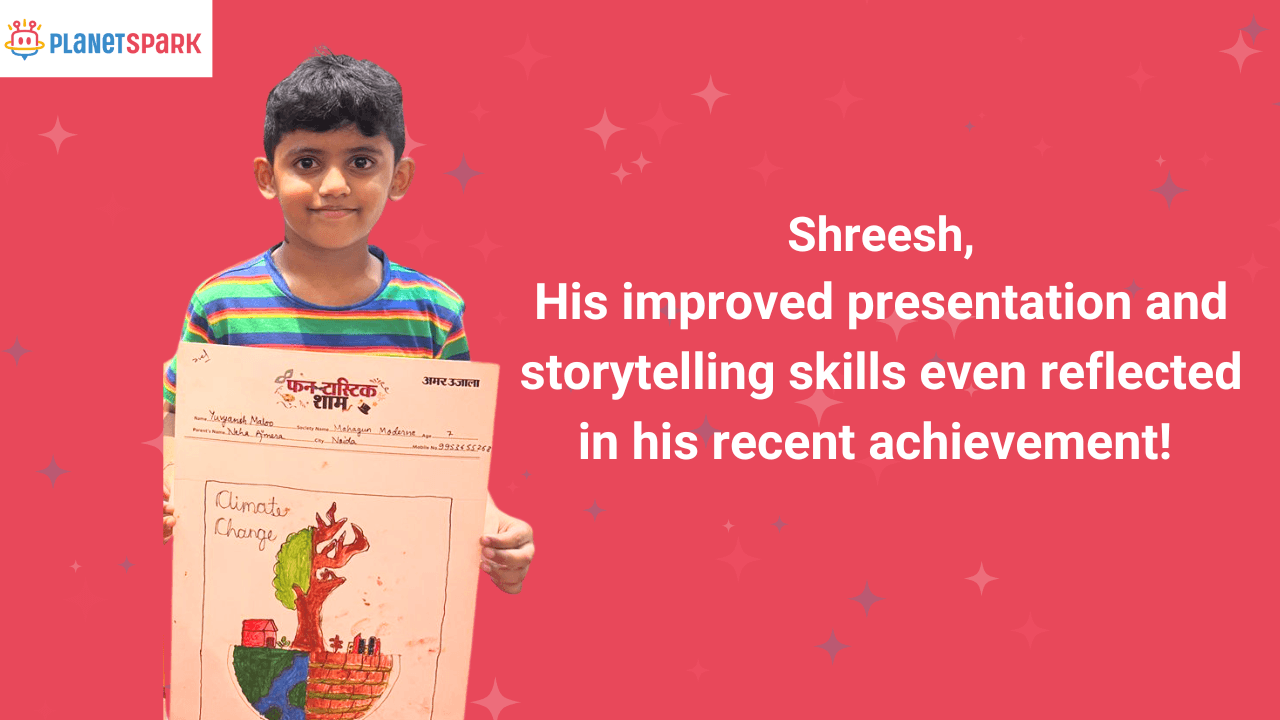
PlanetSpark has played a key role in helping Yuvyansh express his ideas with creativity and confidence. His improvement in presentation and storytelling skills became clearly visible through his recent achievement. Yuvyansh won second place in the Junior Category of a drawing competition on “Climate Change”, organized by the Amar Ujala team. This achievement reflects his growing ability to think creatively, present ideas clearly, and express himself with confidence.
Conclusion The Power of “What Am I” Riddles in Building Thinking Skills
Riddles are a simple yet powerful way to help children learn while having fun. Through riddles for kids what am I, kids learn how to listen carefully, think deeply, and connect clues to find the right answer. These riddles do much more than entertain. They help children build strong thinking skills, improve focus, and boost confidence in a natural and enjoyable way.
Easy riddles for kids are especially helpful because they remove fear from learning. Kids feel free to guess, imagine, and try again. This creates a positive learning environment where making mistakes is part of the journey. Over time, children become better at reasoning, observing details, and expressing their thoughts clearly. These are skills that help them not only in academics but also in daily life.
For parents and working professionals, riddles for kids are a practical learning tool. They require no preparation, no screens, and very little time. A few minutes spent solving or discussing riddles can turn into meaningful learning moments and quality bonding time. Whether used during travel, playtime, or before bed, riddles fit easily into busy routines.
Activities like riddles for kids what am I answers also help children reflect on their thinking. Checking answers teaches them how clues work and how to improve their guesses next time. This reflection strengthens memory and logical skills while keeping learning stress-free.
When combined with a structured and supportive learning approach, riddles become even more effective. Platforms like PlanetSpark align well with this style of learning by encouraging curiosity, clear expression, and confident thinking. Together, fun activities and guided learning help children grow into confident thinkers and communicators.
In the end, riddles are more than just questions. They are small learning tools that create big impact. By making riddles a regular part of a child’s routine, parents can support thinking skills, creativity, and joyful learning every single day.
“Stories shape young minds.”
Develop creative thinking and storytelling skills with PlanetSpark’s expert-led course.
Frequently Asked Questions
“What Am I” riddles are fun guessing questions where clues describe an object, animal, or thing. Kids read or listen to the clues and guess the correct answer using their thinking skills.
Riddles encourage children to observe details, connect clues, and think logically. Solving riddles regularly helps improve focus, memory, reasoning, and problem-solving skills.
Yes, especially easy riddles for kids. These riddles use simple language and familiar objects, making them easy to understand and enjoyable for young learners.
Kids can practice riddles daily for a few minutes. Even short riddle sessions help build thinking and communication skills without feeling tiring or stressful.
Yes, riddles are perfect for busy parents and professionals. They require no preparation and can be used during meals, travel, or bedtime for fun learning moments.
Yes, checking riddles for kids what am I answers helps children understand clues better and learn how to improve their thinking for future riddles.