
How to Write a Sci-Fi Story for Beginners


A Sci-fi story is more than robots, spaceships, and faraway planets, it’s an invitation to imagine the impossible and make it feel real. Kids love science fiction because it lets them push the boundaries of creativity, explore new worlds, meet extraordinary characters, and ask big “What if?” questions.
What if humans lived on Mars?
What if animals could talk using technology?
What if time travel became a school subject?
Sci-fi writing allows children to explore curiosity, problem-solving, and futuristic thinking, all while telling a compelling story. For beginners, starting a sci-fi story can feel overwhelming, but once the foundational steps are broken down, it becomes fun, structured, and incredibly rewarding.
This guide simplifies the process so any child can start building their own universe, one idea at a time.
Foundations of World-Building: But Sci-Fi
World-building is the backbone of every sci-fi story. Unlike regular stories that take place in familiar locations, science fiction needs a world that feels new yet believable. This is where imagination meets logic.
Here’s how beginners can start shaping a sci-fi world:
Step 1: Choose the Type of Sci-Fi World
Children can pick from dozens of imaginative settings, such as:
A futuristic Earth
A distant planet
An underwater city
A world ruled by robots
A time-travel-altered reality
The trick is to pick ONE clear central idea. A story becomes messy when too many concepts compete for attention.
Step 2: Define What Makes the World Unique
Ask simple, child-friendly questions:
What is new about this world?
What technology exists here?
How does life look different from today?
Even small details, floating bicycles, glowing plants, and voice-activated pets, can bring the world to life.
Step 3: Add Rules (All Sci-Fi Worlds Need Rules)
Every world operates on rules.
If teleportation exists, how does it work?
If robots help humans, what are they NOT allowed to do?
Rules make the story believable and keep the imagination grounded.
Your child could be building extraordinary worlds just like this.
Integrating Real Science with Fiction
A sci-fi story becomes powerful when it blends real science with imagination. This balance makes the impossible feel possible, and that’s what hooks readers.
Why Real Science Matters
Children understand the world better when stories connect to things they know:
Gravity
Weather
Space
Technology
Biology
Machines
Using these familiar concepts as starting points can make even the most unusual ideas believable.
How Kids Can Use Science Without Overcomplicating
Here’s a simple method:
Real Science: Plants need sunlight to grow.
Fiction Twist: What if plants glowed at night to produce their own light?
Real Science: Robots follow programmed instructions.
Fiction Twist: What if robots learned emotions on their own?
Children don’t need to use complicated formulas or scientific explanations.
They only need to ask:
“What scientific idea can I twist into something new?”
Ask the Magic Question: “What If?”
What if humans stopped aging after 15?
What if schools floated in the sky?
What if dinosaurs were brought back with DNA technology?
This question alone can launch a powerful sci-fi story idea.
Develop the Physical Setting Like Your Own Bedroom
One of the easiest ways for beginners to imagine a sci-fi world is to start with something familiar, like their bedroom, and slowly transform it.
Step 1: Start With What They Know
Ask the child to look around their bedroom.
What objects do they see?
A lamp, a bed, books, toys, windows…
Step 2: Add a Sci-Fi Twist
Transform each item:
Lamp → A voice-controlled light source that follows the character like a floating orb.
Bed → A zero-gravity sleeping pod that keeps you suspended in mid-air.
Window → A digital screen showing what’s happening in outer space.
Books → Holograms that read themselves aloud.
Toys → Friendly robots that help with homework.
This simple method helps children build the physical setting of their sci-fi story without starting from scratch.
Step 3: Zoom Out to the Larger World
Once the bedroom transformation is complete, expand outward:
Home
School
Neighborhood
City
Planet
Universe
By building the world layer by layer, everything feels connected and more realistic.
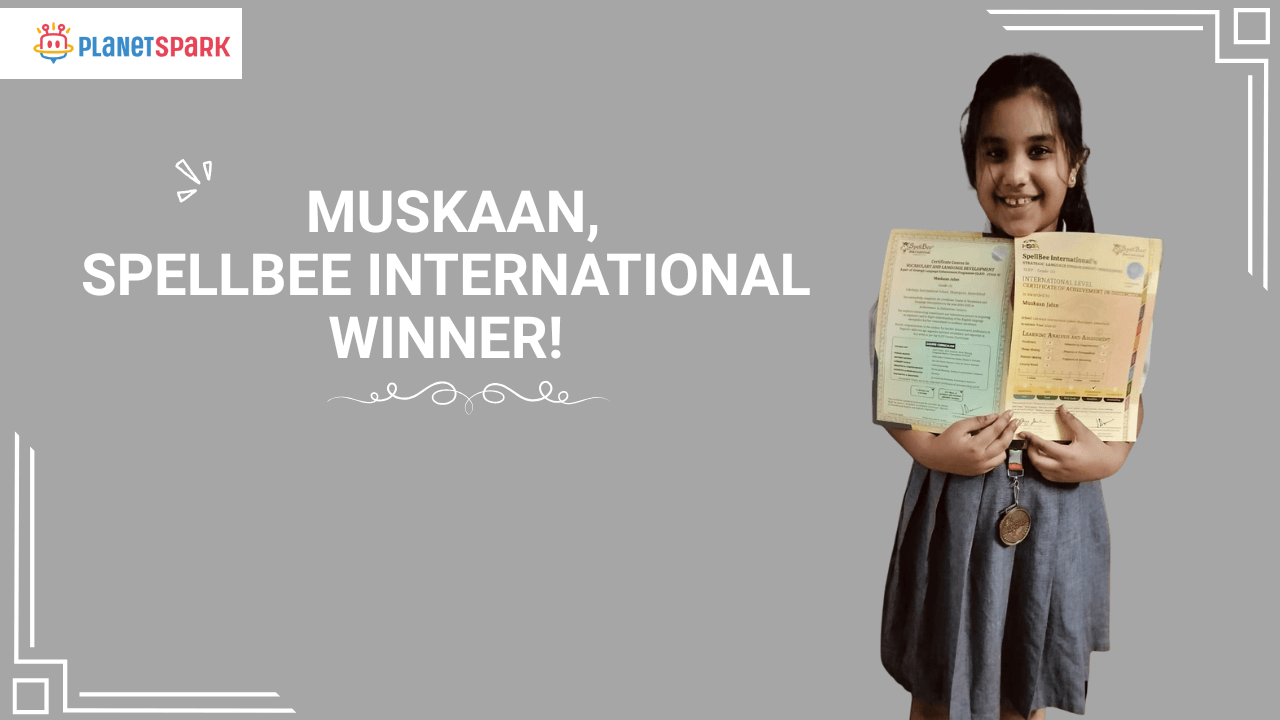
We are beyond proud of Muskaan from PlanetSpark, who showcased her spelling brilliance at the SpellBee International Programme!”
This line works beautifully as a spotlight.
Here’s a slightly polished, storytelling-style version you can optionally use:
“We are incredibly proud of Muskaan, a shining PlanetSpark learner, who displayed exceptional spelling mastery at the SpellBee International Programme. Her discipline, confidence, and love for learning are an inspiration to hundreds of young learners across PlanetSpark.
Last few seats left for our Storytelling Masterclass.
Enroll now and turn your child into a captivating storyteller!
Build Culture and Societies
A great sci-fi story isn’t just about spaceships, portals, and futuristic gadgets; it’s about the people (or aliens) who live in that world. Culture shapes everything: how characters talk, what they eat, what they believe, what they fear, and how they behave.
Even the most imaginative science fiction feels real when the societies inside it feel organised and meaningful.
Here’s how young writers can build rich cultures in their stories:
Step 1: Decide Who Lives in this World
Humans?
Aliens?
Robots?
Hybrid species?
New intelligent life forms?
Ask your child:
“What makes this group different from us?”
This opens the door to creativity:
A species that communicates using colour changes
Robots that vote to choose their leaders
Children who unlock new abilities every year
Floating jellyfish-like creatures that survive on light
Encouraging kids to think beyond basics helps them unlock unique story ideas.
Step 2: Build Their Beliefs & Values
Strong societies have:
Rules
Traditions
Celebrations
Fears
Leaders
Languages
Example:
A planet where citizens celebrate “Gravity Day,” when gravity stops working for an hour.
Or a society where everyone speaks in musical notes.
These small details make a sci-fi story memorable.
Step 3: Add a Conflict Within the Society
Every culture has challenges.
This makes the story engaging.
Examples:
A peaceful robot city attacked by a virus
A human colony is divided about moving to another galaxy
A group of children discovering forbidden technology
Conflict is the heart of every story, especially in science fiction.
Your child could be building extraordinary sci-fi worlds just like this.
Avoid the Usual Pitfalls
Even the most imaginative writers fall into common traps when creating a sci-fi story. Knowing these early helps children build stronger narratives and avoid confusion.
Pitfall 1: Too Many Ideas at Once
Beginner writers often try to mix:
Time travel
Aliens
Robots
Magic
Space missions
Alternate dimensions
all in one story.
This overload makes the plot messy.
Tip: Pick ONE strong idea and build the story around it.
Pitfall 2: Over-Explaining the Science
A child writing a sci-fi story doesn’t need complex technical details.
Readers want imagination, not pages of explanations.
Example of Over-Explanation:
“Hyper-photon energy waves bounce at 45-degree frequencies to teleport matter.”
Better:
“The teleportation pad glowed blue, and in seconds, Kai vanished.”
Simple. Clear. Story-focused.
Pitfall 3: Forgetting Character Emotions
Sci-fi isn't just about inventions; it’s about how characters FEEL.
Ask:
Are they scared of space?
Excited about robots?
Nervous about an alien invasion?
Curious about time travel?
Emotions ground a sci-fi story in reality.
Pitfall 4: Inconsistent World Rules
If gravity works differently in the world, it should ALWAYS work differently.
If robots can’t lie, they should NEVER lie suddenly in chapter five.
Consistency = credibility.
Pitfall 5: Weak Endings
Kids often write amazing beginnings but rush their endings.
Good endings should:
Solve the main conflict
Show character growth
Reveal something meaningful
Wrap up the world-building in a satisfying way
Encourage children to ask:
“What final message do I want readers to remember?”
Why Choose PlanetSpark Storytelling?
Writing a sci-fi story isn’t simply about imagination; kids need structure, guidance, and confidence. That’s exactly where PlanetSpark makes a difference.
Here’s what makes our Storytelling program stand out:
1:1 Interactive Coaching with Experts:
Each learner receives personalized coaching from certified communication trainers who focus on articulation, listening, tone modulation, and audience connection.Comprehensive Skill Framework:
Covers verbal, non-verbal, and interpersonal communication, including clarity of speech, active listening, empathy, and body language refinement.Practical, Real-Life Simulations:
Learners practice through role plays, group discussions, mock interviews, storytelling, and debate sessions that simulate real-world speaking scenarios.Voice Modulation and Expressive Delivery:
Students master pitch, pace, tone, and expression, the building blocks of powerful and engaging communication.Confidence and Personality Integration:
The course focuses on confidence-building, emotional intelligence, and self-presentation, ensuring children express themselves authentically and assertively.Digital Communication Etiquette:
Special modules teach online manners, email writing, and video-call communication, essential skills for the digital era.Feedback and Progress Tracking:
Coaches provide individual feedback through video assessments and performance trackers, helping students monitor growth in fluency, confidence, and clarity.Global Communication Exchange:
Learners engage with peers across countries through collaborative projects and cross-cultural activities, boosting adaptability and global awareness.
Seats fill fast. Enroll now in PlanetSpark’s Storytelling Program.
Every Great Sci-Fi Writer Starts with One Spark
Science fiction isn’t just a genre; it’s an invitation to imagine boldly. Whether you’re building new galaxies, designing futuristic gadgets, or rewriting the rules of reality, the journey always begins with curiosity. When beginners allow themselves to explore freely, create without fear, and question every “what if,” they naturally grow into confident storytellers.
At PlanetSpark, we see this transformation every day.
Just like Muskaan, who didn’t just participate in the SpellBee International Programme,
She owned the stage with confidence, clarity, and courage.
Her achievement isn’t just a trophy for her; it’s a reminder that young minds shine brightest when they’re guided, challenged, and celebrated.
Your sci-fi story might be the next world someone falls in love with.
Your imagination deserves the right platform.
And your storytelling journey deserves to begin today.
Frequently Asked Questions
Start with one strong “what if” idea. It could be about technology, space, alternate dimensions, or futuristic societies. Once you have that, build characters who experience the world you’ve imagined. Don’t worry about perfection, just get the first draft out.
Not at all. You only need basic logic, not a degree in astrophysics. Good sci-fi uses plausible explanations that feel scientific, even if the science isn’t complex.
Consistency. Whether you’re describing alien ecosystems or futuristic cities, make sure your rules stay the same throughout the story. Readers love worlds that behave logically.
Keep your story driven by characters and emotions, and let the science support the plot, not overshadow it. The best science fiction blends imagination with realism.
Start small, flash fiction (500–1000 words) or short stories (1500–2500 words). Once you’re comfortable building worlds, you can take on longer stories or even a novel.