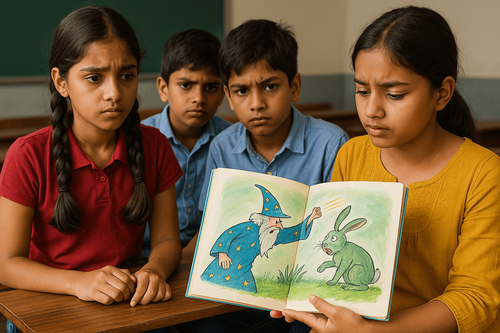
Should Wizard Hit Mommy by John Updike is a thought-provoking story in the Class 12 English Vistas syllabus. It explores a child’s imagination and the moral lessons imparted by parents. The narrative follows Jack, fascinated by a story about a wizard who punishes wrongdoers. Jack imagines the wizard hitting the “bad mommy,” but his mother challenges his view, highlighting ethics and empathy. The story balances imagination and morality, encouraging critical thinking, understanding character motivations, and distinguishing fantasy from reality. Analyzing it enhances comprehension and moral insight for students.
Should Wizard Hit Mommy? Story Summary – Overview
Should Wizard Hit Mommy by John Updike revolves around a young boy named Jack and his interaction with his mother at home. Jack is a lively and imaginative child who loves reading and narrating fantasy stories. One day, he tells his mother a story about a wizard who punishes wrongdoers, a tale filled with excitement and dramatic scenarios. The Wizard in Jack’s story represents justice and the power to enforce rules, reflecting the child’s perception of right and wrong in a magical context.
As Jack narrates his story, he imagines a violent ending in which the wizard hits the “bad mommy,” a character in his tale who has behaved poorly. Jack enjoys the idea of immediate justice and believes it is fair within the context of his imaginative world. However, his mother does not approve of this violent conclusion. She engages Jack in a discussion about morality, empathy, and appropriate behavior, encouraging him to reconsider the consequences of his imagined actions.
The central conflict of the story lies in this difference of perspective: the child’s imaginative sense of justice versus the parent’s moral guidance. Jack struggles to understand why fantasy should be tempered with ethical reasoning, and the conversation between him and his mother becomes both a lesson and an exploration of his emotional growth.
The resolution of the story comes when Jack begins to acknowledge his mother’s viewpoint, realizing that morality and empathy are essential even in imaginative scenarios. The ending emphasizes the balance between imagination and reality, showing that while creativity is valuable, it must coexist with ethical understanding. This story is not only entertaining but also teaches readers important lessons about communication, moral development, and the role of parental guidance in shaping a child’s perception of right and wrong.
Detailed Scene-by-Scene Summary of Should Wizard Hit Mommy?
Scene 1: Jack’s Excitement and Storytelling
The story begins with Jack, a young boy full of imagination, eagerly narrating a fantasy story to his mother. He tells a tale about a wizard who punishes a “bad mommy” for her misbehavior. Jack’s enthusiasm shows his love for storytelling and his understanding of justice, even if expressed in a playful and exaggerated way. His excitement captures the innocence and creativity of childhood, highlighting how children often blend reality with imagination.
Scene 2: Mother’s Observation and Guidance
Jack’s mother listens patiently to his story, observing both his imagination and his emotional responses. She understands that Jack is experimenting with ideas of right and wrong through the story. While she encourages creativity, she also believes it is important to guide him morally. This scene shows the parent-child dynamic, where the parent nurtures creativity but also instills values.
Scene 3: The Conflict Over the Story’s Ending
The tension in the story arises when Jack describes the wizard hitting the “bad mommy.” Jack sees this as a fair punishment and feels satisfied with his imagined resolution. However, his mother objects to the violent conclusion, questioning why a character should be hurt even in a story. This disagreement forms the central conflict, reflecting the contrast between a child’s unfiltered imaginative justice and an adult’s ethical reasoning.
Scene 4: Discussion on Morality and Empathy
Jack and his mother engage in a thoughtful discussion about morality, discipline, and consequences. She explains that stories, even fantasy, should reflect empathy and fairness, teaching that violence is not the best solution. Jack begins to understand that while imagination is important, it must be guided by ethical considerations. This scene emphasizes emotional growth and learning through conversation.
Scene 5: Resolution and Jack’s Realization
In the final scene, Jack starts to acknowledge his mother’s perspective. He realizes that stories can entertain and inspire while also teaching valuable lessons about behavior, empathy, and understanding. The ending highlights a balance between imagination and real-life ethics, leaving readers with a meaningful reflection on how parental guidance shapes a child’s moral development.
Questions and Answers on ‘Should Wizard Hit Mommy’
1. Who is Jack in the story?
Jack is a young, imaginative boy who loves fantasy stories. He enjoys creating scenarios where justice is served, like having the wizard punish the “bad mommy.” His character reflects childhood curiosity, creativity, and a developing sense of morality.
2. What is the central conflict in the story?
The central conflict arises when Jack wants the wizard to hit the “bad mommy” in his story, while his mother disagrees with the violent ending. This highlights the contrast between a child’s imaginative sense of justice and a parent’s moral guidance.
3. Who is the “bad mommy” in Jack’s story?
The “bad mommy” is a character in Jack’s imaginative tale who misbehaves. She symbolizes wrongdoing in Jack’s fantasy world and serves as the focus of his idea of justice.
4. How does Jack’s mother guide him?
Jack’s mother listens patiently, encourages creativity, but also teaches moral lessons. She explains that stories should reflect empathy, fairness, and ethical behavior, helping Jack understand that violence is not the best solution.
5. What is the role of the wizard in the story?
The wizard represents justice and the power to correct wrongs in Jack’s imaginative world. He is a symbolic figure through which Jack explores ideas of punishment and fairness.
6. What lesson does Jack learn by the end of the story?
Jack learns to balance imagination with morality. He realizes that stories can entertain and teach important lessons about empathy, fairness, and ethical behavior.
7. What are the main themes of the story?
The main themes include imagination versus reality, parent-child relationships, moral guidance, empathy, ethical reasoning, and emotional growth.
John Updike (1932–2009) was a celebrated American author, novelist, and critic, widely known for his keen observation of human behavior and everyday life. He wrote novels, short stories, and essays, earning acclaim for his ability to blend simplicity with deep insight into human emotions and relationships. Updike received numerous awards throughout his career, including Pulitzer Prizes for fiction.
Updike’s writing style is relatable, descriptive, and thought-provoking, making his stories accessible to readers of all ages. He often explored themes of morality, family relationships, and personal growth, combining humor and realism to reflect everyday experiences.
In Should Wizard Hit Mommy, Updike’s style is evident in his portrayal of a young child, Jack, and his mother. Through simple yet powerful narration, he delves into child psychology, imagination, and moral conflict. The story captures the subtle tension between a child’s creative freedom and a parent’s ethical guidance, reflecting Updike’s ability to explore complex themes in an engaging and understandable manner. His focus on emotions, perspective, and moral reasoning makes the story both entertaining and educational for students.
Main Characters of Should Wizard Hit Mommy
Jack is a young boy with a vivid imagination. He is curious, expressive, and enjoys creating stories that explore ideas of justice and fairness. Jack represents the innocence of childhood and the natural tendency of children to experiment with moral concepts through fantasy.
The Mother is nurturing, patient, and the voice of morality in the story. She listens to Jack’s imaginative tale but also guides him toward understanding empathy, fairness, and ethical behavior. Her character highlights the importance of parental guidance in helping children balance imagination with moral reasoning.
The Wizard is a symbolic figure in Jack’s story. He represents justice and the power to correct wrongdoing in the imaginative world. Through the wizard, Jack explores his ideas about right and wrong and the consequences of actions in a fantasy setting.
Supporting elements include the “bad mommy” in Jack’s story. She represents misbehavior and wrongdoing, serving as the focus of Jack’s ideas of punishment. Her character helps convey the moral lessons that Jack’s mother emphasizes, bridging the gap between imagination and real-world ethical understanding.
Together, these characters create a story that is both engaging and educational, allowing students to explore themes of morality, imagination, and parent-child relationships while improving their literary analysis skills.
The story highlights the difference between a child’s imaginative world and real-life ethics. Jack enjoys creating stories with dramatic justice, showing how children use imagination to explore complex ideas. The mother guides him to understand that actions, even in stories, should reflect fairness and empathy.
Parent-Child Relationship
The story emphasizes the nurturing and guiding role of parents. Jack’s mother listens patiently and respects his creativity, but she also teaches him moral lessons. This dynamic shows how healthy communication helps children learn ethical reasoning while enjoying their imaginative freedom.
Morality and Ethical Guidance
A key theme is the importance of teaching children right from wrong. The mother discourages Jack from approving violence in his story, emphasizing that ethical considerations are essential even in fantasy. This theme encourages readers to balance creativity with moral understanding.
Emotional Growth and Learning
Jack’s interaction with his mother leads to emotional development. He begins to understand empathy, patience, and the consequences of his imagined actions. The story portrays how children learn life lessons through guidance, discussion, and reflection.
Storytelling and Perspective
The narrative explores how stories convey values and ideas. Jack’s perspective differs from his mother’s, showing that interpretation can vary. Readers learn that storytelling is not just entertainment; it is also a tool for understanding ethics, empathy, and human behavior.
These themes make Should Wizard Hit Mommy a rich and educational story for students, helping them improve comprehension, literary analysis, and moral reasoning skills.
Should Wizard Hit Mommy conveys several important lessons for children and students.
Balancing Imagination with Morality
The story teaches that while imagination is valuable, it should be guided by ethical reasoning. Jack enjoys creating dramatic scenarios in his story, but his mother helps him understand that fairness, empathy, and kindness are essential, even in fantasy.
Importance of Parental Guidance
The mother’s role highlights the significance of nurturing guidance. Parents can help children develop moral understanding while respecting their creativity, showing that lessons about right and wrong are best learned through discussion and gentle guidance.
Understanding Different Perspectives
The story emphasizes that people can see situations differently. Jack’s imaginative sense of justice contrasts with his mother’s ethical reasoning, teaching readers the importance of understanding multiple viewpoints and respecting them.
Emotional and Moral Growth
Through conversation and reflection, Jack learns empathy, patience, and ethical decision-making. The story demonstrates that moral lessons are often best absorbed through interaction, discussion, and creative exploration rather than strict rules.
Value of Storytelling
The narrative shows that stories are not only entertaining but also powerful tools for teaching moral lessons and developing critical thinking skills. Students learn how storytelling can communicate values, ethical dilemmas, and life lessons in an engaging way.
Overall, the story encourages children to enjoy imagination while learning to distinguish between fantasy and ethical behavior, making it both entertaining and educational.
Why Choose PlanetSpark?
At PlanetSpark, we help children strengthen their English reading, comprehension, and creative thinking skills through interactive and engaging online programs. Our courses are designed to make learning enjoyable while building the critical abilities students need to analyze stories like Should Wizard Hit Mommy.
Personalized Learning: Each child receives lessons tailored to their level and pace. This ensures they improve steadily in reading comprehension, creative writing, and literary analysis while gaining confidence in understanding complex texts.
Interactive Sessions: Our live online classes encourage active participation, discussion, and collaboration with teachers and peers. Children learn to express their thoughts clearly, analyze characters, and explore story themes effectively.
Critical Thinking and Moral Reasoning: PlanetSpark programs guide students in understanding character motivations, ethical dilemmas, and moral lessons in stories. This develops their ability to think critically and approach problems logically, just like analyzing Jack’s imaginative and moral conflict in the story.
Confidence and Communication: Through guided exercises, storytelling, and discussions, children gain the confidence to articulate ideas both orally and in writing. They become more comfortable analyzing texts and expressing personal viewpoints.
Conclusion
Should Wizard Hit Mommy by John Updike is a thought-provoking story that beautifully combines imagination, moral reasoning, and parent-child interaction. Through Jack’s imaginative tale and his mother’s guidance, the story highlights the balance between creativity and ethical understanding, making it both entertaining and educational for students.
The narrative teaches important lessons about empathy, fairness, and understanding differing perspectives. It encourages children to enjoy their creativity while learning the value of moral reasoning and critical thinking. Students studying this story can improve reading comprehension, literary analysis, and ethical reflection, which are essential skills for both exams and personal growth.
Frequently Asked Questions
Jack is a young, imaginative boy who loves creating fantasy stories. He explores ideas of justice and morality through his storytelling.
The main conflict arises when Jack wants the wizard to hit the “bad mommy” in his story, while his mother disagrees, emphasizing morality and empathy over violence.
Jack’s mother is nurturing and wise. She guides Jack to understand ethical reasoning, fairness, and the importance of empathy while respecting his imagination.
The wizard represents justice and the power to correct wrongdoing in Jack’s imaginative world, helping him explore ideas of right and wrong.
The story explores themes of imagination versus reality, parent-child relationships, morality, ethical guidance, emotional growth, and storytelling perspectives.
The moral teaches that imagination should be balanced with ethical reasoning. Children should enjoy creativity while understanding empathy, fairness, and consequences of actions.