
Short Stories in English for Kids | 10 Simple and Fun Stories


Stories are a magical part of childhood. They teach us about kindness, bravery, friendship, and fun adventures. Reading and writing simple short stories in English helps children learn new words, think creatively, and enjoy the beauty of language.
At PlanetSpark, we help kids become amazing storytellers! Our storytelling program encourages children to write, speak, and imagine without limits. Whether it’s a funny story, a lesson-filled tale, or a creative adventure, kids learn to express themselves confidently.
Programs like PlanetSpark’s storytelling classes help children develop these skills in a structured and engaging way. Storytelling Training for Kids | Build Confidence and Creativity
Why Storytelling is an Important Skill for Kids
Storytelling is more than just telling fun tales; it is one of the most powerful ways children learn to communicate, imagine, and connect with the world around them. When kids create or narrate stories, they learn how to organise their thoughts, express emotions, and share ideas confidently.
For children, storytelling strengthens language development and creativity. It introduces them to new vocabulary, helps them form meaningful sentences, and encourages them to think beyond textbooks. As they imagine characters, settings, and adventures, their minds become more creative and curious.
Parents also notice another powerful benefit, confidence. When a child tells a story in front of others, they learn how to speak clearly, use expressions, and engage listeners. These are essential skills that help children in school presentations, competitions, and even everyday conversations.
Storytelling also teaches values and empathy. Many stories show kindness, honesty, courage, and friendship. When children write or listen to such stories, they understand emotions and life lessons simply and memorably.
In short, storytelling helps children grow into creative thinkers, confident speakers, and better communicators, skills that will support them throughout life.
Simple Short Stories in English for Kids
1. The Honest Mango Seller
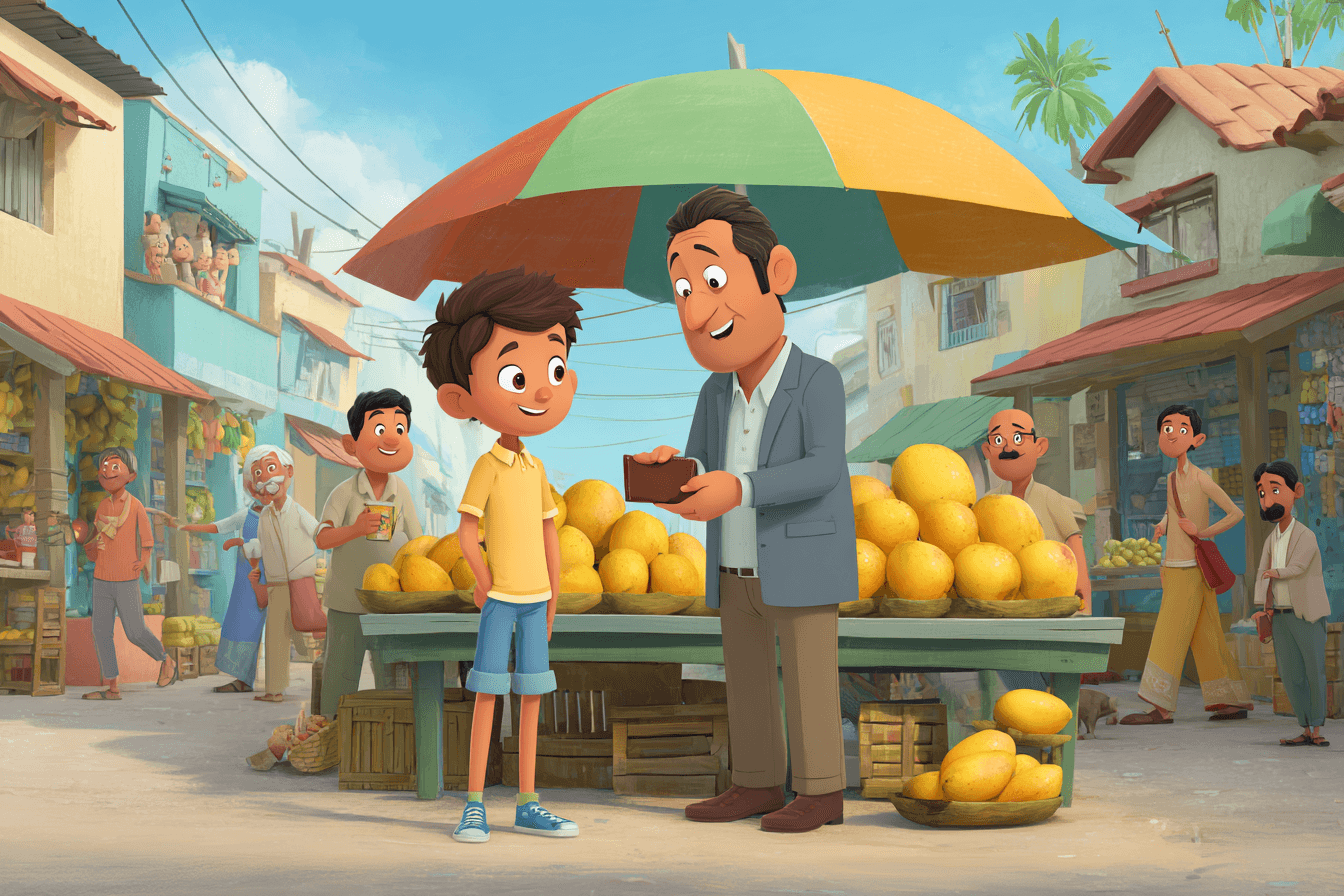
Ravi loved selling mangoes from the tree in his backyard. He set up a small stall every morning and waited for customers with a smile.
One day, a man in a hurry bought some mangoes and accidentally dropped his wallet near the stall. Ravi noticed it after the man had left.
Instead of keeping the wallet, Ravi ran after the man and returned it. The man was so thankful that he came back the next day with his whole family to buy more mangoes.
From then on, Ravi’s honesty became famous in his town, and more people came to buy his fruits.
Moral: Honesty is always rewarded.
Want your child to build strong values and communication skills?
Join PlanetSpark’s storytelling classes today!
2. The Magic Paintbrush
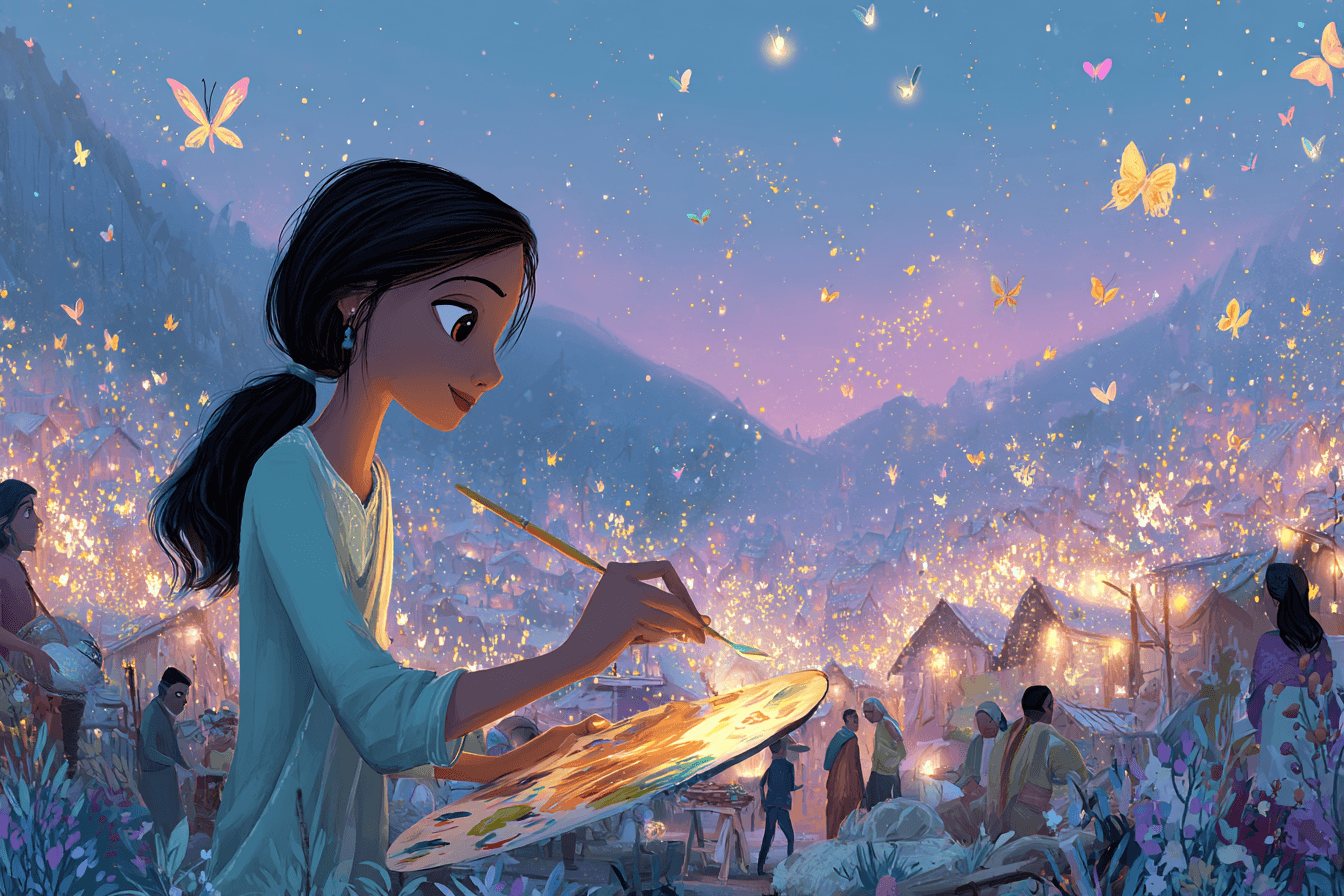
Meera loved to paint, but her family could not afford new colours often. One night, she dreamed of a golden paintbrush, and when she woke up, it was real!
Whenever Meera painted with the brush, her pictures came to life. She painted food for the hungry, clothes for the poor, and toys for the children in her village. She never used the magic brush for selfish reasons.
Her kindness made her beloved by all. The more she shared, the brighter her world became.
Moral: Use your talents to help others.
3. The Lost Puppy
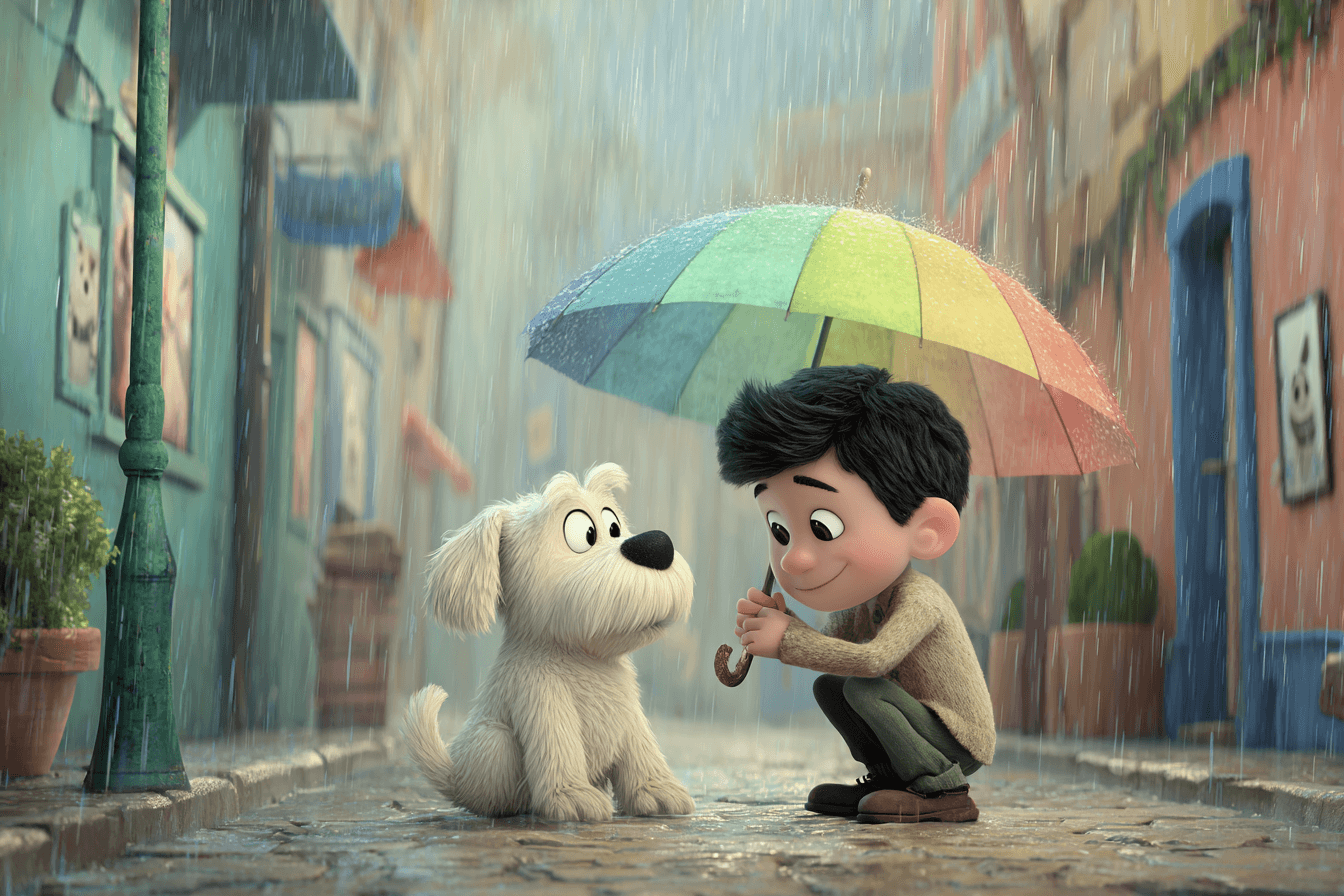
On a rainy day, a little puppy named Coco got lost in the market. He was cold and scared.
Arjun, a kind boy, found Coco hiding near a shop. He fed him biscuits and took him home. Arjun made posters with Coco’s picture and put them up everywhere.
Two days later, Coco’s family saw the poster and came to get him. They thanked Arjun and told him he could visit Coco anytime. Arjun was happy to make a new friend.
Moral: Helping others creates new friendships.
Boost your child’s storytelling and writing with personalised 1:1 coaching.
Book a free trial class now!
4. The Clever Crow and the Pebbles
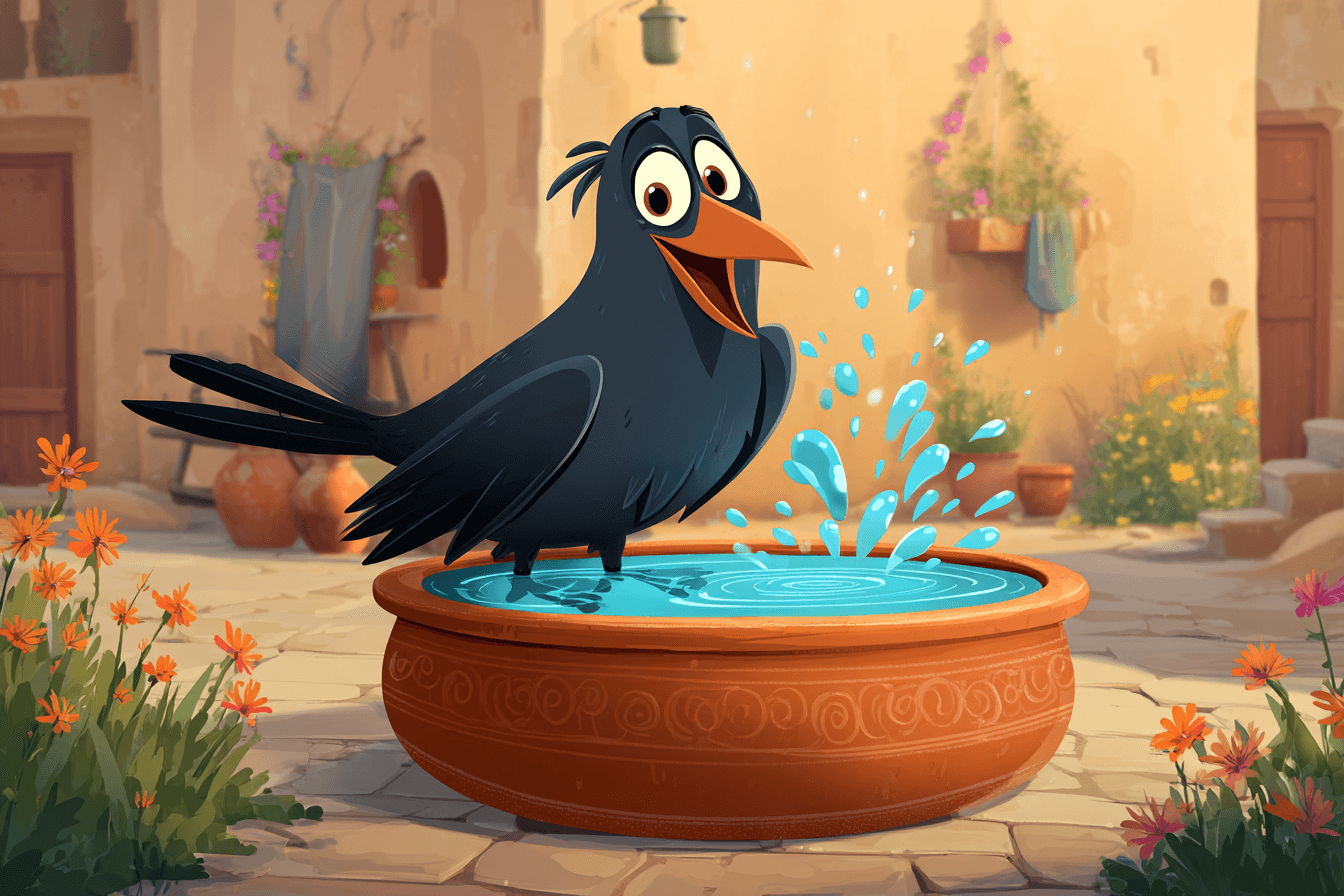
It was summer, and Kalu the crow was very thirsty. He found a pot with little water in it, but the water was too low for him to reach.
Kalu thought hard. He picked up small pebbles and dropped them into the pot one by one. Slowly, the water rose, and Kalu could drink it easily.
He flew away, happy and refreshed.
Moral: Use your mind to solve problems.
5. The Lazy Cat
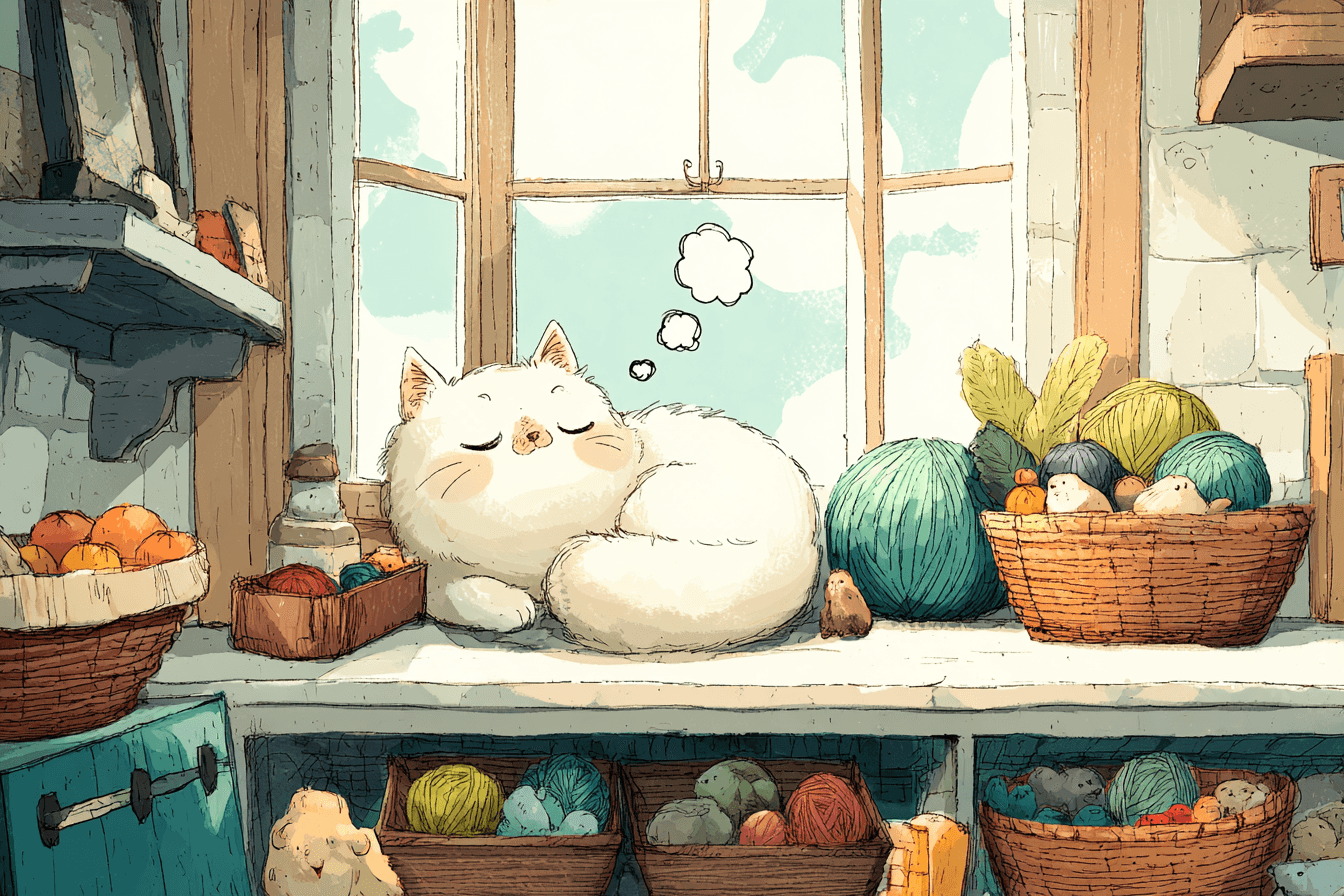
Mimi, the white cat, loved to sleep all day. She never helped other cats find food and always waited to be fed.
One day, all the other cats went away for a picnic, and Mimi was left alone. She became hungry but did not know how to find food herself.
Mimi realised that being lazy made life harder. From that day on, she started learning new things and helping others.
Moral: Don’t be lazy. Learn and participate.
How Kids Can Learn to Write Stories Like These
Every child has imagination, but sometimes they need the right guidance to turn their ideas into a story. Learning storytelling is not about memorising difficult rules—it is about understanding a few simple steps that help ideas flow naturally.
The first step is observing the world. Kids can find story ideas in everyday experiences, a playful pet, a rainy day adventure, or a funny moment at school. These small observations can become the beginning of a great story.
Next comes building a story structure. A good story usually has a beginning, a middle, and an ending. Children learn to introduce characters, create a small problem or adventure, and finally solve it in an exciting or meaningful way.
Another important step is adding imagination and emotions. Kids learn to describe how characters feel, what they see, and what happens next. This makes stories more interesting and engaging for readers.
Finally, children improve by practising and sharing their stories. When they read their stories aloud or receive feedback, they learn how to make their storytelling clearer and more creative.
With the right environment and encouragement, children quickly move from writing simple sentences to creating full stories that are imaginative, expressive, and meaningful.
6. The Brave Little Ant
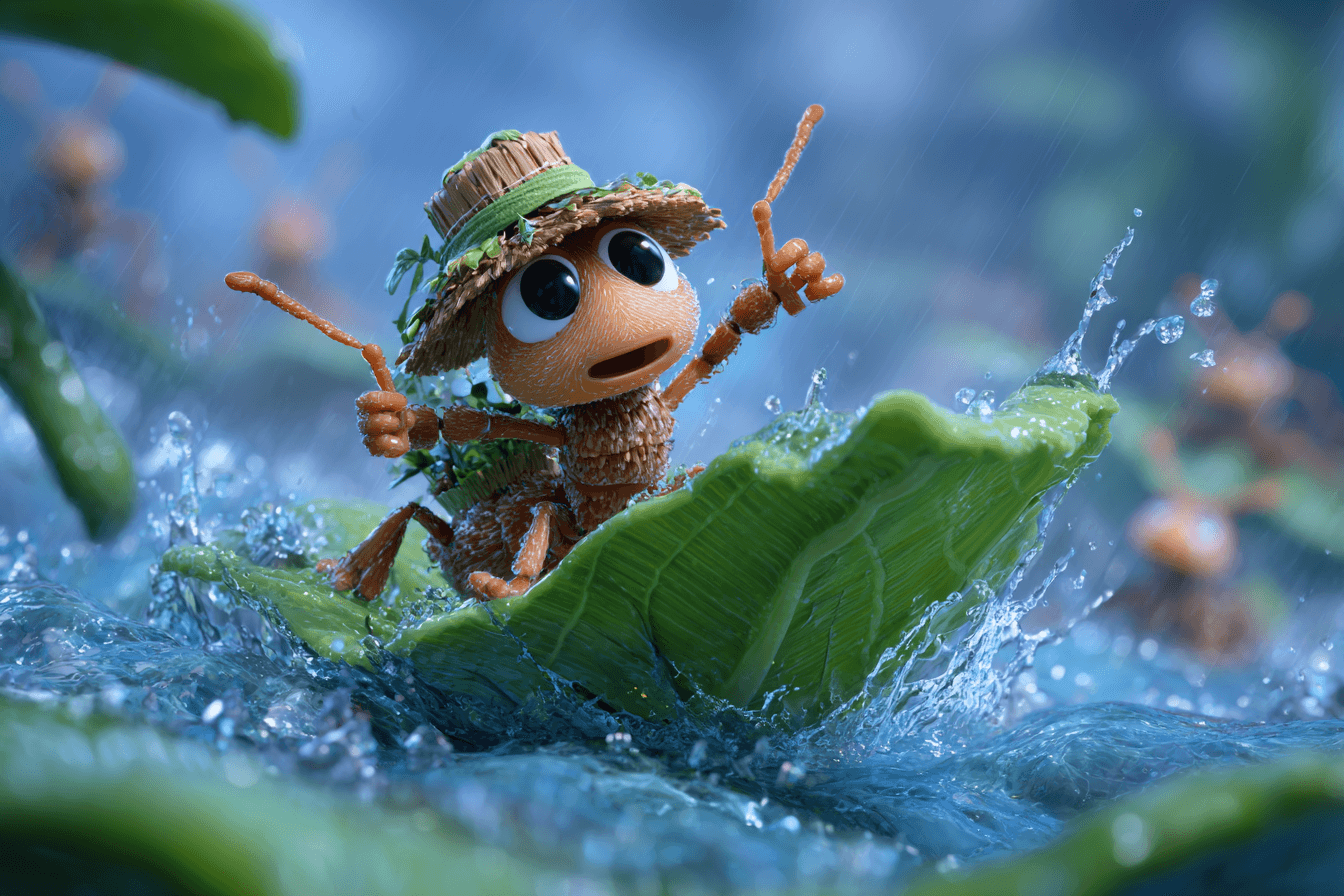
Anya the ant loved adventures. One day, while collecting food, she was washed away by rain.
Anya stayed calm and climbed onto a dry leaf. She used it like a boat and floated safely to a dry place. She found her way back home and told her friends about the adventure.
Everyone cheered for Anya’s courage.
Moral: Stay brave, even when things go wrong.
Want your child to create stories like these?
Explore PlanetSpark’s creative writing programs.
7. The Greedy Fox
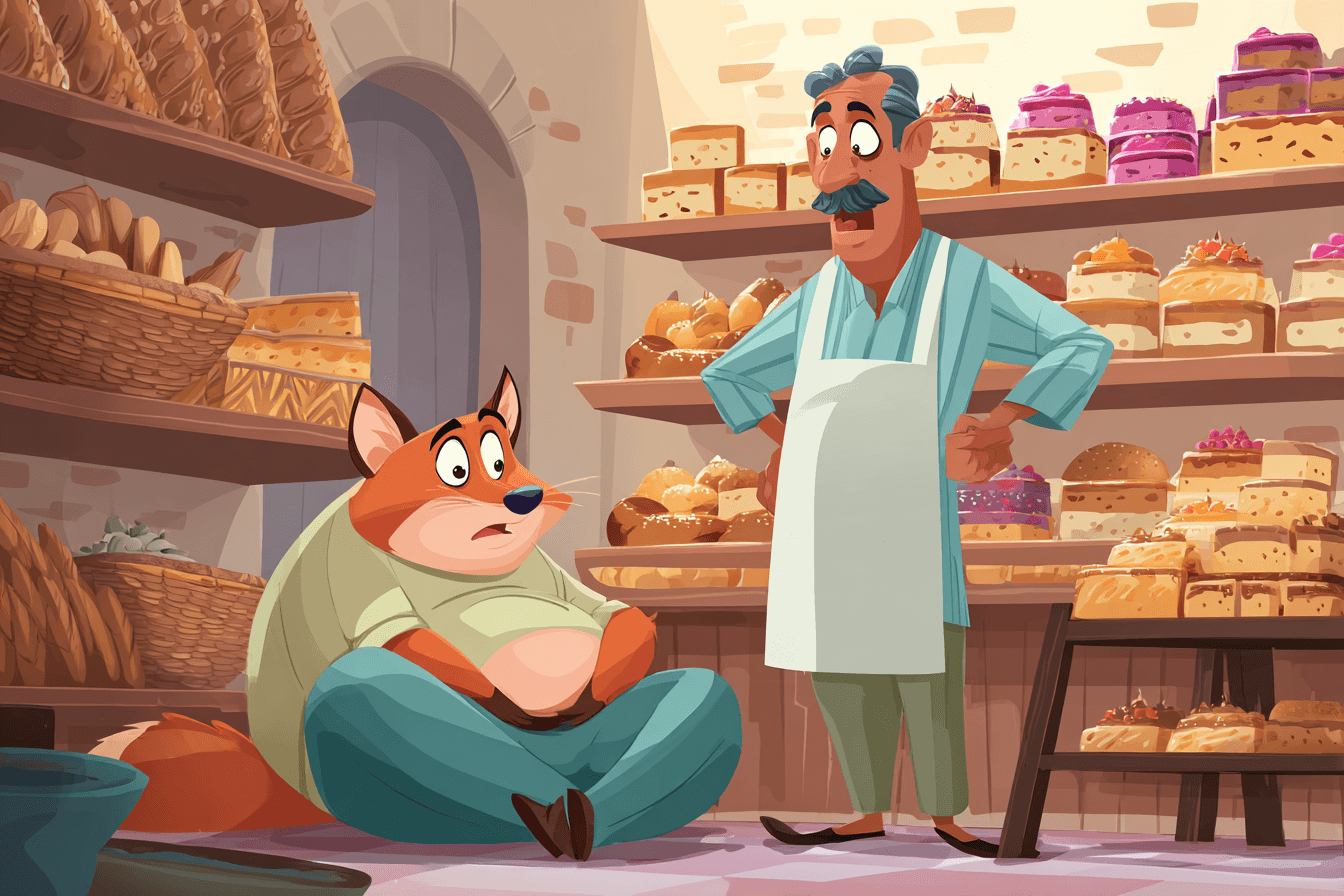
Rocky the fox loved eating. One day, he saw a bakery window open and couldn’t resist jumping inside.
He ate too much bread and cake. Soon his stomach hurt badly. The baker found him, and Rocky said sorry.
Rocky promised never to be greedy again and shared food with his friends from then on.
Moral: Greed causes trouble. Sharing brings happiness.
8. The Friendship Tree
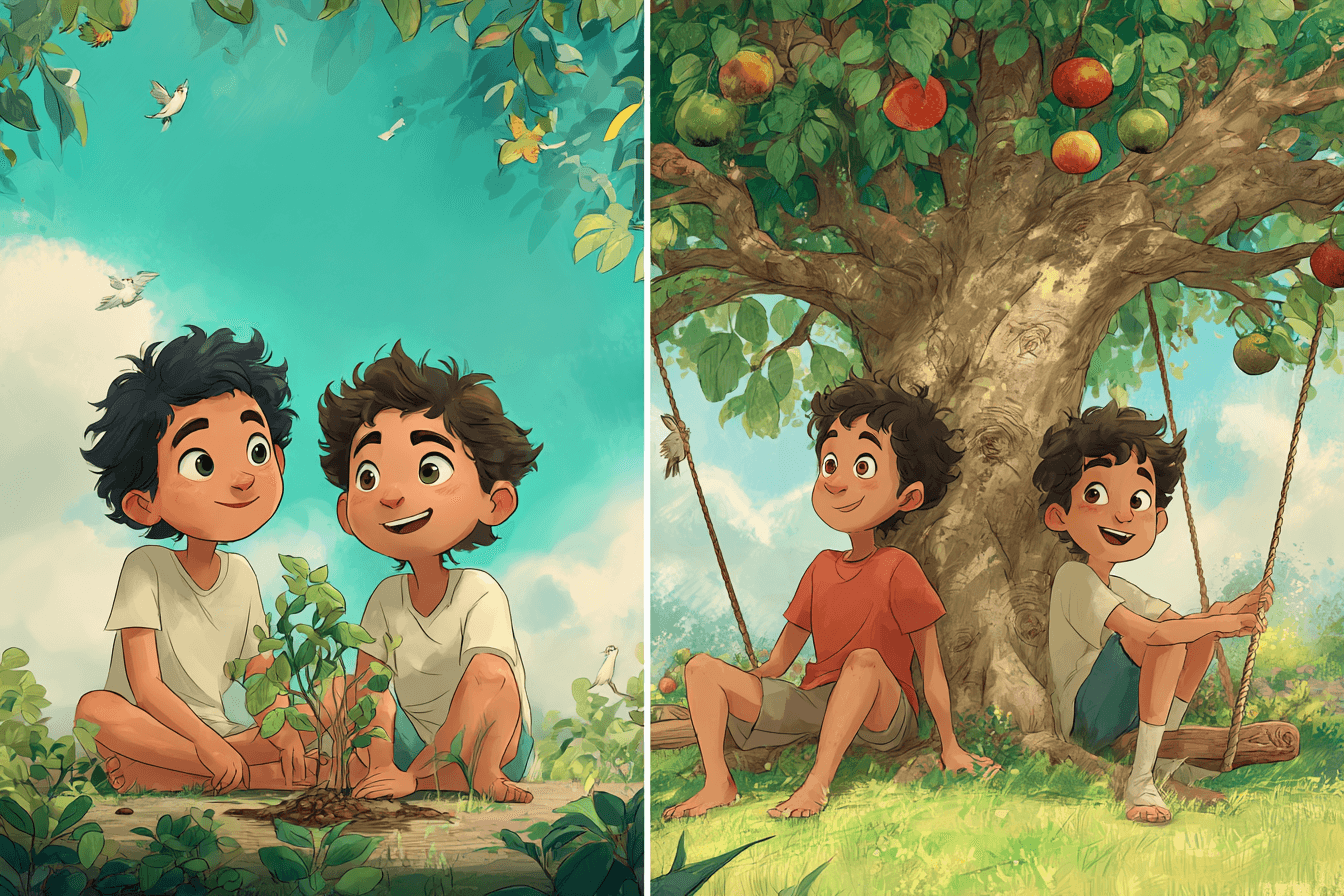
Riya and Sam planted a small tree together in their school garden. Every day, they watered it and watched it grow.
Years later, the tree became big, giving them fruits and cool shade. Their friendship also grew stronger.
The tree reminded them that friendships, like plants, need care and love.
Moral: Friendship grows with time and care.
9. The Helpful Parrot
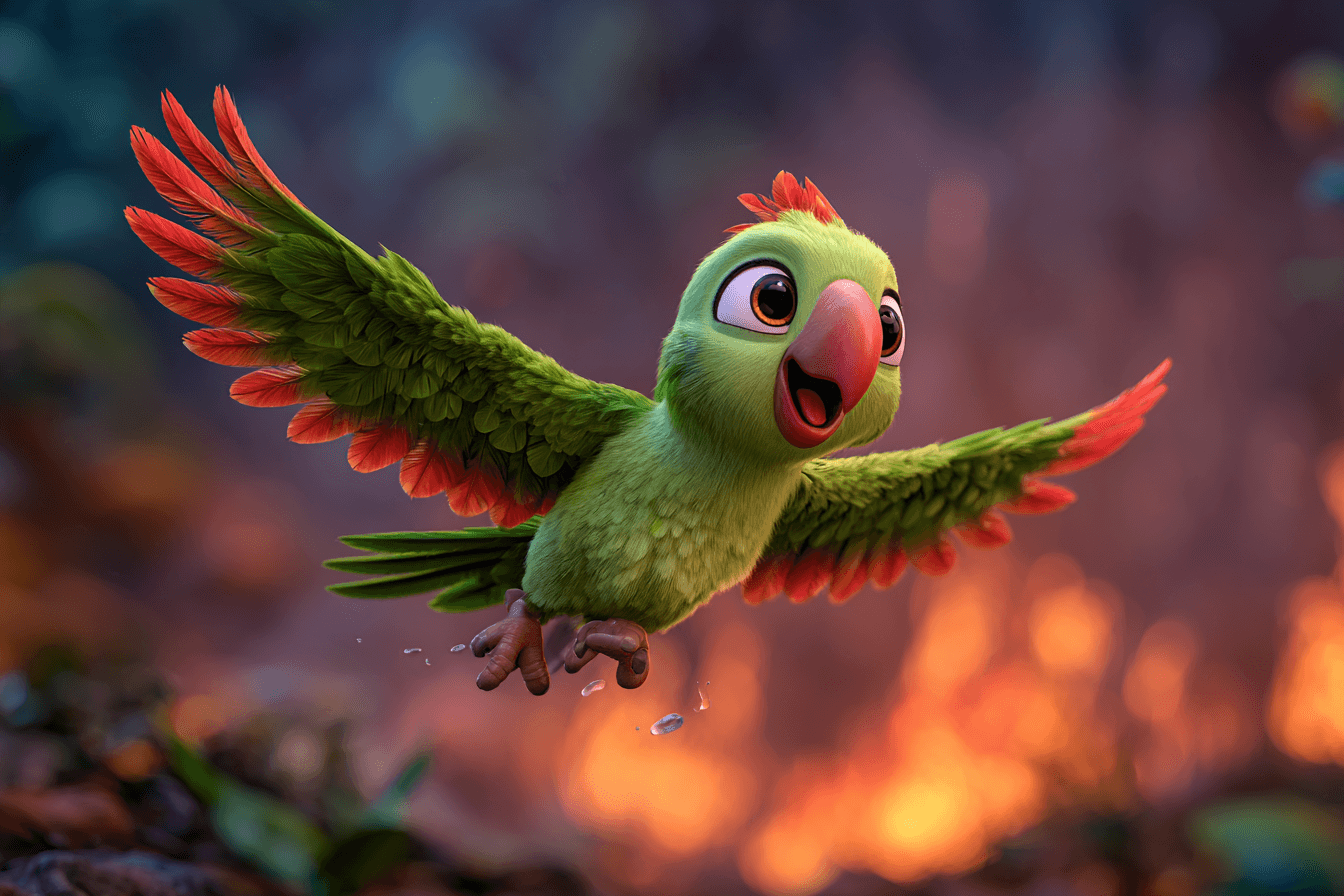
Pico the parrot lived in a green forest. One day, a fire broke out. While other animals ran away, Pico wanted to help.
He carried drops of water in his small beak and dropped them on the fire again and again. The animals laughed, but Pico didn’t stop.
Soon, it began to rain, and the fire went out. The animals thanked Pico for his efforts.
Moral: Small efforts can make a big difference.
Help your child develop a love for reading and writing.
Start with a free PlanetSpark demo class.
10. The Little Lantern

Tara lived in a village where the nights were always dark. One day, she made a paper lantern and placed it outside her home.
Her neighbours loved the idea. Soon, everyone made their lanterns. The village was no longer dark at night.
Tara’s simple idea brought light and happiness to the whole village.
Moral: Small ideas can make big changes.
Why Storytelling Matters for Kids
Storytelling is not just about reading bedtime tales; it builds life skills. When kids read or create stories, they learn to:
- Express ideas clearly
- Build imagination and creativity
- Improve vocabulary and grammar
- Understand emotions and morals
Practising stories helps kids in school and daily life by improving their confidence and communication.
How PlanetSpark Helps Kids Become Storytellers
At PlanetSpark, we believe that every child has a story to tell. Our programs include:
- Creative Writing and Story Building: PlanetSpark helps children develop their imagination and writing abilities through structured creative writing and story-building activities. Kids learn how to transform simple ideas into complete stories with interesting characters, exciting plots, and meaningful endings. This process improves their vocabulary, creativity, and ability to express thoughts clearly in written form.
- 1:1 Personalised Coaching with Certified Trainers: At PlanetSpark, every child receives individual attention through one-on-one sessions with certified trainers. These experts guide children step-by-step in improving their storytelling, writing, and speaking skills. Personalised coaching ensures that each child learns at their own pace, receives constructive feedback, and gains the confidence to express their ideas effectively.
- Interactive Storytelling Clubs and Performances: Children also participate in interactive storytelling clubs and live performances, where they get opportunities to share their stories with others. These activities encourage kids to speak confidently, use expressive language, and engage their audience. It also makes learning fun while helping children overcome stage fright and develop strong public speaking skills.
- AI Tools like SparkX for Practice and Feedback: PlanetSpark uses AI-powered tools like SparkX to support children in their learning journey. These tools provide instant feedback on storytelling and writing exercises, helping kids understand how to improve their structure, vocabulary, and creativity. The AI system also tracks progress so both parents and trainers can see how the child is developing over time.
- Fun Writing Prompts and Gamified Learning Modules: To make learning enjoyable, PlanetSpark introduces fun writing prompts and gamified activities that inspire children to think creatively. Kids might write stories about magical worlds, adventurous characters, or exciting mysteries. Gamified learning modules turn storytelling practice into engaging challenges, motivating children to keep learning and improving while having fun.
Kids move from simple sentence writing to telling complete stories with confidence.
Help Your Child Become a Confident Storyteller
Storytelling is more than just a creative activity; it is a powerful skill that helps children express ideas, communicate confidently, and think creatively. When kids learn how to build stories, develop characters, and present their ideas clearly, they also strengthen essential life skills like communication, imagination, and confidence.
Throughout this journey, children need the right guidance, structured learning, and opportunities to practice their storytelling abilities. With expert coaching, interactive storytelling activities, and technology-driven learning tools, kids can gradually transform their imagination into powerful stories.
This is exactly where PlanetSpark’s Storytelling and Creative Writing programs make a difference. Through personalised coaching, engaging storytelling clubs, AI-powered practice tools, and fun writing challenges, children learn how to express themselves confidently while enjoying the learning process.
Whether your child loves imagining magical adventures, writing fun stories, or speaking confidently in front of others, storytelling can unlock their creative potential and help them become better communicators.
Give your child the opportunity to discover the power of storytelling and build confidence that lasts a lifetime.
Recommended Reads for Young Storytellers
Frequently Asked Questions
Short stories written in around 10 lines are simple and easy for children to read and understand. These stories usually include a small plot, a clear message, and a moral lesson at the end. Popular examples include stories about honesty, kindness, teamwork, and hard work that help children learn important values in a fun way.
A short story in English with a moral is a brief narrative that teaches an important life lesson. These stories often feature simple characters, a small challenge or event, and a meaningful conclusion. They are commonly used for children because they combine entertainment with valuable lessons such as honesty, patience, or responsibility.
Funny short stories for kids are light-hearted and entertaining stories that include humor, silly situations, or playful characters. These stories help children enjoy reading while improving their imagination and language skills. Funny stories are also a great way to encourage reluctant readers to develop an interest in books.
Reading English short stories helps children improve their vocabulary, grammar, and comprehension skills. It also develops creativity and imagination by exposing kids to different characters and situations. Short stories are especially helpful for young learners because they are quick to read and easy to understand.
The best short stories for children are simple, engaging, and meaningful. They usually include interesting characters, exciting events, and a clear message or moral. Stories that teach kindness, honesty, courage, and teamwork are especially popular because they help children learn valuable life lessons while enjoying the reading experience.