
Best 15 Easy Stories with Dialogues for Young Readers

Table of Contents
- What Are Stories with Dialogues and Why Are They Important
- 15 Easy Stories with Dialogues for Kids
- Key Examples of Stories with Dialogue from Literature
- Why Dialogue is Important in Stories
- How to Write Stories with Dialogues
- Tips for Writing Natural Dialogue
- Learn Storytelling the Right Way with PlanetSpark Storytelli
- Practice Today, Speak Confidently Tomorrow
What if your child could turn simple stories into exciting conversations that feel real and fun? Many children struggle to make their stories engaging because they do not know how to use conversations effectively. Stories without dialogue often feel flat and less interesting. This blog on stories with dialogues helps young readers understand how conversations bring stories to life.
You will explore 15 easy and fun stories, learn simple dialogue examples, understand famous fables, and discover how to write your own engaging dialogue stories. You will also see how dialogue improves communication and confidence.
Let us begin with understanding what makes dialogue so powerful in storytelling.
What Are Stories with Dialogues and Why Are They Important
Stories with dialogue are narratives in which characters communicate through conversation. Instead of only describing events, these stories show actions, emotions, and relationships through what characters say. This makes the story feel more real, engaging, and easier to understand.
For example:
“I am scared,” said Riya.
“I am here with you,” replied her friend.
In just two lines, we understand fear, comfort, and friendship. This is the power of dialogue. It allows readers to experience the moment rather than just read about it.
Why dialogues matter in storytelling
- They make stories interactive and engaging: Readers feel like they are part of the conversation, not just observers.
- Help readers understand emotions clearly: Tone, word choice, and expressions reveal feelings better than long descriptions.
- Improve speaking and writing skills: Children learn how real conversations work, including sentence structure and expression.
- Build imagination and creativity: Kids start imagining how characters speak, react, and express themselves.
- Make characters relatable: Conversations help readers connect with characters and understand their personalities.
Stories with dialogues are especially helpful for children because they mirror real-life conversations. When kids read or write such stories, they naturally learn to communicate better in everyday situations, such as school, friendships, and public speaking.
They also help children practice tone, clarity, and confidence, which are essential life skills beyond academics.
Struggling to make your child speak confidently? Book a FREE PlanetSpark trial class today and unlock powerful communication skills before it's too late. Limited seats available.
15 Easy Stories with Dialogues for Kids
Here are simple explanations of each story to help children understand the meaning, characters, and lessons more clearly. These explanations make stories with dialogues easier to remember and apply in real life.
1. The Lion and the Mouse
“Please let me go,” squeaked the mouse.
“You are too small to help me,” laughed the lion.
“One day I will help you,” said the mouse.
Later…
“Help! I am trapped,” roared the lion.
“I will save you,” said the mouse, cutting the net.
This story shows that kindness always comes back to you. The lion thinks the mouse is too small to help, but later the mouse saves his life.
Moral: Even small friends can be great allies.
Explanation: Even small people can do big things. Never underestimate anyone.
2. The Tortoise and the Hare
“I am the fastest,” said the hare proudly.
“Let us race,” said the tortoise calmly.
“You cannot win,” laughed the hare.
“I may be slow, but I never stop,” replied the tortoise.
The hare is overconfident and careless, while the tortoise is slow but determined. In the end, the tortoise wins.
Moral: Persistence beats arrogance.
Explanation: Consistency and hard work matter more than speed or talent.
3. The Fox and the Grapes
“I must get those grapes,” said the fox.
“You cannot reach them,” said a bird.
“They are probably sour anyway,” said the fox.
The fox cannot reach the grapes, so he pretends they are not good.
Moral: We often dislike what we cannot have.
Explanation: Sometimes we make excuses when we fail instead of accepting the truth.
4. The Boy Who Cried Wolf
“Wolf! Wolf!” shouted the boy.
“Where is it?” asked the villagers.
“There is no wolf,” laughed the boy.
Later…
“Help! There is a real wolf!”
“No one will believe you now,” said the villagers.
The boy lies repeatedly for fun, but when he truly needs help, no one believes him.
Moral: Do not lie.
Explanation: Trust is very important. Once broken, it is hard to regain.
5. The Ant and the Grasshopper
“Come work with us,” said the ants.
“I want to sing,” said the grasshopper.
Winter came…
“Please help me,” said the grasshopper.
“We worked hard,” replied the ants.
The ants work hard and prepare for winter, while the grasshopper wastes time.
Moral: Hard work is important.
Explanation: Planning and hard work help us stay prepared for difficult times.
Want your child to understand stories and speak confidently? Book a FREE PlanetSpark trial class now and see real improvement in communication skills. Limited seats.
6. The Golden Egg
“Our hen lays golden eggs,” said the farmer.
“Let us get all the gold at once,” said his wife.
“Oh no, we lost everything,” cried the farmer.
The farmer becomes greedy and destroys his source of wealth.
Moral: Greed leads to loss.
Explanation: Greed can make us lose what we already have. Patience is important.
7. The Two Friends and the Bear
“Run!” shouted one friend.
“I cannot climb,” said the other.
The bear left…
“You are safe now,” said the friend.
“What did the bear say?”
“It told me never to trust a false friend.”
One friend abandons the other in danger, showing his true nature.
Moral: True friends stay in difficult times.
Explanation: A real friend stands by you in difficult situations.
8. The Honest Woodcutter
“Is this your axe?” asked the fairy.
“No,” said the woodcutter honestly.
“Your honesty is your reward,” said the fairy.
The woodcutter tells the truth even when tempted by gold and silver.
Moral: Honesty is rewarded.
Explanation: Honesty always brings rewards, even if not immediately.
9. The Thirsty Crow
“I need water,” said the crow.
“Try the pot,” said another bird.
“I have an idea,” said the crow.
The crow uses intelligence to solve a problem instead of giving up.
Moral: Use your brain.
Explanation: Smart thinking and problem-solving are very valuable skills.
10. The Cap Seller and the Monkeys
“Give me my caps,” said the seller.
The monkeys copied him.
“I have a trick,” he smiled, throwing his cap.
The seller uses observation and clever thinking to get his caps back.
Moral: Intelligence solves problems.
Explanation: Staying calm and thinking smartly can solve tricky problems.
Is your child struggling with confidence while speaking? Enrol in a PlanetSpark storytelling class today and unlock their full potential. Hurry, limited spots available.
11. The Monkey and the Crocodile
“Come visit my home,” said the crocodile.
“I cannot leave the tree,” said the monkey.
“I left my heart on the tree,” tricked the monkey.
The monkey saves himself by thinking quickly and tricking the crocodile.
Moral: Clever thinking saves you.
Explanation: The presence of mind and intelligence can help us escape danger.
12. The Dog in the Manger
“I will not let anyone eat this,” said the dog.
“But you cannot eat it,” said the cow.
The dog does not use the hay, and does not let others use it either.
Moral: Do not be selfish.
Explanation: Being selfish helps no one and creates unnecessary problems.
13. The Milkmaid and Her Pail
“I will become rich,” said the milkmaid.
“Oh no!” she cried as the pot fell.
The milkmaid gets lost in dreams and loses everything due to carelessness.
Moral: Do not daydream too much.
Explanation: Stay focused on the present and avoid overthinking future success.
14. The Bundle of Sticks
“Break this bundle,” said the father.
“We cannot,” said the sons.
“Together you are strong,” he explained.
The father teaches his sons the importance of unity through a simple example.
Moral: Unity is strength.
Explanation: Together, people are stronger and cannot be easily broken.
15. The Elephant and the Ants
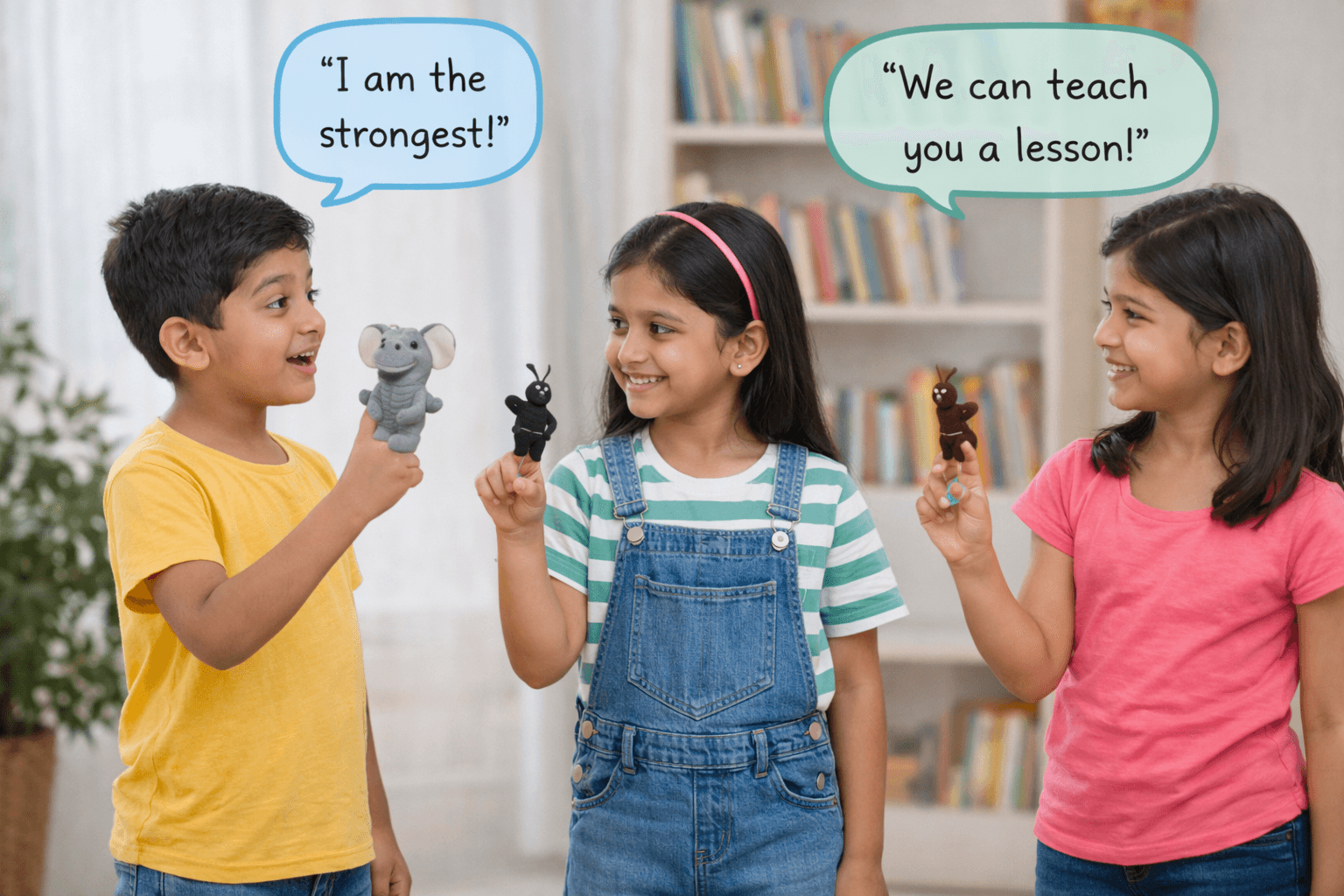
“I am the strongest,” said the elephant.
“We can teach you a lesson,” said the ants.
“Please forgive me,” said the elephant.
The elephant learns humility after being troubled by tiny ants.
Moral: Be kind to everyone.
Explanation: No one is too big or too powerful. Everyone deserves respect.
Key Examples of Stories with Dialogue from Literature
Beyond fables, many famous stories use dialogue as a powerful storytelling tool. These stories show how conversations alone can reveal emotions, relationships, and even the entire plot without heavy description.
- “Thank You, Ma'am” shows kindness through a meaningful conversation between a boy and a woman. Instead of punishing him, she talks to him with empathy. Through their dialogue, we see how compassion can change someone’s behaviour.
- “The Gift of the Magi” expresses deep love between a couple. Their conversations and actions reveal sacrifice and care. The dialogue helps readers feel their emotions rather than just reading about them.
- “I Want My Hat Back” uses very simple and repetitive dialogue, making it perfect for children. The story depends almost entirely on conversations, showing how even basic dialogue can create suspense and humour.
These good stories prove that dialogue is not just an addition to storytelling. It can actually carry the entire narrative and make it more engaging, emotional, and memorable.
Why Dialogue is Important in Stories
Dialogue plays a major role in storytelling because it makes the story feel alive. Instead of long descriptions, readers experience the story through conversations, just like real life.
Benefits of dialogue
- Brings stories to life: Conversations make scenes feel real and immediate, as if the reader is watching them happen.
- Shows character personality: The way a character speaks reveals their nature, mood, and background. For example, a confident character speaks differently from a shy one.
- Builds emotional connection: Readers understand feelings better when characters express them directly through words.
- Moves the story forward quickly: Dialogue naturally conveys important information without long explanations.
Dialogue examples also help children understand tone, expression, and communication. They learn how to ask questions, respond, express emotions, and interact socially. This makes stories with dialogues not only fun to read but also highly useful for real-life communication skills.
Want your child to think creatively and speak clearly? Join PlanetSpark today and give them the confidence to express ideas effortlessly. Limited seats available.
How to Write Stories with Dialogues
Writing stories with dialogue becomes much easier when children follow a simple structure. Dialogue-based storytelling is not about using difficult words. It is about making characters speak in a natural, meaningful way. When kids learn this skill step by step, they can turn even a basic idea into an engaging story.
Step-by-step guide
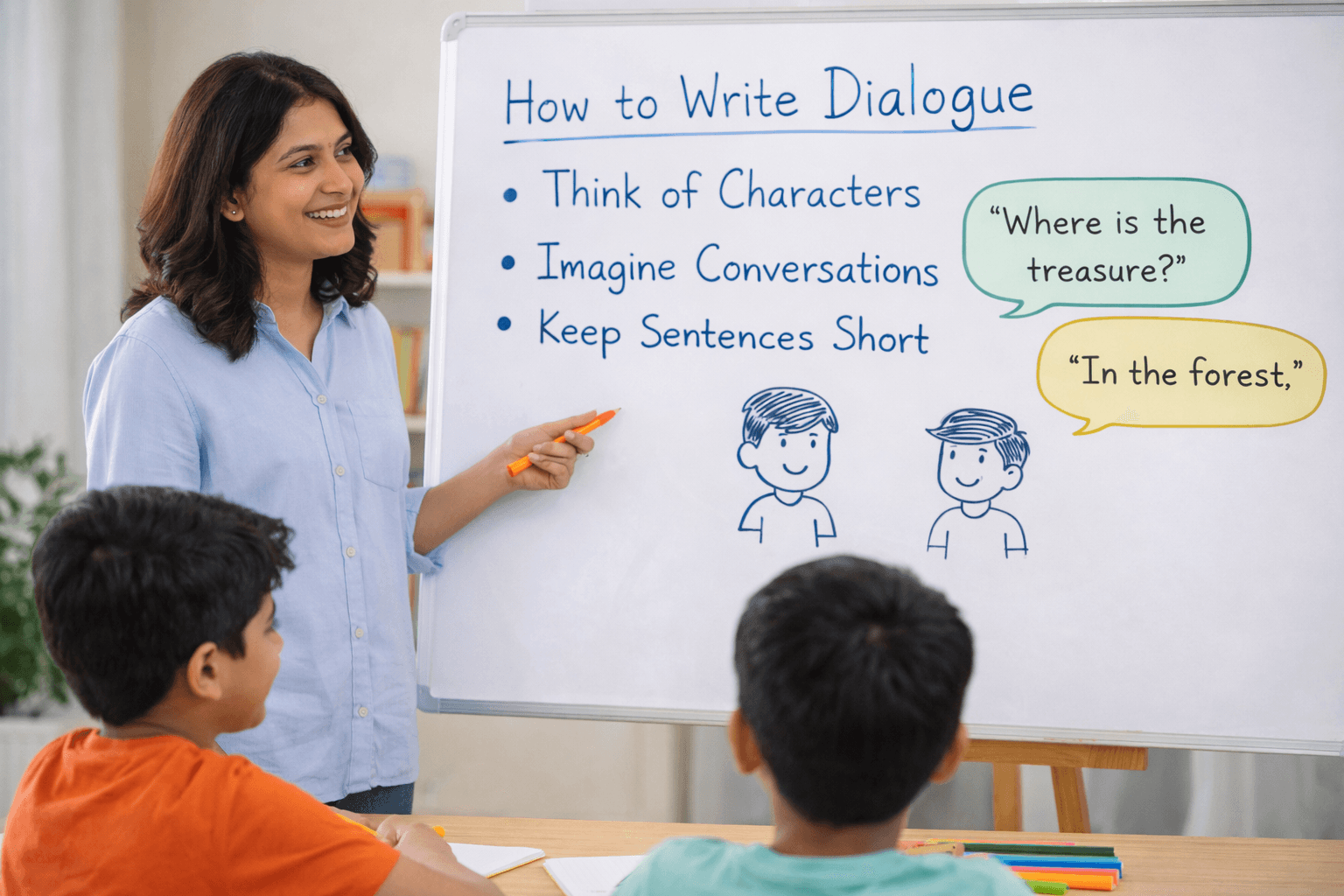
- Think of a simple story idea: Start with everyday situations like going to school, playing with friends, or helping someone. Simple ideas are easier to convert into conversations.
- Create characters: Choose 2 or 3 characters so the story remains clear. Give them simple personalities, such as happiness, curiosity, or bravery.
- Imagine conversations: Ask yourself what the characters would say to each other. Think of real-life conversations to make it sound natural.
- Keep sentences short: Short and clear sentences make dialogue easy to read and understand, especially for young readers.
- Use quotation marks correctly: Always put spoken words inside quotation marks so readers can identify who is speaking.
Dialogue example in writing
“Where are you going?”
“To the park,” said Aman.
“Can I come?”
“Yes,” he smiled.
This simple dialogue example shows how a conversation can move a story forward without long explanations. It also helps children understand how real conversations flow.
Tips for Writing Natural Dialogue
To make stories more engaging, dialogues should sound like real speech. Forced or overly formal sentences can make the story feel unnatural.
Useful tips
- Keep it realistic: Write the way people actually speak in daily life.
- Avoid long sentences: Break conversations into short lines so they are easy to follow.
- Use simple words: This helps young readers understand and enjoy the story.
- Add emotions: Show feelings through words like happy, scared, excited, or worried.
- Use dialogue tags wisely: Words like “said,” “asked,” or “whispered” help readers know who is speaking.
For example:
Instead of writing
“I am happy,”
You can write
“I am so excited to play,” said Riya, jumping with joy.
This makes the story livelier and more expressive.
By following these steps and tips, children can start creating good stories that are fun, engaging, and full of meaningful conversations. Over time, they will become more confident in both writing and speaking.
Learn Storytelling the Right Way with PlanetSpark Storytelling Classes
PlanetSpark storytelling classes are designed by communication experts to help children become confident speakers and creative thinkers. These classes are ideal for kids who struggle with expressing ideas, lack confidence while speaking, or want to improve their creative writing skills.
Structured storytelling training ensures that children not only learn theory but also practice real-world communication.
Key Features
- Live interactive classes with expert trainers
- One-on-one personalized attention
- Real-world storytelling and speaking practice
- AI-powered progress tracking tools
- Curriculum aligned with global communication standards
- Regular feedback and performance reports
- Confidence-building activities
PlanetSpark focuses on making children future-ready by improving communication, critical thinking, and creativity.

Practice Today, Speak Confidently Tomorrow
Learning through stories with dialogues is one of the most powerful ways to improve communication skills. When children regularly read and practice dialogue-based stories, they develop confidence, creativity, and clarity in expression.
Start small, practice daily, and focus on improving step by step. Over time, these skills will help children succeed not only in academics but also in real-life communication and future opportunities.
Frequently Asked Questions
At PlanetSpark, we define them as stories in which characters communicate through conversation, making storytelling more engaging.
It improves communication, creativity, and confidence in expressing ideas clearly.
Start with simple dialogue examples, then practice short stories with guided learning.
Yes, they help children understand tone, emotions, and conversational flow.
“Where are you going?” “I am going to school.”
PlanetSpark provides structured learning with expert teachers and real-time feedback.
Yes, consistent storytelling practice builds strong communication skills and confidence.