
Story Illustration Techniques to Build Strong Storytelling Skills
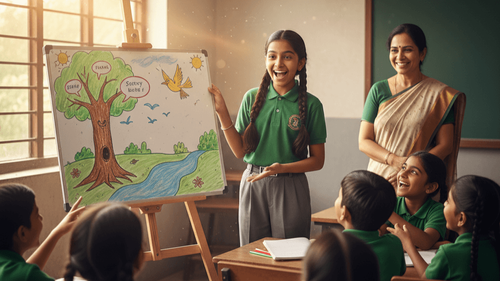

Table of Contents
- What Story Illustration Really Means
- Why Story Illustration Works for Storytelling
- Core Elements of Effective Story Illustration
- How to Teach Story Illustration at Home
- Story Illustration Activities to Improve Storytelling
- How Story Illustration Supports Confident Speaking
- When to Introduce Story Illustration
- Common Mistakes Parents Should Avoid
- About PlanetSpark
- Final Thoughts on Story Illustration
Story illustration is one of the most reliable ways to help children turn ideas into clear, engaging narratives. Parents search for it because visual cues make storytelling easier, help kids organize their thoughts, and improve how they express scenes, emotions, and plot. This guide explains how story illustration works, why it strengthens storytelling skills, and how to teach it effectively at home.
PlanetSpark offers structured storytelling training that blends imagination, organization, and delivery to help children narrate confidently.
What Story Illustration Really Means
Story illustration goes beyond drawing. It is the process of converting thoughts, characters, and scenes into visual anchors that guide a child’s narration. Instead of depending on memory or rehearsed sentences, children use illustrations to map out the world they want to describe. These visuals give them a clear sense of where the story takes place, who is involved, what is happening, and how emotions shift between moments. When a child can see the story laid out in front of them, they naturally understand setting, conflict, sequencing, and character emotion with far less confusion.
Because early learners think in pictures long before they think in text, strong storytelling programs introduce illustration early. Visual cues help young minds organize thoughts, build story flow, and express ideas confidently without the pressure of remembering lines or perfect wording.
Why Story Illustration Works for Storytelling
They build scene clarity
When children draw scenes from their story, they are forced to decide what the environment looks like, who is present, and what objects matter. This pushes them to visualize the world they are creating instead of relying on vague mental images. The clearer the scene is in their mind, the easier it becomes for them to describe colours, spaces, actions, and moods during narration. This naturally strengthens descriptive language and helps them narrate in a way that feels vivid and immersive.
They improve plot structure
When a child creates illustrations for different moments of the story, they must decide which event comes first, what follows next, and how the story ends. This visual sequencing becomes an effortless introduction to narrative structure. Instead of memorizing “beginning-middle-end,” children understand it intuitively because the drawings literally show the flow of events. This makes storytelling organized, coherent, and easier to deliver aloud.
They remember details better
Visuals serve as memory triggers. When children look at an illustration, they instantly recall what happened in that moment, what the characters felt, and how the story progressed. This reduces hesitation during narration and prevents them from forgetting important plot points. Because each picture is linked to a specific idea or action, the child’s memory becomes stronger, and narration becomes more confident and fluid.
Core Elements of Effective Story Illustration
Character Identity
When children draw characters with distinct features, they begin to understand each character as an individual with a unique voice, role, and personality. This clarity helps them shift tones naturally during narration because they can visualize who is speaking at each moment. Distinct character identity also strengthens emotional clarity; children can express fear, excitement, or confidence more easily when they know how their character looks and behaves. It anchors their storytelling and prevents monotone narration.
Setting Mapping
A simple background helps children situate their story in a specific place and time. Whether the scene is in a forest, a school hallway, or a magical planet, drawing the setting forces children to think about atmosphere, mood, and context. This improves their ability to narrate with detail, because they understand what surrounds the characters and how that environment influences the story. Strong setting mapping leads to richer descriptions and more immersive storytelling.
Plot Milestones
By creating separate drawings for major events, children see the story arc visually laid out in front of them. This makes it easier to follow the natural rise and fall of the narrative, ensuring they do not skip important transitions or rush through key moments. Plot milestones create a clear path for children to follow while narrating, making the flow smoother, more structured, and more coherent. It helps them maintain momentum without losing track of the storyline.
Emotion Highlighting
Illustrating facial expressions and body cues teaches children how emotions shape storytelling. A sad face, a surprised gesture, or an angry stance becomes a visual reminder of how the character should sound or feel during narration. This helps children practice emotional projection and expressive delivery. When kids understand emotional changes visually, they become more confident in using tone, pitch, and modulation to match the mood of the story.
Cause and Effect
Sequential illustrations help children understand how one event leads to another. They begin to recognize that every action has a consequence and that stories rely on logical flow. This strengthens reasoning as they connect events meaningfully rather than presenting them as unrelated happenings. Cause-and-effect awareness results in stronger structure, clearer transitions, and more impactful narration.
How to Teach Story Illustration at Home
Start with a prompt
Begin by giving children a simple prompt such as an object, a theme, or a picture. Prompts act as anchors that prevent the child from feeling overwhelmed or unsure about where to begin. When imagination is guided but not restricted, children find it easier to build their story world. A prompt gives direction without controlling creativity, helping the child take the first step confidently.
Build characters
Once the prompt is set, ask children to sketch the main characters. The drawings do not need to be perfect; what matters is clarity. Encourage them to define at least one trait for each character, such as brave, shy, funny, or curious. These traits become the foundation for expressive narration because children understand how each character should sound, act and respond within the story.
Divide the story into panels
Next, help children break the narrative into separate frames or panels. Each panel represents one key event in the story. Dividing the story visually helps children understand sequencing, transitions, and cause-and-effect. It also prevents them from jumping around or forgetting important moments. Panels turn the story into a clear roadmap for narration.
Add emotion points
Ask children to include small visual indicators of emotions within each panel. These can be facial expressions, posture changes, or simple symbols showing fear, joy, surprise, or curiosity. Emotion points help children project feelings correctly during narration. They learn that stories are not only about events but also about how characters experience those events.
Tell the story aloud
Once the illustrations are complete, children use them as visual guides to narrate the entire story. This removes the pressure of memorization and allows natural flow. Children speak with greater clarity and confidence because each drawing reminds them of what happens next. This seamless link between drawing and narration strengthens both expressive delivery and storytelling structure.
Join now with PlanetSpark to help your child become a confident and expressive storyteller.
Story Illustration Activities to Improve Storytelling
Picture-to-Story Mapping
Start with a single picture and ask the child to imagine what happened before and after that moment. They then create additional scenes that complete the story. This activity trains creative continuity because the child learns to extend a single idea into a full narrative. It also strengthens sequencing, as children must think logically about how each new scene connects to the previous one.
Character Evolution Frames
In this activity, children draw a sequence of frames showing how a character changes throughout the story. This could include emotional shifts, learning moments or physical transformations. By mapping these changes visually, children understand growth, conflict and resolution more clearly. It helps them narrate with stronger character depth because they can see the journey unfold step by step.
Silent Story Panels
Provide panels with only illustrations and no words. Children must interpret the visuals, identify motivations and infer the storyline on their own. Silent story panels sharpen inference skills and encourage independent thinking. Because the child must construct the narrative from visual cues, their descriptive ability and confidence in structuring events improve significantly.
Mixed-Media Storyboards
Allow children to combine drawings, magazine cutouts, stickers and textured elements to build a rich visual world. Mixed-media storyboards stimulate creativity by letting children experiment with multiple forms of expression. The variety of visual elements gives them more details to work with during narration, encouraging descriptive storytelling, spatial awareness and layered imagination.
How Story Illustration Supports Confident Speaking
Story illustration strengthens sequencing, clarity, visual recall and expressive delivery. When children create drawings that represent each part of the story, they develop a clear sense of what happens first, what follows next and how the narrative concludes. This visual roadmap prevents them from jumping between ideas or losing track of the storyline.
Because every drawing anchors a specific moment, children can recall details effortlessly while narrating. They no longer depend on memory alone; the illustrations guide them naturally through each scene. This reduces hesitation, helps them stay focused and allows narration to flow smoothly from one event to the next.
When to Introduce Story Illustration
Most children between the ages of five and seven respond extremely well to illustration-based storytelling because visual thinking is naturally dominant at this stage. Drawing helps them translate imagination into simple scenes, making it easier to understand characters, sequence events and express emotions during narration. The visual anchor gives them confidence and reduces the pressure of remembering what comes next.
However, older children also benefit significantly from this technique. As stories become more complex, illustrations help them organize ideas, plan plot movement and build deeper narrative arcs. The process sharpens content clarity, strengthens story structure and encourages more expressive delivery. Even pre-teens and teenagers use visual planning such as comic panels, mind maps or storyboards to improve narrative flow and maintain coherence while speaking.
Common Mistakes Parents Should Avoid
Over-directing the child
Avoid controlling the drawing or correcting every small detail. When parents focus too much on artistic accuracy, children become hesitant and lose confidence in their ideas. The goal of story illustration is not perfect artwork but clear thinking. Let creativity lead the process so the child feels ownership over the story and becomes more invested in narrating it.
Ignoring structure
Illustrations should follow the sequence of the story, not appear as random or disconnected sketches. When drawings are placed out of order, children struggle to understand the flow of events during narration. Ensuring that illustrations follow beginning, middle and end helps children develop strong story organisation skills and makes their narration clearer and more structured.
Not connecting illustrations to narration
Some children draw with excitement but then narrate from memory instead of using the visuals they created. This breaks the purpose of story illustration entirely. Children should rely on their drawings as anchors while speaking. When they connect visuals to narration, their delivery becomes smoother, more confident and better structured.
Skipping character emotion
Many children draw characters without noticing their expressions or body language. Without emotion in the illustration, expressive narration becomes difficult. Encourage children to show how characters feel happy, scared, surprised or frustrated through facial expressions or simple gestures. Emotion in the drawings directly supports emotional projection in storytelling, making narration richer and more engaging.
About PlanetSpark
PlanetSpark helps children become expressive and confident storytellers through live 1:1 sessions and structured narrative training. Each class builds imagination, clarity and delivery so students learn to tell stories that engage and connect.
1:1 Expert Coaching: Children learn storytelling with certified communication trainers who guide them on body language, voice modulation, speech structuring and delivery through personalised 1:1 sessions.
Step-by-Step Storytelling Skill Building: The curriculum includes storytelling techniques, speech structuring, persuasive elements and content organisation, helping children build clear and engaging narratives.
Real-Time Storytelling Practice: Kids participate in storytelling circles, panel discussions and group activities where they narrate stories and receive live feedback from global peers.
AI-Based Story Analysis with SparkX: Children upload their storytelling videos for AI evaluation on voice clarity, body language, grammar usage, confidence and organization, enabling measurable improvements.
Consistent Progress Tracking: Structured progress reports assess content quality, critical thinking, grammar, voice modulation, confidence and delivery, with trainer notes and customized action plans.
Final Thoughts on Story Illustration
Story illustration gives children the ability to visualize ideas, build structure, organize scenes and express emotions with clarity. By turning abstract thoughts into simple visual frames, children gain a clearer understanding of how stories move, how characters change and how emotions shape a narrative. This visual foundation removes the pressure of memorization and allows children to speak with confidence, pacing and expressive depth.
When story illustration is paired with guided narration and meaningful feedback, it evolves from a drawing exercise into a complete storytelling system. Children learn to think creatively, communicate clearly and deliver stories in a well-organized manner. Over time, this approach builds strong speaking habits, reduces stage anxiety and helps young storytellers develop into confident, expressive communicators who enjoy sharing their ideas.
Enroll now at PlanetSpark and build strong storytelling skills with expert guidance.
Frequently Asked Questions
Story illustration is a visual storytelling technique where children draw characters, settings, and key scenes before narrating the story. These drawings act as visual anchors, helping them understand the flow of events, identify emotions, and remember important details. It’s especially helpful for young learners who process information better through images than text.
By sketching scenes in sequence, children learn how stories move from one moment to the next. Illustration strengthens descriptive skills, because kids naturally add details when drawing. It also makes narration more confident and expressive, as children rely on visuals instead of memorising lines. This improves clarity, structure and emotional delivery.
Most children begin benefiting from story illustration between ages five and seven, when imagination is strong and visual thinking is natural. Older children and pre-teens can also use it to plan longer, more complex stories. It helps them organize ideas, map plot movement, and create deeper narrative arcs.
Activities like picture-to-story mapping, silent story panels, mixed-media storyboards, and character evolution frames provide structured ways to practice. These activities train sequencing, creativity, emotional projection, and scene building. They also keep storytelling engaging and imaginative.
Parents can begin with a simple prompt or object, guide the child to create characters, and then divide the story into visual panels. Adding small emotion cues helps children express feelings while narrating. After the drawings are complete, parents should encourage the child to narrate the whole story using the visuals as support.
Illustrations reduce the pressure of remembering every detail, which lowers hesitation and stage fear. Kids feel more in control because they can see the story in front of them. This allows narration to flow smoothly, improves expressive delivery, and helps them maintain structure, all essential for confident speaking.