
5 Best Storytelling Secrets in 2026 to Level Up Communication
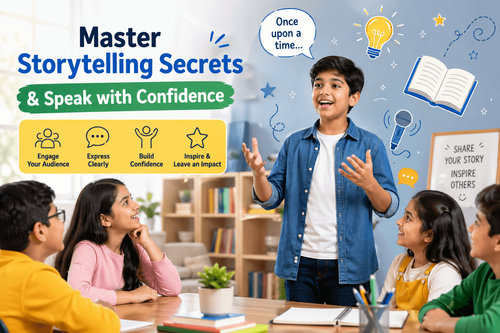

Table of Contents
- 5 Best Storytelling Secrets to Improve Communication
- Take Your Storytelling Skills to the Next Level with PlanetS
- Best Storytelling Techniques for Better Communication
- Boost Your Storytelling Skills with PlanetSpark Communicatio
- How to Practice Storytelling Daily
- Build Strong Communication Skills with PlanetSpark Today
- Master the Art of Storytelling and Enhance Your Communicatio
Do you struggle to express your ideas in a way that grabs attention? Many students face this challenge. This is where storytelling secrets can make a real difference. They help turn simple thoughts into engaging and memorable communication.
Many learners today are improving these skills through structured platforms like PlanetSpark, where storytelling and communication are taught through interactive practice and expert guidance. In this blog, you will discover the best storytelling techniques, practical storytelling examples, and easy ways to improve your communication skills. Let’s dive into how storytelling can transform the way you speak and connect with others.
5 Best Storytelling Secrets to Improve Communication
Learning storytelling does not have to be complicated or time-consuming. With the right approach and consistent practice, students can quickly improve how they express their ideas. Using proven storytelling secrets, you can make your communication more engaging, clear, and memorable. These techniques are especially useful for school presentations, conversations, and public speaking. Here are the five best storytelling secrets that can make a real difference in your communication skills.
1. Start with a Strong Hook
The beginning of your story is the most important part because it decides whether your audience will stay interested or not. A strong hook grabs attention instantly and creates curiosity.
You can start with:
- A question
- A surprising fact
- A dramatic situation
- A relatable moment
Example:
Instead of saying “I will tell you about my day,” say “You won’t believe what happened to me today!”
This makes listeners curious and encourages them to pay attention to your story.
2. Use Simple and Clear Language
One of the most effective storytelling secrets is to keep your language simple. Avoid using difficult or complicated words that may confuse your audience. Clear and simple language helps your message reach everyone easily.
When your story is easy to understand, people stay engaged and remember it better. This is especially important for students who are still developing their communication skills.
Want to speak confidently and impress everyone?
Join PlanetSpark Communication Skills Classes today!
3. Add Emotions to Your Story
Stories become powerful when they include emotions. Whether it is happiness, excitement, fear, or surprise, emotions help your audience connect with your story on a deeper level.
For example, instead of saying “I won the competition,” you can say “I felt so excited and proud when my name was announced.”
Adding emotions makes your story more relatable and memorable.
4. Follow a Clear Structure
A well-structured story is easier to understand and more enjoyable to listen to. Always organize your story into three parts:
- Beginning: Introduce the situation
- Middle: Explain the main event or problem
- End: Share the result or lesson
This structure helps your audience follow your story without confusion and keeps your message clear.
5. Practice Regularly
Practice is the key to mastering storytelling. The more you practice, the more confident and fluent you become. Try sharing stories daily with your friends, family, or classmates.
You can also:
- Practice in front of a mirror
- Record yourself and listen back
- Participate in school speaking activities
Regular practice helps you improve your storytelling techniques and build strong communication skills over time.
These storytelling secrets are simple, practical, and highly effective. By applying them in your daily life, you can become a better speaker, express your ideas confidently, and improve your overall communication skills.
Take Your Storytelling Skills to the Next Level with PlanetSpark
If you want to master these storytelling secrets faster and more effectively, learning with the right guidance can make a huge difference. PlanetSpark Communication Skills Classes are designed to help students not just understand storytelling, but actually apply it confidently in real-life situations like school presentations, competitions, and everyday conversations.
With a structured approach and expert support, students can turn simple storytelling techniques into powerful communication skills that last a lifetime. Here’s how PlanetSpark helps learners grow:
- Live interactive classes that keep students engaged and actively participating
- Expert trainers who guide students step by step and help refine their speaking skills
- Real-world practice sessions for storytelling, presentations, and public speaking
- Personalized feedback to identify strengths and improve weak areas
- Confidence-building activities that reduce hesitation and stage fear
- Structured curriculum designed for gradual and consistent improvement
- Focus on storytelling and communication to help students express ideas clearly and creatively
By learning in such a supportive and interactive environment, students not only improve their storytelling but also develop strong communication skills that help them succeed academically and socially.
Want to improve communication skills?
Join PlanetSpark Communication Skills Classes.
Book a free trial now!
Best Storytelling Techniques for Better Communication
To truly master storytelling, students need to understand and apply the best storytelling techniques for communication. These techniques not only make stories more engaging but also help in delivering ideas clearly and confidently. When used correctly, they can transform simple communication into something powerful and memorable.
Here are the most effective storytelling techniques explained in detail:
Use Visualization
- Help your audience see the story in their mind by describing scenes clearly
- Talk about colors, sounds, actions, and surroundings to make the story vivid
- Use simple but descriptive words so listeners can easily imagine the situation
- Example: Instead of saying “I went to a park,” say “I walked into a green park filled with colorful flowers and children laughing”
- Visualization makes your story more engaging and easier to remember
Include Dialogue
- Add conversations between characters to make your story lively and realistic
- Dialogue helps break monotony and keeps listeners interested
- It also improves your speaking and expression skills
- Example: Instead of saying “My teacher appreciated me,” say “My teacher smiled and said, ‘Well done, I am proud of you!’”
- Using dialogue makes your storytelling more dynamic and interactive
Keep It Short and Focused
- Avoid adding unnecessary details that may confuse or bore the audience
- Focus on the main message or idea you want to convey
- Keep your story simple, clear, and to the point
- Short stories are easier to understand and remember
- This technique is especially useful for presentations and classroom speaking
Use Repetition for Impact
- Repeat important words or phrases to highlight key ideas
- Repetition helps the audience remember your message better
- It also adds rhythm and emphasis to your storytelling
- Example: “I tried again, I practiced again, and I finally succeeded”
- Use repetition wisely so it strengthens your message without sounding repetitive
Adapt to Your Audience
- Always think about who you are speaking to before telling your story
- Adjust your language, tone, and examples based on your audience
- For younger kids:
- Use simple words
- Add fun and imagination
- For older students:
- Include real-life situations
- Add more details and meaningful lessons
- Understanding your audience helps you connect better and communicate effectively
For example, storytelling examples for kids should be fun, simple, and imaginative, while stories for older students can include deeper ideas and real-life experiences.
By applying these storytelling techniques regularly, students can improve their communication skills, express ideas more clearly, and become confident speakers in any situation.
Boost Your Storytelling Skills with PlanetSpark Communication Classes
Many students understand storytelling techniques in theory but struggle when it comes to applying them in real situations. They may feel nervous while speaking, find it hard to organize their thoughts, or lose their audience’s attention midway. These challenges can affect not just storytelling, but overall communication and confidence as well. Without the right guidance and consistent practice, it becomes difficult to improve these skills effectively.
This is where PlanetSpark Communication Skills Classes can truly make a difference. The program is designed to help students bridge the gap between learning and real-life application. Through live interactive sessions, learners actively participate in storytelling, public speaking, and communication exercises that build both skill and confidence.
With the support of expert trainers, students receive personalized feedback on their performance. This helps them understand their strengths and identify areas for improvement. The structured curriculum ensures that each learner progresses step by step, starting from basic storytelling techniques to advanced communication skills.
Key benefits include:
- Interactive classes that encourage active participation
- Real-world speaking practice through storytelling activities
- Individual feedback to improve clarity and expression
- Confidence-building exercises to overcome hesitation
- A structured learning path for consistent growth
Over time, students become more confident in expressing their ideas clearly and creatively. They learn how to engage their audience, present their thoughts effectively, and communicate with impact in any situation, whether it is in school, competitions, or everyday conversations.
How to Practice Storytelling Daily
Improving storytelling requires consistent practice. Students can develop this skill by following simple daily habits.
Practice Ideas
- Share one story every day with family or friends
- Read storybooks and observe how stories are written
- Watch storytelling videos and learn from them
- Write short stories in a notebook
- Participate in school activities like debates or presentations
Tips for Better Practice
- Speak clearly and confidently
- Maintain eye contact
- Use gestures to make stories interesting
- Record your storytelling and review it
Daily practice helps in building confidence and improving communication skills over time. The more students practice, the better they become at using storytelling secrets effectively.
Help your child speak confidently with expert guidance
Enroll in PlanetSpark classes today
Mistakes To Avoid And How To Fix Them
While learning storytelling, students often make some common mistakes that can reduce the impact of their communication. Identifying and fixing these mistakes can quickly improve storytelling skills and make communication more effective.
Build Strong Communication Skills with PlanetSpark Today
PlanetSpark Communication Skills Classes are designed for kids and students who want to improve their speaking, storytelling, and overall communication abilities. These classes help learners overcome hesitation, build confidence, and express their ideas clearly.
Structured learning plays an important role in developing communication skills. With the right guidance and practice, students can master storytelling and become confident speakers.
Key Features of PlanetSpark Communication Skills Classes
PlanetSpark offers a well-designed learning experience that helps students build strong communication and storytelling skills. Each feature is carefully planned to ensure students not only learn but also apply their skills in real-life situations.
- Live, Interactive Classes: Students learn through engaging live sessions where they can actively participate, ask questions, and practice speaking. This interactive environment keeps learners involved and makes learning more effective compared to passive methods.
- Expert Teachers: Classes are conducted by trained and experienced educators who specialize in communication skills. They guide students step by step, correct mistakes, and help them improve with the right techniques and strategies.
- Real-World Communication Practice: Students are given opportunities to practice speaking in real-life scenarios such as presentations, conversations, and storytelling activities. This prepares them for school, competitions, and everyday communication.
- Personalized Feedback: Every student receives individual attention and detailed feedback on their performance. This helps them understand their strengths and areas of improvement, leading to faster progress.
- Confidence-Building Framework: The program is designed to gradually build confidence in students. Through consistent practice and positive reinforcement, learners become more comfortable expressing their ideas.
- Structured Curriculum for Students: PlanetSpark follows a well-organized curriculum that covers all aspects of communication, including storytelling, public speaking, and language skills. This ensures systematic learning and measurable improvement.
- Focus on Storytelling and Public Speaking: Special emphasis is given to storytelling and public speaking, which are essential for effective communication. Students learn how to present ideas clearly, engage their audience, and speak with confidence.
These features work together to create a strong foundation for students, helping them become confident communicators and skilled storytellers.

Master the Art of Storytelling and Enhance Your Communication Skills
Storytelling is more than just sharing stories. It is a powerful skill that helps students express ideas clearly, connect with others, and build confidence. By learning and applying storytelling secrets, students can improve both academic and personal communication.
Consistency is the key to success. With regular practice and the right techniques, anyone can become a great storyteller. Start small, keep improving, and watch your communication skills grow stronger every day.
Also Read- 22 Ways on How to Improve Communication Skills: Tips for All Ages
Frequently Asked Questions
Storytelling secrets are techniques that help present ideas in an engaging and memorable way. They improve communication and confidence.
Storytelling examples make it easier to understand how to structure ideas and communicate effectively in real-life situations.
Some of the best techniques include using simple language, adding emotions, following a structure, and practicing regularly.
PlanetSpark classes provide expert guidance, personalized feedback, and interactive sessions to improve storytelling and communication skills.
Yes, these classes are designed for all levels. Beginners can learn basic storytelling techniques and gradually build confidence.