Cinematic storytelling helps children turn simple
ideas into stories that feel visual, engaging, and easy to imagine. Instead of only explaining what happens, kids learn to describe scenes, emotions, and actions so listeners can picture the story clearly. This approach strengthens creativity, communication skills, and confidence in both speaking and writing.
PlanetSpark helps children build strong communication
and storytelling skills through structured, age-appropriate learning. With guided practice and creative activities, kids learn to express ideas clearly, confidently, and imaginatively.
What Is Cinematic Storytelling?
Cinematic storytelling is the ability to tell a story in a way that feels like a movie playing in the listener’s mind. Children describe scenes using sights, sounds, feelings, and movement so the audience can clearly imagine what is happening. Instead of only listing events, kids show the story as it unfolds.
For young learners, cinematic storytelling makes expression more exciting and meaningful. It helps children organize ideas, build imagination, and communicate thoughts clearly in school assignments, presentations, and everyday conversations.
Why Cinematic Storytelling Works So Well for Kids Today
Turns Imagination into Visual Stories
Children naturally imagine characters, scenes, and entire worlds, but many struggle to explain these ideas clearly to others. Understanding what is cinematic storytelling helps children turn imagination into stories that feel visual and easy to picture. Instead of jumping randomly between ideas, kids learn to organize scenes so listeners can follow the story smoothly. By using a simple storytelling framework, children move from one moment to the next in a clear and engaging way.
Builds Creativity and Communication Confidence
When children learn cinematic storytelling, they begin to express ideas with more detail and confidence. Visual storytelling encourages creative thinking and helps children feel proud of how they communicate. These skills strengthen both speaking and writing, making children more comfortable sharing ideas in class. A structured storytelling framework also supports confidence by giving children a clear path to express their thoughts.
Improves School Communication and Expression
Cinematic storytelling directly supports school learning by improving descriptive writing, oral presentations, and comprehension skills. Children learn how to explain ideas clearly rather than giving short or unclear answers. Understanding what is cinematic storytelling helps students organize thoughts during exams, storytelling tasks, and classroom discussions. Using storytelling frameworks makes academic communication more structured and effective.
One key benefit of cinematic storytelling is that children learn to think in scenes instead of isolated sentences. They begin to describe what is happening, where it is happening, and how characters feel in that moment. This scene-based thinking makes stories more engaging and easier to understand. Storytelling frameworks guide children to build these scenes step by step without feeling overwhelmed.
Makes Storytelling Structured and Easy to Follow
Many children have great ideas but struggle with structure. Cinematic storytelling introduces simple storytelling frameworks that help children plan a clear beginning, middle, and end. This structure prevents stories from feeling confusing or rushed. As children practice, they become more comfortable organizing ideas and expressing them clearly across both spoken and written communication.
Understanding Cinematic Storytelling in a Simple Way
Like a Movie in Your Mind
Cinematic storytelling encourages children to imagine their story as if a movie is playing in their head. They think about what characters can see, hear, and feel in each moment, and then describe those details using simple, clear language. This approach helps children move beyond plain sentences and bring their ideas to life. When supported by a basic storytelling framework, kids find it easier to organize these imagined scenes into a story others can easily follow.
Using Camera Angles in Stories
Children learn to shift focus within a story just like a camera does in a movie. They may describe a close moment, such as a character’s expression, or zoom out to show a larger scene like a park or classroom. These mental camera movements help stories flow in a clear sequence rather than jumping randomly between ideas. Storytelling frameworks guide children on when to zoom in and when to zoom out, making stories more structured and engaging.
Showing Feelings Through Details
Instead of directly saying how a character feels, children learn to show emotions through actions, surroundings, and reactions. Describing sounds, colours, or movements helps listeners understand the mood of a scene naturally. This makes stories more expressive and relatable. A simple storytelling framework helps children place these emotional details at the right moments in the story without overloading it.
Building Scenes Step by Step
Cinematic storytelling teaches children to build stories one scene at a time rather than rushing through events. Each scene has a place, an action, and a feeling, which makes the story easier to understand. Using storytelling frameworks helps children break their ideas into manageable parts. This step-by-step approach reduces confusion and helps stories feel complete and well-organised.
Fun Ways Kids Use Cinematic Storytelling Every Day
Playing with Point of View
Kids often move their focus while telling stories without noticing it. Sometimes they talk about a tiny detail, and sometimes they describe a big place. Learning to use close-ups and wide views helps kids guide the listener’s attention. A close-up shows an important moment, while a wide view helps everyone understand where the story is happening. Simple storytelling frameworks help children change focus smoothly so the story does not feel confusing.
Try this at home or in class: Ask your child to describe a toy very closely, then describe the whole room it is in.
Bringing Emotions to Life
Stories become more interesting when kids show feelings through details. Talking about colours, sounds, and movement helps others feel the mood of the story. A quiet room can feel calm, and fast footsteps can feel exciting or scary. These small details make stories feel real. Storytelling frameworks help kids decide where to add emotions without adding too much at once.
Try this at home or in class: Ask your child to tell the same story twice, once as a happy scene and once as a scary scene.
Using Actions to Show Feelings
Instead of saying “the character was sad,” kids can show sadness through actions. A character might walk slowly, look down, or speak softly. These actions help listeners understand feelings without being told directly. This makes storytelling more fun and natural. Storytelling frameworks guide kids to place these actions at the right moment in the story.
Try this at home or in class: Ask your child to act out a feeling and then describe it using words.
Creating Clear Story Pictures
Good stories help listeners see clear pictures in their mind. Kids can do this by naming simple details like where the character is, what they are doing, and what is happening around them. These small story pictures make it easier to follow the story. Using storytelling frameworks helps children build one clear picture at a time instead of mixing everything together.
Try this at home or in class: Ask your child to draw a scene and then describe it out loud as a story.
Common Kid Challenges with Visual Stories (And Easy Fixes)
Making Stories Feel Alive
Young children often tell stories very quickly. They say what happened, but they forget to add little details. Stories feel more alive when kids talk about what they can see, hear, or feel. Thinking in small scenes helps children slow down and enjoy the story. Simple storytelling frameworks help kids remember to add these details one step at a time.
Showing, Not Just Telling
Sometimes children say, “The boy was happy” or “The girl was scared.” Showing a story means explaining what the character does instead. A happy character might jump or smile. A scared character might hide or speak softly. This makes stories more fun to listen to. A basic storytelling framework helps kids show feelings using actions instead of just words.
Let’s Play the Show-It Game
This game helps children learn to show stories in a fun way. One person says a feeling, like happy, sad, or excited. The child must tell a short story without saying the feeling word. They can only show it using actions, sounds, or movements. This game helps children think creatively and enjoy storytelling.
Practice Box for Parents and Teachers
Goal: Help children tell stories that feel fun, clear, and easy to imagine.
Activity 1: Scene Builder Ask your child three simple questions while they tell a story: Where is the character? What is the character doing? What can we see or hear?
Activity 2: Show-It Challenge Pick a feeling and ask the child to tell a story without saying the feeling word. Encourage them to show the feeling using actions or sounds.
Activity 3: Draw and Tell Ask the child to draw one picture from their story. Then ask them to explain the picture using words.
Tip for Adults: Praise effort, not perfection. If the story is short or silly, that’s okay. The goal is to help children enjoy storytelling while learning simple storytelling frameworks naturally.
Super Fun Activities to Practice Cinematic Storytelling at Home
Practising cinematic storytelling at home does not need special tools or long study time. Simple games and short activities help children learn how to imagine stories visually and share them with confidence. These activities keep learning fun while gently building storytelling skills.
Film a Mini Story
Using a phone or tablet, children can record short videos or role-plays to tell their stories. The video does not need editing or effects. Just acting out a short scene helps kids notice facial expressions, hand movements, and how the background adds meaning to the story. Watching the video later helps children see how their story looks and sounds. This makes storytelling feel exciting and playful rather than like homework.
Try this at home: Ask your child to record a 30-second story about a toy, a pet, or a made-up character.
Ask Story Helper Questions
Parents can guide storytelling by asking simple questions while the child talks. Questions like “What did it look like?”, “What could you hear?”, or “How did the character feel?” help children add details naturally. These questions encourage kids to think in scenes instead of rushing through the story. Using a simple storytelling framework helps children organise ideas without feeling pressured.
Try this at home: Pause the story gently and ask one question at a time instead of correcting the child.
Act It Out Together
Acting out stories makes storytelling easier for young children. Parents and children can take turns being characters and moving around the room. Actions help kids show feelings and events without needing long sentences. This builds confidence and makes stories more fun to tell.
Try this at home: Choose a place like a park or jungle and act out one short scene together.
Draw First, Then Tell
Some children find it easier to draw before speaking. Drawing a scene helps them remember what happens in the story. After drawing, children can explain the picture using words. This method supports visual thinking and helps children tell clearer stories step by step.
Try this at home: Ask your child to draw one scene and describe it using three simple sentences.
Parent Tip: Let stories be silly, short, or messy. The goal is not perfect storytelling but helping children enjoy expressing ideas using simple storytelling frameworks in a relaxed way.
PlanetSpark: Structured Storytelling Growth for Children
PlanetSpark helps children become expressive and confident storytellers through live 1:1 sessions and structured narrative training. Each class builds imagination, clarity and delivery so students learn to tell stories that engage and connect.
1:1 Expert Coaching Children learn storytelling with certified communication trainers who guide them on body language, voice modulation, speech structuring, and delivery through personalized 1:1 sessions.
Step-by-Step Storytelling Skill Building The curriculum includes storytelling techniques, speech structuring, persuasive elements, and content organization, helping children build clear and engaging narratives.
Real-Time Storytelling Practice Kids participate in storytelling circles, panel discussions, and group activities where they narrate stories and receive live feedback from global peers.
AI-Based Story Analysis with SparkX Children upload their storytelling videos for AI evaluation on voice clarity, body language, grammar usage, confidence, and organization, enabling measurable improvements.
Consistent Progress Tracking Structured progress reports assess content quality, critical thinking, grammar, voice modulation, confidence, and delivery, with trainer notes and customized action plans.
Ashwin’s Journey: From Confident Speaker to Imaginative Story Builder
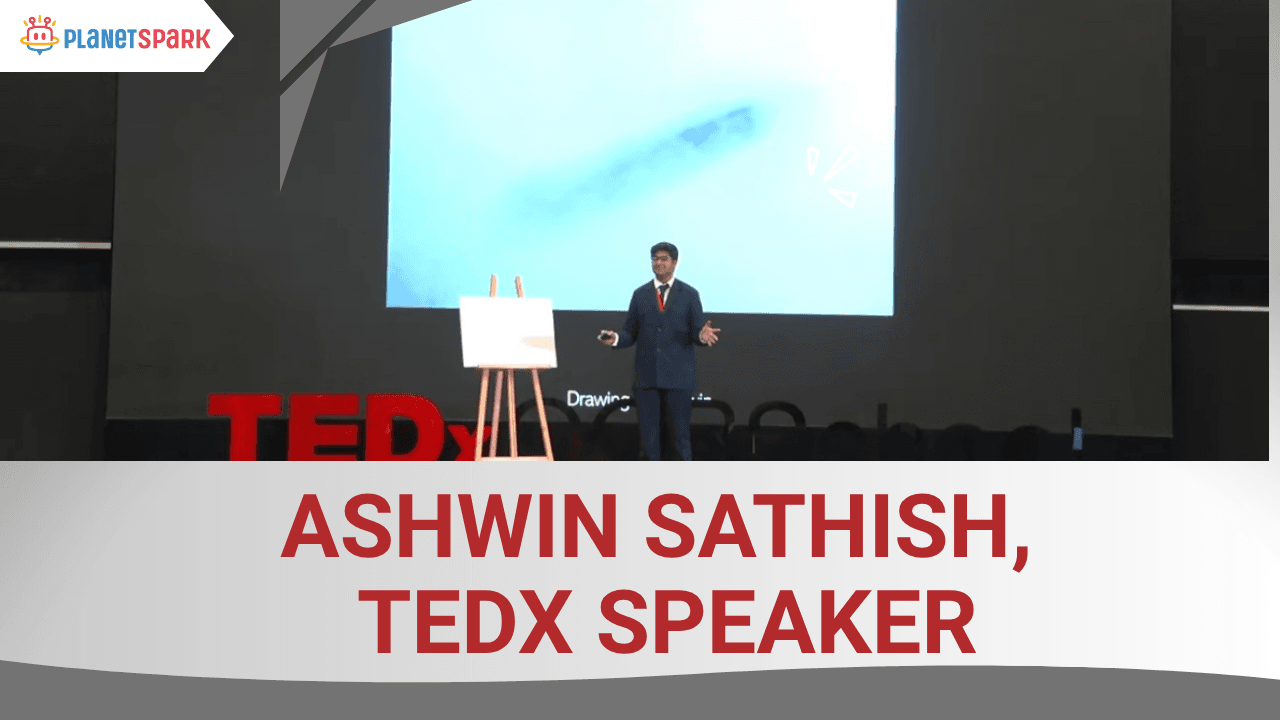
Ashwin Sathish, a sharp Grade 8 learner aged 13, has grown far beyond classroom discussions, using his strong expressive skills to shape vivid stories and meaningful ideas. Known for his TEDx appearance in New Delhi, Ashwin’s confidence on stage has naturally flowed into his writing, helping him build worlds that feel alive and purposeful. With steady practice and a curiosity for “what could be,” he continues to turn simple ideas into rich, engaging narratives that show the power of imagination and clarity of thought.
Ready to Unlock Your Child’s Inner Filmmaker?
Cinematic storytelling helps children see stories in a new and exciting way. Instead of only saying what happened, children learn how to show ideas using pictures in their mind, small details, emotions, and actions. This makes their stories clearer, more interesting, and easier for others to imagine. As children practise this skill, storytelling becomes something they enjoy rather than something they feel unsure about.
When kids understand what is cinematic storytelling and practise using clear storytelling frameworks, they learn how to organise their thoughts step by step. They become better at explaining ideas, describing scenes, and sharing feelings in words. This structured way of thinking supports not just storytelling, but also speaking in class, writing assignments, and everyday conversations.
Over time, cinematic storytelling helps children grow into confident communicators. They feel more comfortable expressing ideas, asking questions, and sharing their imagination with others. These skills support school learning, creativity, and self-expression, helping children communicate with clarity, confidence, and joy in their daily lives.
Cinematic storytelling helps children tell stories by creating pictures in the listener’s mind. Kids use sights, sounds, feelings, and actions to show what is happening. This makes stories more engaging and easier to understand.
Regular storytelling often explains events in simple sentences. Cinematic storytelling shows scenes using details, emotions, and movement. This helps stories feel more lively and interesting.
Cinematic storytelling improves creativity, communication, and confidence. It helps children organise ideas clearly while speaking or writing. These skills support learning and classroom participation.
Children as young as five or six can start learning cinematic storytelling. Simple activities like drawing, acting, and describing scenes work well. Skills grow naturally with regular practice.
Storytelling frameworks give children a simple structure to follow. They help kids organise stories with a clear beginning, middle, and end. This makes storytelling easier and less confusing.
Yes, cinematic storytelling improves speaking, writing, and comprehension. Children learn to explain ideas clearly and confidently. These skills help in storytelling tasks, presentations, and exams.